Key Takeaways
-
DBT, CBT, ACT, and mindfulness-based therapy are evidence-based approaches available in Brandon that teach concrete emotion management skills rather than just discussing feelings.
-
Mood regulation therapy addresses depression, anxiety, mood swings, BPD, bipolar disorder, and trauma by reducing emotional reactivity and building distress tolerance through structured skill training.
-
Both in-person and telehealth options are available in Brandon and throughout Florida, with bilingual English-Spanish services to ensure culturally appropriate care.
-
You don’t need a crisis or diagnosis to start therapy—early intervention before emotions feel out of control makes it easier to build new emotional regulation skills.
-
Choose a therapist with specialized training in evidence-based approaches, experience with your specific concerns, good communication style, and flexible scheduling that fits your lifestyle.
-
Psychiatric evaluation for medication may complement therapy for conditions like bipolar disorder or major depression, but psychotherapy is the primary treatment for most mood-related conditions.
Do your emotions sometimes feel like a roller coaster you never signed up to ride? One moment you feel fine, and the next you are overwhelmed, irritable, or completely shut down. If this sounds familiar, you are not alone — and help is closer than you think. Mood regulation therapy in Brandon is designed to help you understand your emotional patterns, build practical coping skills, and feel more in control of your daily life.
Whether you are dealing with depression, anxiety, mood swings, or intense emotional reactions, there are evidence-based therapies that can make a real difference. This guide will walk you through what mood regulation therapy is, how it works, and how to find the right support in Brandon. Let’s get into it.

What Is Mood Regulation Therapy?
Mood regulation therapy is not one single treatment. It is a collection of evidence-based approaches that help people manage emotional highs and lows more effectively. The goal is to reduce emotional reactivity, increase distress tolerance, and build healthier ways of responding to life’s challenges.
According to Mental Health Resources from the CDC, emotional wellbeing is closely tied to physical health, relationships, and overall quality of life. When your mood is unstable, everything else can feel harder — work, relationships, sleep, and even simple daily tasks.
Mood regulation therapy addresses this by teaching you concrete skills. It is not just about talking through your feelings. It is about learning how to feel them without being swept away.
Common Conditions That Benefit From Mood Regulation Therapy
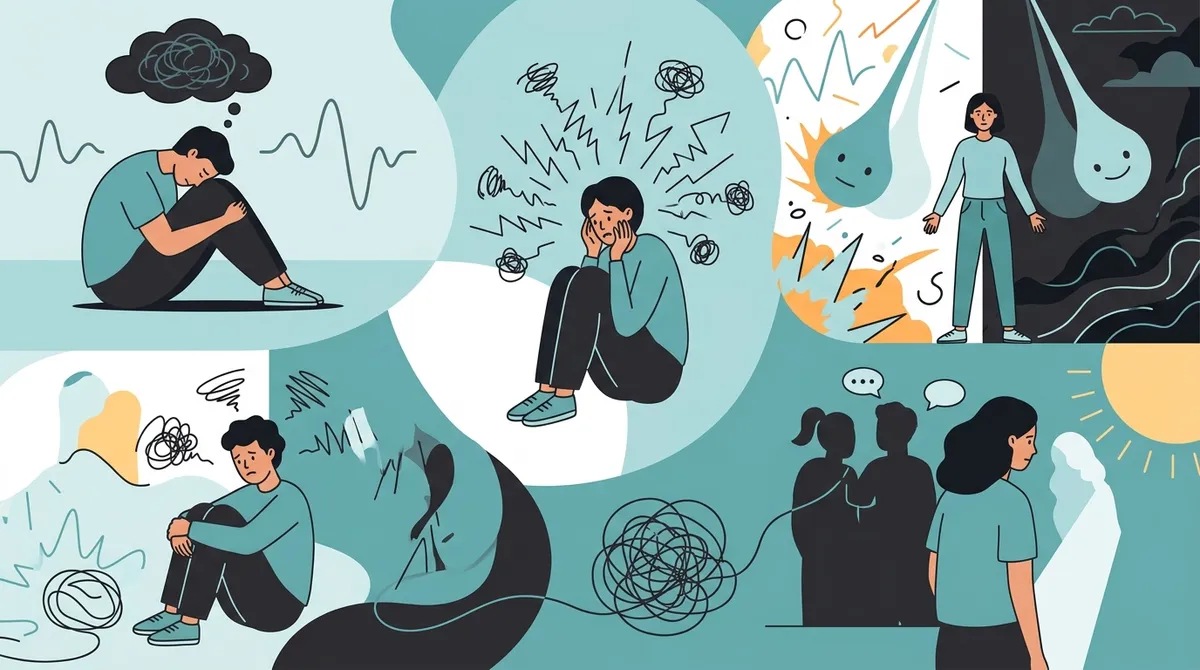
Mood regulation therapy can help a wide range of people. You do not need a specific diagnosis to benefit. That said, it is especially useful for people dealing with the following concerns.
- Depression — persistent sadness, low energy, and hopelessness that makes daily life feel heavy. Learn more about depression treatment and how therapy can help you regain hope.
- Anxiety — racing thoughts, constant worry, and physical tension that keep you on edge. Explore anxiety treatment options tailored to your needs.
- Mood swings — rapid shifts between emotional states that feel unpredictable and exhausting.
- Borderline personality disorder (BPD) — intense emotions, fear of abandonment, and relationship instability.
- Bipolar disorder — cycling between elevated and depressed mood states that disrupt daily functioning.
- Trauma responses — emotional dysregulation following difficult or traumatic experiences. Trauma therapy can be a powerful part of mood stabilization.
- Chronic stress — ongoing stress that chips away at your emotional resilience over time.
If you recognize yourself in any of these descriptions, mood dysregulation may be something worth exploring with a licensed therapist.

The Top Evidence-Based Approaches Used in Brandon
Therapists in Brandon use several proven methods to help clients regulate their moods. Each approach has unique strengths, and the right fit depends on your specific needs and goals.
1. Dialectical Behavior Therapy (DBT)
DBT was originally developed to treat borderline personality disorder, but it is now widely used for anyone struggling with emotional intensity. It combines cognitive techniques with mindfulness and acceptance strategies. DBT for better mental health focuses on four core skill areas.
- Mindfulness — learning to observe your emotions without immediately reacting to them.
- Distress tolerance — surviving crisis moments without making things worse.
- Emotion regulation — understanding and changing your emotional responses.
- Interpersonal effectiveness — communicating your needs clearly while maintaining healthy relationships.
West Florida Therapy notes that DBT is considered the gold standard for borderline personality disorder because psychotherapy — not medication — is the primary treatment. That is great news, because it means real, lasting change is possible through the therapeutic relationship and skill-building.
2. Cognitive Behavioral Therapy (CBT)
CBT is one of the most widely researched therapies in the world. It helps you identify negative thought patterns and replace them with more balanced, realistic ones. If your mood tends to spiral because of how you interpret situations, cognitive behavioral therapy can help you break that cycle.
For example, if you think “nothing ever goes right for me,” CBT helps you examine that belief and find evidence for a more balanced view. Over time, this changes how you feel and how you respond.
3. Acceptance and Commitment Therapy (ACT)
ACT takes a slightly different angle. Rather than fighting difficult emotions, ACT teaches you to accept them and still move forward with your values and goals. If you have been struggling with acceptance and commitment therapy in Brandon, this approach can help you build psychological flexibility.
4. Mindfulness-Based Therapy
Mindfulness-based approaches teach you to slow down, observe your thoughts and feelings without judgment, and respond rather than react. Research shows that regular mindfulness practice can significantly reduce anxiety, depression, and emotional reactivity. You can explore mindfulness techniques that transform mental health as part of your overall treatment plan.

Comparing Therapy Approaches for Mood Regulation
Not sure which approach might be the best fit for you? This table breaks down the key differences to help you understand your options at a glance.
| Therapy Type | Best For | Core Focus | Skill-Based? |
|---|---|---|---|
| DBT | Intense emotional swings, BPD, self-harm urges | Distress tolerance, emotion regulation | Yes — structured skill training |
| CBT | Depression, anxiety, negative thought patterns | Changing unhelpful thinking | Yes — thought challenging exercises |
| ACT | Chronic stress, avoidance, life transitions | Acceptance and values-based living | Yes — flexibility and commitment |
| Mindfulness-Based | Anxiety, depression, stress | Present-moment awareness | Yes — meditation and observation |
Your therapist will help you identify which approach — or combination of approaches — makes the most sense based on your history, symptoms, and goals.
What to Expect When You Start Mood Regulation Therapy
Starting therapy can feel intimidating. But knowing what to expect makes it a lot less scary. Here is a general overview of what the process looks like.
- Initial consultation — A brief phone call to talk about your concerns and see if the therapist is a good fit for your needs.
- Intake assessment — A deeper conversation about your history, current symptoms, and goals. This helps your therapist build a personalized treatment plan.
- Ongoing sessions — Weekly or bi-weekly appointments where you learn skills, process experiences, and make meaningful progress.
- Progress check-ins — Regular reviews of your goals so your treatment can be adjusted as you grow and change.
You can explore our therapy process at West Florida Therapy to get a clearer picture of what to expect from start to finish. The goal is always to give you clarity and structure so you never feel lost.
In-Person and Virtual Options in Brandon
One of the most exciting developments in mental health care in 2026 is the wide availability of both in-person and telehealth options. You no longer have to choose between convenience and quality care.
- In-person therapy — Available at our Brandon office for those who prefer face-to-face connection. Learn more about in-person therapy in Brandon, Florida.
- Telehealth therapy — Available throughout all of Florida for those with busy schedules, transportation challenges, or who simply prefer the comfort of home. Discover the benefits of telehealth therapy in Florida.
- Bilingual services — English and Spanish sessions are available, so you can express yourself fully in your preferred language.
For Spanish-speaking adults who have faced language barriers in mental health care, bilingual services are a game changer. You deserve to feel heard and understood in the language that feels most natural to you.
According to Substance Abuse & Mental Health services in Florida, access to culturally and linguistically appropriate care is a key factor in mental health recovery outcomes. That is something West Florida Therapy takes seriously.
When Should You Consider Mood Regulation Therapy?
You do not have to be in crisis to benefit from therapy. In fact, the earlier you reach out, the easier it tends to be to build new skills before things feel out of control. Here are some signs it might be time to explore mood regulation therapy.
- Your emotions feel overwhelming or out of proportion to situations.
- You snap at people you care about and feel guilty afterward.
- You feel stuck in cycles of sadness, irritability, or numbness.
- You use unhelpful coping strategies like avoidance, isolation, or substance use.
- Your mood is affecting your work, relationships, or self-esteem.
- You feel like you are just surviving, not actually living.
If any of these resonate with you, it may be time to take that first courageous step. You can also learn more about mood disorder therapy for emotional wellbeing and what personalized support can look like.
What About Psychiatric Support and Medication?
Sometimes therapy works best alongside psychiatric support. For conditions like major depressive disorder or bipolar disorder, a psychiatrist may evaluate whether medication could be a helpful addition to your treatment plan. This is not always necessary, and your therapist can help you decide if a referral makes sense for your situation.
It is worth noting that for many mood-related conditions — including most personality disorders — psychotherapy is the primary treatment. Mental Health Links from the Florida Department of Health offer additional resources to help you navigate available options in the state.
If you are curious about what a combined approach might look like, talking with a licensed psychotherapist is a great starting point.
How to Choose the Right Therapist in Brandon
Finding the right therapist is a little like finding the right doctor. Credentials matter, but so does fit. Here are some things to look for when choosing a therapist for mood regulation.
- Specialized training — Look for a therapist trained in DBT, CBT, ACT, or other evidence-based approaches for mood concerns.
- Experience with your specific concerns — Whether it is depression, anxiety, BPD, or trauma, find someone who has worked with similar issues.
- Good communication — Your therapist should feel approachable, non-judgmental, and genuinely invested in your progress.
- Flexible scheduling and format — Consider whether in-person or telehealth works better for your lifestyle.
- Language accessibility — If English is not your first language, bilingual care can make therapy far more effective.
At West Florida Therapy, Margaret Deuerlein is a caring and licensed psychotherapist who brings warmth, expertise, and a personalized approach to every session. She works with adults and adolescents dealing with mood issues, anxiety, depression, trauma, and more. You can learn more about her approach by visiting Margaret Deuerlein’s profile.
Ready to explore your options? Visit us on Google — West Florida Therapy to read reviews and learn more about what clients experience when they work with our team.
Mood Regulation Therapy for Teens and Young Adults
Adolescents and young adults often struggle with emotional regulation in ways that can look like defiance, withdrawal, or impulsivity. But underneath those behaviors is often a young person who simply has not yet learned how to handle big feelings.
Mood regulation therapy can be incredibly helpful for teens navigating school pressures, social anxiety, and family stress. For parents wondering how to help, avoiding common mistakes when choosing teen therapy in Brandon is a helpful place to start. Virtual options are also available — explore virtual therapy for adolescents in Brandon, FL for flexible, accessible care.
For Gen Z young adults managing isolation, academic stress, or early career pressure, telehealth therapy removes many of the barriers that used to keep people from getting help. You do not even have to leave your apartment. That is a pretty big deal.
Taking the First Step Toward Emotional Balance
Mood regulation therapy in Brandon is not about becoming a different person. It is about learning to work with your emotions instead of constantly being at war with them. With the right support, you can go from feeling overwhelmed and reactive to feeling grounded, clear, and capable.
You do not have to keep riding that emotional roller coaster alone. Help is available — in person in Brandon or virtually throughout all of Florida. Whether you are dealing with depression, anxiety, mood swings, or something harder to name, there is a path forward. Take a look at how to find mood regulation therapy in Brandon that works and see what your options look like.
Your wellbeing matters. And the right therapist can help you find your way back to it. Reach out to our team today and take that first step toward feeling like yourself again — maybe even a better version of yourself than you have felt in a long time.
FAQs
Q: What is mood regulation therapy and how can it help me?
A: Mood regulation therapy is a collection of evidence-based approaches — like DBT, CBT, and ACT — that help you manage emotional highs and lows more effectively. It gives you practical skills to reduce emotional reactivity, handle difficult moments without making them worse, and feel more in control of your daily life. Think of it as a toolbox for your emotions!
Q: Is DBT the best therapy for mood swings and emotional regulation?
A: DBT is one of the most highly recommended therapies for emotional regulation, especially if you experience intense mood swings, impulsivity, or relationship challenges. It was originally developed for borderline personality disorder but works well for many people struggling with emotional dysregulation. Your therapist can help you decide if DBT, or a combination of approaches, is the right fit for you.
Q: Do Brandon therapists offer telehealth for mood regulation therapy?
A: Yes! Many therapists in Brandon — including West Florida Therapy — offer both in-person and telehealth appointments throughout all of Florida. This makes it easy to get support from home, work, or wherever you feel comfortable. Telehealth can be a fantastic option for busy schedules or for those who prefer a little extra comfort during sessions.
Q: When should I see a therapist versus a psychiatrist for mood problems?
A: A therapist is usually the best first step for most mood concerns like anxiety, depression, mood swings, or emotional reactivity. A psychiatrist may be helpful if medication is being considered alongside therapy, particularly for conditions like bipolar disorder or major depressive disorder. Your therapist can help guide you toward the right level of care based on your specific needs.
Q: Is mood regulation therapy available in Spanish in Brandon?
A: Absolutely! West Florida Therapy offers bilingual services in both English and Spanish, which is a wonderful option for Spanish-speaking clients who want to feel fully heard and understood in their preferred language. Culturally and linguistically appropriate care can make therapy more effective and more comfortable from day one.