

Key Takeaways
-
A therapist provides talk therapy to build coping skills and explore thoughts, emotions, and relationships, while a psychiatrist is a medical doctor who can evaluate conditions and prescribe medication.
-
Start with a therapist if you feel overwhelmed by stress, grief, relationship conflict, or ongoing sadness and want tools to handle emotions better.
-
Consider a psychiatrist if your symptoms are severe or worsening, affect sleep or focus, you want to explore medication, or therapy alone has not brought enough relief.
-
You do not have to choose just one: many people see a therapist for talk therapy and a psychiatrist for medication management at the same time, with shared updates if you consent.
-
Ask providers about their credentials, approach, progress tracking, fees, insurance, privacy, and whether they can prescribe medication before you commit.
-
If you are unsure, see your primary care doctor to rule out physical causes like thyroid issues, and remember you can change course later. In a crisis, call or text 988.
Feeling stuck, stressed, or just not like yourself? You are not alone, and reaching out is already a brave first step. But then a big question pops up: should I see a therapist or psychiatrist? It is one of the most common questions people ask when they start looking for mental health care, and the answer is simpler than you might think.
In short, a therapist helps you talk through your thoughts, feelings, and patterns using structured sessions. A psychiatrist is a medical doctor who can evaluate your symptoms and prescribe medication. Many people use one, and some use both.
This friendly guide walks you through the differences, the signs that point toward each choice, and a simple step-by-step way to decide. By the end, you will feel more confident about where to begin, whether you are a stressed millennial, a teen, a parent, a couple, or someone who would feel more comfortable getting care in Spanish.

What Is the Difference Between a Therapist and a Psychiatrist?
Let’s clear up the confusion first. The word “therapist” is a broad term. It can describe licensed counselors, clinical social workers, psychologists, and even some psychiatrists. These professionals provide psychotherapy, which is often called talk therapy. Titles and credentials can vary, so it is always smart to ask about a provider’s license and training.
A psychiatrist is a physician who specializes in mental health. Psychiatrists can assess mental health conditions, look for possible medical causes, and prescribe medication. Some also offer talk therapy, though many focus mainly on medication management. Services vary from practice to practice.
According to the National Institute of Mental Health (NIMH), psychotherapy can help people work through thoughts, emotions, behaviors, relationships, and coping skills. It can be used on its own or together with medication, depending on your needs.
A Quick Side-by-Side Look
| Feature | Therapist | Psychiatrist |
|---|---|---|
| Main focus | Talk therapy and skill building | Medical evaluation and medication |
| Training | Varies (counseling, social work, psychology) | Medical doctor with psychiatry specialty |
| Can prescribe medication? | Generally no | Yes |
| Typical visits | Weekly or bi-weekly, longer sessions | Often shorter, less frequent check-ins |
| Best for | Stress, relationships, grief, trauma, ongoing emotional struggles | Medication questions, severe or complex symptoms, medical review |
Think of it this way: a therapist is like a coach who walks beside you while you learn new skills and understand your story. A psychiatrist is like a medical guide who checks how your brain and body are working and whether medication might help.
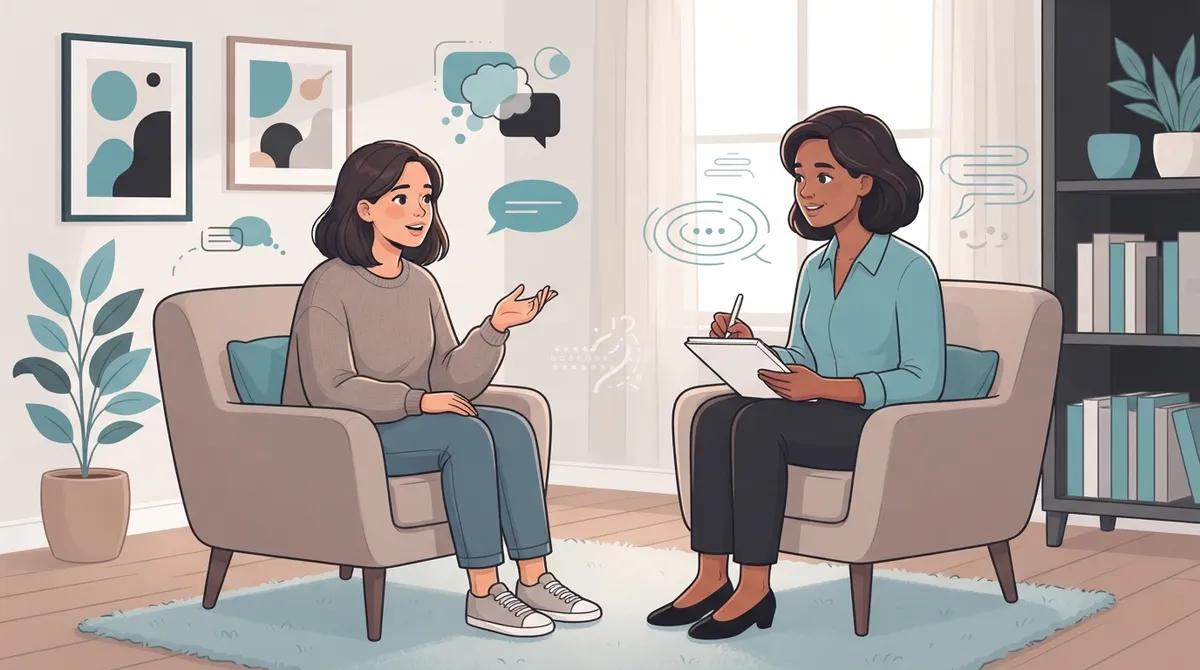
Signs You Might Want to Start With a Therapist
For many people, therapy is a wonderful first step. If any of these sound familiar, a therapist may be a great place to begin:
- You feel overwhelmed by stress, work pressure, or life changes
- You are dealing with grief, loss, or a big transition
- You and your partner keep having the same fights
- You feel anxious, sad, or “off” most days and want to understand why
- You are a teen facing school pressure, social worries, or family tension
- You want tools to handle your emotions in a healthier way
- You have experienced something painful and want a safe place to heal
Therapy gives you a steady, judgment-free space to talk. Over time, you build coping skills, notice patterns, and grow more confident. If you are curious about what this looks like in practice, you can read more about what a psychotherapist does and how they can help.
Common Concerns Therapy Can Help With
Therapy is often used for anxiety, depression, trauma, relationship struggles, and mood changes. You can learn more about anxiety treatment, depression treatment, and trauma therapy to see how each approach works.
Signs You Might Want to See a Psychiatrist
A psychiatrist can be a smart choice when you want a medical point of view. Consider reaching out to a psychiatrist or another qualified prescriber if:
- You want to find out whether medication could help you
- Your symptoms are severe, complex, or getting worse
- Your daily life is being heavily affected, such as sleep, appetite, or focus
- A medical cause may be playing a role in how you feel
- You are already taking medication and need it reviewed or adjusted
- Therapy alone has not given you the relief you hoped for
Remember, asking about medication does not mean something is “wrong” with you. It simply means you are gathering information to care for yourself well. A psychiatrist can talk through the pros and cons with you and help you decide what feels right.
Do You Have to Choose Just One?
Here is the good news: you do not have to pick only one. Many people see a therapist and a psychiatrist at the same time. In this setup, the therapist provides regular talk therapy, while the psychiatrist evaluates and manages medication. When both providers talk to each other (with your permission), your care can feel smooth and connected.
This team approach is common for people dealing with ongoing depression, anxiety, mood concerns, or trauma. Some clinicians also provide both therapy and medication management, though that varies by practice.
How to Decide: A Simple Step-by-Step Guide
Still unsure? Walk through these steps. There is no wrong answer, and you can always change course later.
- Name what you are feeling. Jot down your main concerns. Is it stress, sadness, worry, relationship trouble, or something else? Notice how long it has been going on and how much it affects your day.
- Check how intense your symptoms are. If your symptoms are mild to moderate and you want tools and support, therapy is often a good start. If they feel severe or complex, a medical evaluation may help.
- Think about what you want. Do you want to talk things through and build skills? Start with a therapist. Do you want to explore medication? Consider a psychiatrist.
- Consider a primary care visit. Your regular doctor can check for physical causes, such as thyroid issues or low vitamin levels, and can offer a referral if needed.
- Look at the practical side. Think about cost, insurance, location, language, and scheduling. Many people find that online sessions make things easier.
- Start somewhere and stay flexible. You can begin with therapy and add a psychiatrist later, or the other way around. Good providers will help point you in the right direction.
Questions to Ask Before You Choose a Provider
NIMH suggests asking a few smart questions when choosing a mental health provider. Here are some to bring to your first call:
- What are your credentials and license?
- Do you have experience with what I am dealing with?
- What is your approach to treatment?
- How will we set goals and measure progress?
- What are your fees, and do you accept insurance?
- How do you protect my privacy and confidentiality?
- Can you prescribe medication, or will you refer me to someone who can?
A caring provider will welcome these questions. Feeling comfortable with your provider matters just as much as their credentials.
What About Teens, Couples, and Spanish-Speaking Adults?
Different people need different kinds of support, and that is perfectly okay.
For Teens and Their Parents
Teens often deal with school stress, social worries, and family changes. Therapy gives them a private space to be heard. Parents can also be part of the process when it helps. If your teen seems withdrawn, anxious, or overwhelmed, therapy is often a gentle first step. Our guide on virtual therapy for adolescents explains how online sessions can fit into a busy teen’s life.
For Couples
If the main struggle is communication, trust, or closeness, couples therapy is usually the right fit, since a psychiatrist focuses on individual medical care. You can explore how couples therapy helps partners reconnect and rebuild.
For Spanish-Speaking Adults
Talking about feelings is hard enough without a language barrier. Being able to share in your first language can make therapy feel safer and more natural. Bilingual English and Spanish care is available at West Florida Therapy, so you never have to translate your pain.
For Gen Z and Busy Young Adults
If your schedule is packed or you feel isolated, virtual sessions can be a great fit. You can learn more about telehealth therapy in Florida and how it works from the comfort of home.
How West Florida Therapy Can Help You Get Started
At West Florida Therapy, our goal is to make that first step feel easy. Margaret Deuerlein is a caring psychotherapist who helps adults and adolescents work through anxiety, depression, trauma, and relationship struggles. Sessions are available in person in Brandon, Florida, and virtually across the state, in English or Spanish.
Here is a quick look at how getting started works. You can also see the full process on our site.
- Start with a conversation. A free 15-minute consultation lets you share your concerns and ask questions.
- Build your plan. Together, you create a personalized plan based on your goals.
- Get steady support. You meet weekly or bi-weekly, in person or online.
- Track your progress. We check in often and adjust as you grow.
If it turns out that a medical evaluation or medication review would help you, a good therapist can talk with you about that and point you toward the right next step. You can see what other clients say by reading West Florida Therapy reviews on Google.
Taking care of your whole self also includes your smile and your overall wellness. Our friends at Dental Theory are a local resource for dental care in the Brandon area.
Paying for Care: Insurance and Other Options
Cost is a real concern, and it is smart to ask about it upfront. West Florida Therapy is in-network with several major insurance providers, including Aetna, Cigna, Florida Blue, Optum, Oscar, and United Health Care. Many clients also choose to pay out of pocket for extra privacy and flexibility, and HSA and FSA accounts are accepted. It is always a good idea to call your insurance company to check your mental health benefits, copays, and deductible. You can read more on our payment options page.
When to Get Urgent Help
Sometimes you need help right now, and that is okay. If you are in an emotional crisis in the United States, call or text 988 to reach the 988 Suicide & Crisis Lifeline, which offers free, confidential support 24 hours a day. You can also chat online at 988lifeline.org. If there is an immediate physical emergency, call 911.
For treatment referrals and information, the SAMHSA National Helpline is free, confidential, and open 24/7 at 1-800-662-HELP (4357). You can also explore mental health resources from the CDC, browse Florida mental health links, or learn about substance abuse and mental health services in Florida.
Final Thoughts: There Is No Wrong First Step
So, should you see a therapist or psychiatrist? If you want to talk, build skills, and understand yourself better, a therapist is a wonderful place to start. If you want a medical evaluation or to explore medication, a psychiatrist can help. And if you are not sure, begin with the one that feels most doable today. You can always adjust as you go.
The most important thing is that you take that first step. You deserve support, and you do not have to carry everything alone. If you are ready to talk, reach out to West Florida Therapy to schedule your free 15-minute consultation. We would be honored to walk with you.
FAQs
Q: What is the difference between a therapist and a psychiatrist?
A: A therapist provides talk therapy to help you work through thoughts, feelings, and relationships. A psychiatrist is a medical doctor who can evaluate mental health conditions and prescribe medication. Many people find that the two work well together.
Q: Should I see a therapist or psychiatrist for anxiety or depression?
A: Many people start with a therapist for anxiety or depression because talk therapy builds lasting coping skills. If your symptoms are severe or you are curious about medication, a psychiatrist can add helpful medical insight. You can also use both at the same time.
Q: Can I see a therapist and psychiatrist at the same time?
A: Absolutely! This is very common. Your therapist can focus on talk therapy while your psychiatrist handles medication, and with your permission, they can share updates so your care stays connected.
Q: Can a therapist prescribe medication?
A: Generally, no. Most therapists, such as counselors and social workers, do not prescribe medication. If you want a medication evaluation, a therapist can refer you to a psychiatrist or another qualified prescriber.
Q: Should I see my primary care doctor before finding a mental health provider?
A: It can be a helpful first stop, especially if your symptoms may have a physical side or you need a referral. That said, you can also reach out to a therapist directly. Do whatever feels most comfortable for you.