
Key Takeaways
-
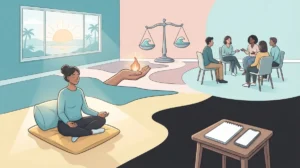
Depression counseling is talk therapy with a licensed Florida mental health professional to understand feelings, change unhelpful patterns, and build coping skills.
-
Verify that any counselor holds an active Florida license and has regular experience treating depression in your age group before booking.
-
Many people start with a free 15-minute phone consultation to ask questions and gauge whether the counselor feels like a good fit.
-
Telehealth and in-person sessions can be combined, and telehealth clinicians must be authorized to provide services where you are physically located during the session.
-
Insurance benefits vary by plan, so call your carrier to confirm mental health coverage, copays, and deductibles, and confirm fees directly with any provider.
-
If you or someone you know is in mental health crisis, call or text 988 any time, or call 911 for immediate physical danger, since counseling is not emergency care.
If you’ve been feeling heavy, tired, or stuck lately, please know you’re not alone, and you don’t have to push through it by yourself. Depression can sneak into everyday life. It can make mornings harder, work feel pointless, and even the people you love feel far away. The good news? Support is closer than you might think, and depression counseling in Brandon, Florida is a real, practical step toward feeling like yourself again.
Maybe you’re a busy millennial juggling work and life transitions. Maybe you’re a young adult who feels isolated, or a parent worried about a teen. Maybe you’d feel more comfortable talking in Spanish. Whatever your story, this guide walks you through what counseling looks like, how to choose the right counselor, what it may cost, and how to get started. Think of it as a friendly conversation with someone who wants you to feel supported.

What Is Depression Counseling?
Depression counseling is a form of talk therapy where you work with a licensed mental health professional to understand your feelings, change unhelpful patterns, and build healthier coping skills. It’s not about being “fixed.” It’s about having a safe, judgment-free space to be heard and to learn tools that actually work for your life.
Depression is more than a bad week. Common signs can include:
- Ongoing sadness, emptiness, or feeling numb
- Loss of interest in things you used to enjoy
- Changes in sleep, such as sleeping too little or too much
- Low energy, trouble focusing, or feeling “foggy”
- Changes in appetite or weight
- Feeling guilty, hopeless, or worthless
- Pulling away from friends and family
If these sound familiar, it may help to read more about what depression is and how it affects your daily life. Understanding what you’re facing is often the first brave step.
Why Local Depression Counseling in Brandon Can Help
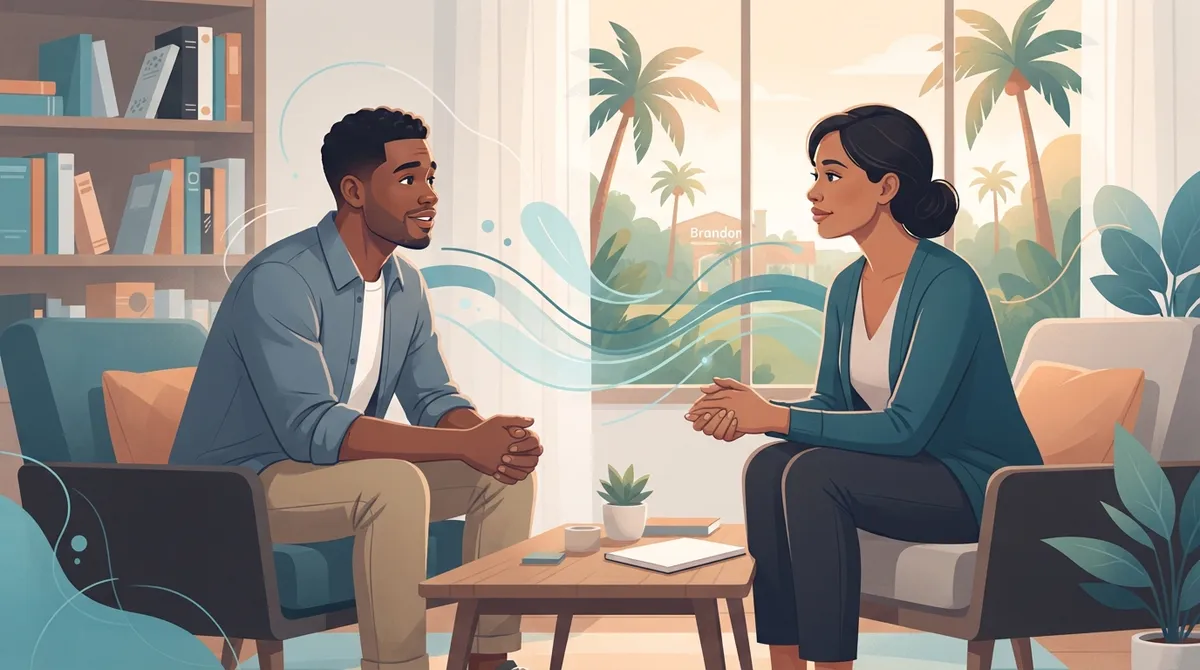
Choosing a counselor close to home has real benefits. You can build a steady routine, show up in person when you need that human connection, and work with someone who understands the local community, including the pace of life around Brandon, Valrico, Riverview, and greater Tampa.
In-person sessions can feel grounding. Sitting in a calm, private office, away from the distractions at home, helps some people open up more easily. If you like that idea, you can learn about in-person therapy in Brandon, Florida.
At the same time, local doesn’t have to mean limited. Many people mix in-person visits with online sessions on busy weeks. We’ll talk about that flexibility in a moment.
Who Provides Depression Counseling in Brandon?
In Florida, depression counseling can be provided by several types of licensed professionals. Each brings training in mental health care. Common titles include:
- Licensed Mental Health Counselors (LMHCs)
- Licensed Clinical Social Workers (LCSWs)
- Licensed Marriage and Family Therapists (LMFTs)
- Psychologists
It’s always smart to confirm that a clinician holds an active Florida license and has experience with your age group and concerns. A psychotherapist can help you explore thoughts, emotions, and relationships in depth, and you can read more about what a psychotherapist does and how they can help.
At West Florida Therapy, Margaret Deuerlein is a caring psychotherapist who works with adults and adolescents facing depression, anxiety, trauma, and relationship stress. Her approach is warm, steady, and built around what you need most.
Common Therapy Approaches for Depression
There isn’t one “right” type of therapy for everyone. A good counselor will explain why an approach fits your symptoms and goals. Here are some of the most common methods used for depression:
| Approach | What It Focuses On | Good To Know |
|---|---|---|
| Cognitive Behavioral Therapy (CBT) | Spotting and changing negative thought patterns and behaviors | Practical and skills-based. Often includes simple exercises between sessions. |
| Dialectical Behavior Therapy (DBT) | Managing intense emotions, handling stress, and improving relationships | Helpful when emotions feel overwhelming or hard to control. |
| Mindfulness-Based Approaches | Staying present and noticing thoughts without judgment | Can ease rumination and the constant “what if” loop. |
| Trauma-Informed Care | Understanding how past experiences shape current feelings | Useful when depression is tied to painful life events. |
| Interpersonal Therapy | Improving relationships and communication | Great when loneliness or conflict is part of the picture. |
Curious about a specific method? You can explore what cognitive behavioral therapy is, learn how DBT supports emotional balance, or see how interpersonal therapy changes lives. If past pain is part of your story, EMDR treatment and trauma therapy may also play a role.
How to Choose the Right Depression Counselor
Finding the right fit matters. Research shows the relationship you build with your therapist is a big part of how helpful therapy feels. Here’s a simple step-by-step way to choose:
- Check the license. Make sure the clinician is actively licensed in Florida.
- Ask about depression experience. You want someone who regularly works with depression and understands your age group.
- Learn their approach. Ask what methods they use and why they think those fit you.
- Talk about logistics. Ask about fees, insurance, cancellation policies, and appointment times.
- Notice how you feel. Do you feel heard and respected? Trust your gut.
- Ask how progress is reviewed. A good counselor checks in with you and adjusts the plan as you grow.
For more guidance, this article on how to find the right depression therapist near you is a helpful companion read. And if you want to avoid common pitfalls, take a look at mistakes to avoid when searching for depression help.
What to Expect: The Process at West Florida Therapy
Starting therapy can feel scary, so here’s a peek at what the first steps often look like at West Florida Therapy. You can also read more about our process.
- Start with a conversation. You begin with a brief, free 15-minute phone consultation. You share your concerns and goals, and you get to ask questions to see if it feels like a good fit.
- Build your personalized plan. Together you create a plan based on your experiences, challenges, and goals.
- Steady, ongoing support. Sessions usually happen weekly or every other week, in person or through telehealth. Each session builds on the last.
- Track progress and adjust. You check in regularly, celebrate growth, and tweak the plan when needed.
No pressure and no judgment. Just a real person helping you take the next step.
In-Person or Online: Which Is Right for You?
Brandon is a busy area, and life doesn’t always leave room for a drive across town. That’s where telehealth comes in. Online counseling can help people who deal with tight schedules, transportation limits, mobility challenges, or just plain exhaustion. West Florida Therapy offers telehealth therapy across Florida.
Here’s a quick comparison to help you decide:
| Option | Best For | Things To Consider |
|---|---|---|
| In-Person (Brandon office) | Those who like face-to-face connection and a private space away from home | Requires travel and a set time in your day |
| Telehealth (online) | Busy schedules, limited transportation, or people living elsewhere in Florida | Needs a private spot and a steady internet connection |
| Mix of both | Anyone who wants flexibility week to week | Talk with your counselor about what works best |
One quick note: for telehealth, the clinician must be authorized to provide services where you are physically located during the session. Within Florida, that’s straightforward. If you want a deeper look, read in-person versus telehealth therapy in Brandon.
Support for Different Life Stages and Needs
Depression doesn’t look the same for everyone. Here’s how counseling can fit different readers:
- Spanish-speaking adults: Talking about feelings is easier in the language you think and dream in. Bilingual English/Spanish counseling removes language barriers so nothing gets lost in translation. You can learn how to find a Spanish-speaking therapist in Brandon.
- Stressed millennials: Career pressure, money worries, and big life changes can pile up fast. Individual therapy offers a place to slow down and sort it all out. Here are 15 reasons to try individual therapy for adults in Brandon.
- Teens and parents: School stress, friendships, and family changes can weigh heavily on adolescents. Parents often wonder when to step in. Explore virtual therapy for adolescents in Brandon.
- Gen Z and young adults: Isolation, academic pressure, and uncertainty about the future are common. Counseling can help you build confidence and connection. Read more on isolation and depression.
- Couples: Depression can strain a relationship. If you and your partner are struggling to connect, couples therapy can help you both feel understood.
Counseling Alongside Medication or Medical Care
Depression treatment is personal. Some people do well with counseling alone. Others find that counseling works best alongside medication or other medical care. A primary care doctor or psychiatric prescriber can help you decide whether a medication evaluation makes sense for you.
Sometimes depression connects with other things, like sleep problems, anxiety, or physical health. For example, you may want to read about why depression can make you sleep too much or how to navigate ADHD, depression, and anxiety together. Your counselor can help you see the full picture and coordinate with your other providers when it’s helpful.
Cost, Insurance, and Payment Options
Let’s talk money, because cost is a real concern for many people. Therapy fees vary by provider, so it’s wise to confirm current rates directly. Some local practices list sliding-scale options, but those offerings change, so always verify before booking.
West Florida Therapy offers flexible choices:
- Out-of-pocket: Many clients pay directly for privacy and flexibility. We accept all major credit cards, HSA, and FSA accounts.
- Insurance: We’re in-network with several major providers, including Aetna, Cigna, Florida Blue, Optum, Oscar, and United Health Care.
Because benefits differ, we recommend calling your insurance carrier to check your mental health coverage, copays, and deductible. You can find details on payment options anytime.
Simple Things You Can Try Between Sessions
Counseling works best when you add small, steady habits in daily life. These tips don’t replace therapy, but they can support it:
- Keep a gentle routine for sleep and wake times
- Take a short walk outside, even for ten minutes
- Reach out to one trusted person each week
- Write down one small thing that went okay each day
- Break big tasks into tiny steps
If you’d like more ideas, check out coping mechanisms for depression that work. Be kind to yourself. Healing is not a straight line, and small steps count.
When It’s Urgent: Crisis Support
Counseling is powerful, but it isn’t an emergency service. If you or someone you know is in a mental health crisis, call or text 988, the Suicide and Crisis Lifeline, any time, day or night. If someone is in immediate physical danger, call 911 or go to the nearest emergency department.
For additional resources, you can explore the CDC’s mental health resources, the Florida Department of Health mental health links, and the Florida Department of Children and Families substance abuse and mental health services.
Take the First Step Toward Feeling Better
Reaching out takes courage, and you’ve already taken a big step by learning more. Depression counseling in Brandon, Florida, can give you tools, understanding, and a steady person in your corner. You deserve support that feels warm, respectful, and real.
Want to see what others say? You can visit our West Florida Therapy location on Google and read about the experiences of people in our community.
Ready when you are. Contact West Florida Therapy to schedule your free 15-minute consultation with Margaret Deuerlein and take the first step toward feeling lighter, more hopeful, and more like you. You don’t have to carry this alone.
FAQs
Q: How do I find a depression counselor in Brandon, Florida?
A: Start by looking for a licensed Florida clinician who works with depression and your age group. Many practices offer a free phone consultation, which is a great way to see if the fit feels right. West Florida Therapy offers a free 15-minute consultation to get you started.
Q: Does insurance cover depression counseling in Brandon, FL?
A: Many insurance plans do cover counseling, but benefits vary from plan to plan. West Florida Therapy is in-network with Aetna, Cigna, Florida Blue, Optum, Oscar, and United Health Care. It’s best to call your insurance carrier to confirm your copay and deductible.
Q: Can I get online depression counseling if I live in Brandon?
A: Yes, absolutely! Telehealth is a flexible option for busy schedules or when getting to the office is tough. West Florida Therapy offers virtual sessions for people anywhere in Florida, and you can even mix online and in-person visits.
Q: What types of therapy are used to treat depression?
A: Common approaches include cognitive behavioral therapy (CBT), dialectical behavior therapy (DBT), mindfulness-based methods, interpersonal therapy, and trauma-informed care. A good counselor will explain why a certain approach fits your symptoms and goals.
Q: What should I do if I’m in a mental health crisis?
A: If you or someone you know is in crisis, call or text 988 right away. If there’s immediate physical danger, call 911 or go to the nearest emergency room. Routine counseling appointments are wonderful for ongoing support, but they aren’t a replacement for emergency care.