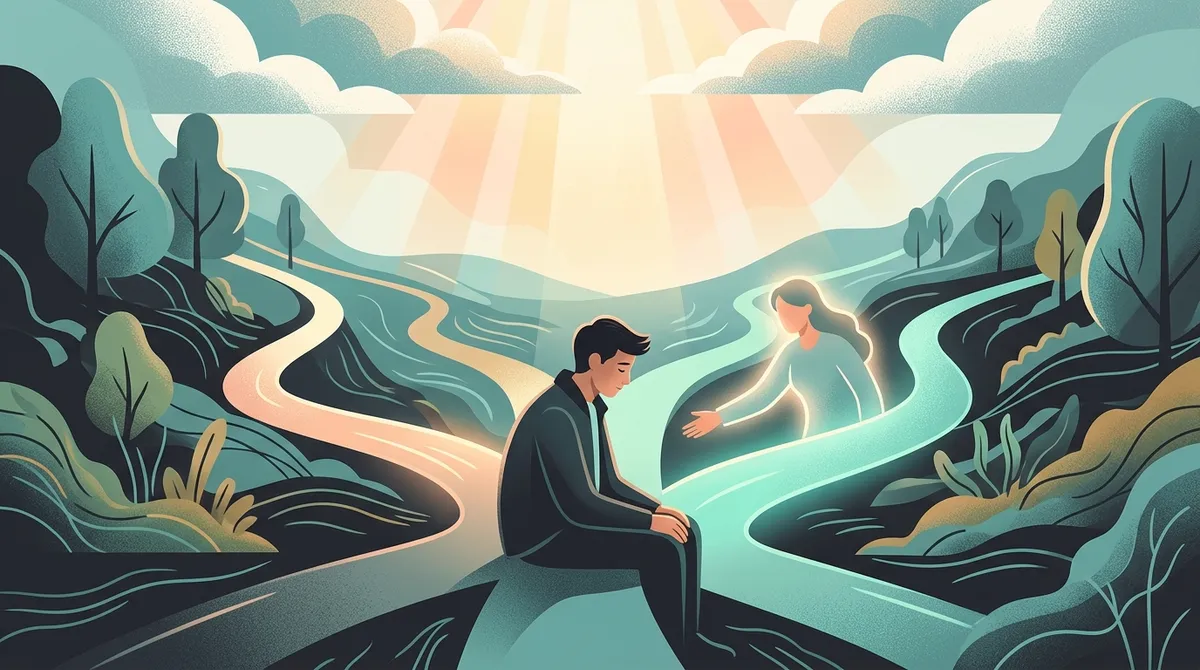
Key Takeaways
-
Seek treatment early when you notice persistent sadness for 2+ weeks, loss of interest in activities, or changes in sleep/appetite—waiting until crisis point significantly worsens outcomes.
-
Depression treatment is not one-size-fits-all; choose based on severity (individual therapy for mild-moderate, medication for moderate-severe, IOPs for severe) and your specific needs, not just proximity.
-
Prioritize therapist fit over location by checking licensure, specialization in depression, insurance acceptance, language availability, and scheduling—the right provider matters more than nearest zip code.
-
Virtual therapy is equally effective as in-person treatment for most depression cases and offers greater flexibility, accessibility, and convenience without geographic barriers.
-
If your first therapy experience felt wrong, don’t give up; therapist-client fit is crucial for success, so reflect on what didn’t work and schedule consultations with specialized providers before concluding therapy doesn’t work for you.
-
Contact 988 Suicide & Crisis Lifeline immediately by calling or texting 988 if experiencing suicidal thoughts or crisis—this free, confidential service is available 24/7 nationwide.
You typed “depression near me” into your phone at 2 a.m. Maybe you’ve been feeling empty for weeks. Maybe getting out of bed feels impossible. Whatever brought you to that search bar, one thing is clear — you’re ready to get help. That’s a brave first step, and it matters more than you know.
But searching for depression near me can feel overwhelming. There are so many options, so much confusing information, and so many potential wrong turns. The good news? You don’t have to figure it all out alone. This article walks you through the five biggest mistakes people make when looking for depression treatment — and exactly how to avoid them.
According to the National Institute of Mental Health, about 21 million U.S. adults experienced at least one major depressive episode in 2021. That’s roughly 8.3% of all adults. Depression is incredibly common, it is treatable, and real support is available near you — including right here in Florida. To learn more about what depression actually is, check out this helpful overview: What Is Depression and How Does It Affect Your Daily Life.

Mistake 1: Assuming All Depression Treatment Is the Same
One of the most common mistakes people make is assuming that all therapy or treatment for depression works the same way. It doesn’t. Depression treatment comes in several different forms, and the right one for you depends on your specific situation, history, and needs.
Here’s a quick look at the main types of depression treatment available:
| Treatment Type | Best For | Format |
|---|---|---|
| Individual Therapy (CBT, ACT, etc.) | Mild to moderate depression | In-person or virtual |
| Medication Management (Psychiatry) | Moderate to severe symptoms | In-person or telehealth |
| Intensive Outpatient Programs (IOP) | Severe depression needing structure | In-person, some virtual |
| Support Groups | Peer connection and shared experience | In-person or online |
| Combined Therapy + Medication | Many moderate-to-severe cases | Both formats available |
Many people benefit most from a combination of talk therapy and, when appropriate, medication. A licensed therapist can help you figure out what approach fits your situation. If you’re curious about how therapy helps with recovering from depression, that’s a great place to start.
Don’t settle for a one-size-fits-all approach. Your depression story is unique, and your treatment plan should be too.
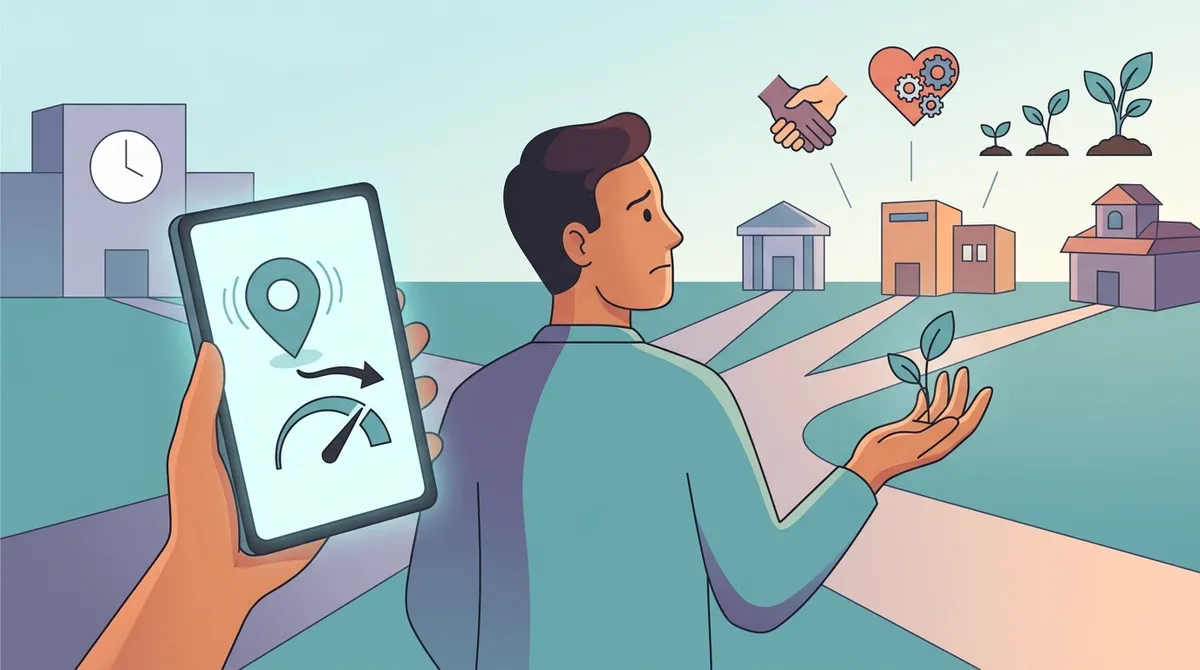
Mistake 2: Only Looking at Distance and Ignoring the Right Fit
When you search “depression near me,” it’s tempting to just pick the closest provider. But proximity alone won’t get you better. The right fit matters much more than the nearest zip code.
Here are the key factors to consider beyond distance:
- Licensure: Make sure the provider is a licensed mental health professional (LCSW, LMHC, PhD, PsyD, etc.)
- Specialization: Does the therapist have specific experience treating depression?
- Language: Do you need a bilingual provider? Spanish-speaking adults in Florida often face barriers due to language — finding a bilingual therapist matters.
- Insurance: Does the provider accept your insurance (Aetna, Cigna, Florida Blue, Optum, Oscar, United Health Care)?
- Availability: Can they schedule you soon, or is the waitlist months long?
- Format: Do they offer in-person, virtual, or both?
At West Florida Therapy, for example, services are available both in-person in Brandon, Florida, and through telehealth across all of Florida — in English and Spanish. That kind of flexibility means the right fit can also be near you, whether you’re in Tampa, Riverview, Valrico, or anywhere else in the state.
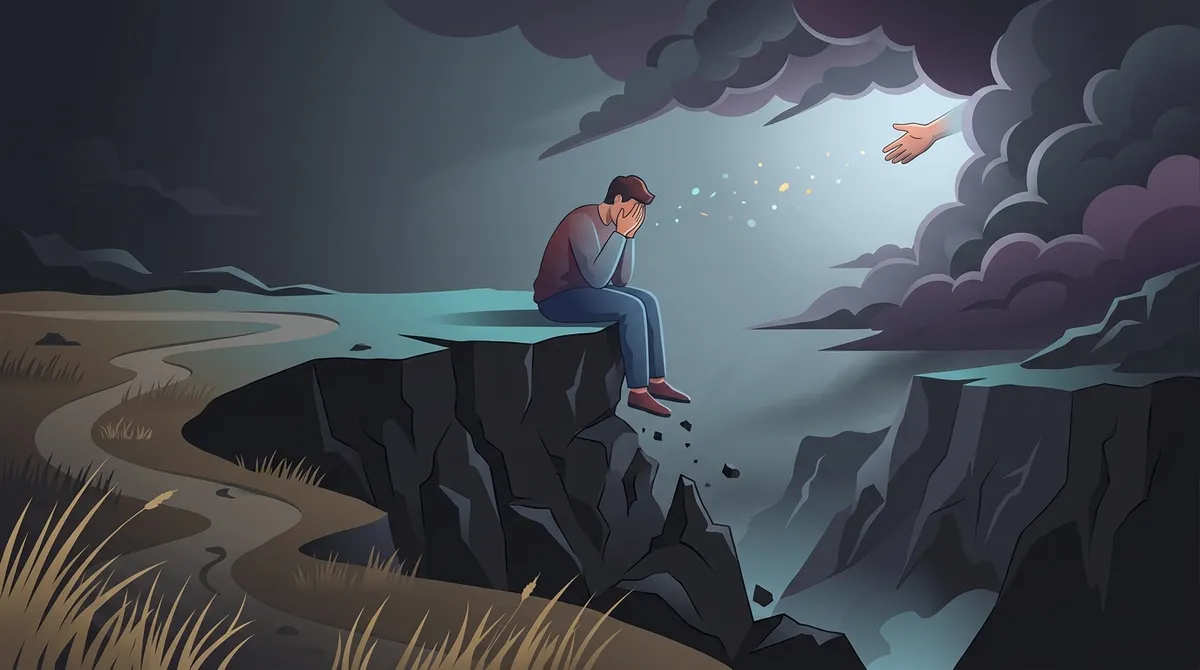
Mistake 3: Waiting Until the Crisis Point to Reach Out
This might be the most painful mistake on this list. So many people wait until depression has completely taken over their lives before they finally ask for help. They wait until they’ve lost their job. Until their relationship is falling apart. Until they can barely function.
You don’t have to wait that long. In fact, the earlier you reach out, the better your outcomes tend to be.
Here’s how to recognize when it’s time to stop waiting and start searching for depression near me:
- You’ve felt persistently sad or empty for more than two weeks — not just having a bad day, but a low mood that won’t lift.
- You’ve lost interest in things you used to enjoy — hobbies, socializing, activities that once felt exciting now feel pointless.
- Your sleep, appetite, or concentration has changed — sleeping too much or too little, eating more or less than usual, or struggling to focus at work or school.
- You’re having thoughts of hopelessness or worthlessness — feeling like nothing will ever get better or that you don’t matter.
- Your daily functioning is suffering — depression is affecting your relationships, job, school, or ability to care for yourself.
If any of these sound familiar, please don’t wait. Depression treatment works, and the sooner you begin, the sooner you can start feeling like yourself again. You can also learn more about mood issues and how therapy can address them.
If you are in immediate crisis or having thoughts of suicide, please contact the 988 Suicide & Crisis Lifeline by calling or texting 988. This free, confidential service is available 24/7 and was launched nationwide in July 2022 to offer immediate support. You can also find additional resources through Mental Health Links provided by the Florida Department of Health.
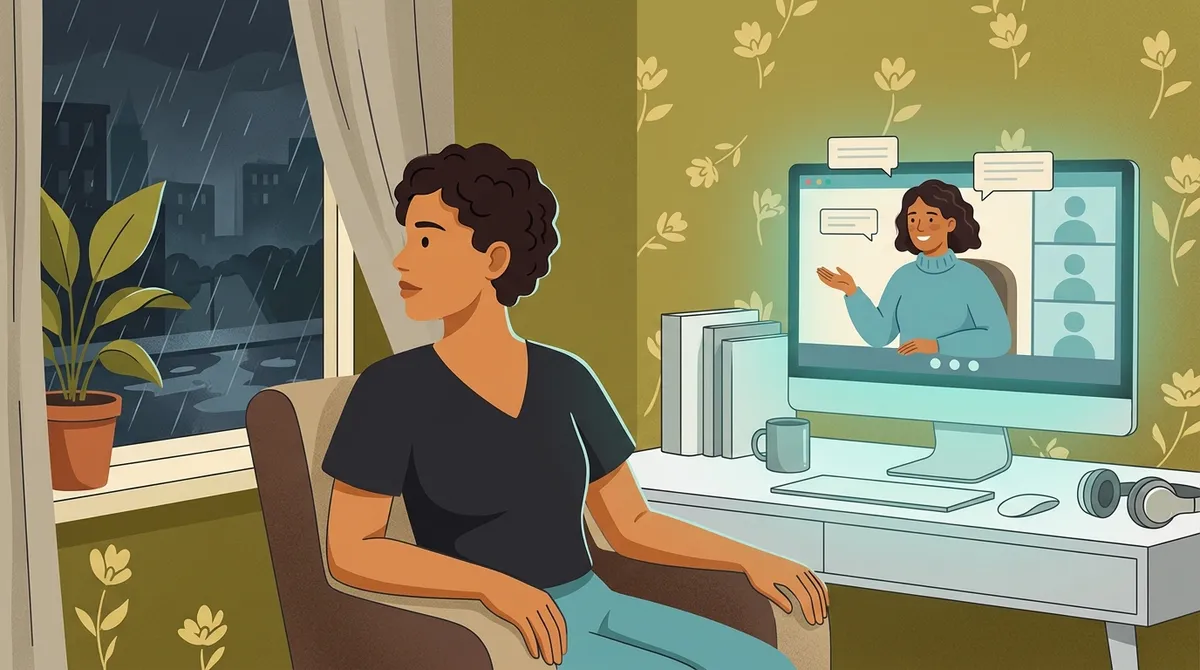
Mistake 4: Overlooking Virtual Therapy as a Real Option
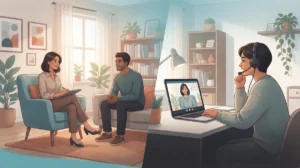
A lot of people searching for depression near me assume they must find someone local they can physically visit. But telehealth has completely changed the landscape of mental health care — and virtual therapy is just as effective as in-person for most people dealing with depression.
Here’s why virtual therapy deserves serious consideration:
- You can access care from anywhere in Florida — no commute, no traffic, no parking stress
- Sessions fit more easily into a busy work or school schedule
- It’s often easier to open up emotionally from the comfort of your own home
- Virtual options reduce barriers for people in rural areas or with limited transportation
- Many providers offer evening and weekend slots for telehealth appointments
Telehealth adoption expanded substantially after 2020, and in 2026, virtual behavioral health care is more robust than ever. Many providers now offer seamless hybrid models — in-person when you want it, virtual when you need it.
If you’ve never tried online therapy, explore what telehealth therapy in Florida looks like — it might surprise you. Gen Z adults and busy millennials especially tend to thrive in virtual therapy settings because of the convenience and accessibility. You can also check out why Brandon virtual therapy for adults is a game changer to understand the real benefits.
And for teens and adolescents dealing with depression, virtual options have been a lifeline. Virtual therapy for adolescents in Brandon, FL is a great resource for parents looking to support their kids.
Mistake 5: Giving Up After One Bad Experience
This one is heartbreaking to see. Someone finally works up the courage to try therapy, has a difficult experience with their first therapist, and then concludes that “therapy doesn’t work for me.” So they stop looking. They go back to struggling alone.
Here’s the truth: finding the right therapist is sometimes a process. Like any important relationship, the fit has to feel right. A good therapist-client connection is one of the strongest predictors of successful treatment outcomes.
If your first experience wasn’t a great fit, here’s what to do next:
- Reflect on what felt off. Was it the therapist’s style? Their communication? A lack of specialization in depression?
- Be specific in your next search. Look for a therapist who specializes in depression and uses evidence-based approaches like CBT, ACT, or EMDR.
- Schedule a free consultation. Many therapists offer a brief intro call so you can get a feel for the relationship before committing.
Margaret Deuerlein at West Florida Therapy is a licensed, caring psychotherapist with deep experience helping adults and adolescents work through depression. She takes time to truly understand each person’s experience and builds a personalized treatment plan around their goals. You can learn more about Margaret Deuerlein and her approach, or explore the therapy process to see what working together would look like from start to finish.
A free 15-minute consultation is available so you can ask questions and feel confident before your first session. Don’t let one difficult experience close the door on treatment that could genuinely change your life.
What to Expect When You Start Depression Treatment
Once you’ve found the right provider, knowing what to expect can ease a lot of anxiety about the process. Here’s a simple overview of how depression treatment typically unfolds:
- Initial consultation: A brief call or intake session to discuss your concerns, goals, and what you’re looking for in therapy.
- Assessment and planning: Your therapist will get to know your history and build a personalized treatment plan tailored to your needs.
- Ongoing sessions: Weekly or bi-weekly sessions where you develop coping skills, process emotions, and work through the root causes of your depression.
- Progress check-ins: Regular reviews of your progress so your treatment plan can be adjusted as you grow and heal.
Treatment doesn’t have to be scary or mysterious. It’s a structured, supportive process — and each session builds on the last. For a deeper look at different treatment modalities, explore what depression treatment options are available near you.
Additional Resources for Depression Support in Florida
Beyond individual therapy, there are several other resources worth knowing about as you navigate your search for depression near me:
- 988 Suicide & Crisis Lifeline — Call or text 988 anytime for free, confidential crisis support
- Primary care physicians — Your family doctor can screen for depression and provide referrals
- Community mental health centers — Often offer sliding-scale fees for those without insurance
- Support groups — Peer-led groups can complement individual therapy and reduce isolation
- SAMHSA’s helpline — 1-800-662-4357 for substance abuse and mental health service referrals
You can also explore additional mental health services through the Florida Department of Children and Families Substance Abuse & Mental Health page, which lists statewide resources. For broader guidance, the CDC’s Mental Health Resources page is a trustworthy starting point.
If you’re exploring related challenges alongside depression — like anxiety, trauma, or relationship difficulties — West Florida Therapy offers support for all of these. Check out resources on anxiety treatment, trauma therapy, and relationship problems to see how comprehensive care can address the full picture of your mental health.
You Deserve to Feel Better — Starting Now
Depression can make you feel like nothing will ever change. But that feeling is a symptom of the illness — not the truth. People recover from depression every single day, and with the right support, you can too.
Avoiding the five mistakes above puts you miles ahead in your search for depression near me. You know what to look for, what to ask, and when to reach out. Now it’s just a matter of taking that next step.
Whether you’re in Brandon, Tampa, Valrico, Riverview, or anywhere else across Florida, help is genuinely within reach. Visit us on Google — West Florida Therapy to read reviews, get directions, and see what others have experienced on their healing journey.
You don’t have to keep carrying this alone. Reach out to our team today to schedule your free 15-minute consultation and take the first step toward feeling like yourself again. Healing is possible — and it starts with one brave search.
FAQs
Q: How do I find the right depression therapist near me?
A: Start by looking for a licensed therapist (LCSW, LMHC, or similar) who specializes in depression and offers evidence-based approaches like CBT or ACT. Check that they accept your insurance and offer a free consultation — that first conversation can tell you a lot about whether the fit feels right for you!
Q: Can I get depression treatment online instead of in person?
A: Absolutely! Virtual therapy is just as effective as in-person sessions for most people with depression, and it offers much more flexibility. At West Florida Therapy, telehealth sessions are available throughout all of Florida — so you can access quality care from wherever you’re most comfortable.
Q: What should I do if my depression is getting worse?
A: Please don’t wait — reach out to a mental health professional as soon as possible. If you’re having thoughts of self-harm or suicide, contact the 988 Suicide & Crisis Lifeline immediately by calling or texting 988. The sooner you connect with support, the sooner the healing can begin, and you deserve that support now.
Q: How do I know if I need therapy or medication for depression?
A: Many people benefit from therapy alone, while others do best with a combination of therapy and medication. A licensed therapist can help assess your symptoms and guide you toward the right treatment plan — and if medication seems appropriate, they can refer you to a psychiatrist for an evaluation.
Q: Is there bilingual depression therapy available near me in Florida?
A: Yes! West Florida Therapy offers bilingual therapy in both English and Spanish, making it easier for Spanish-speaking adults to access quality depression care without language barriers. Sessions are available in person in Brandon, Florida, and via telehealth throughout the state.