
Key Takeaways
-
Behavioral therapy is a skills-based talk therapy that targets how thoughts, emotions, and behaviors connect, with goal-focused sessions and practice between visits rather than just venting.
-
Common approaches in Brandon include CBT for anxiety and depression, DBT for intense emotions, ACT for chronic worry, mindfulness-based therapy for stress, and EMDR for trauma.
-
Before choosing a therapist, confirm they are licensed in Florida, trained for your specific concern, and serve your age group, and ask about their approach and in-person versus telehealth options.
-
Verify insurance directly with both the clinic and your insurer, asking about copay, deductible, referral or prior authorization requirements, and out-of-pocket rates, since directory listings don't guarantee coverage.
-
Feeling comfortable with your therapist is a major factor in progress, so a short consultation call is a valuable way to gauge whether you feel safe and understood.
-
If you feel unsafe or in crisis, call or text 988 to reach the Suicide and Crisis Lifeline immediately; bilingual Spanish-speaking therapy is also available in Brandon for those who want it.
If you’ve been searching for behavioral therapy in Brandon, Florida, chances are something in your life feels heavy right now. Maybe it’s constant worry. Maybe it’s a mood that won’t lift, a relationship that feels stuck, or a teenager who seems to be struggling in silence. First, take a breath. Reaching out for help is a brave step, and you’re already taking it.
Behavioral therapy is a practical, skills-based way to understand your thoughts, feelings, and actions, and to change patterns that no longer serve you. In 2026, there are more ways than ever to get this kind of care in the Brandon area, from in-person visits to secure online sessions.
In this guide, we’ll walk through what behavioral therapy is, which approaches are available, how to pick a licensed therapist, and what the first few months can look like. Whether you’re an adult, a teen, or part of a couple, you’ll find friendly, clear answers here. And if you need a bilingual option, we’ll cover that too.

What Is Behavioral Therapy?
Behavioral therapy is a form of talk therapy that focuses on how your thoughts, emotions, and behaviors connect. The big idea is simple: when you change unhelpful habits and thinking patterns, you can feel better and function better.
In Brandon, the phrase “behavioral therapy” can mean a few different things. It might refer to regular outpatient counseling. It might mean care that includes a psychiatric provider. Or it might point to a more structured program. Services, eligibility, and clinician credentials vary from one provider to the next, so it helps to ask questions before you book.
It also helps to know that behavioral therapy is not just “venting.” Sessions are goal-focused. You and your therapist set clear targets, practice new skills, and check your progress along the way. If you’d like to learn more about the role of the clinician guiding that process, this overview of what a psychotherapist does is a great place to start.
Is Behavioral Therapy the Same as Counseling?
They overlap, but they aren’t identical. Counseling is a broad term for supportive talk-based care. Behavioral therapy usually uses specific, research-backed techniques and homework between sessions. Many Brandon providers blend both, depending on your needs.
What Can Behavioral Therapy Help With?
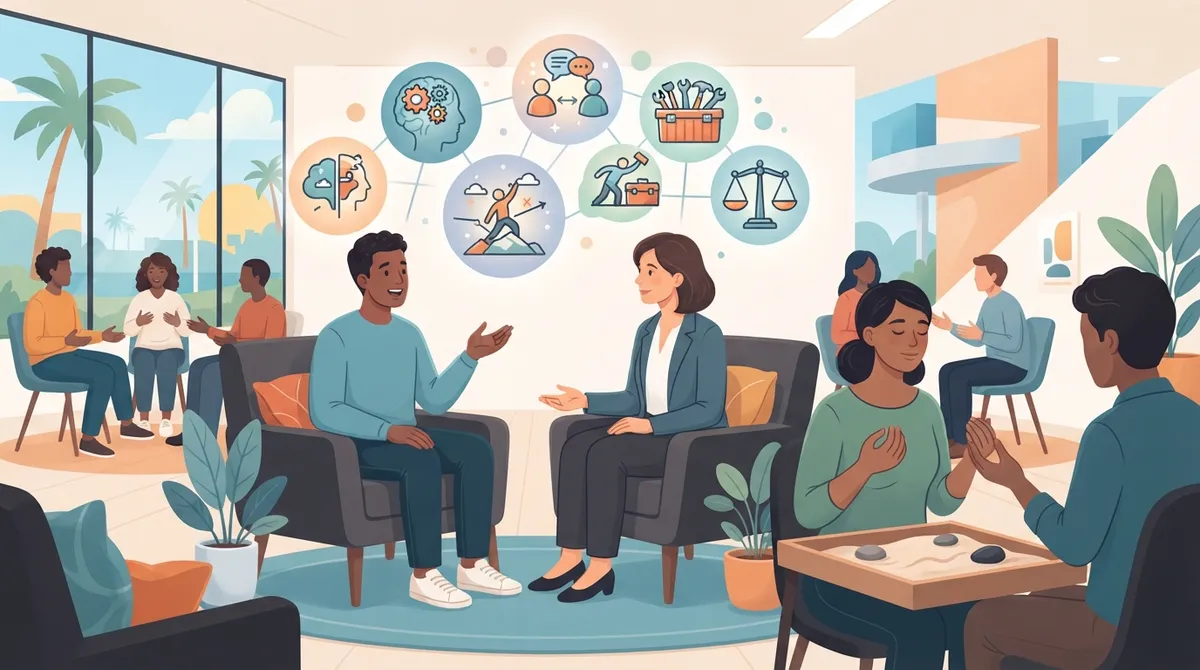
Behavioral therapy supports a wide range of concerns. Local clinics list care for anxiety, depression, ADHD, bipolar disorder, OCD, trauma, and more. Here are some common reasons people seek it out:
- Anxiety and panic: constant worry, racing thoughts, or sudden panic that feels out of nowhere
- Depression and low mood: feeling flat, tired, hopeless, or stuck
- Trauma and stress reactions: nightmares, flashbacks, or feeling on edge
- Relationship struggles: repeated arguments, distance, or broken trust
- Anger and emotional swings: reacting in ways you later regret
- School and work pressure: burnout, perfectionism, and overwhelm
If any of these sound familiar, you’re far from alone. Many people in the Brandon area carry the same worries, and therapy gives you tools to carry them differently. You can explore more on anxiety treatment, depression treatment, and trauma therapy if you’d like details on a specific concern.
Common Types of Behavioral Therapy Available in Brandon
Not every approach fits every person. A good therapist will match the method to your goals. Here are the approaches most often offered by local providers:
| Approach | What It Focuses On | Often Used For |
|---|---|---|
| Cognitive Behavioral Therapy (CBT) | Spotting and reshaping unhelpful thoughts and habits | Anxiety, depression, stress, OCD |
| Dialectical Behavior Therapy (DBT) | Emotion regulation, distress tolerance, and communication skills | Intense emotions, impulsivity, relationship stress |
| Acceptance and Commitment Therapy (ACT) | Accepting hard feelings and acting on your values | Anxiety, chronic worry, life transitions |
| Mindfulness-Based Therapy | Staying present and calming the nervous system | Stress, panic, overwhelm |
| Trauma-Informed Care and EMDR | Processing painful memories safely | Trauma, PTSD, attachment wounds |
Want to go deeper? Here are some helpful reads on cognitive behavioral therapy, dialectical behavior therapy, acceptance and commitment therapy, and EMDR treatment.
Outpatient Therapy, Intensive Programs, and Psychiatric Care
It’s easy to get confused by all the terms. Here’s a simple breakdown of the levels of care you may come across in the Brandon area:
- Outpatient therapy: You meet with a therapist weekly or every other week, then go home. This fits most people dealing with anxiety, low mood, stress, or relationship concerns.
- Intensive outpatient programs (IOP): These offer more hours of treatment each week, often in a group setting. They can help when symptoms are more severe or when substance use is involved.
- Psychiatric care: A psychiatric provider can evaluate whether medication might help. Many people use medication and therapy together.
Some local organizations offer several of these services in one place. Others focus on therapy alone. For substance use or co-occurring needs, outpatient and intensive programs also exist in Brandon, so confirm current availability and eligibility directly with the provider. You can also browse state resources through the Florida Department of Children and Families for substance abuse and mental health services.
How to Find a Licensed Behavioral Therapist in Brandon
Choosing a therapist is a personal decision, and it’s okay to take your time. Here’s a simple step-by-step approach:
- Clarify your goal. Are you coping with anxiety, healing from trauma, or fixing communication in your relationship? Knowing this narrows your search.
- Check licensure. Make sure the clinician is licensed in Florida and trained for your specific concern.
- Ask about approach. Find out if they use CBT, DBT, ACT, EMDR, or another method that suits you.
- Confirm who they serve. Some therapists work with adults only. Others see teens, couples, or families.
- Ask about format. Do they offer in-person sessions, telehealth, or both?
- Verify cost and insurance. A directory listing is not a guarantee of coverage, so call both the clinic and your insurer.
- Book a consultation. A short first call helps you sense whether you feel safe and understood.
That last step matters more than most people realize. Research and experience both point to the same truth: feeling comfortable with your therapist is a big part of making progress. For more help with this process, take a look at how to find the right therapy in Brandon.
Behavioral Therapy for Different Life Stages
Every stage of life brings its own pressures. Here’s how behavioral therapy can support different groups in Brandon.
Teens and Adolescents
Teenage years can bring school stress, social anxiety, family tension, and big emotions. Behavioral therapy gives teens practical tools to handle all of it. Many families choose a mix of in-person and online sessions to fit busy school schedules. Parents often play a supportive role, too. If you’re weighing options, this guide to virtual therapy for adolescents can help.
Young Adults and Millennials
Young adults often juggle work, money, relationships, and big life changes all at once. Burnout and isolation are common. Skills-based therapy offers a clear plan, which many people in this age group appreciate. If cost is on your mind, ask about payment options and insurance when you reach out.
Couples
Couples therapy uses behavioral and emotion-focused methods to improve communication, rebuild trust, and bring back closeness. You can read more about couples therapy or explore the Gottman Method if you’d like to see how research-based relationship care works.
Spanish-Speaking Adults
Talking about your feelings is hard enough. Doing it in your second language can make it even harder. Bilingual therapy lets you express yourself fully, in the language you think and feel in. If this matters to you, look for a provider who offers sessions in both English and Spanish. Here’s a helpful guide on finding a Spanish-speaking therapist in Brandon.
In-Person or Online: Which Is Right for You?
Both formats can work well. The best choice depends on your comfort, schedule, and needs.
| Factor | In-Person | Telehealth |
|---|---|---|
| Convenience | Requires travel to the office | Join from home or anywhere private |
| Connection | Face-to-face presence | Video-based, still personal |
| Best for | Those who want a dedicated space away from home | Busy schedules, students, and statewide access |
| Privacy needs | Private office setting | Requires a quiet, private spot |
Some people start online and move to in-person later, or the other way around. There’s no wrong answer. To learn more, see this comparison of in-person and telehealth therapy in Brandon, or read about in-person therapy in Brandon, Florida and telehealth therapy across Florida.
What to Expect From the Process
Starting therapy can feel like a big leap. Knowing the steps can make it much easier. At West Florida Therapy, the process is simple and supportive:
- Start with a conversation. A free 15-minute consultation lets you share your concerns, ask questions, and see if it feels like a good fit.
- Build a personalized plan. Together, you and your therapist create a treatment plan around your goals and experiences.
- Attend consistent sessions. Most people meet weekly or every other week, in person or by telehealth. Each session builds on the last.
- Track progress and adjust. Your therapist checks in on how you’re doing, celebrates wins, and adjusts the plan as needed.
You can read more about our process on our website. And if you’re curious about the clinician behind the care, you can meet Margaret Deuerlein, a caring psychotherapist who helps clients work through anxiety, depression, trauma, and relationship struggles with warmth and practical tools.
Insurance, Cost, and Payment Questions
Money questions are real, and they shouldn’t stop you from getting help. Costs depend on the clinician, your plan, and the type of service. Because listings can change, always confirm benefits directly.
Before you book, ask these questions:
- Is the therapist in-network with my insurance plan?
- What is my copay and deductible for outpatient mental health care?
- Do I need a referral or prior authorization?
- What are the out-of-pocket rates if I choose not to use insurance?
- Do you accept HSA or FSA cards?
West Florida Therapy works with several major insurance carriers and also offers out-of-pocket options for clients who prefer extra privacy and flexibility. You can review the current payment options or contact us with questions about your specific plan.
Tips to Get the Most Out of Behavioral Therapy
Therapy works best when you and your therapist are a team. A few small habits can make a big difference:
- Practice between sessions. Skills grow with repetition, just like exercise.
- Be honest, even when it’s uncomfortable. Your therapist is there to help, not judge.
- Set small, clear goals. Tiny wins build real momentum.
- Give it time. Many people notice shifts within a few sessions, but deeper change takes patience.
- Speak up if something isn’t working. A good therapist welcomes feedback.
For extra support between visits, the CDC’s mental health resources and the Florida Department of Health’s mental health links offer helpful, reliable information. And if you ever feel unsafe or in crisis, call or text 988 to reach the Suicide and Crisis Lifeline right away.
Taking Your First Step Toward Feeling Better
Finding the right behavioral therapy in Brandon, Florida doesn’t have to feel scary. With so many approaches, formats, and providers, there’s a path that can fit your life. What matters most is finding someone who listens, uses proven methods, and makes you feel safe.
You don’t have to keep carrying anxiety, pain, or stress on your own. Real change is possible, and it often starts with a single phone call. West Florida Therapy offers in-person sessions in Brandon and telehealth across Florida, with bilingual English and Spanish support and a free 15-minute consultation.
Ready to talk? Contact us today to schedule your free consultation. You can also visit us on Google — West Florida Therapy to see our Brandon location and read what clients are saying. We’d love to help you take that first brave step.
FAQs
Q: What does behavioral therapy treat, and is it the same as counseling?
A: Behavioral therapy helps with concerns like anxiety, depression, trauma, OCD, ADHD, anger, and relationship stress. It’s closely related to counseling, but it usually uses specific, research-backed skills and practice between sessions. Many Brandon therapists blend both styles to fit your needs.
Q: How do I find a licensed behavioral therapist in Brandon, Florida?
A: Start by checking that the clinician is licensed in Florida and trained in your area of concern. Then ask about their approach, who they serve, and whether they offer in-person or online sessions. A free consultation call is a great way to see if it feels like a good fit.
Q: Can I get online behavioral therapy from a Brandon provider?
A: Yes! Many Brandon providers offer secure telehealth sessions, which is handy for busy schedules, students, and anyone who prefers home. West Florida Therapy offers telehealth across Florida along with in-person visits in Brandon.
Q: Does behavioral therapy in Brandon accept my insurance?
A: It depends on the clinician and your plan. Insurance participation and out-of-pocket costs vary, and a website listing isn’t a guarantee of coverage. Call both the clinic and your insurer to confirm your benefits, copay, deductible, and any authorization rules.
Q: What’s the difference between outpatient therapy, intensive outpatient care, and psychiatric care?
A: Outpatient therapy means regular sessions, usually weekly or every other week, while you live your normal life. Intensive outpatient programs offer more weekly hours for higher needs, and psychiatric care focuses on evaluation and medication management. Many people combine therapy with psychiatric support.