Key Takeaways
-
DBT is a skills-based therapy that blends acceptance and change, teaching four core areas: mindfulness, distress tolerance, emotion regulation, and interpersonal effectiveness.
-
Comprehensive DBT typically includes individual therapy, a skills group, between-session coaching, and therapist consultation, which differs from DBT-informed therapy that borrows only some skills.
-
Ask providers about their DBT training, whether they follow a structured model, which ages they treat, skills group schedules, between-session support, fees, and telehealth options before starting.
-
Directory listings for Brandon-area DBT providers change often, so contact each practice directly to confirm current availability, group schedules, and openings.
-
Skills training is usually organized into modules that take about six months to cover, and some relief may come early, but deeper change requires steady practice over time.
-
If you or someone you love is in immediate danger or crisis, call or text 988 in the United States, or call 911 for a life-threatening emergency, since DBT is not a substitute for emergency care.
If your emotions feel like a wave that knocks you over before you can catch your breath, you are not alone. Many people in the Tampa Bay area feel this way. Stress at work, tension at home, school pressure, and old hurts can pile up fast. The good news? There is a skills-based approach that can help. Dialectical behavior therapy in Brandon, Florida gives you practical tools you can use right away, not just a place to talk.
Whether you are a teen dealing with big feelings, a young adult juggling school and life, or a parent trying to support your family, DBT may be worth a closer look. In this friendly guide, we will walk through what DBT is, how it works, what to ask a provider, and how to find the right fit. We will keep it simple and honest, so you can feel more confident about taking the next step.
What Is Dialectical Behavior Therapy and How Does It Work?
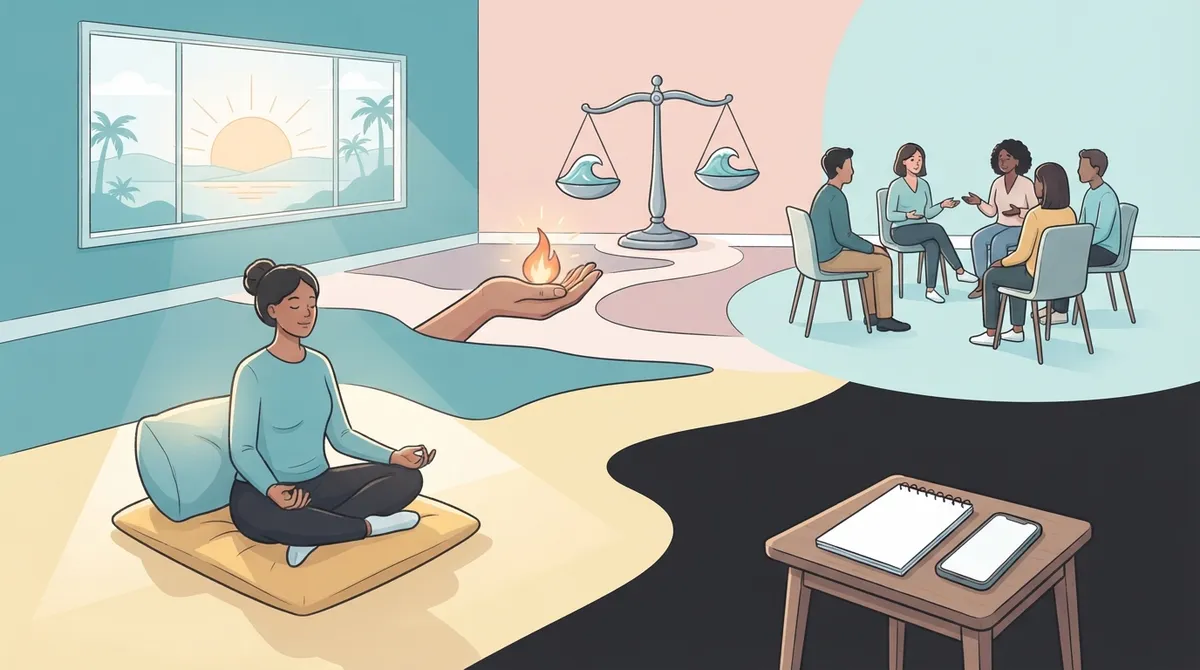
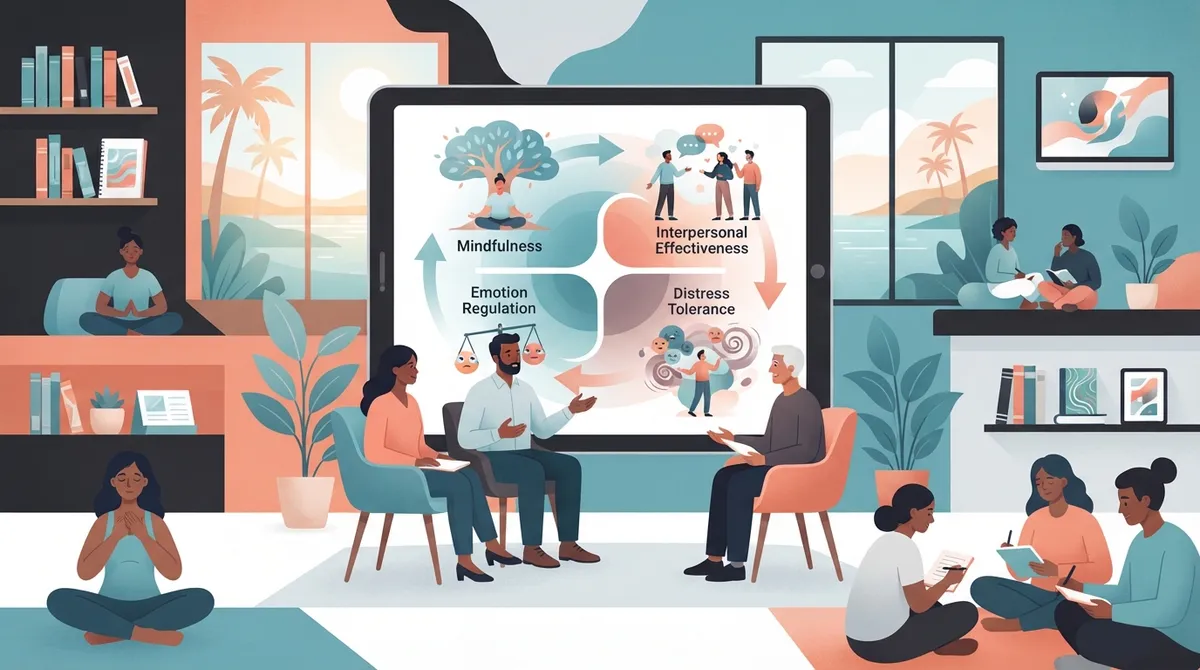
Dialectical behavior therapy, often called DBT, is a structured form of psychotherapy. It blends two ideas that might seem opposite at first: acceptance and change. You learn to accept yourself as you are right now, while also building new skills to make life better.
That blend is where the word “dialectical” comes from. It simply means holding two truths at once. For example, “I am doing the best I can” and “I can also learn new ways to cope.” Both can be true, and DBT helps you live in that space without shame.
DBT is commonly used to help people manage intense emotions, handle distress, and improve relationships. Many people choose it when they feel overwhelmed, reactive, or stuck in painful patterns. Our guide on using DBT for better mental health and emotional balance offers even more background.
What Are the Four Core DBT Skill Areas?
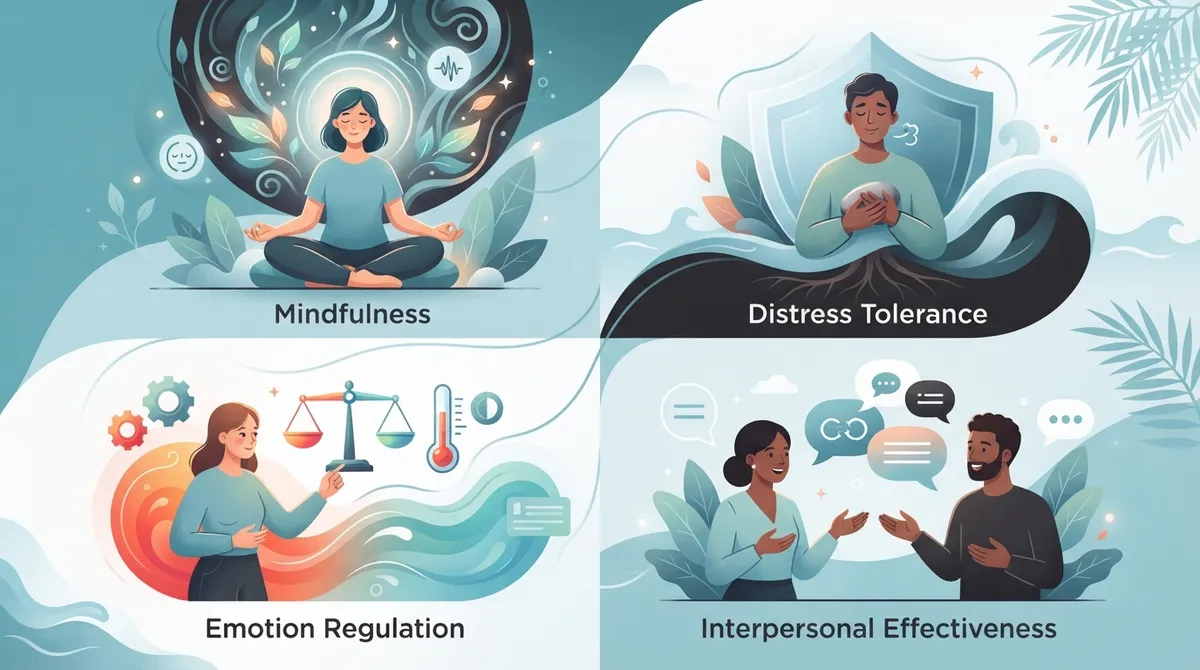
DBT skills are usually organized into four areas. Think of them as four tools in a toolbox. You may use one more than the others, depending on the day.
| Skill Area | What It Teaches | Everyday Example |
|---|---|---|
| Mindfulness | Staying present without judging yourself | Noticing a racing mind and gently returning to your breath |
| Distress Tolerance | Getting through a crisis without making it worse | Using a cold-water splash or paced breathing during a panic spike |
| Emotion Regulation | Understanding and easing strong feelings | Naming what you feel and checking if the facts fit the feeling |
| Interpersonal Effectiveness | Asking for what you need while keeping relationships strong | Setting a calm boundary with a coworker or family member |
These skills build on each other. Mindfulness helps you notice what is happening. Distress tolerance helps you get through the hard moment. Emotion regulation helps you understand the feeling. Interpersonal effectiveness helps you handle the people involved.
Why Skills Matter More Than Insight Alone
Many of us have heard, “Just calm down.” If only it were that easy! DBT recognizes that knowing why you feel something is not always enough to change it. You also need real tools. That is why DBT feels so hands-on. You practice, you try things out, and you keep what works.
Who Can Benefit From DBT in Brandon?
DBT was first created for people with intense, hard-to-manage emotions. Today, it is used more widely. Many people find the skills helpful when life feels like too much. Here are some common reasons people look into it:
- Feeling emotions very strongly or swinging quickly between moods
- Struggling with anxiety, panic, or constant worry
- Dealing with depression or feeling numb and stuck
- Having conflict in close relationships
- Acting on impulse and regretting it later
- Coping with the long-term effects of stress or trauma
If you recognize yourself in this list, take a breath. Needing support is not a weakness. It is a smart move. You can also read more about anxiety treatment and mood issues to see how different approaches fit different needs.
DBT for Teens and Young Adults
Teens and young adults face a lot right now. School pressure, social media, friendships, and family stress can feel huge. DBT skills are often easy for younger people to pick up because they are practical and clear. If you are a parent, you may also want to explore our article on virtual therapy for adolescents in Brandon, FL.
DBT for Adults Under Stress
Adults in their late twenties through early forties often carry a heavy load. Work demands, money worries, relationships, and big life changes all stack up. DBT can offer calm, repeatable steps for the moments when stress spikes.
What Does a Full DBT Program Include?
This part matters a lot. Not every therapist who uses DBT techniques offers the full DBT model. Knowing the difference helps you choose well.
A comprehensive DBT program often includes several pieces working together:
- Individual therapy: One-on-one sessions to work on your personal goals and challenges.
- Skills training group: A class-style group where you learn and practice the four skill areas.
- Between-session coaching: Some programs offer support between appointments so you can use skills in real moments.
- Therapist consultation team: Providers meet with each other to stay on track and support their work.
Some programs include all four. Others include only some. That is okay, but you should know what you are getting. A therapist who uses “DBT-informed” techniques may borrow helpful skills without offering the full structured program. Neither is wrong, but they are different. Ask questions so there are no surprises.
What Is the Difference Between Comprehensive DBT and DBT-Informed Therapy?
Here is a quick side-by-side look to make this easier to understand.
| Feature | Comprehensive DBT | DBT-Informed Therapy |
|---|---|---|
| Structure | Follows a set treatment model | Uses select DBT skills within another approach |
| Skills group | Often included | Usually not included |
| Between-session coaching | May be offered | Rarely offered |
| Time commitment | Often longer and more structured | Often more flexible |
| Best for | Intense emotions and ongoing struggles | People who want some skills alongside regular therapy |
Neither option is automatically better. The right choice depends on your needs, your goals, and your schedule. A good provider will help you figure out which path makes sense.
Where Can You Find DBT in Brandon, Florida?
The Brandon area has several providers who include DBT in their work. Local directory listings describe individual DBT, skills groups, and some online options. One Brandon-area listing, for example, describes individual DBT along with a skills group, and notes that group participation requires being in individual DBT therapy at the same time.
Here is an important reminder. Directory listings change often. Schedules, group times, and openings can shift. Always contact a practice directly to confirm what is available now. Do not rely only on an online listing.
If you want to see how local care options compare, our guides on how to find dialectical behavior therapy in Brandon and our simple guide to Brandon dialectical behavior therapy are great places to keep reading.
How West Florida Therapy Can Support You
At West Florida Therapy, we offer individual and couples therapy for adults and adolescents. We provide in-person sessions at our Brandon office and virtual sessions anywhere in Florida. We also offer bilingual services in English and Spanish, which means you can share your story in the language that feels most natural.
Margaret Deuerlein is a caring psychotherapist who works with clients facing anxiety, depression, trauma, and relationship stress. You can learn more about her approach on our About Margaret Deuerlein page. We focus on warm, steady support and a plan that fits your life. If you are curious about emotional balance tools, you can also read about our approach to emotional resilience and dialectical behavioral therapy.
We want you to feel heard from the very first conversation. If you would like to see what others say about us, you can read West Florida Therapy reviews on Google.
What Should You Ask a Provider Before Starting DBT?
Choosing a therapist is a big decision. Do not be shy about asking questions. A good provider will welcome them. Here are some helpful ones to bring to your first call:
- What DBT training and experience do you have?
- Do you follow a structured DBT model, or do you use DBT-informed skills?
- Which ages and concerns do you usually treat?
- Is there a skills group, and what is the schedule?
- Do you offer between-session support?
- What are your fees, and do you take my insurance?
- Can I meet by telehealth if I need to?
- How do you track progress and handle safety concerns?
You can also read our tips on mistakes to avoid when choosing a therapist in Brandon. Feeling comfortable with your therapist matters just as much as their credentials.
What Is the Step-by-Step Process for Getting Started?
Starting therapy does not have to feel scary. Here is a simple path many people follow:
- Start with a conversation. A short phone consultation helps you share your concerns and ask questions. At West Florida Therapy, we offer a free 15-minute consultation.
- Build your personalized plan. Together, you and your therapist set goals and decide which skills and approaches fit best.
- Meet consistently. Most people meet weekly or every other week, in person or by telehealth.
- Check in and adjust. Your therapist reviews your progress and changes the plan as needed.
You can see more about how this works on our Our Process page.
How Long Does DBT Usually Take?
This is one of the most common questions, and the honest answer is: it depends. Skills training is often organized into modules. One Brandon-area provider listing describes a skills group cycle that takes about six months to cover all the modules, with a suggestion to repeat the cycle. Confirm current details with any provider, since programs can change.
Many people feel some relief early on, especially after learning a few calming tools. Deeper change usually takes steady practice over time. Be patient with yourself. Learning new skills is like learning a new language. It gets easier the more you use it.
Can You Do DBT by Telehealth in Florida?
Yes, many people do. Telehealth can be a great fit if you have a busy schedule, limited transportation, or just feel more comfortable at home. It can also help if you live outside Brandon but still want support. West Florida Therapy offers virtual sessions across Florida. You can learn more on our telehealth therapy in Florida page.
If you prefer face-to-face care, our in-person therapy in Brandon, Florida option may be the better match. Many people also find that mixing both works well.
What About Cost and Insurance?
Cost is a real concern, and we get it. We work with several insurance providers, including Aetna, Cigna, Florida Blue, Optum, Oscar, and United Health Care. We also offer out-of-pocket options, and we accept major credit cards, HSA, and FSA accounts.
Because coverage varies, we suggest calling your insurance company to check your mental health benefits, copays, and deductible. You can find more on our payment options page. Any provider you consider should be able to explain fees clearly before you begin.
When Should You Get Urgent Help Instead?
DBT is a wonderful tool, but it is not a replacement for emergency care. If you or someone you love is in immediate danger or a mental health crisis, call or text 988 in the United States. For a life-threatening emergency, call 911. You deserve fast support, and help is available right now.
For more trusted information, you can explore these helpful resources: CDC mental health resources, Florida Department of Health mental health links, and Florida substance abuse and mental health services.
Take Your Next Step Toward Feeling Better
Big emotions do not have to run your life. With the right skills and the right support, you can learn to ride the wave instead of getting pulled under. DBT offers a clear path, and you do not have to walk it alone.
If you are ready to explore DBT in Brandon, Florida, we would love to hear from you. Reach out to our team to schedule your free 15-minute consultation, and let us help you take that first brave step. You are worth the support.
FAQs
Q: What is dialectical behavior therapy, and who is it for?
A: DBT is a skills-based therapy that blends acceptance and change. It teaches mindfulness, distress tolerance, emotion regulation, and interpersonal skills. Many teens and adults use it when emotions feel too big to manage alone.
Q: Does DBT in Brandon include individual therapy and skills groups?
A: Some Brandon-area providers offer both individual DBT and a skills group, and some groups require you to be in individual therapy too. Offerings differ from practice to practice, so call ahead to confirm what is available and what the current schedule looks like.
Q: Can I get DBT by telehealth in Florida?
A: Yes, many providers offer DBT-style skills work through secure video sessions. West Florida Therapy offers virtual therapy across Florida, along with in-person visits in Brandon, so you can pick what feels most comfortable.
Q: Does insurance cover DBT therapy in Brandon, Florida?
A: Coverage depends on your plan and your provider. We work with several insurers, including Aetna, Cigna, Florida Blue, Optum, Oscar, and United Health Care. It is a good idea to call your insurance company to check your mental health benefits before you begin.
Q: How do I choose a qualified DBT therapist?
A: Ask about DBT training, whether they follow a structured DBT model, which ages and concerns they treat, and how they handle progress and safety. Most of all, choose someone you feel comfortable talking with. A free consultation is a great way to see if it feels right.