

Key Takeaways
-
Therapists help people understand their feelings, thoughts, and behaviors through conversation, skill-building, and a plan tailored to each person, acting more like a guide than someone who does the work for you.
-
A typical 45-60 minute session includes a check-in, choosing one focus goal, practicing skills or exploring a issue, and wrapping up with a small step to try before the next visit.
-
You don't need to be in crisis to start therapy; common concerns include anxiety, depression, trauma, grief, relationship conflict, stress, and low self-esteem.
-
Therapy and medication are different kinds of care: most therapists don't prescribe, so psychiatrists handle medication while therapists can work alongside them.
-
Therapy comes in many approaches, such as CBT for anxiety and depression, DBT for intense emotions, and EFT for couples, so a good therapist matches the method to the person.
-
Therapy is worth considering if worry or sadness lasts for weeks, sleep or energy changes, or relationships are strained; you can ask prospective therapists about credentials, approach, fees, and how they measure progress.
Maybe you have a lot on your mind lately. Work stress, school pressure, a rocky relationship, or a heavy feeling you can’t name. And somewhere in the back of your head, a quiet question keeps popping up: what does a therapist do, exactly?
It’s a great question to ask. Many people picture a couch, a notepad, and someone saying “And how does that make you feel?” Real therapy looks a lot warmer and more practical than that.
In this guide, we’ll walk through what a therapist does, what happens in a session, and how therapy can help. You’ll also learn how the different titles work. Whether you’re a teen, a young adult, a busy millennial, or part of a couple, you’ll find something useful here. And if English or Spanish feels more comfortable for you, that matters too. Let’s get started.

What Does a Therapist Do? The Short Answer
A therapist is a trained mental health professional who helps people understand their feelings, thoughts, and behaviors. They do this through conversation, skill-building, and a plan made just for you.
In simple terms, a therapist does these things:
- Listens without judgment so you can say what’s really going on.
- Assesses your concerns, history, and goals.
- Teaches practical skills for stress, worry, anger, and low mood.
- Guides you through tough experiences at a pace that feels safe.
- Tracks progress and adjusts the plan as you grow.
- Connects you with other care when needed, like a medical provider.
Think of a therapist as a trained guide on a hiking trail. They don’t carry you up the mountain. They help you read the map, pack the right gear, and keep going when the path gets steep.
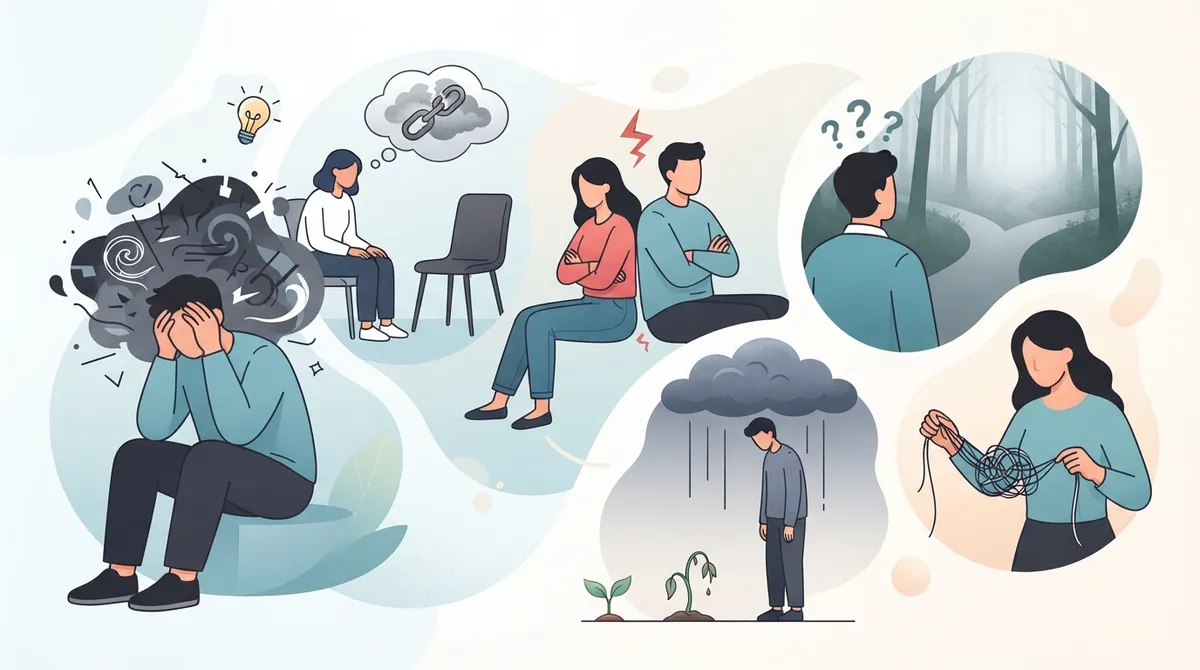
What Problems Can a Therapist Help With?
Therapists work with many everyday and serious struggles. You don’t need to be in a crisis to go. Common concerns include:
- Anxiety, worry, and panic. See our guide on anxiety signs, types, and treatment options.
- Depression, low motivation, and feeling stuck.
- Trauma and painful past experiences.
- Grief and big life changes.
- Relationship conflict and communication problems.
- Stress from work, school, or family life.
- Low self-esteem and self-doubt.
- Anger and mood swings.
The need is real and common. According to SAMHSA’s 2024 National Survey on Drug Use and Health, about 22.9% of U.S. adults, or roughly 60.1 million people, received mental health treatment that year. So if you’re thinking about therapy, you’re in very good company.
What Happens in a Typical Therapy Session?
Most sessions last about 45 to 60 minutes. Each one has its own flow, but they often include these parts:
- A check-in. You share how your week went and what’s on your mind.
- A focus. You and your therapist pick one topic or goal to work on.
- Skill practice or deeper exploration. You might learn a coping tool, look at a thought pattern, or process a hard memory.
- A wrap-up. You review what you learned and plan what to try before the next visit.
Your therapist won’t pressure you to share more than you’re ready to. Good therapy moves at a pace that feels safe. You can also say “I’m not ready to talk about that yet,” and a caring therapist will respect it.
What Happens at Your First Appointment?
The first visit can feel nerve-racking, so here’s what to expect. It’s mostly a getting-to-know-you conversation. For more detail, our guide on what to expect at your first therapy session walks through it step by step.
Here are a few things that usually happen:
- You talk about what brought you in and what you hope to change.
- Your therapist asks about your history, daily life, sleep, and support system.
- You learn about privacy and confidentiality rules.
- You ask any questions you have about fees, schedule, and approach.
- You decide together whether it feels like a good fit.
Want to get ready ahead of time? Try our tips on how to prepare for a therapy appointment.
The Therapy Process From Start to Finish
Therapy isn’t random. It follows a clear path. At West Florida Therapy, the process looks like this:
- Start with a conversation. A brief phone consultation helps you share your concerns and goals. It’s also a chance to ask questions and see if the fit feels right. The first 15 minutes are free.
- Build your personalized plan. You and your therapist create a plan based on your experiences, challenges, and goals.
- Get consistent support. You meet weekly or every other week, in person or by telehealth. Each session builds on the last.
- Track progress and adjust. Your therapist checks in on growth, celebrates wins, and changes the plan when needed.
You can learn more about our process and how sessions are structured.
Common Types of Therapy Therapists Use
There is no one-size-fits-all approach. A good therapist matches the method to the person. Here are some well-known options.
| Approach | What It Focuses On | Often Used For |
|---|---|---|
| Cognitive Behavioral Therapy (CBT) | Changing unhelpful thoughts and habits | Anxiety, depression, stress |
| Dialectical Behavior Therapy (DBT) | Emotion control, calm under stress, healthy relationships | Intense emotions, mood swings |
| Trauma-focused therapy | Processing painful past events safely | Trauma, PTSD symptoms |
| Emotionally Focused Therapy (EFT) | Rebuilding emotional connection | Couples and relationship distress |
| Schema Therapy | Deep, long-standing life patterns | Repeated relationship or self-worth struggles |
| Mindfulness-based approaches | Staying present and calming the body | Stress, worry, sleep trouble |
Want to dig deeper? Read about cognitive behavioral therapy, explore DBT for emotional balance, or see which type of therapy is best for you.
Individual, Couples, and Family Sessions
Therapy comes in different formats, depending on your needs.
Individual Therapy
This is one-on-one time with your therapist. It works well for anxiety, depression, trauma, life changes, and stress. Many adults and teens start here. Our article on how individual therapy transforms adult lives shares what progress can look like.
Couples Therapy
Couples therapy helps partners talk better, fight fairly, and reconnect. Both people are in the room, and the therapist helps you both feel heard. If you and your partner keep having the same argument, couples therapy can break the loop. Not sure if it’s time? Here are 13 signs couples therapy can help.
Therapy for Teens
Teenagers face school pressure, social worry, and family stress. A therapist gives them a private, judgment-free space to talk. Parents can learn what to expect in our guide to adolescent therapy.
SAMHSA’s 2024 survey of treatment facilities found that 91.8% offered individual psychotherapy, 83.9% offered group therapy, and 71.8% offered couples or family therapy. These figures show how common each format is.
Therapist, Psychologist, Psychiatrist, or Counselor?
These titles can be confusing. “Therapist” is a broad word, not one single license. Several kinds of trained professionals provide therapy, and rules vary by profession and by state.
| Title | What They Do | Can They Prescribe Medication? |
|---|---|---|
| Licensed therapist or counselor | Provides talk therapy and teaches coping skills | No |
| Psychologist | Provides therapy and psychological testing | Generally no, with limited exceptions by state |
| Psychiatrist | Medical doctor who diagnoses and manages medication | Yes |
| Clinical social worker | Provides therapy and connects clients to community resources | No |
Therapy and medication are different kinds of care. Some people use one, and some use both. Not sure which path fits? This guide can help you decide whether to see a therapist or psychiatrist. You can also read about therapy versus counseling and what a psychotherapist does.
Meet Margaret Deuerlein: A Caring Psychotherapist
At West Florida Therapy, you’ll work with Margaret Deuerlein, a caring psychotherapist who helps adults and adolescents with anxiety, depression, trauma, relationship struggles, and more. Her approach is warm, steady, and focused on you. You are never rushed, and you are never judged.
Margaret offers individual therapy for adults and teens, as well as couples therapy. She is licensed and certified, and bilingual in English and Spanish. You can learn more on her page, About Margaret Deuerlein.
In-Person or Online: Where Does Therapy Happen?
You have options. In-person sessions are available at the office in Brandon, Florida. Telehealth sessions are available to anyone across Florida, from the comfort of home.
Telehealth has become very common. In 2024, about 12.8% of U.S. adults, or roughly 33.4 million people, received mental health treatment through telehealth, according to SAMHSA. It’s a great fit for busy schedules, travel, and people who feel more relaxed at home.
Not sure which is right for you? Compare in-person versus telehealth therapy, or learn how telehealth therapy works. Both formats can be effective when the match between you and your therapist is strong.
Bilingual Therapy: Care in Your Own Language
Talking about feelings is hard enough. Doing it in a second language can make it harder. Many feelings sound different, or feel truer, in the language you grew up with.
That’s why bilingual care matters. West Florida Therapy offers sessions in both English and Spanish, so you can speak freely and be understood. If you’re looking for support in Spanish, read how to find a Spanish-speaking therapist.
How Do You Know It’s Time to See a Therapist?
You don’t need to hit rock bottom first. Therapy can help with stress and growth, too. You might consider it if:
- Worry or sadness lasts for weeks and won’t lift.
- Sleep, appetite, or energy have changed.
- You feel stuck, numb, or overwhelmed.
- You and your partner keep having the same fight.
- You pull away from friends and family.
- Your teen seems withdrawn, anxious, or very stressed.
Our guides on mental health warning signs and when to see a therapist can help you decide. Tools like meditation can support you along the way, too.
In 2024, 52.1% of U.S. adults with any mental illness received treatment, according to SAMHSA. That means nearly half did not. If you’ve been waiting, reaching out is a brave and smart step.
How Often Do You Go, and How Long Does It Take?
Most clients meet weekly or every other week. Weekly sessions often build momentum faster. Every other week can work well later, once you’ve gained steady skills.
How long therapy lasts depends on your goals. Some people feel better in a few months. Others stay longer to work through deeper patterns. Your therapist will check in on progress along the way. For more, see how long therapy takes to work.
Privacy, Boundaries, and Trust
Trust is the heart of therapy. Therapists keep what you share private. There are legal and safety exceptions, such as concerns about serious harm, and these vary by state. Your therapist will explain them at the start.
Therapists also keep professional boundaries. That keeps the focus on you and your growth. Feel free to ask any prospective therapist about their credentials, experience, approach, fees, and how they measure progress. A good therapist welcomes those questions.
For broader support, Florida offers public resources too. You can browse Florida Department of Health mental health links, explore Florida’s substance abuse and mental health services, or read the CDC’s mental health resources. If you are ever in crisis, call or text 988, the Suicide and Crisis Lifeline, any time.
What Does Therapy Cost?
Cost is a real concern, and that’s okay. West Florida Therapy offers flexible options. Many clients choose out-of-pocket payment for privacy and flexibility, using credit cards, HSA, or FSA accounts. The practice is also in-network with several major insurance plans. We recommend checking with your insurance carrier about your mental health benefits, copays, and deductible. You can read more on payment options, or see answers about insurance coverage.
Take the Next Small Step
So, what does a therapist do? They listen, guide, teach, and walk beside you while you build a calmer, stronger life. You don’t have to carry anxiety, trauma, or pain alone.
If you’re in the Brandon area, you can see what neighbors say about us: Visit us on Google — West Florida Therapy. Ready to talk? Contact us to set up your free 15-minute consultation with Margaret. One brave step is all it takes to begin. You’ve got this, and you don’t have to do it alone.
FAQs
Q: What does a therapist do in a typical session?
A: A therapist checks in on how you’re doing, helps you focus on one goal, and teaches or practices helpful skills with you. Sessions usually last 45 to 60 minutes. You’ll leave with a better understanding and often a small step to try before next time.
Q: What kinds of problems can a therapist help with?
A: Therapists help with anxiety, depression, trauma, grief, stress, relationship conflict, low self-esteem, and big life changes. You don’t have to be in crisis to start. Many people go simply because they want to feel more like themselves.
Q: Do therapists prescribe medication?
A: Most therapists do not prescribe medication, because therapy and medication are two different kinds of care. A psychiatrist or other prescribing provider handles medication. Your therapist can work alongside them if you need both.
Q: Is online therapy as effective as in-person therapy?
A: For many people, online therapy works well, especially when you feel comfortable with your therapist. The best choice depends on your needs and comfort. West Florida Therapy offers in-person sessions in Brandon and telehealth across Florida, so you can pick what suits you.
Q: How do I know if I should see a therapist?
A: Consider it if worry, sadness, or stress lasts for weeks, affects your sleep or relationships, or just feels too heavy to carry alone. You don’t need a crisis to deserve support. A free 15-minute consultation is an easy way to see if therapy feels right.