

Key Takeaways
-
Don't wait for a crisis or a diagnosis: consider therapy when thoughts, feelings, or behaviors are persistent, distressing, worsening, or interfering with work, school, relationships, sleep, or self-care.
-
Use the two-week guideline as a checkpoint: if low mood, anxiety, or feeling off lasts two weeks or more, book an appointment, but don't wait if symptoms are severe or you're using substances to cope.
-
If two or three signs apply, such as low mood most days, sleep changes, trouble focusing, withdrawing from people, or leaning on alcohol or substances, that's a good reason to reach out.
-
You don't need a diagnosis to start therapy; therapists offer training, tools, goal-setting, and an objective view that friends often can't provide.
-
Call or text 988 for emotional distress or suicidal or self-harm thoughts, any time, free and private; call 911 for immediate physical danger, an attempt in progress, or a suspected overdose.
-
A first appointment is a friendly conversation about your goals, not a test: you'll set goals, discuss options, and check whether you feel comfortable with the therapist before committing.
You’re lying awake at 2 a.m., asking yourself the same question again: is this bad enough for therapy, or should I just tough it out? If that sounds familiar, you’re far from alone. Many people wonder when they should see a therapist, and most wait much longer than they need to.
Here’s the friendly truth: you don’t need a crisis, a diagnosis, or a perfect reason. In 2026, therapy is for anyone who feels stuck, overwhelmed, or just not like themselves. Still, the choice between getting help now and waiting it out is a real one. Maybe you’re a stressed millennial juggling work and life. Maybe you’re a teen under school pressure, a parent worried about your child, or a couple who keeps having the same fight.
In this guide, we compare seeing a therapist now with waiting, so you can decide with confidence. We’ll cover the clear signs, the two-week guideline, what to expect, and where to turn if you need urgent help.
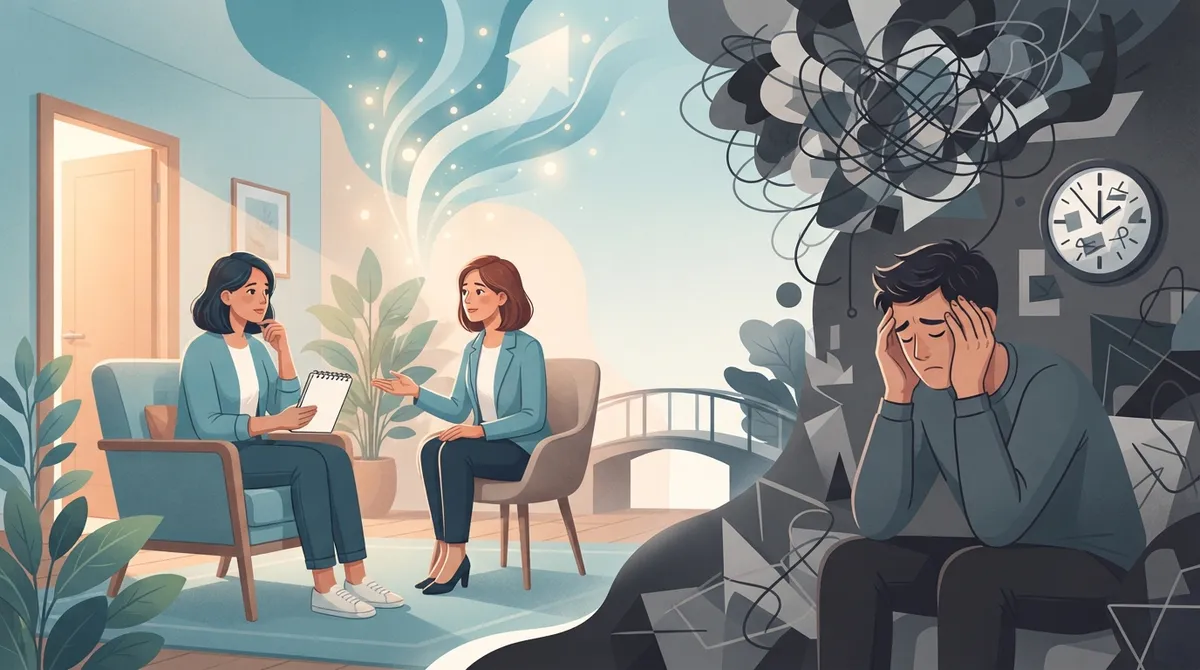
The Short Answer: When Should I See a Therapist?
You should consider seeing a therapist when your thoughts, feelings, or behaviors are persistent, distressing, worsening, or getting in the way of daily life. That includes work, school, relationships, sleep, and self-care. You don’t have to wait until things feel severe.
The National Institute of Mental Health suggests getting professional help for severe or distressing symptoms that last two weeks or more. Think of that as a helpful nudge, not a strict rule. If something feels very hard sooner, reaching out sooner is okay.
Therapy also helps with specific challenges, even brand-new ones. Grief, a breakup, a big move, a job change, or a scary event can all be good reasons to talk to someone.
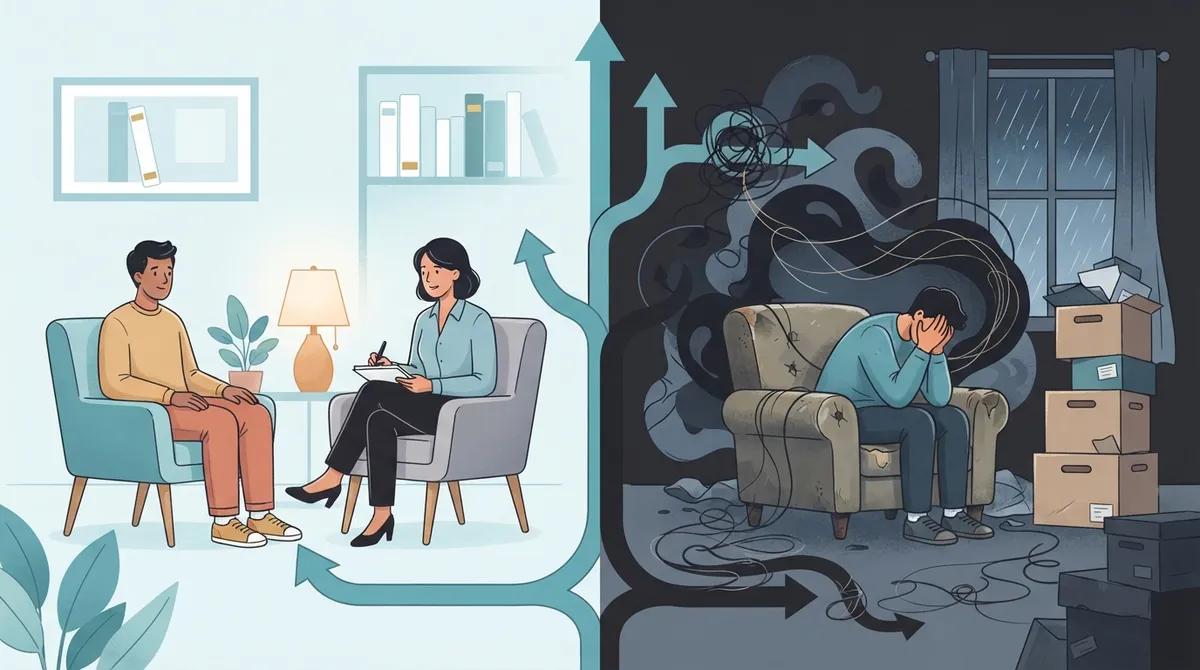
Seeing a Therapist Now vs. Waiting It Out
Let’s put the two choices side by side. This table shows how each path often plays out.
| Factor | Seeing a Therapist Now | Waiting It Out |
|---|---|---|
| Symptoms | Addressed early, before they grow | May build up or spread to other areas of life |
| Coping skills | You learn tools right away | You rely on old habits that may not work |
| Relationships | Better communication and connection | Strain can grow over time |
| Sleep and energy | Often improve with support | May stay disrupted |
| Cost and effort | Smaller, steady investment | Problems may feel bigger and harder later |
| Peace of mind | You have a plan and a guide | You carry it alone |
Waiting isn’t wrong, and some stress does pass on its own. But when distress sticks around, early support usually makes the road smoother.
Clear Signs It May Be Time to See a Therapist
Not sure if what you feel “counts”? Here are common signs that therapy could help.
- Your mood feels low or flat most days, or you’ve lost interest in things you used to enjoy.
- Worry takes over your thoughts, your body, or your day.
- Sleep has changed. You can’t fall asleep, or you sleep far too much.
- Your appetite or weight has shifted without a clear reason.
- Focus is hard. Simple tasks feel heavy or take much longer.
- You feel irritable, restless, or easily upset.
- You pull away from friends, family, or activities.
- You’re leaning on alcohol or other substances to cope.
- Your relationships keep hitting the same wall.
If two or three of these feel true for you, that’s a good sign to reach out. Our guide on how to recognize mental health warning signs early goes deeper on this.
Do You Need a Diagnosis First?
Nope. This is one of the biggest myths out there. You don’t need a label to deserve support. A therapist can help you sort out what’s going on, set goals, and build skills, whether or not your experience fits a diagnosis.
Many people also start therapy just to talk it through. If you’ve been wondering whether you need therapy or simply a good listener, here’s a simple test. Friends can offer comfort. A therapist offers training, tools, and an objective view, plus a private space with no judgment.
Seeing a Therapist for Specific Concerns
Different struggles have different signals. Here’s how it can look for common concerns.
Anxiety
If worry feels constant, or panic shows up out of the blue, it’s worth talking to someone. Racing thoughts, a tight chest, and avoiding places or people are common clues. Learn more about anxiety signs, types, and treatment options, or explore our anxiety treatment services. If panic is part of your story, see our tips on managing panic attacks.
Depression
Persistent sadness, heavy fatigue, and feeling hopeless are strong signals. Depression can also show up as irritability or numbness. Read what depression is and how it affects your daily life, or look into our depression treatment options.
Trauma and Grief
If a past event or a recent loss keeps replaying in your mind, therapy can help you heal at your own pace. Start with how to recognize and heal from psychological trauma or learn about trauma therapy.
Relationship Struggles
If you and your partner keep fighting about the same thing, feel distant, or have stopped talking openly, couples therapy can help you reconnect. You don’t have to wait until things feel broken. Many couples come in to strengthen their bond before problems grow.
Who Often Benefits From Starting Early?
Therapy fits many life stages. Here are a few groups who often gain a lot from reaching out sooner.
- Teens (13-17): School stress, social worries, and family tension are common. Early support gives teens tools while habits are still forming.
- Young adults (18-27): Big transitions, isolation, and academic pressure can pile up fast. Virtual therapy makes help easy to reach.
- Millennials (28-43): Work, money, family, and life changes can feel like too much. Therapy helps you carry less.
- Couples: Communication breakdowns and life changes are easier to work through together, early.
- Parents of teens: If you notice big changes in your child’s mood, sleep, grades, or friendships, a check-in can bring relief.
- Spanish-speaking adults: Talking about feelings in your first language can make it far easier to open up.
Why Not Wait for a Crisis?
Many people think therapy is only for emergencies. In reality, therapy works best as support, not just rescue. Starting early means you can learn coping skills while you still have energy and clarity.
The numbers show how common this is. According to SAMHSA’s 2024 National Survey on Drug Use and Health, about 23.4% of U.S. adults (roughly 61.5 million people) had a mental illness in the past year. About 22.9% received mental health treatment. Still, only around 52.1% of adults with any mental illness got care. That means many people who could benefit are still going without help.
You’re not weak for asking. You’re being wise, the same way you’d see a doctor for a nagging cough.
The Two-Week Guideline: Helpful, Not a Rule
The two-week mark is a handy checkpoint. If you’ve felt very low, anxious, or off for two weeks or more, it’s a good time to book. But please don’t wait two weeks if:
- Your symptoms are severe or scary.
- A specific event, like a loss or trauma, has shaken you.
- You can’t do your usual daily tasks.
- You’re using alcohol or drugs to cope.
- Someone close to you is worried about you.
Trust your gut. If you’re asking the question, that already says something.
When to Call 988 or 911 Instead
Therapy is wonderful, but some moments need faster help. Please know the difference.
| Situation | Where to Turn |
|---|---|
| You feel overwhelmed, hopeless, or in emotional distress and want to talk right now | Call or text 988, or use the 988 chat (free, private, 24/7) |
| You’re having thoughts of suicide or self-harm | Call or text 988 right away |
| You’re worried about someone else’s emotional crisis | Call or text 988 for guidance |
| Someone is in immediate physical danger, an attempt is in progress, or an overdose is suspected | Call 911 |
You don’t have to be suicidal to contact 988. It’s there for anyone who needs support. You can also find helpful resources through CDC mental health resources.
What Happens at a First Therapy Appointment?
Worried about the unknown? Here’s what a first visit usually looks like, so there are no surprises.
- A friendly conversation. You share what brings you in and what you hope to change.
- Questions about your life. Your therapist may ask about sleep, stress, relationships, and health.
- Goal setting. Together you decide what progress would look like.
- A look at your options. You’ll talk about approaches and how often to meet.
- A fit check. This is your chance to see if you feel comfortable with the therapist.
It’s okay to feel nervous. Everyone does. A good therapist will move at your pace.
How West Florida Therapy Can Help
At West Florida Therapy, we make starting simple. Psychotherapist Margaret Deuerlein is a caring guide who helps adults, adolescents, and couples work through anxiety, depression, trauma, and relationship struggles. You can learn more about what a psychotherapist does and see our process before you book.
- Free 15-minute consultation to see if we’re a good fit.
- Bilingual care in English and Spanish.
- In-person sessions in Brandon, plus telehealth therapy across Florida.
- Flexible payment through out-of-pocket rates or in-network insurance, including Aetna, Cigna, Florida Blue, Optum, Oscar, and United Health Care. See our payment options.
Telehealth is also very common. In 2024, about 12.8% of U.S. adults received mental health treatment through telehealth, so you’re in good company if you prefer to meet from home. Curious about local care? Read about in-person therapy in Brandon, Florida or see what our community says when you visit us on Google for West Florida Therapy.
Simple Steps to Take Today
Feeling ready but not sure how to begin? Try these small steps.
- Jot down what you’ve noticed. Write a few lines about your mood, sleep, and stress.
- Note how long it’s lasted. Days, weeks, or months all matter.
- Talk to your primary care provider if you’d like a checkup or a referral. For more local options, browse Florida mental health links or substance abuse and mental health services.
- Book a consultation. A short call can answer many questions.
Final Thoughts: The Best Time Is When You’re Ready
So, when should you see a therapist? Whenever you feel stuck, stretched thin, or simply curious about feeling better. Waiting can work for small bumps, but ongoing distress deserves real support. You don’t need to earn it, and you don’t need to wait for things to fall apart.
You’ve already taken a brave first step by learning more. When you’re ready for the next one, we’d love to meet you. Contact us today to schedule your free 15-minute consultation with West Florida Therapy. Healing can start with one simple conversation.
FAQs
Q: Should I see a therapist if my symptoms have lasted less than two weeks?
A: Yes, absolutely. The two-week mark is just a helpful guide, not a rule. If your symptoms feel severe, scary, or are getting in the way of daily life, it’s perfectly okay to reach out right away.
Q: Can I see a therapist without a mental health diagnosis?
A: You sure can! You don’t need a diagnosis to get support. Many people start therapy to manage stress, work through a life change, or simply feel better, and your therapist will help you figure out the best path forward.
Q: How do I know if I need therapy or just need to talk to someone?
A: Talking with a friend can feel great, but therapy adds training, tools, and a judgment-free space. If your feelings keep coming back, affect your sleep, work, or relationships, or feel too heavy to handle alone, a therapist can help.
Q: When should I call 988 instead of scheduling a therapy appointment?
A: Call or text 988 if you’re in emotional distress, having thoughts of suicide or self-harm, or need someone to talk to right now. It’s free, private, and open 24/7, and you don’t have to be suicidal to use it. For immediate physical danger or a suspected overdose, call 911.
Q: What should I expect at my first therapy appointment?
A: Your first visit is mostly a friendly conversation about what’s bringing you in and what you’d like to change. You’ll set goals, talk through options, and see whether you feel comfortable with your therapist. There’s no pressure, and you can go at your own pace.