
Key Takeaways
-
Focus on finding a licensed Florida mental health professional with relevant experience for your specific concern rather than worrying about the therapy vs. counseling label, as both terms overlap significantly in practice.
-
Verify your provider's credentials through Florida's Department of Health and confirm their license type (LMHC, LCSW, LMFT, or Psychologist), as licensure ensures accountability and proper training requirements.
-
Counseling typically addresses short-term, specific issues like life transitions and stress management, while therapy often handles deeper concerns like trauma, persistent anxiety, or long-standing patterns.
-
Before scheduling, ask potential providers about their Florida licensure, experience with your specific concern, treatment approaches, insurance acceptance, and availability for both in-person and virtual sessions.
-
Many Brandon-area providers accept major insurance plans (Aetna, Cigna, Florida Blue, Optum, Oscar, United Health Care) and offer self-pay options; contact your insurance directly to confirm your mental health benefits and copays.
-
For mental health emergencies, call 911 or the Suicide & Crisis Lifeline at 988—therapy and counseling are not designed for immediate crisis intervention.
If you’ve been searching for help and typing “therapy vs counseling brandon florida” into Google late at night, you’re not alone. So many people sit at this exact crossroads, unsure which word even matters. Here’s some good news: you don’t have to get the label perfectly right before you reach out. What matters most is finding a caring, licensed professional who understands what you’re going through and can walk beside you.
At West Florida Therapy, we hear this question all the time from folks across Brandon and the surrounding area. Some are stressed-out young professionals. Some are couples who feel like roommates instead of partners. Some are worried parents trying to help a teenager who seems to be struggling. Wherever you fall, this guide will help you understand the real differences (and similarities) between therapy and counseling, so you can make a confident, informed choice.
Therapy vs Counseling: Is There Really a Difference?
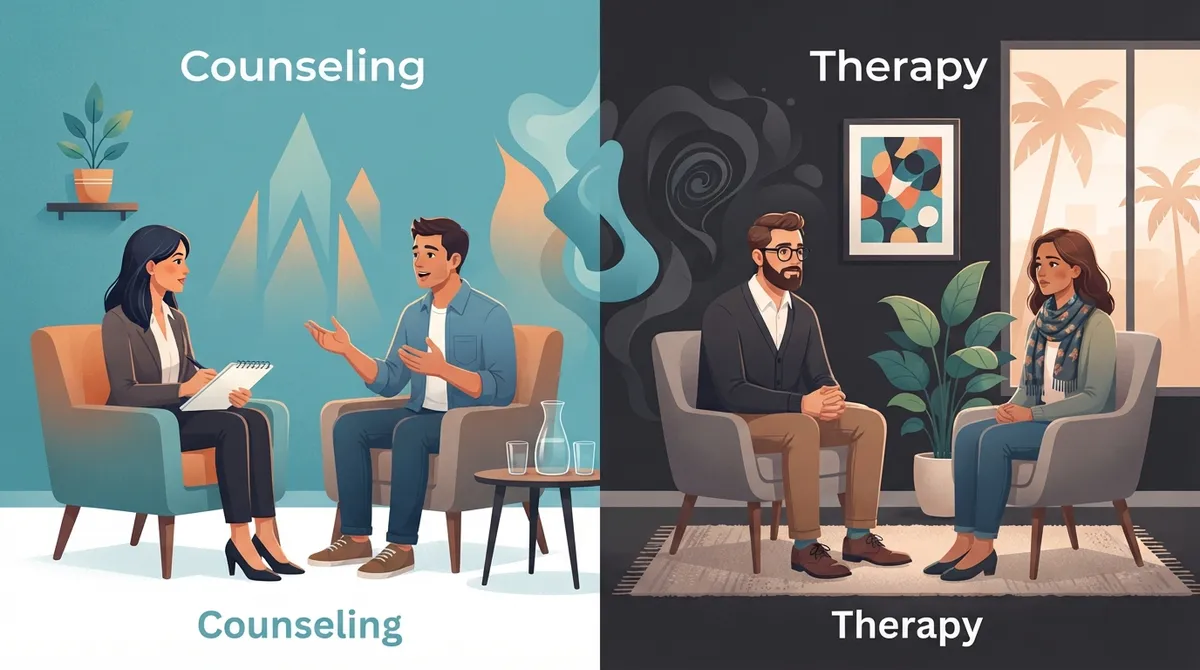
Here’s the honest truth: in everyday mental health care, “therapy” and “counseling” are often used to mean the same thing. Both involve talking with a trained professional. Both can help with stress, sadness, worry, relationship troubles, and more. Both are backed by real, tested methods.
But if we’re splitting hairs, there’s often a difference in emphasis:
- Counseling tends to focus on current, specific concerns. Think life transitions, everyday stress, relationship bumps, or building new coping skills.
- Therapy (or psychotherapy) often digs a little deeper. It may address long-standing patterns, past trauma, or diagnosed conditions like depression or anxiety that have stuck around for a while.
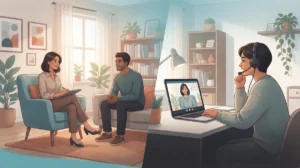
That said, these categories aren’t set in stone. A skilled counselor may treat trauma. A therapist may help you through a rough patch at work. The line blurs constantly, and that’s okay. What really matters is the person sitting across from you (or on your screen, if you’re doing virtual sessions) and whether they have the right training to help with your specific concern.
Why the Provider’s License Matters More Than the Label
Instead of stressing over word choice, focus your energy on checking credentials. Florida takes licensing seriously, and for good reason. It protects you as a client.
In Florida, mental health professionals typically fall into a few categories:
| Provider Type | What They Do | Typical Training |
|---|---|---|
| Licensed Mental Health Counselor (LMHC) | Counseling, psychotherapy, diagnosis, treatment planning | Graduate degree (60+ semester hours), supervised experience, national exam |
| Licensed Clinical Social Worker (LCSW) | Psychotherapy, case management, clinical treatment | Graduate social work degree, supervised hours, clinical exam |
| Licensed Marriage & Family Therapist (LMFT) | Relationship-focused therapy, family systems work | Graduate degree, supervised clinical hours, licensing exam |
| Psychologist | Testing, diagnosis, therapy | Doctoral degree, separate licensing pathway |
| Psychiatrist | Medication management, some therapy | Medical degree, psychiatric residency |
Florida’s Board of Clinical Social Work, Marriage & Family Therapy and Mental Health Counseling oversees LCSWs, LMFTs, and LMHCs. They handle licensing, renewals, and discipline, so consumers have a real system of accountability behind them.
Florida actually defines mental health counseling pretty broadly. It covers counseling, psychotherapy, crisis help, education, and methods used to assess and treat emotional or mental struggles. So whether a Brandon practice calls their service “therapy” or “counseling,” the actual work being done may look very similar under Florida law.
What Florida Requires of Licensed Counselors and Therapists
Wondering how rigorous this training actually is? Here’s a simple breakdown of what it takes to become a Florida LMHC:
- Complete a graduate program with at least 60 semester hours (or 80 quarter hours) of coursework.
- Starting July 1, 2025, graduate from a program accredited by CACREP, MPCAC, or an equivalent accrediting body.
- Finish required supervised clinical experience hours under a qualified supervisor.
- Pass the National Clinical Mental Health Counseling Examination (NCMHCE), administered by the National Board for Certified Counselors.
- Apply for licensure through Florida’s Department of Health and renew every two years.
LCSWs go through a similar path, including the ASWB clinical exam. Even provisional licenses have limits. Florida Statute 491.0046 says a provisional license expires after 24 months and cannot be renewed. This keeps professionals moving steadily toward full licensure and accountability.
You can always verify a provider’s license through Florida’s Department of Health resources or the Mental Health Links page, which is a great starting point for learning more about state programs and protections.
How to Decide What You Actually Need
Instead of asking “is this therapy or counseling,” try asking yourself these questions:
- Am I dealing with a specific, short-term stressor, or has this been going on for months or years?
- Do I want to build coping skills, or do I need to process something painful from my past?
- Am I looking for individual support, or do I need help as a couple or family?
- Do I want in-person sessions in Brandon, or would virtual sessions fit my schedule better?
- What can I afford, and does my insurance cover mental health visits?
Your honest answers will point you toward the right kind of support, regardless of what it’s labeled on a website.
When Counseling Might Be the Right Fit
Counseling-style support often works well for:
- Adjusting to a new job, move, or major life change
- Working through a specific relationship conflict
- Building better communication or coping skills
- Processing grief after a recent loss
- Getting short-term support during a stressful season
If you’re a busy millennial juggling work stress, family demands, and life transitions, this kind of focused, goal-oriented support can feel manageable and less overwhelming than you might expect.
When Therapy Might Be the Better Match
Deeper therapeutic work is often recommended when someone is facing:
- Persistent anxiety that interferes with daily life
- Long-term depression or mood struggles that won’t lift
- Trauma from past experiences
- Repeating relationship patterns that feel stuck
- Diagnosed mental health conditions requiring ongoing care
This is where a skilled psychotherapist can really make a difference. Margaret Deuerlein, a caring and experienced therapist with West Florida Therapy, works with individuals and couples across Brandon and throughout Florida to help untangle these deeper, more complicated patterns. She brings warmth, patience, and evidence-based methods to every session, whether you meet with her in person or through telehealth. You can learn more about Margaret Deuerlein and her approach to care.
Special Considerations for Different Life Stages
Support for Teens and Their Families
Adolescence brings its own storm of pressures: school stress, social anxiety, friendship drama, and family tension. Parents often wonder whether their teen needs “counseling” or “therapy,” but honestly, what matters most is finding someone trained to work with young people. West Florida Therapy offers virtual therapy for adolescents as well as in-person sessions, giving families flexibility that fits real life.
Support for Couples
Couples facing communication breakdowns, trust issues, or feeling disconnected often benefit from specialized couples therapy. This isn’t about assigning blame. It’s about learning to hear each other again and rebuilding a partnership that feels solid. Many couples in Brandon find that structured, guided sessions help them break old patterns faster than trying to figure it out alone.
Support for Spanish-Speaking Families
Language barriers should never stand between someone and quality mental health care. That’s why bilingual services (English and Spanish) matter so much for Hispanic families across Florida. Feeling truly understood, in your own language, can make all the difference in how comfortable you feel opening up.
What to Ask Before You Schedule a Session
Before committing to a provider, it helps to ask a few simple questions:
- Are you licensed in the state of Florida, and what is your license type?
- Do you have experience treating my specific concern?
- What treatment approaches do you use?
- Do you accept my insurance, or what are your self-pay rates?
- What happens if I need urgent help between sessions?
- Do you offer both in-person and virtual options?
A good provider will welcome these questions. It shows you’re taking your care seriously, and that’s always a good sign.
Insurance, Cost, and Access in Brandon
Money worries shouldn’t keep you from getting help. Many Brandon-area practices, including West Florida Therapy, accept insurance plans like Aetna, Cigna, Florida Blue, Optum, Oscar, and United Health Care. Self-pay options are also common for those who want extra privacy or flexibility. It’s always smart to call your insurance provider directly to confirm your specific mental health benefits, copays, and deductible details.
For state-level resources on affordable and accessible care, the Substance Abuse & Mental Health program through Florida’s Department of Children and Families is a helpful place to explore additional support options.
A Word About Emergencies
Therapy and counseling are wonderful tools, but they are not designed for emergencies. If you or someone you love is in immediate danger, please call 911. If you’re having thoughts of harming yourself, call or text 988 to reach the Suicide & Crisis Lifeline right away. These services are free, confidential, and available every day of the week. For general guidance on caregiving and mental wellness, the Mental Health Resources from the CDC offer helpful, trustworthy information.
Getting Started Feels Easier Than You Think
Here’s what the process usually looks like when you reach out to a Brandon-based practice:
- You have a brief phone consultation to share your goals and ask questions.
- Together, you and your provider build a personalized treatment plan.
- You attend regular sessions, either weekly or biweekly, in person or virtually.
- Your provider checks in on your progress and adjusts your plan as needed.
This structure gives you clarity and support from day one, so you’re never left wondering what comes next.
Bringing It All Together
So, therapy vs counseling in Brandon, Florida? Honestly, the words matter far less than the person you choose to work with. Focus on licensure, experience, and whether the provider truly understands your situation. Whether you’re dealing with everyday stress or something deeper, there’s no shame in reaching out for support. It’s one of the bravest things you can do for yourself.
If you’re ready to take that first step, our team at West Florida Therapy is here for you with warmth, patience, and real expertise. You deserve to feel heard and supported. Reach out to our team today to schedule your free 15-minute consultation and start building a plan that fits your life. You can also visit us on Google — West Florida Therapy to read reviews from real clients in the Brandon community who’ve walked this path before you. You’re not alone, and healing really is possible.
FAQs
Q: What is the difference between therapy and counseling in Brandon, Florida?
A: Honestly, the two words overlap a lot! Counseling often focuses on current concerns and skill-building, while therapy may dig deeper into patterns, trauma, or diagnosed conditions. The provider’s license and experience matter far more than the label on the door.
Q: Should I choose a therapist or counselor for anxiety, depression, or trauma?
A: It really depends on how long you’ve been struggling and how deep the issue runs. For persistent anxiety, depression, or trauma, look for a licensed provider with specific training in those areas, whether they call themselves a therapist or counselor.
Q: How do I find a licensed therapist or counselor near Brandon, FL?
A: Start by verifying credentials through Florida’s Department of Health, then look for someone who treats your specific concern. West Florida Therapy offers both in-person sessions in Brandon and virtual care across Florida, so you have flexible options.
Q: Are therapy and counseling covered by insurance in Florida?
A: Many Florida providers accept major insurance plans like Aetna, Cigna, Florida Blue, Optum, Oscar, and United Health Care. It’s always smart to call your insurance company directly to confirm your specific mental health benefits and copays.
Q: Is online therapy available to people in Brandon, Florida?
A: Yes! Virtual therapy is a wonderful option for busy schedules, teens, and anyone who prefers meeting from home. West Florida Therapy offers telehealth sessions throughout Florida, alongside in-person appointments in Brandon.