
Key Takeaways
-
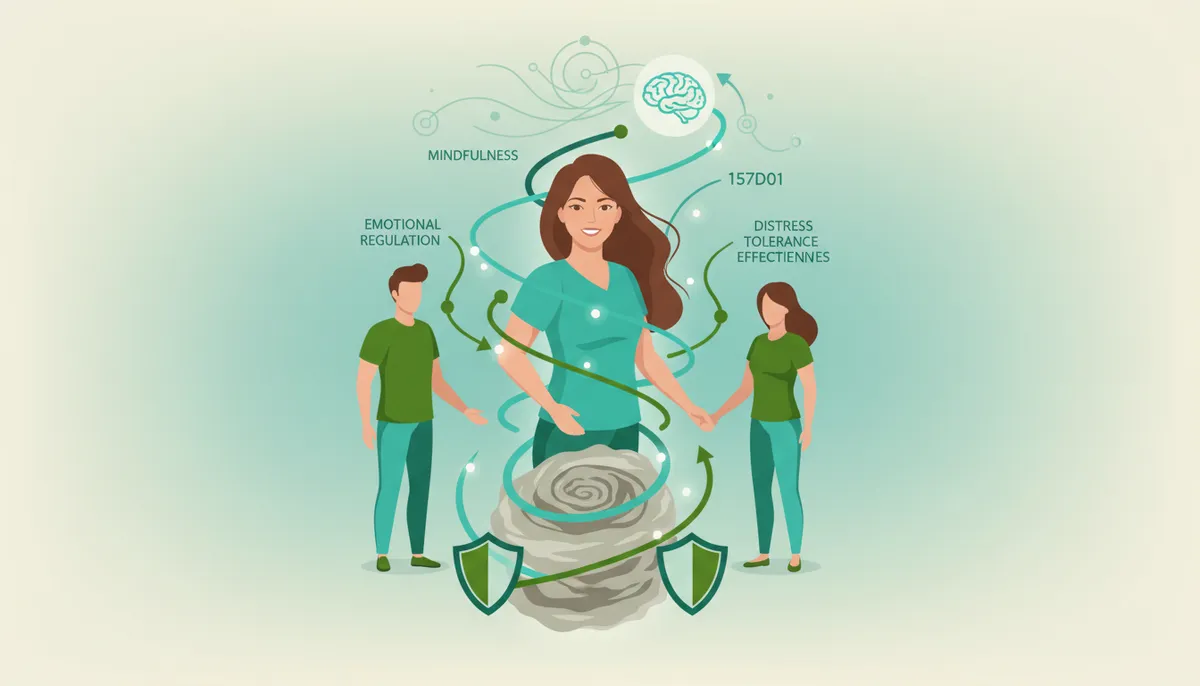
DBT provides a structured approach to managing emotions through four core skill areas: mindfulness, distress tolerance, emotion regulation, and interpersonal effectiveness.
-
Learn practical techniques like the STOP skill and DEAR MAN method to pause before reacting and communicate more effectively in challenging situations.
-
Mindfulness exercises help you stay present, reduce stress, and create space between your emotions and automatic reactions.
-
DBT is beneficial for individuals struggling with anxiety, depression, relationship issues, or intense emotional experiences, offering actionable coping strategies.
-
Practice DBT skills consistently and patiently, treating them like learning a new skill that improves with repetition and self-compassion.
-
Individual and group therapy sessions provide personalized guidance and a supportive environment for developing emotional regulation skills.
Have you ever felt like your emotions control you instead of the other way around? Maybe you’ve experienced intense feelings that seem to come out of nowhere, leaving you feeling overwhelmed and unsure how to cope. You’re not alone. Many people struggle with managing difficult emotions, and that’s where Dialectical Behavior Therapy, or DBT, comes in. This practical approach to therapy helps you build real skills for handling life’s challenges, improving your relationships, and finding more peace in your daily life.
DBT is a type of therapy that combines acceptance and change strategies to help you create a life worth living. Originally developed to help people with intense emotional struggles, DBT has become one of the most effective approaches for anyone looking to improve their emotional wellbeing. Whether you’re dealing with anxiety, depression, relationship problems, or just want better ways to handle stress, DBT offers concrete tools you can use right away. Margaret Deuerlein at West Florida Therapy specializes in helping individuals and couples learn these valuable skills in a warm, supportive environment.
What Makes DBT Different from Other Therapy Approaches
DBT stands out because it’s not just talk therapy. Instead of only exploring your past or analyzing your thoughts, DBT focuses on building specific skills you can practice and use in your everyday life. Think of it like learning to play an instrument. You need instruction, practice, and patience to get better.
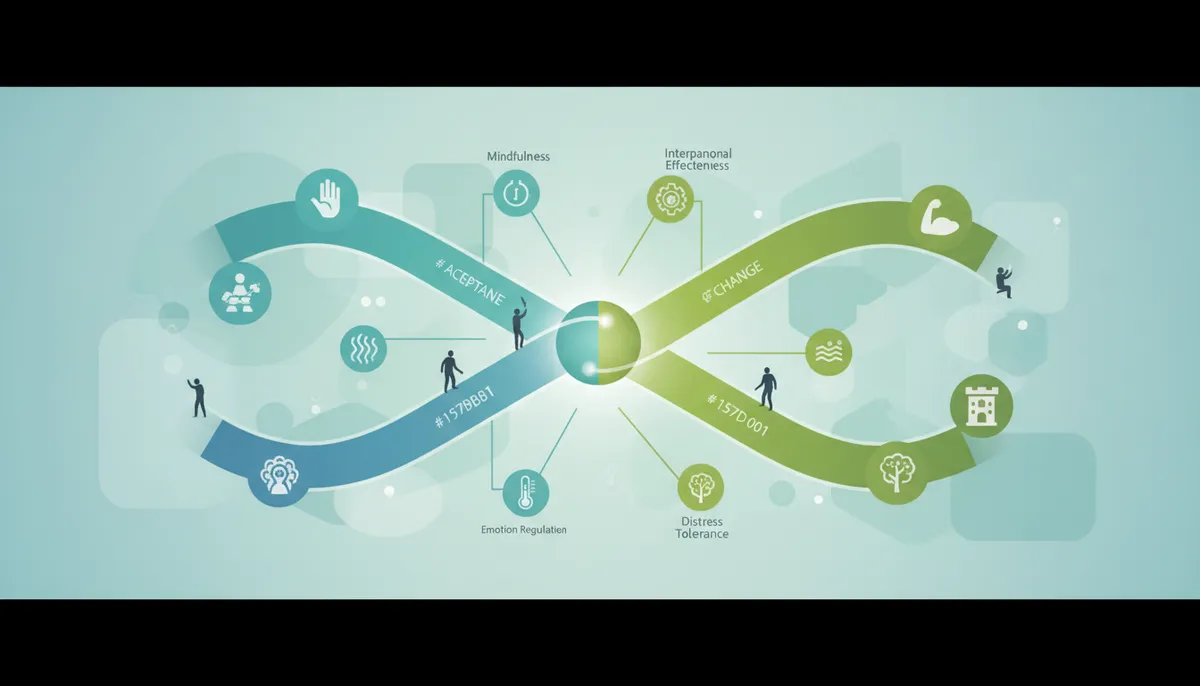
The approach balances two important ideas that might seem opposite at first. On one hand, DBT helps you accept yourself as you are right now, with all your struggles and imperfections. On the other hand, it teaches you how to make positive changes in your life. This balance between acceptance and change is what makes DBT so powerful.
Here’s what sets DBT apart from traditional therapy:
- Structured skill-building sessions that teach practical techniques
- Focus on the present moment rather than dwelling on the past
- Clear strategies for managing crisis situations
- Emphasis on developing emotional awareness and control
- Regular homework assignments to practice new skills
- Support for both individual growth and relationship improvement
Unlike some therapy approaches that can feel vague or unclear, DBT gives you a roadmap. You’ll learn specific skills organized into four main areas, each designed to help you handle different aspects of your emotional life. According to the CDC’s mental health resources, evidence-based therapies like DBT are essential tools for improving overall wellbeing and managing mental health challenges.
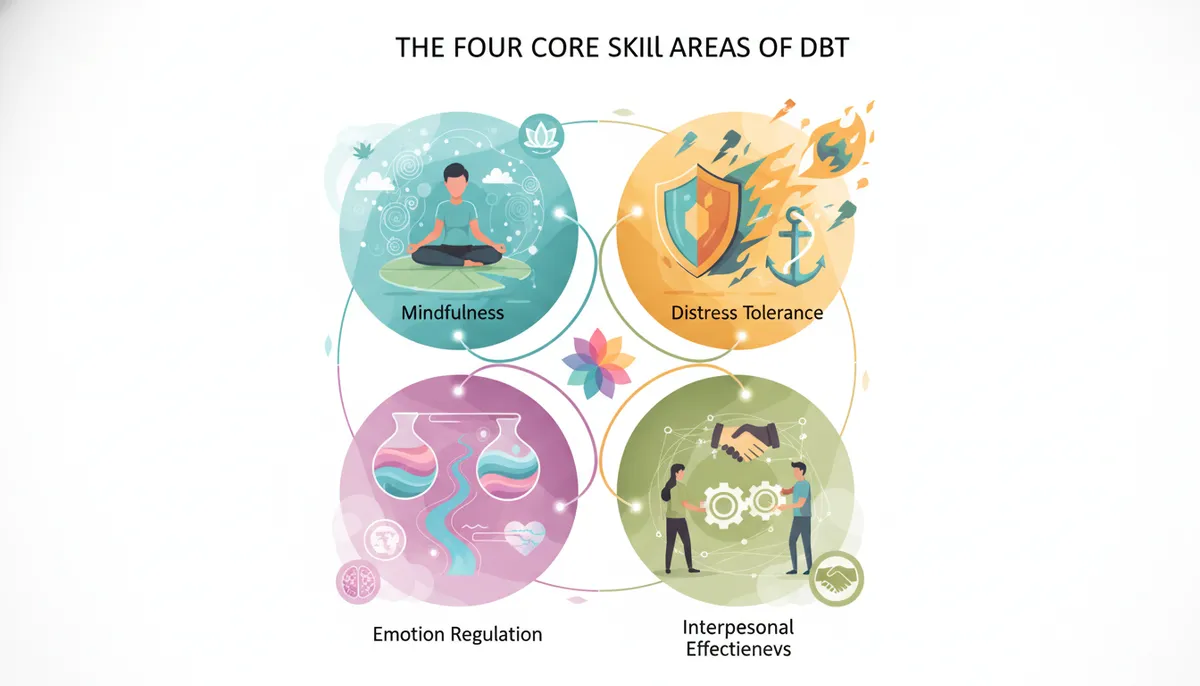
The Four Core Skill Areas You’ll Learn in DBT
DBT teaches four main skill sets that work together to help you manage your emotions and improve your relationships. Each area focuses on different aspects of your mental health, and together they create a complete toolkit for handling life’s challenges.
Mindfulness: Learning to Stay Present
Mindfulness is the foundation of all DBT skills. It teaches you to pay attention to the present moment without judgment. Instead of worrying about tomorrow or replaying yesterday, you learn to focus on what’s happening right now.
Practicing mindfulness helps you notice your thoughts and feelings without getting swept away by them. You’ll learn simple exercises like focusing on your breath, observing your surroundings, or paying attention to physical sensations. These practices might seem simple, but they’re incredibly powerful for reducing stress and managing anxiety.
Distress Tolerance: Getting Through Tough Moments
Life throws curveballs, and sometimes you need ways to cope with immediate crisis situations. Distress tolerance skills help you survive difficult moments without making things worse. These are your emergency tools for when emotions feel overwhelming.
Some key distress tolerance techniques include:
- Self-soothing activities that calm your nervous system through your five senses
- Distraction techniques that give you a break from intense emotions
- Improving the moment by finding ways to make a bad situation slightly more bearable
- Weighing pros and cons before acting on impulses
Emotion Regulation: Understanding and Managing Your Feelings
Emotion regulation skills help you identify what you’re feeling and why. You’ll learn to recognize patterns in your emotional responses and develop strategies for changing unwanted emotions. This doesn’t mean suppressing your feelings but rather understanding them better so they don’t control your actions.
These skills are particularly helpful for people dealing with depression or mood swings. You’ll discover ways to reduce emotional vulnerability by taking care of your physical health, getting enough sleep, and building positive experiences into your daily routine.
Interpersonal Effectiveness: Building Better Relationships
The fourth skill area focuses on improving your relationships with others. You’ll learn how to ask for what you need, set boundaries, and handle conflict in healthy ways. These skills help you maintain your self-respect while also keeping important relationships strong.
Interpersonal effectiveness is especially valuable for couples working on their relationship. You’ll practice communicating clearly, listening actively, and negotiating solutions that work for everyone involved.
How DBT Sessions Actually Work in Real Life
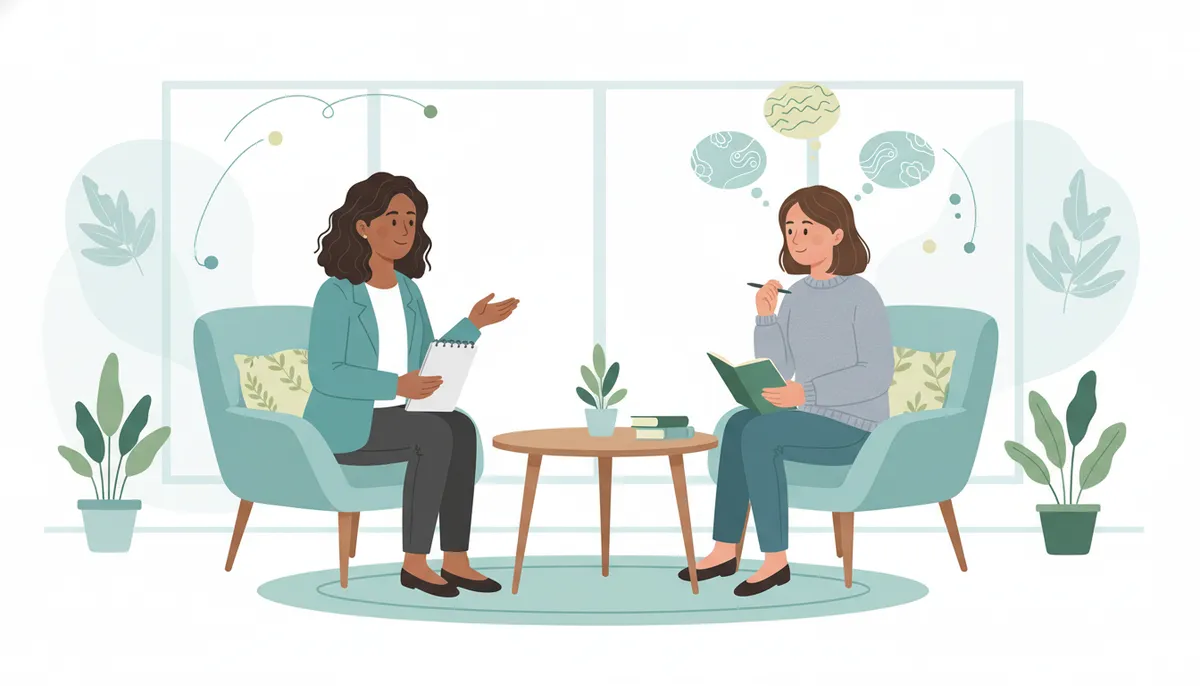
Starting DBT might feel a bit overwhelming at first, but the structure actually makes it easier to follow. Most DBT programs include both individual therapy sessions and skills training, though the exact format can vary based on your needs and what your therapist recommends.
In individual sessions, you’ll work one-on-one with your therapist to address your specific challenges and goals. These meetings give you space to talk about what’s happening in your life, practice new skills, and get personalized guidance. Margaret Deuerlein provides compassionate individual therapy that helps you apply DBT skills to your unique situation.
Skills training typically happens in a group setting, though it can also be done individually. Think of it like taking a class where you learn new techniques alongside others who are working on similar goals. Group sessions create a supportive environment where everyone shares their experiences and learns from each other.
Here’s what a typical DBT journey might look like:
- Initial assessment where you and your therapist discuss your goals and challenges
- Weekly individual therapy sessions lasting 45-60 minutes
- Skills training sessions where you learn and practice the four core skill areas
- Homework assignments to practice skills between sessions
- Regular check-ins to track your progress and adjust your treatment plan
The great news is that you don’t have to commit to years of therapy to see benefits. Many people notice improvements within a few months of consistent practice. The key is showing up regularly and actually using the skills you learn in your daily life.
Who Benefits Most from DBT and Why It Works
While DBT was originally created for people with intense emotional struggles, it’s now recognized as helpful for a wide range of mental health challenges. The skills are practical and universally useful, which means almost anyone can benefit from learning them.
DBT is particularly effective for people who:
- Experience strong emotions that feel hard to control
- Struggle with anxiety or frequent worry
- Deal with depression or mood issues
- Have difficulty in relationships or maintaining boundaries
- Engage in impulsive behaviors they want to change
- Feel overwhelmed by stress and need better coping strategies
Research shows that DBT works because it addresses both the emotional and behavioral aspects of mental health. According to the Florida Department of Health’s mental health resources, evidence-based treatments like DBT provide structured support that leads to lasting positive changes.
For teenagers and young adults, DBT offers age-appropriate ways to handle the unique pressures of school, social media, and finding their identity. The skills help them navigate friendship drama, academic stress, and family conflicts with more confidence and less emotional turmoil.
Adults dealing with life transitions like career changes, relationship problems, or health challenges also find DBT incredibly valuable. The practical nature of the skills means you can apply them immediately to whatever situation you’re facing.
DBT for Couples and Relationship Issues
DBT isn’t just for individual therapy. The interpersonal effectiveness skills are particularly powerful for couples working to improve their relationship. When both partners learn DBT skills, they develop a common language for discussing emotions and resolving conflicts.
Couples therapy using DBT principles helps partners communicate more effectively, validate each other’s feelings, and work together to solve problems. Instead of getting stuck in the same arguments over and over, couples learn new ways to understand each other and find solutions that work for both people.
Practical DBT Techniques You Can Start Using Today
You don’t have to wait until you’re in therapy to start benefiting from DBT. Here are some simple techniques you can begin practicing right now to improve your emotional wellbeing and reduce stress.
The STOP Skill for Crisis Moments
When you’re feeling overwhelmed or about to do something you might regret, use the STOP skill:
- Stop: Freeze. Don’t react immediately.
- Take a step back: Get some physical or mental distance from the situation.
- Observe: Notice what’s happening inside you and around you.
- Proceed mindfully: Choose how to respond based on your values and goals.
This simple four-step process creates a pause between your feelings and your actions. It gives you time to think instead of just reacting automatically.
The DEAR MAN Technique for Asking for What You Need
Communicating your needs clearly can be challenging, especially if you worry about seeming demanding or causing conflict. DEAR MAN is a structured way to express yourself effectively:
- Describe the situation objectively
- Express your feelings using “I” statements
- Assert yourself by asking clearly for what you want
- Reinforce the positive outcomes of your request
- Stay mindful of your goal
- Appear confident even if you don’t feel it
- Negotiate if needed to find a solution that works
This approach helps you advocate for yourself while maintaining respect for the other person. It’s particularly useful for setting boundaries and addressing relationship problems.
Simple Mindfulness Exercises for Daily Practice
You don’t need special equipment or lots of time to practice mindfulness. Try these quick exercises:
- One-mindful breathing: Focus on taking three slow, deep breaths, paying attention to the sensation of air moving in and out
- Five senses check-in: Notice one thing you can see, hear, smell, taste, and touch right now
- Mindful eating: Take one bite of food and really pay attention to the taste, texture, and experience
- Body scan: Spend 30 seconds noticing sensations in different parts of your body
These brief practices train your brain to stay present instead of getting lost in worry or rumination. With regular practice, mindfulness becomes easier and more natural.
Common Challenges When Learning DBT and How to Overcome Them
Learning new skills takes time and effort, and it’s completely normal to face some obstacles along the way. Understanding these common challenges helps you prepare for them and stay motivated.
One of the biggest hurdles is remembering to use your skills when you need them most. In moments of high emotion, your brain tends to default to old patterns. The solution is practice, practice, practice. Use your skills even when you’re calm so they become automatic.
Some people feel frustrated when skills don’t work perfectly right away. Remember that DBT is like learning any new skill. You wouldn’t expect to play piano beautifully after one lesson. Be patient with yourself and celebrate small improvements.
Here are strategies for sticking with DBT practice:
- Keep a skills journal to track what you try and what works
- Set reminders on your phone to practice daily
- Find an accountability partner who’s also learning DBT
- Start with one skill at a time instead of trying to master everything at once
- Talk with your therapist when you feel stuck or discouraged
Another challenge is dealing with chronic stress that makes it hard to focus on learning new things. If you’re constantly in crisis mode, it’s harder to practice skills effectively. This is where working with a trained therapist becomes especially important. They can help you stabilize your situation while gradually building your skill set.
Finding the Right DBT Therapist for Your Needs
Not all therapists are trained in DBT, so it’s important to find someone with proper credentials and experience. Look for therapists who have completed specialized DBT training and ideally participate in ongoing consultation groups to stay current with best practices.
When searching for a DBT therapist, consider these factors:
- Specific training and certification in DBT
- Experience working with your particular challenges
- Availability for regular sessions that fit your schedule
- Whether they offer individual therapy, skills training, or both
- Your comfort level and connection with the therapist
- Practical considerations like location and cost
Margaret Deuerlein at West Florida Therapy provides compassionate, evidence-based DBT support for individuals and couples throughout Florida. Services are available both in-person and virtually, making it easier to access quality care regardless of where you live. Bilingual services in English and Spanish ensure that language is never a barrier to getting the help you need.
The therapeutic relationship matters immensely in DBT. You need to feel comfortable being honest about your struggles and willing to try new approaches. Take time to find a therapist who makes you feel heard, respected, and supported. According to the Florida Department of Children and Families, finding the right mental health provider is a crucial step toward recovery and wellness.
Combining DBT with Other Mental Health Support
DBT works well on its own, but it can also be combined with other forms of support for even better results. Many people use DBT alongside medication, other therapy approaches, or lifestyle changes to address their mental health comprehensively.
If you’re taking medication for anxiety, depression, or other conditions, DBT skills help you manage side effects and use your medication more effectively. The mindfulness and emotion regulation skills support your overall treatment plan.
DBT also pairs well with other therapeutic approaches. For example, if you’re working through trauma, you might use DBT skills to manage overwhelming emotions while also doing trauma-focused work with your therapist.
Supporting your DBT practice with healthy lifestyle habits makes a big difference too. Regular exercise, good sleep, proper nutrition, and social connection all support better mental health and make it easier to use your DBT skills effectively.
Tracking Your Progress and Celebrating Growth
One of the most rewarding aspects of DBT is being able to see concrete progress over time. Unlike some forms of therapy where change feels vague or unclear, DBT gives you specific markers of improvement.
Keep track of your growth by noticing:
- How often you use skills in difficult situations
- Reduction in behaviors you want to change
- Improved relationships and fewer conflicts
- Better ability to handle stress without falling apart
- Increased confidence in managing your emotions
- More days where you feel good about yourself and your life
Don’t expect perfection or linear progress. Some weeks will be harder than others, and that’s completely normal. The goal isn’t to never struggle but to have better tools for handling struggles when they arise.
Celebrate small victories along the way. Maybe you used a skill in a tough moment instead of your old coping method. Maybe you noticed your emotion before it became overwhelming. These small wins add up to significant change over time.
Making DBT Skills a Lasting Part of Your Life
The ultimate goal of DBT is for the skills to become second nature. You want them to be automatic responses rather than something you have to consciously remember to use. This happens through consistent practice over time.
Even after you complete formal DBT treatment, continuing to use your skills keeps them sharp. Think of it like maintaining physical fitness. You don’t stop exercising once you reach your goal weight. You keep it up to maintain your health.
Many people find it helpful to revisit their DBT materials periodically. Pull out your handouts when you’re facing a new challenge or feeling stuck. Refresh your memory on skills you haven’t used in a while. Join a DBT skills practice group if one is available in your area.
The skills you learn in DBT are tools for a lifetime. They help you handle whatever life throws your way with more confidence, resilience, and peace. Whether you’re dealing with current struggles or want to prevent future ones, DBT gives you practical strategies that actually work.
Start Your DBT Journey Today
Learning DBT skills can transform how you experience and manage your emotions. These practical, evidence-based techniques give you real power to create positive change in your life, improve your relationships, and build the future you want.
You don’t have to struggle alone with overwhelming emotions, relationship conflicts, or mental health challenges. Help is available, and DBT offers a clear path forward. Whether you’re dealing with anxiety, depression, stress, or relationship issues, these skills provide concrete tools you can use right away.
Margaret Deuerlein at West Florida Therapy understands how difficult it can be to manage intense emotions and life challenges. With warm, compassionate support and evidence-based DBT techniques, she helps individuals and couples throughout Florida build better lives. Services are available in English and Spanish, both in-person and virtually, making quality care accessible no matter where you are. Reach out today to start learning the skills that will help you create lasting positive change.
Taking the first step toward better mental health is an act of courage and self-care. You deserve support, and DBT can give you the tools to build a life that feels meaningful, balanced, and worth living. Don’t wait to get the help you need. Your journey toward emotional wellbeing and healthier relationships can start right now.
See what others have experienced and read reviews from real clients on Google who have found support and growth through therapy services. Their stories might inspire you to take that important first step toward your own healing journey.
FAQs
Q: What is DBT and how does it work for mental health?
A: DBT, or Dialectical Behavior Therapy, is a practical therapy approach that teaches specific skills for managing emotions, handling stress, and improving relationships. It works by combining acceptance of who you are right now with strategies for positive change, using four core skill areas: mindfulness, distress tolerance, emotion regulation, and interpersonal effectiveness. Unlike traditional talk therapy, DBT focuses on building concrete skills you can practice and use in everyday situations.
Q: How long does it take to see results from DBT therapy?
A: Many people notice improvements within a few months of consistent DBT practice, though the timeline varies for each person. The key to seeing results is regular attendance at therapy sessions and actually practicing the skills between appointments. Some people experience immediate relief from learning crisis management techniques, while deeper emotional changes develop gradually over several months. Think of it like learning any new skill – the more you practice, the more natural and effective it becomes.
Q: Can I learn DBT skills on my own without a therapist?
A: While you can start practicing basic DBT techniques on your own, working with a trained therapist provides the best results. A therapist helps you personalize skills to your specific situation, provides accountability, and guides you through challenges. That said, reading about DBT and trying simple techniques like mindful breathing or the STOP skill can be helpful starting points. For lasting change and support with serious mental health challenges, professional guidance makes a significant difference in your progress.
Q: Is DBT only for people with severe mental health issues?
A: No, DBT is helpful for anyone wanting to manage emotions better and improve their relationships, regardless of diagnosis. While originally developed for people with intense emotional struggles, the skills are universally useful for handling stress, anxiety, relationship conflicts, and everyday challenges. Many people use DBT simply to build resilience and improve their quality of life. The practical nature of the skills makes them valuable for anyone looking to create positive change.
Q: How does DBT differ from regular therapy or counseling?
A: DBT differs from traditional therapy by focusing on skill-building rather than just talking about problems or exploring your past. It provides structured, concrete techniques you can practice and apply immediately to real-life situations. DBT also emphasizes the present moment and future goals rather than dwelling on past events. The approach includes specific homework assignments, regular skills practice, and clear strategies for handling crisis situations, making it more action-oriented than many traditional therapy approaches.