
Key Takeaways
-
EFT prioritizes transforming emotional experiences by understanding underlying feelings, not just managing symptoms.
-
Attachment theory suggests humans need secure emotional bonds, and EFT helps identify and reshape unhealthy relationship patterns.
-
Practice emotional awareness by regularly identifying and exploring your feelings using emotion wheels and self-reflection techniques.
-
EFT creates change through corrective emotional experiences, allowing vulnerable expression in a safe therapeutic environment.
-
The therapy follows a structured three-stage process: de-escalation, restructuring interactions, and consolidating new emotional patterns.
-
EFT is effective for addressing relationship conflicts, individual anxiety, and depression by exploring deep emotional needs and experiences.
Have you ever felt stuck in a cycle of anxiety, disconnected from your partner, or overwhelmed by emotions you can’t quite name? You’re not alone. Many people struggle to understand and express their feelings in healthy ways, which can lead to relationship problems, depression, and a general sense of being emotionally adrift. That’s where Emotionally Focused Therapy (EFT) comes in—a powerful, evidence-based approach that can help you build stronger emotional connections and find relief from distress.
Emotionally Focused Therapy is a humanistic approach rooted in attachment theory that focuses on improving emotional bonds between people. Unlike other therapies that emphasize changing thoughts or behaviors first, EFT prioritizes understanding and transforming emotional experiences. It’s particularly effective for couples therapy, but it also works beautifully for individuals dealing with anxiety, depression, and trauma. In this guide, we’ll walk you through what EFT is, how it works, and practical steps you can take to use this approach to enhance your emotional wellbeing.
Whether you’re considering therapy for yourself, your relationship, or your teenager, understanding EFT can open doors to deeper healing and more fulfilling connections. Let’s explore how this compassionate approach can make a real difference in your life.

What Is Emotionally Focused Therapy and Why Does It Matter?
Emotionally Focused Therapy is a structured, short-term psychotherapy approach developed in the 1980s by Dr. Sue Johnson and Dr. Les Greenberg. It’s grounded in the understanding that humans have a fundamental need for secure emotional bonds with others. When these bonds are threatened or broken, we experience distress that can manifest as anxiety, depression, anger, or relationship conflict.
EFT differs from approaches like Cognitive Behavioral Therapy (CBT) in a fundamental way. While CBT focuses on changing problematic thoughts and behaviors, EFT digs deeper into the emotional experiences underlying those patterns. The goal isn’t just to manage symptoms but to transform the emotional responses that drive them. This makes EFT particularly powerful for addressing relationship issues and attachment-related struggles.
According to research from the International Centre for Excellence in Emotionally Focused Therapy, EFT achieves consistently high success rates in couples counseling, with lasting positive outcomes for marital distress. The therapy typically involves 8-20 sessions and follows a structured process that helps individuals and couples identify negative interaction patterns, access underlying emotions, and create new, healthier ways of connecting.
At West Florida Therapy, therapists use EFT principles to help clients across Florida develop stronger emotional awareness and healthier relationships. The approach is particularly valuable for bilingual clients, as emotional expression can vary across languages and cultures, and having therapy available in both English and Spanish ensures that everyone can fully explore their feelings.

Understanding the Core Principles of EFT
To use EFT effectively, it helps to understand the key principles that guide this therapeutic approach. These foundations explain why EFT works and how it creates lasting change.
Attachment Theory as the Foundation
EFT is built on attachment theory, which suggests that humans are biologically wired to seek close emotional bonds with others. From infancy through adulthood, we need secure connections to feel safe and thrive. When we don’t have these secure attachments, we develop patterns of anxiety, avoidance, or ambivalence that affect our relationships and mental health.
Understanding your attachment style can be transformative. Are you anxiously attached, constantly worrying about rejection? Avoidantly attached, keeping others at arm’s length? Or securely attached, comfortable with intimacy and independence? EFT helps you recognize these patterns and work toward more secure ways of connecting.
Emotions as Primary Drivers
In EFT, emotions aren’t just symptoms to be managed—they’re valuable information about our needs and experiences. The therapy teaches that our emotional responses, even painful ones, make sense when we understand the context. For example, anger in a relationship often masks deeper feelings of hurt or fear of abandonment.
By learning to identify, express, and work with emotions rather than against them, you can create meaningful change. This emotional awareness is especially helpful for anxiety treatment, as it helps you understand what triggers your anxious responses and develop healthier coping strategies.
Change Through Corrective Emotional Experiences
EFT creates change not through intellectual insight alone but through new emotional experiences. In therapy, you have opportunities to express vulnerable feelings in a safe environment and receive validating, supportive responses. These corrective experiences gradually reshape your emotional patterns and expectations about relationships.

How to Begin Your EFT Journey: Step-by-Step Guide
Ready to explore Emotionally Focused Therapy for yourself or your relationship? Here’s a practical roadmap to get started and make the most of this powerful approach.
Step 1: Identify Your Emotional Struggles
Before beginning EFT, take time to reflect on your current challenges. Ask yourself:
- What emotions do I struggle with most often? (anxiety, anger, sadness, numbness)
- How do I typically handle difficult feelings? (avoid them, express them explosively, shut down)
- What patterns keep repeating in my relationships?
- When do I feel most disconnected from others or myself?
Write down your observations in a journal. This self-awareness will help you articulate your concerns when you meet with a therapist and track your progress over time. For teenagers dealing with mood issues, this reflection might focus on school stress, friendship problems, or family dynamics.
Step 2: Find an EFT-Trained Therapist
Not all therapists practice Emotionally Focused Therapy, so it’s important to specifically look for someone trained in this approach. Here’s how:
- Search for EFT-certified therapists in your area or who offer virtual sessions across Florida
- Check credentials and training through the International Centre for Excellence in Emotionally Focused Therapy
- Schedule consultation calls with 2-3 therapists to find the best fit
- Ask about their specific experience with your concerns (couples issues, anxiety, trauma)
- Inquire about session format (in-person or virtual) and language options if needed
At West Florida Therapy, therapists are experienced in EFT and offer both in-person sessions and virtual therapy throughout Florida. This flexibility means you can access quality care whether you’re in Tampa, Miami, Jacksonville, or anywhere else in the state. Bilingual services ensure that Spanish-speaking clients can fully express themselves in their preferred language.
Step 3: Commit to the Process
EFT typically requires 8-20 sessions for meaningful change. This isn’t quick-fix therapy—it’s a process of deep emotional work. To get the most from EFT:
- Attend sessions consistently, even when they feel uncomfortable
- Be honest about your emotions, even the ones that feel shameful or scary
- Complete any between-session exercises your therapist recommends
- Give yourself permission to be vulnerable and take emotional risks
- Practice patience with yourself and the process
Remember that feeling worse before feeling better is sometimes part of the journey. As you explore painful emotions you’ve been avoiding, temporary discomfort is normal. Your therapist will help you navigate these difficult moments safely.
The Three Stages of EFT: What to Expect
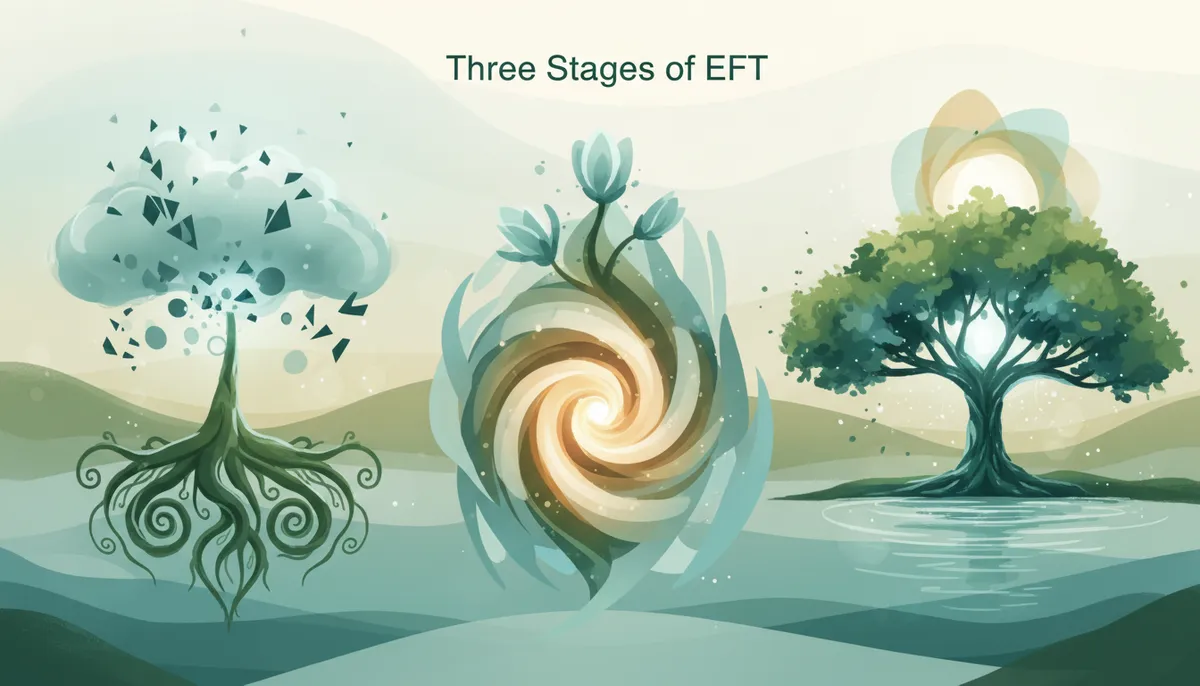
Emotionally Focused Therapy follows a structured process with three distinct stages. Understanding what happens in each stage can help you know what to expect and recognize your progress.
Stage 1: De-escalation and Cycle Awareness
In the first stage, you’ll work with your therapist to identify and understand the negative patterns keeping you stuck. For individuals, this might mean recognizing how anxiety triggers avoidance behaviors. For couples, it involves mapping out the cycle of conflict—how one person’s withdrawal triggers the other’s pursuit, creating a loop of disconnection.
Key activities in Stage 1 include:
- Identifying negative interaction patterns and emotional responses
- Recognizing the underlying emotions driving surface behaviors
- Understanding how past experiences shape current reactions
- Beginning to break the cycle by increasing awareness
This stage is about creating a map of your emotional landscape. You’ll start seeing patterns you couldn’t recognize before, which is the first step toward changing them.
Stage 2: Restructuring Interactions
Stage 2 is where the deep work happens. You’ll access and express previously hidden emotions—the vulnerable feelings underneath anger, the longings beneath withdrawal. This is when EFT creates those corrective emotional experiences that reshape your patterns.
In this stage, you might:
- Express fears of rejection or abandonment you’ve kept hidden
- Practice asking for what you need emotionally
- Respond to others in new, more vulnerable ways
- Challenge old beliefs about relationships and emotions
For couples therapy, this stage involves creating new bonding moments where partners share deeper feelings and respond with compassion. For individual therapy, it means developing a more secure relationship with your own emotions and learning to self-soothe effectively.
Stage 3: Consolidation and Integration
In the final stage, you consolidate the changes you’ve made and integrate new patterns into daily life. The focus shifts from intense emotional work to practical application and maintenance.
Stage 3 activities include:
- Practicing new communication skills in everyday situations
- Developing strategies for handling setbacks and challenges
- Creating a plan for maintaining emotional connection going forward
- Celebrating progress and acknowledging growth
By this stage, the changes that felt awkward and effortful in Stage 2 start feeling more natural. You’ve internalized new ways of relating to your emotions and to others.
Practical Techniques You Can Use Right Now
While EFT is most effective with a trained therapist, you can start using some core principles immediately to improve your emotional wellbeing. These techniques won’t replace therapy but can complement your work or help you decide if EFT is right for you.
Practice Emotion Identification
Many people struggle to name their emotions beyond broad categories like “good” or “bad.” Developing emotional vocabulary is crucial for EFT work. Try this exercise:
- Set aside 10 minutes each day for emotional check-ins
- Use an emotion wheel or feelings chart to identify specific emotions
- Ask yourself: What am I feeling right now? Where do I feel it in my body?
- Write down the emotion and the situation that triggered it
- Notice patterns over time without judgment
This simple practice builds the emotional awareness that EFT relies on. According to the CDC’s mental health resources, developing emotional awareness is a key component of mental wellbeing and can help prevent more serious mental health challenges.
Use the STOP Technique
When you notice yourself getting caught in a negative emotional cycle, use this four-step process:
- S – Stop: Pause whatever you’re doing or saying
- T – Take a breath: Breathe deeply to calm your nervous system
- O – Observe: Notice what you’re feeling without judgment
- P – Proceed mindfully: Choose a response aligned with your values rather than reacting automatically
This technique, drawn from mindfulness practices that complement EFT, helps you create space between emotion and reaction. It’s particularly valuable for managing anxiety and preventing conflict escalation in relationships.
Practice Vulnerability in Small Steps
EFT emphasizes the healing power of vulnerability, but that doesn’t mean you need to bare your soul to everyone immediately. Start small:
- Share one genuine feeling with a trusted friend or family member
- Express a need or preference you usually keep to yourself
- Admit when you’re struggling instead of pretending everything’s fine
- Ask for help or support when you need it
Notice how others respond to your vulnerability. You might be surprised to find that opening up creates deeper connection rather than the rejection you feared.
EFT for Different Life Situations
Emotionally Focused Therapy can be adapted to various challenges and life circumstances. Here’s how EFT principles apply to different situations you might be facing.
Using EFT for Relationship Conflicts
EFT is best known for its effectiveness in couples therapy, and for good reason. Research shows it achieves high success rates for relationship distress by helping partners understand the emotional dynamics beneath their conflicts.
Common relationship patterns EFT addresses include:
| Pattern | What It Looks Like | EFT Approach |
|---|---|---|
| Pursue-Withdraw | One partner seeks connection while the other pulls away | Help pursuer express vulnerability instead of criticism; help withdrawer engage despite fear |
| Attack-Attack | Both partners respond to hurt with anger and blame | Access the underlying hurt and fear beneath the anger |
| Withdraw-Withdraw | Both partners avoid conflict and emotional connection | Create safe space to risk vulnerability and engagement |
If you’re struggling in your relationship, couples therapy using EFT principles can help you break these cycles and rebuild emotional connection. The approach works for all types of relationship challenges, from communication problems to intimacy issues to recovering from betrayal.
Applying EFT to Individual Anxiety
While EFT started as a couples therapy, it’s highly effective for individual issues like anxiety. The approach helps you understand anxiety not as a problem to eliminate but as an emotional signal worth exploring.
EFT for anxiety involves:
- Identifying what your anxiety is trying to tell you about unmet needs
- Exploring the attachment fears underlying anxious responses
- Developing compassion for your anxious parts rather than fighting them
- Building more secure internal and external relationships to reduce baseline anxiety
Many people with anxiety have insecure attachment patterns from childhood that leave them constantly worried about abandonment or rejection. EFT helps heal these old wounds by creating new, secure attachment experiences in therapy and in relationships.
EFT for Depression and Trauma
Depression often involves disconnection—from others, from emotions, from yourself. EFT addresses this by helping you reconnect with feelings you’ve shut down and rebuild relationships that have become distant. Depression treatment using EFT focuses on accessing the emotions underneath numbness and withdrawal.
For trauma therapy, EFT helps by creating a safe space to process painful emotions at a manageable pace. The attachment focus is particularly relevant since trauma often damages our sense of safety in relationships. EFT can help rebuild trust and security after traumatic experiences.
Overcoming Common Challenges in EFT
Even the most effective therapy approaches come with challenges. Here’s how to navigate common obstacles you might encounter in your EFT journey.
When Emotions Feel Too Overwhelming
One of the most common concerns about EFT is: “What if I open up emotionally and can’t handle it?” This fear is understandable, especially if you’ve spent years avoiding difficult feelings. The good news is that EFT therapists are trained to help you approach emotions safely, at a pace you can manage.
If emotions feel overwhelming:
- Tell your therapist immediately—they can adjust the pace
- Use grounding techniques to stay present (focus on your breath, notice your surroundings)
- Remember that emotions, even intense ones, are temporary and won’t harm you
- Practice self-compassion for the difficulty of this work
Many clients find that emotions feel less overwhelming once they stop avoiding them. The anticipation is often worse than the actual experience of feeling and expressing emotions in a supportive environment.
Dealing with Partner Resistance in Couples Therapy
Sometimes one partner is enthusiastic about EFT while the other is skeptical or reluctant. This is normal and doesn’t doom the therapy to failure. In fact, addressing this resistance is part of the therapeutic process.
If your partner is resistant:
- Give them time to build trust with the therapist
- Focus on your own willingness to be vulnerable first
- Avoid using therapy as ammunition in arguments
- Acknowledge their concerns and fears about the process
Often, the more resistant partner is actually more hurt and afraid, which makes them protective. As they see that therapy creates safety rather than blame, resistance usually softens.
Managing Cost and Time Concerns
Therapy requires investment of time and money, which can feel daunting, especially for Millennials dealing with financial stress or remote Gen Z adults navigating tight budgets. However, consider the cost of not addressing your emotional wellbeing—strained relationships, decreased work performance, ongoing anxiety or depression.
To make EFT more manageable:
- Check if your insurance covers mental health services
- Ask about sliding scale fees if cost is a barrier
- Consider virtual therapy options that save commute time
- View therapy as preventive care that may save medical costs long-term
According to the Florida Department of Children and Families, mental health services are an important investment in overall wellbeing. Many resources are available to help make care affordable and accessible.
Finding the Right Support for Your EFT Journey
Working with the right therapist makes all the difference in your EFT experience. Margaret Deuerlein at West Florida Therapy is a caring psychotherapist who specializes in helping individuals, couples, and adolescents navigate anxiety, depression, relationship challenges, and trauma using evidence-based approaches like EFT.
Whether you’re a Spanish-speaking adult facing language barriers in accessing mental health care, a stressed Millennial trying to balance work and life transitions, an anxious teenager dealing with school and social pressures, a couple struggling with communication, or a remote Gen Z adult navigating mental health challenges virtually, Margaret provides compassionate, individualized care tailored to your unique needs.
West Florida Therapy offers:
- In-person therapy sessions in the office
- Virtual therapy available throughout Florida
- Bilingual services in English and Spanish
- Specialized support for anxiety, depression, relationship issues, and trauma
- Evidence-based approaches including Emotionally Focused Therapy
You can check out what clients are saying about their experiences and visit West Florida Therapy on Google to learn more about the practice and read reviews from people who’ve found healing through therapy.
Taking Your Next Steps Toward Emotional Healing
Emotionally Focused Therapy offers a powerful path toward deeper self-understanding, healthier relationships, and relief from anxiety, depression, and emotional distress. Unlike approaches that focus solely on managing symptoms or changing thoughts, EFT gets to the heart of what drives your struggles—your attachment needs and emotional experiences.
The journey isn’t always easy. Opening up emotionally requires courage, and change takes time. But the research is clear: EFT works. It creates lasting improvements in relationships and mental health by transforming the emotional patterns that keep you stuck.
You don’t have to navigate this journey alone. Whether you’re dealing with relationship conflicts, anxiety that won’t let up, depression that makes everything feel gray, or the aftermath of trauma, EFT can help you find your way back to connection—with others and with yourself.
If you’re ready to explore how Emotionally Focused Therapy can support your emotional wellbeing, reach out to West Florida Therapy today. Margaret Deuerlein and her team are here to walk alongside you on your journey toward healing and growth. Take that first step—you deserve support, connection, and the chance to feel better.
FAQs
Q: What’s the difference between EFT and other types of therapy like CBT?
A: While Cognitive Behavioral Therapy (CBT) focuses on changing thoughts and behaviors, Emotionally Focused Therapy (EFT) prioritizes understanding and transforming emotional experiences first. EFT is rooted in attachment theory and believes that by accessing and expressing deeper emotions, you can create lasting change in how you relate to yourself and others. It’s less about managing symptoms and more about healing the underlying emotional wounds driving your struggles.
Q: How long does Emotionally Focused Therapy typically take?
A: EFT usually involves 8-20 sessions, though the exact length depends on your specific situation and goals. Individual therapy for anxiety or depression might be on the shorter end, while couples working through significant relationship challenges may need more time. The therapy follows a structured process with three stages, and progress varies based on your commitment, the complexity of issues, and how quickly you’re able to access and work with emotions.
Q: Can EFT help with anxiety and depression, or is it just for couples?
A: While EFT is best known for couples therapy, it’s highly effective for individual issues like anxiety, depression, and trauma. The approach helps you understand these struggles as attachment-related problems—difficulties in your relationship with yourself and others. By building more secure emotional connections and learning to work with your feelings rather than against them, EFT can provide significant relief from anxiety and depression symptoms.
Q: Is EFT available in languages other than English?
A: Yes! Many therapists, including those at West Florida Therapy, offer Emotionally Focused Therapy in multiple languages. Bilingual services in English and Spanish are particularly valuable because emotional expression can vary across languages and cultures. Being able to explore your feelings in your preferred language ensures you can fully express yourself and get the most from therapy.
Q: What should I expect in my first EFT therapy session?
A: In your first EFT session, your therapist will want to understand your current struggles, relationship history, and what you hope to achieve. You’ll start identifying patterns in how you handle emotions and relationships. Don’t worry—you won’t be expected to dive into deeply vulnerable feelings right away. The early sessions focus on building safety, trust, and awareness so that when you do explore difficult emotions, you’ll have the support and tools you need.