
Key Takeaways
-
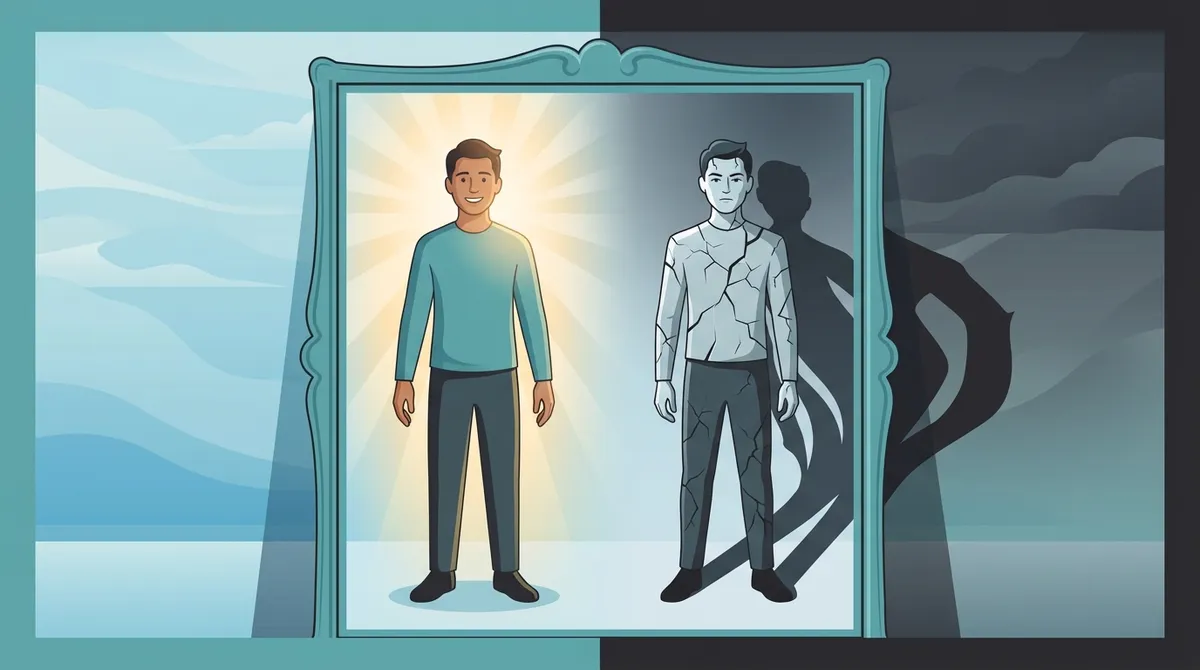
Narcissistic traits stem from fragile self-esteem and sensitivity to criticism, not genuine confidence; recognize this hidden vulnerability helps build compassion while still protecting your boundaries.
-
Healthy confidence allows you to accept criticism, admit mistakes, and celebrate others’ wins without feeling threatened; narcissistic patterns involve constant need for admiration and exploitation of others.
-
Treatment for NPD is possible with specialized therapy approaches like schema therapy and DBT, but success requires the person to embrace vulnerability—a major challenge since they typically avoid it.
-
If living with someone narcissistic, set firm boundaries, seek your own therapy, build a support network, and recognize that walking on eggshells and self-doubt are not your fault or responsibility.
-
NPD develops from multiple factors including childhood trauma, excessive praise/criticism, and parenting styles; understanding these roots doesn’t excuse harmful behavior but supports healing possibilities.
-
Couples therapy and individual therapy offer flexible formats (in-person or virtual) to address relationship damage and personal growth related to narcissistic patterns.
Have you ever wondered if someone you love is just confident — or if something deeper is going on? It is a question a lot of people ask. Maybe a friend always needs to be the center of attention. Maybe a partner rarely shows empathy. Maybe you have even questioned your own patterns. Understanding the difference between healthy self-confidence and narcissistic traits can feel confusing, but it matters more than you might think.
This article breaks it all down in plain language. We will look at what healthy confidence looks like, what narcissistic patterns actually involve, and how therapy can help — whether you are the one struggling or you are in a relationship with someone who has these traits. Let us start with the basics.

What Is Healthy Self-Confidence?
Healthy confidence is a good thing. It helps you take on challenges, set boundaries, and believe in your own worth. People with genuine self-confidence do not need constant praise to feel okay about themselves. They can handle criticism without falling apart. They celebrate other people’s wins without feeling threatened.
Here is what healthy self-confidence typically looks like:
- You feel good about yourself without needing constant approval
- You can admit mistakes and learn from them
- You show empathy toward others
- You have secure, stable relationships
- You handle criticism with grace, even when it stings
- You support others without feeling diminished
Healthy narcissism — yes, a small amount is normal — supports your confidence and resilience. It helps you strive for success and take pride in your accomplishments. The problem begins when these traits cross a line and become pathological. That is when professional support becomes important. Exploring low self-esteem or confidence issues with a therapist can help you find a healthy balance.

What Are Narcissistic Traits? Key Signs to Know
Narcissistic traits go well beyond confidence. They involve a pattern of behavior that affects relationships, work, and emotional well-being. According to the DSM-5 (diagnostic code 301.81 / F60.81), Narcissistic Personality Disorder (NPD) is a real, recognized personality disorder with consistent symptoms that persist across time.
The Cleveland Clinic identifies nine core diagnostic criteria for NPD. A person does not need all nine to have narcissistic traits, but the pattern matters. Here are the most common signs:
- A grandiose sense of self-importance
- Preoccupation with fantasies of power, success, or brilliance
- Believing they are special and can only be understood by other “special” people
- A strong need for excessive admiration
- A deep sense of entitlement
- Exploiting others for personal gain
- Lacking empathy for others’ feelings or needs
- Envying others or believing others envy them
- Arrogant or haughty behaviors and attitudes
Underneath this outer shell of confidence, research shows that many people with narcissistic traits actually have fragile self-esteem. They are highly sensitive to criticism and fear being seen as ordinary or flawed. This vulnerability often drives the behavior that can seem so confusing from the outside.

Healthy Confidence vs. Narcissistic Traits: A Side-by-Side Look
It helps to see these two patterns compared directly. The table below makes the differences clear:
| Area | Healthy Self-Confidence | Narcissistic Traits |
|---|---|---|
| Self-Worth | Stable and internally sourced | Fragile and dependent on external validation |
| Empathy | Genuine and consistent | Limited or absent |
| Criticism | Accepted with some discomfort | Met with rage, shame, or withdrawal |
| Relationships | Mutually supportive | Often one-sided or exploitative |
| Admiration | Appreciated but not required | Constantly sought and demanded |
| Mistakes | Owned and learned from | Denied, blamed on others |
| Boundaries | Respected | Frequently violated |
This comparison makes one thing very clear: narcissistic patterns are not just about being confident. They create real harm — for the person living with them and for those around them. If you recognize these patterns in yourself or someone close to you, reaching out to a licensed psychotherapist is a meaningful first step.

How Narcissistic Traits Affect Relationships
One of the most painful parts of narcissistic behavior is how it impacts relationships. Whether in a romantic partnership, a family, or a friendship, these patterns create tension, confusion, and emotional pain.
Research highlights that NPD is strongly associated with:
- Tumultuous and unstable relationships
- Social isolation over time
- Increased risk of depression and anxiety
- Substance use problems
- Legal or workplace difficulties
Partners of people with narcissistic traits often feel unseen, criticized, and emotionally exhausted. If you are in a relationship like this, you are not imagining things — and you deserve support too. Couples therapy can be a powerful space to address communication breakdowns and begin rebuilding connection. You can also explore more about relationship problems and how therapy can help.
What Causes Narcissistic Personality Disorder?
NPD does not develop overnight. Most experts agree that it comes from a combination of factors. Understanding the roots can build compassion — even when the behavior itself is harmful.
Common contributing factors include:
- Early childhood experiences — Excessive praise or criticism during development can shape narcissistic patterns
- Trauma or neglect — Emotional wounds in childhood often create defensive self-protective behaviors in adulthood
- Genetic and temperament factors — Some people are naturally more sensitive to shame and rejection
- Parenting styles — Both over-indulgent and cold, dismissive parenting have been linked to NPD development
- Cultural pressures — Environments that heavily reward status and achievement can reinforce narcissistic tendencies
It is important to remember that having these risk factors does not mean someone will develop NPD. And having NPD does not mean someone cannot grow and change with the right help. Trauma therapy can be an important part of addressing the roots of these patterns.
Can Narcissistic Personality Disorder Be Treated?
This is one of the most common questions people ask — and the honest answer is: yes, treatment is possible, but it takes time and commitment. NPD is listed as a lifelong condition, but therapy can meaningfully reduce symptoms and improve quality of life.
Treatment is genuinely challenging. People with narcissistic traits often resist therapy because it requires vulnerability — something they typically avoid. They may seek validation from their therapist rather than real self-reflection. They may engage in power struggles or withdraw emotionally when things get uncomfortable.
That is why working with a trained therapist who understands personality disorders is so important. According to the Society for Psychotherapy, effective treatment focuses on stabilizing day-to-day functioning, reducing interpersonal conflicts, and gently addressing the shame and dysregulated self-esteem at the core of NPD.
Approaches that show promise include:
- Individual psychotherapy — Building a trusting relationship with one therapist, working through defenses slowly
- Schema therapy — Identifying deep-rooted thinking patterns and reshaping them over time. Learn more about schema therapy and how it works.
- Dialectical Behavior Therapy (DBT) — Building emotional regulation and distress tolerance skills
- Couples therapy — Addressing relationship patterns in a structured, supported space
There are no FDA-approved medications specifically for NPD, but medications may be used to treat related conditions like depression, anxiety, or mood issues that often accompany it.
How Therapists Approach NPD Treatment
Working with a narcissistic client is one of the most nuanced challenges in mental health care. Therapists need specialized training to manage the unique dynamics that arise. These include:
- Clients demanding equality or superiority in the therapeutic relationship
- Clients distancing from difficult emotions to avoid shame
- Clients seeking validation rather than honest feedback
- Power struggles that can derail the therapeutic process
A skilled therapist knows how to set clear, consistent boundaries while remaining warm and non-judgmental. Managing what therapists call “countertransference” — the therapist’s own emotional reactions — is also critical. The goal is not to break someone down, but to slowly create a safe enough space for real vulnerability to emerge.
At West Florida Therapy, Margaret Deuerlein brings compassion and clinical expertise to every session. Whether you are personally working through narcissistic patterns or navigating a relationship with someone who has them, Margaret provides a grounded, caring space for real progress. You can visit West Florida Therapy on Google to read reviews from real clients who have experienced this supportive care firsthand.
What If You Are Living With Someone Who Has Narcissistic Traits?
If someone in your life has narcissistic traits, you already know how exhausting it can be. You may feel like you are always walking on eggshells. You might question your own perception of reality — a painful experience sometimes called gaslighting. Your own mental health deserves attention too.
Here are some practical steps to protect your well-being:
- Name what is happening — Understanding narcissistic patterns helps you stop taking the behavior personally
- Set clear, firm boundaries — Know what you will and will not accept, and communicate it calmly
- Seek your own therapy — Individual therapy gives you a space to process your experience without judgment
- Build a support network — Isolation is common in these relationships; connection is protective
- Know when to step back — Not every relationship can or should be saved; your safety matters most
For helpful Florida-specific mental health and substance abuse resources, the Florida Department of Children and Families offers guidance for people navigating difficult relationships and mental health challenges.
You can also explore signs of codependency that can develop in relationships with narcissistic individuals, as well as emotional pain support and relationship and communication issues therapy. The CDC’s mental health resources also provide a helpful starting point for understanding your options.
Therapy Formats That Work: Individual, Couples, and Virtual
The good news is that support is available in flexible formats. You do not have to wait until things reach a crisis point. Whether you prefer in-person sessions or the convenience of virtual therapy, help is accessible.
Here is a quick look at therapy options that address narcissistic patterns:
| Therapy Format | Best For | Availability |
|---|---|---|
| Individual Therapy | Personal growth, processing relationship pain | In-person (Brandon, FL) or virtual |
| Couples Therapy | Relationship conflicts, communication repair | In-person or telehealth |
| Telehealth Therapy | Convenient access across all of Florida | All of Florida, virtually |
| Bilingual Therapy (EN/ES) | Spanish-speaking clients | In-person and virtual |
If you are wondering whether virtual therapy is right for you, telehealth therapy across Florida makes it easy to connect with a skilled therapist without leaving home. For teens, virtual therapy for adolescents is also available and has been shown to be highly effective.
Florida residents can also explore mental health links through the Florida Department of Health for additional community resources.
Content strategy and digital visibility for mental health practices is an area that tools like SEO Rocket help mental health providers grow their online presence so more people can find the support they need.
Taking the First Step Toward Healing
Whether you are exploring your own patterns or trying to make sense of someone else’s behavior, understanding narcissistic traits is a powerful starting point. You deserve clarity, support, and real tools for change.
At West Florida Therapy, Margaret Deuerlein is here to walk alongside you — with warmth, skill, and genuine care. Sessions are available in-person in Brandon, Florida, and virtually throughout the state. Bilingual services in English and Spanish are also available, ensuring that no language barrier stands between you and the help you deserve.
Real change is possible. It starts with one courageous step. Reach out to West Florida Therapy today and take that step toward a healthier, more connected life.
FAQs
Q: What are the main symptoms of narcissistic personality disorder?
A: The main symptoms include a grandiose sense of self-importance, excessive need for admiration, lack of empathy, sense of entitlement, and exploiting others for personal gain. Underneath these behaviors, many people with NPD actually struggle with fragile self-esteem and deep sensitivity to criticism. If you recognize these patterns in someone you love — or yourself — a therapist can help you understand what is really going on.
Q: What is the difference between healthy narcissism and NPD?
A: Healthy narcissism is a normal part of confidence — it helps you believe in yourself and bounce back from setbacks. NPD goes much further, involving persistent patterns of entitlement, lack of empathy, and fragile self-worth that harm relationships and daily functioning. The key difference is that healthy confidence does not come at the expense of others.
Q: Can narcissistic personality disorder actually be treated?
A: Yes — treatment is possible and can make a meaningful difference, though it takes time and a skilled, patient therapist. Approaches like individual psychotherapy, schema therapy, and DBT can help reduce symptoms and improve relationships. The biggest hurdle is that people with narcissistic traits often resist vulnerability, which is why finding the right therapeutic fit really matters.
Q: How do you deal with someone who has narcissistic traits?
A: Setting clear boundaries, seeking your own individual therapy, and building a strong support network are all important steps. It also helps to understand that the behavior is often rooted in deep-seated shame and fear — not a reflection of your worth. You do not have to navigate this alone; a therapist can give you tools to protect your well-being and make informed decisions about the relationship.
Q: What challenges do therapists face when treating NPD?
A: Therapists working with NPD clients often encounter power struggles, resistance to emotional vulnerability, and a tendency to seek validation rather than honest self-reflection. This is why specialized training and clear therapeutic boundaries are essential. A good therapist creates a consistently warm yet structured space that gradually makes it safe for real healing to happen.