

Key Takeaways
-
Maternal separation anxiety (MSA) is a treatable mental health condition characterized by excessive worry, guilt, or fear when separated from your child; it’s distinct from postpartum anxiety and can emerge at any stage of your child’s life, not just infancy.
-
Gradual exposure through small, manageable separations starting with just 30 minutes is one of the most effective tools for reducing anxiety while simultaneously helping your child build independence and resilience.
-
Research shows 72% of mothers with perinatal depression or anxiety never received counseling or treatment, indicating many struggle silently; professional help through CBT, EMDR, or talk therapy can address root causes and develop personalized coping strategies.
-
Create a consistent goodbye routine with clear transitions (hug, special phrase, confident wave) to signal safety and predictability; when you model calm during separations, your child learns to feel calm too, which paradoxically eases your own anxiety.
-
Seek professional help if anxiety interferes with work, relationships, or daily tasks; you’re avoiding necessary separations; experiencing panic attacks; or feeling depressed and hopeless—early intervention is most effective and you don’t need to wait until things feel unbearable.
-
Build your support system by talking openly with partners or friends, joining parent groups, calling the National Maternal Mental Health Hotline (1-833-TLC-MAMA), or working with a therapist who specializes in maternal mental health to normalize these feelings and reduce isolation.
If you’ve ever felt your heart sink when leaving your child with someone else, you’re not alone. Maternal separation anxiety is something many moms experience, and it can be surprisingly intense. Whether you’re heading back to work, running errands, or simply stepping out for an hour, that wave of worry can feel overwhelming. The good news? You don’t have to just push through it on your own.
This feeling is more common than most people realize. It can show up during infancy, toddler years, or even when your child starts school. It doesn’t make you a bad mom — it makes you a human one. But when it starts affecting your daily life, sleep, or relationships, it’s worth paying attention to. Let’s walk through five practical, compassionate ways to cope with maternal separation anxiety so you can feel more at ease — and still be the amazing mom you already are.

What Is Maternal Separation Anxiety?
Maternal separation anxiety (MSA) is a mental health experience where mothers feel excessive worry, guilt, or fear when separated from their child. It goes beyond normal concern. It can involve racing thoughts about your child’s safety, difficulty focusing on anything else, and even physical symptoms like a tight chest or upset stomach.
MSA is not the same as postpartum anxiety, though the two can overlap. Postpartum anxiety typically refers to the early months after birth. MSA, on the other hand, can emerge at any stage of your child’s life — from newborn through school age and beyond. It’s a normal part of motherhood that becomes a problem when it interferes with daily functioning.
Common Signs of Maternal Separation Anxiety
Recognizing the signs is the first step toward getting better. Here’s what MSA can look like:
- Persistent worry about your child’s health or safety when apart
- Difficulty concentrating at work or during personal time
- Mood swings or irritability related to separations
- Trouble sleeping because of anxious thoughts about your child
- Panic attacks or intense physical reactions before or during separations
- Hypervigilance — constantly checking in or calling caregivers
- Avoiding separations altogether, even when it’s not practical
If several of these sound familiar, you may be dealing with more than typical mom worry. The anxiety treatment options available today are compassionate and effective — and seeking help is a sign of strength, not weakness.
Who Experiences Maternal Separation Anxiety?
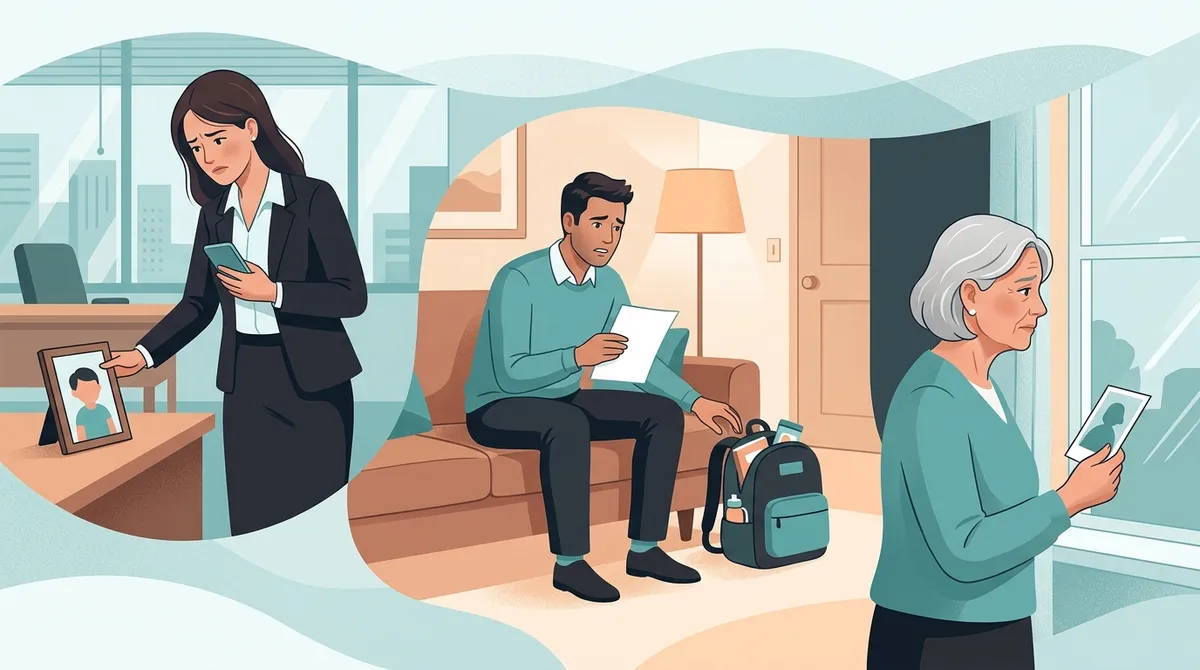
MSA affects mothers across all backgrounds, ages, and life stages. Research published in PubMed shows that it is especially common in mothers of older children and is linked to depressive symptoms, fewer coping skills, and higher levels of stress. According to a Listening to Mothers Survey, 72% of people with perinatal depression or anxiety never received counseling or treatment — which means a lot of moms are struggling in silence.
For Hispanic moms navigating a new culture or language barriers, the isolation can feel even more intense. At West Florida Therapy, bilingual therapy in English and Spanish is available, making it easier for Spanish-speaking moms to access the support they deserve. You should never have to choose between getting help and feeling understood in your own language.
When Does MSA Tend to Peak?
MSA often intensifies during major life transitions. Some of the most common trigger points include:
- Returning to work after maternity leave — Conflicting emotions of excitement and guilt are very common here.
- Starting childcare or daycare — Handing your child off to a new environment can feel terrifying.
- School enrollment — Even kindergarten drop-offs can bring up intense feelings.
- Overnight stays with relatives — Knowing your child is somewhere unfamiliar without you can spike anxiety.
- Medical appointments or procedures — When you can’t be present to protect your child, fear can escalate.
Knowing these triggers can help you prepare and plan coping strategies in advance. You can also explore resources through Mental Health Resources from the CDC for broader guidance on mental wellness for caregivers.
5 Ways to Cope With Maternal Separation Anxiety
Ready to feel better? Here are five compassionate, research-backed strategies that can make a real difference.
1. Start With Small, Manageable Separations
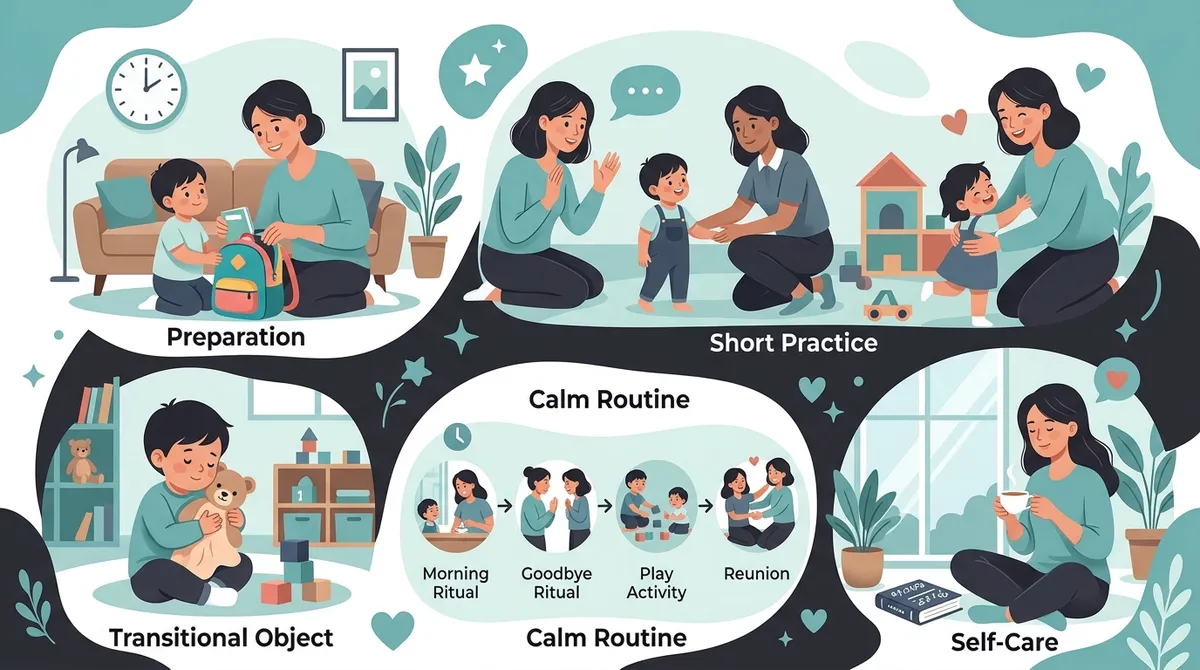
You don’t have to go from zero to overnight trips right away. Gradual exposure is one of the most effective tools for reducing anxiety. Start with short separations — even 30 minutes — and build up from there. Each small success teaches your nervous system that separation is safe.
This also benefits your child. Short, regular separations actually help kids build independence and resilience. So when you practice this, you’re helping both of you grow. Consider it a win-win.
- Start with a 30-minute separation and gradually increase the time
- Choose a familiar and trusted caregiver for early practice
- Avoid sneaking away — a clear goodbye builds trust for both of you
- Celebrate small wins — every successful separation is progress
2. Create a Consistent Goodbye Routine
Routines are powerful tools for anxious minds. A consistent goodbye routine gives both you and your child a sense of predictability and safety. It signals that separation is normal — and that reunions always follow.
Your routine doesn’t have to be elaborate. A quick hug, a special phrase, and a confident wave can be enough. The key is consistency. When you model calm during goodbyes, your child learns to feel calm too — and that can actually ease your own anxiety in return.
3. Practice Mindfulness and Positive Visualization
When anxious thoughts spiral, mindfulness can help you gently return to the present moment. Instead of imagining worst-case scenarios, try picturing your child happily playing or learning. This isn’t denial — it’s training your brain to consider positive outcomes alongside fearful ones.
Simple mindfulness practices include:
- Deep breathing exercises (try 4 counts in, 4 counts hold, 4 counts out)
- Body scan meditations to release physical tension
- Journaling your worries — then writing one positive outcome for each
- Grounding techniques like the 5-4-3-2-1 method
If anxiety symptoms feel too intense to manage alone, understanding your anxiety signs and treatment options is a great place to start. Learning what drives your anxiety helps you address it at the root.
4. Build Your Support System
You were not meant to do this alone. Talking openly about maternal separation anxiety — with a partner, a trusted friend, or a therapist — can relieve so much of the shame and isolation that often comes with it. Normalizing these feelings is one of the most powerful things you can do.
Consider these ways to build your support network:
- Talk to your partner about your feelings without judgment
- Join a parent support group, either locally or virtually
- Call the National Maternal Mental Health Hotline at 1-833-TLC-MAMA for free, confidential support
- Connect with a therapist who specializes in perinatal or maternal mental health
For couples where MSA is creating tension or communication challenges, couples therapy can help partners better understand and support each other through parenting stress. Relationship strain is common when one partner feels consumed by worry — and getting help together is a meaningful step.
You can also find additional community resources through Substance Abuse & Mental Health services in Florida.
5. Seek Professional Therapy
Sometimes the most loving thing you can do — for yourself and your child — is to ask for professional help. A licensed therapist can help you identify the root causes of your anxiety, develop personalized coping strategies, and process any deeper experiences that may be fueling your fear.
Therapeutic approaches that work well for maternal separation anxiety include:
- Cognitive Behavioral Therapy (CBT) — helps you challenge and reframe anxious thought patterns
- EMDR — especially helpful if past trauma is contributing to your anxiety (learn more about EMDR treatment)
- Mindfulness-based therapy — builds present-moment awareness and emotional regulation
- Talk therapy — provides a safe, non-judgmental space to process your feelings
If you’re not sure where to start, Margaret Deuerlein at West Florida Therapy is a licensed and caring psychotherapist who helps moms work through anxiety, mood issues, and the emotional weight of parenthood. Sessions are available in-person in Brandon, Florida, and via telehealth therapy throughout Florida — making it easy to get support wherever you are.
MSA vs. Postpartum Anxiety: A Quick Comparison
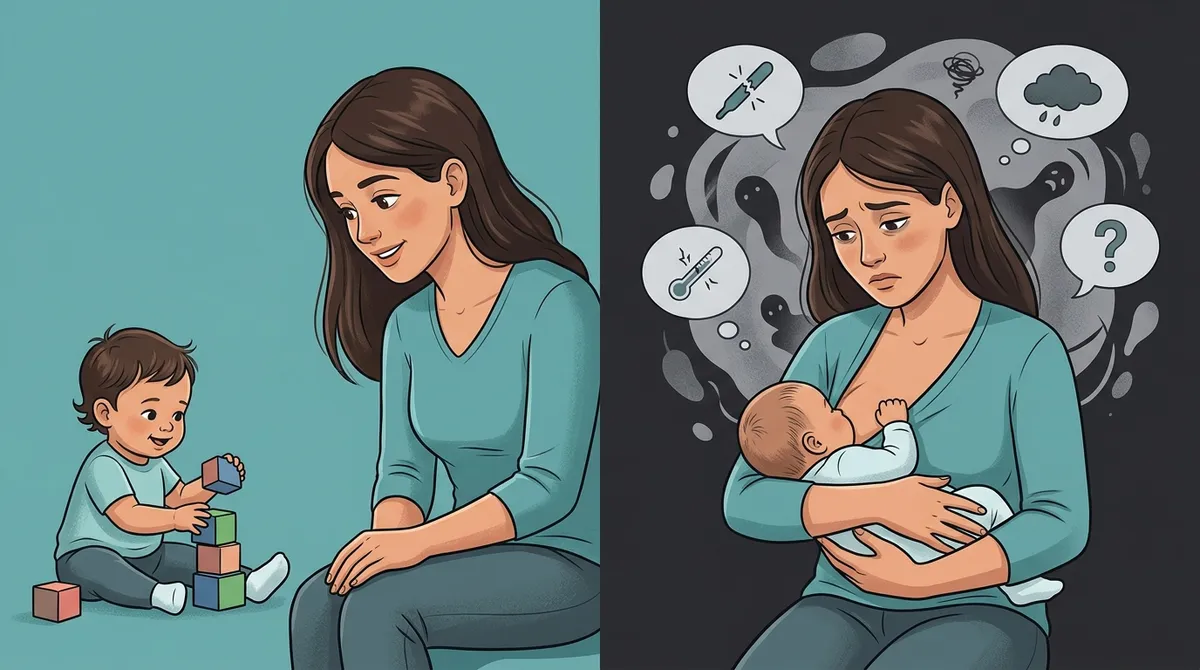
Many moms confuse these two conditions. Here’s a simple breakdown to help clarify the difference:
| Feature | Postpartum Anxiety | Maternal Separation Anxiety |
|---|---|---|
| Timing | Begins shortly after birth | Can start at any stage of child’s life |
| Main Focus | General anxiety about new motherhood | Specifically triggered by separation from child |
| Common Symptoms | Racing thoughts, sleep issues, irritability | Worry about child’s safety, hypervigilance, avoidance |
| Can Co-Occur With | Depression, OCD, PTSD | Depression, generalized anxiety |
| Treatment | Therapy, medication, support groups | Therapy, gradual exposure, coping strategies |
Both conditions deserve care and attention. If you recognize yourself in either column, please know that effective help is available. You can also explore depression treatment if you feel that low mood is also playing a role in what you’re experiencing.
When to Reach Out for Help
It can be hard to know when normal mom worry crosses into something that needs professional attention. Here are some clear signals that it’s time to reach out:
- Your anxiety is interfering with work, relationships, or daily tasks
- You are avoiding necessary separations in ways that affect your child’s development
- You’re experiencing panic attacks related to separations
- You feel depressed, hopeless, or emotionally exhausted most of the time
- Your sleep or physical health is significantly disrupted by worry
If any of these sound like you, reaching out sooner rather than later makes a big difference. You don’t have to wait until things feel unbearable. Therapy works best when you start early — and you deserve support now. Florida residents can also explore resources through Mental Health Links provided by the Florida Department of Health.
Self-Care Is Not Optional — It’s Essential
We know — “self-care” can feel like a buzzword. But for moms dealing with maternal separation anxiety, intentional self-care is genuinely therapeutic. When your nervous system is constantly on high alert, daily habits that promote calm and joy can slowly rewire your anxiety response.
Try building these into your week:
- Regular movement — even a 20-minute walk can lower cortisol significantly
- Prioritizing sleep — anxiety and sleep deprivation feed each other
- Eating regular, nourishing meals — blood sugar crashes worsen anxiety
- Spending time doing something just for you — hobbies, creativity, rest
- Limiting doomscrolling or obsessive news consumption
For help setting meaningful goals around your mental wellness, explore the life goals resources available through West Florida Therapy. Taking care of yourself is one of the best things you can do for your child, too.
You Are Not Alone in This
Maternal separation anxiety is real, it’s valid, and it’s treatable. The love you have for your child is beautiful — but it shouldn’t come at the cost of your own mental health and wellbeing. With the right tools, the right support, and a little compassion for yourself, things can and do get better.
Margaret Deuerlein and the team at West Florida Therapy are here to walk alongside you. Whether you prefer in-person sessions in Brandon, Florida, or virtual therapy from the comfort of your home, compassionate, personalized care is available to you. You can visit us on Google to read reviews and learn more about what other clients have experienced.
You’ve already taken the first brave step by reading this far. Now take one more — and reach out to someone who can truly help. Schedule your free 15-minute consultation today and start moving toward the peace and confidence you deserve as a mom.
FAQs
Q: What are the most common signs of maternal separation anxiety?
A: The most common signs include persistent worry about your child’s safety when apart, difficulty concentrating, sleep disruptions, hypervigilance (constantly checking in with caregivers), and sometimes even panic attacks before or during separations. If these feelings are interfering with your daily life, it’s a good sign that some extra support could really help you feel more like yourself again.
Q: Is maternal separation anxiety the same as postpartum anxiety?
A: Not exactly! Postpartum anxiety typically shows up in the early months after birth and involves general worry about new motherhood. Maternal separation anxiety, on the other hand, is specifically triggered by being away from your child and can show up at any stage — including when your child starts school or daycare. Both are very real and both deserve compassionate care.
Q: Can maternal separation anxiety affect mothers of older children?
A: Absolutely — and more often than people think! Research shows that MSA can actually be quite intense in mothers of older children, especially during school transitions or when a child gains more independence. The love doesn’t shrink as kids grow, so it makes complete sense that the worry can linger or even grow with them.
Q: When should I seek professional help for maternal separation anxiety?
A: If your anxiety is getting in the way of your work, relationships, or daily routines — or if you’re avoiding necessary separations because the fear feels too overwhelming — it’s a great time to reach out to a therapist. You don’t have to wait until things feel unbearable. Early support truly makes a difference, and therapy is a safe, judgment-free space to work through what you’re feeling.
Q: How can therapy help with maternal separation anxiety?
A: Therapy can be incredibly effective for MSA! A therapist can help you identify the thought patterns driving your anxiety, teach you practical coping tools like mindfulness and gradual exposure, and create a personalized plan for feeling more confident during separations. Options like Cognitive Behavioral Therapy (CBT) and EMDR are both research-backed approaches that work well for anxiety rooted in separation fears.