Key Takeaways
-
Always confirm a group is currently running and accepting new members before you plan to attend, since schedules and availability change often.
-
Ask the facilitator about their license, training, and experience, and look up licensed professionals through Florida's state licensing system.
-
Group therapy is led by a trained therapist focused on treatment goals and skills, while peer support groups share experience and may not be clinical treatment.
-
Call your insurance company to verify mental health benefits, and ask providers about sliding-scale fees, copays, and deductibles before enrolling.
-
Some DBT skills groups require you to also attend individual DBT therapy, so ask about eligibility requirements before signing up.
-
Many people find that combining a group with individual therapy works well, since groups build connection and skills while one-on-one sessions address personal history.
Feeling stuck with stress, worry, or grief can make the world feel very small. Many people in the Tampa Bay area say they feel like no one else gets it. That is exactly where group therapy can help. Sitting in a room (or on a screen) with others who share similar struggles can bring real relief. You hear “me too,” and something in your chest loosens.
If you are searching for group therapy Brandon Florida options, you are in the right place. This guide walks you through what group therapy is, the types of groups people often find in and near Brandon, and how to pick one that fits your life. We will also cover costs, credentials, and what to expect on day one.
One quick note: group schedules and availability change often. Always confirm details directly with the provider before you plan to attend. Let’s dive in, friend.
What Is Group Therapy, Really?
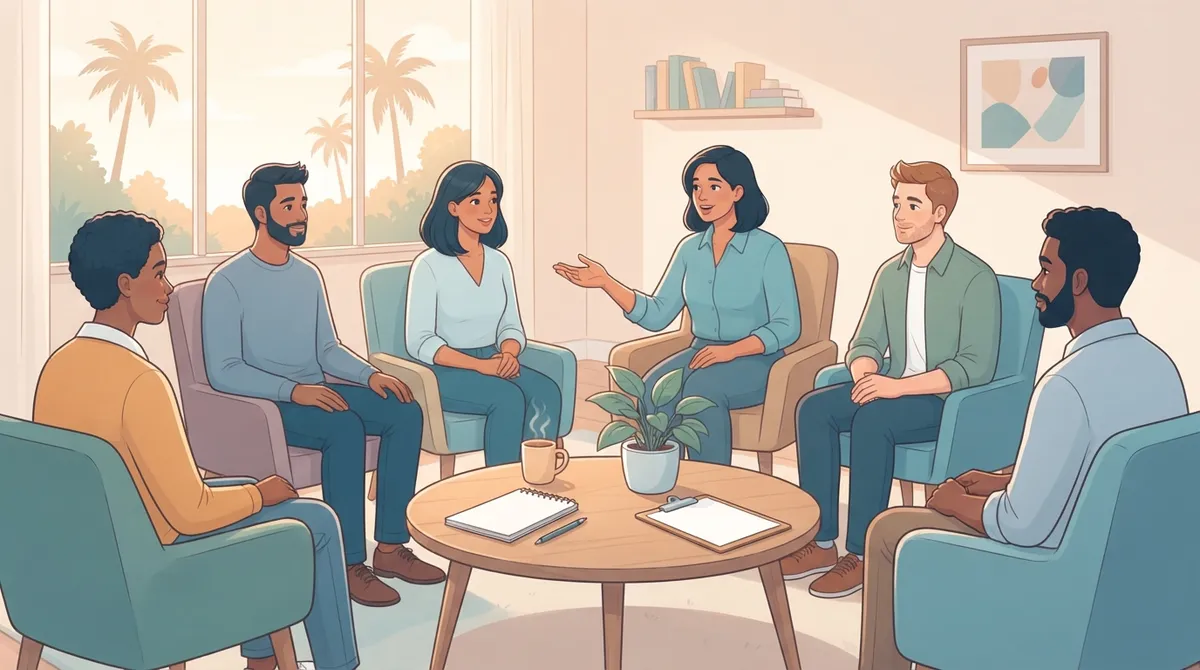
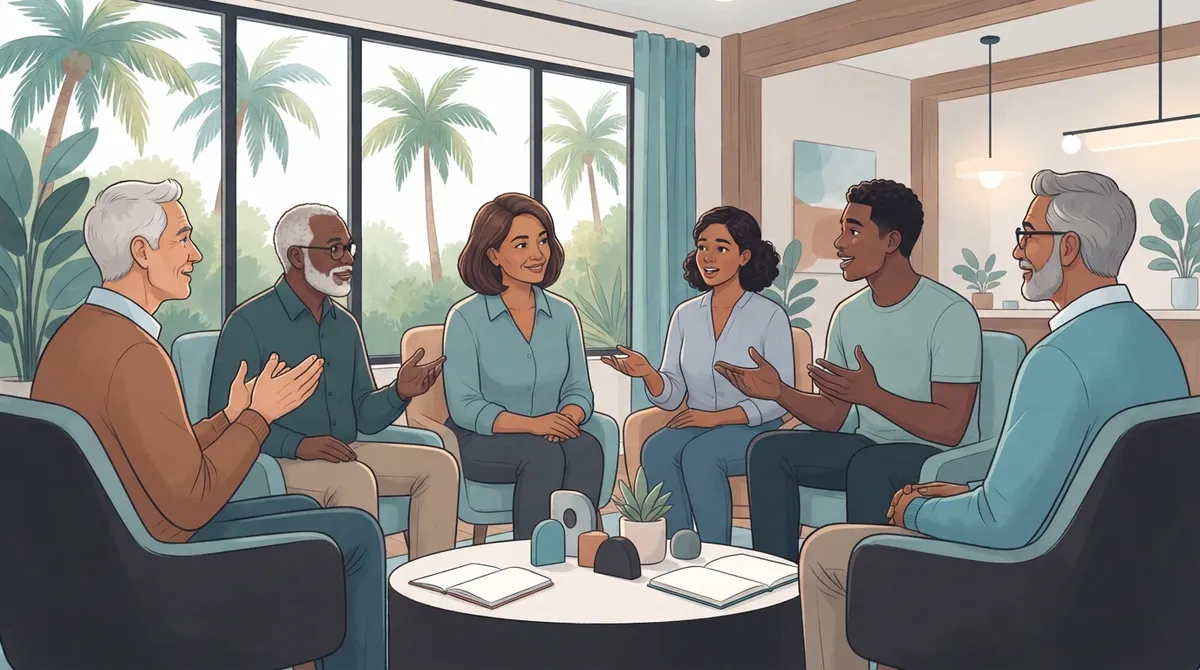
Group therapy is counseling led by a trained therapist with several people at once. Everyone shares a similar concern or goal. The therapist guides the conversation, teaches skills, and keeps the space safe.
A peer-led support group is a little different. Those groups are often run by members, not clinicians, and may not count as clinical treatment. Both can be helpful. They just serve different needs.
Group Therapy vs. Support Group
| Feature | Group Therapy | Peer Support Group |
|---|---|---|
| Leader | Licensed or trained therapist | Often a peer or volunteer |
| Focus | Skills, healing, treatment goals | Shared experience and encouragement |
| Structure | Planned sessions or modules | Often open and informal |
| Cost | May involve fees or insurance | Often free or low cost |
14 Group Therapy Options and Tips for Brandon, FL
Below are 14 practical ideas, group types, and tips to help you find the right fit. Think of this as your friendly roadmap.
1. Anxiety and Stress-Management Groups
Local directories list anxiety and stress groups in and near Brandon. These often teach breathing, thought-reframing, and calming skills. If worry runs your day, this can be a gentle starting point. You can also learn more through our guide on understanding anxiety signs, types, and treatment options.
2. DBT Skills Groups
Dialectical Behavior Therapy (DBT) skills groups teach four big skill areas: mindfulness, emotion regulation, distress tolerance, and interpersonal effectiveness. One Brandon-area listing describes rotating modules and says participants must also be in individual DBT therapy. Always verify current eligibility and schedules. For a simple primer, see our post on how to use DBT for better mental health and emotional balance.
3. Grief Support Groups
Loss is heavy, and nobody should carry it alone. One local directory lists a monthly grief group at Brandon Regional Library for parents, grandparents, and adult siblings after the death of a child. Because listings can go out of date, confirm meeting details with the organizer first. You may also like our piece on the stages of grief nobody tells you about.
4. Addiction and Recovery Groups
Recovery groups can be clinical or peer-led. Some focus on relapse prevention. Others focus on connection and accountability. Florida’s state resources on substance abuse and mental health are a helpful place to start looking.
5. Domestic Violence Education Groups
Some local listings include domestic-violence education and support groups. These offer safety planning, education, and a place to be heard. If you are in danger right now, call 911 or a local crisis line immediately.
6. Divorce and Separation Support
A breakup or divorce can shake your sense of self. Groups for divorce support can help you rebuild routines and confidence. They also remind you that healing is possible.
7. Premarital and Relationship Groups
Some listings mention premarital counseling groups. These can help partners practice communication before big commitments. If you and your partner prefer private sessions, our couples therapy services offer one-on-one support.
8. Trauma-Informed Groups
Trauma-informed groups focus on safety, choice, and pacing. You do not have to share your story to benefit. If you want to learn more about healing, read how to recognize and heal from psychological trauma.
9. CBT-Based Groups
Cognitive Behavioral Therapy (CBT) groups teach you to spot unhelpful thoughts and swap them for balanced ones. They are often structured, with homework between sessions. This format can feel very practical and empowering.
10. Virtual Group Options
Some providers offer in-person and virtual services. Virtual groups can be great if you have a busy schedule, limited transportation, or just feel more at ease at home. Availability varies, so ask each provider what they currently run.
11. Check the Facilitator’s Credentials
This tip matters a lot. Ask about the facilitator’s license, training, and experience with your concern. In Florida, you can look up licensed professionals through the state licensing system. A good facilitator will happily answer these questions.
12. Ask About Group Size and Confidentiality
Smaller groups often allow more personal attention. Larger groups can offer more variety of voices. Ask how confidentiality works, since group members are expected to keep what is shared private.
13. Confirm Costs, Insurance, and Sliding-Scale Fees
Some listings mention insurance acceptance or sliding-scale options. Coverage, fees, and age eligibility differ by provider. Call your insurance company to verify your mental health benefits before you enroll. You can also review our payment options to see how we handle costs.
14. Verify the Group Is Actually Running
Here is a real-world example. One national provider’s Brandon location page states it currently offers no in-person or virtual groups in Florida, while other directories list groups from different providers. The lesson? Never assume. Call, email, or check the provider’s site to confirm a group is open and accepting new members.
Which Group Fits Which Person?
Everyone’s story is different. Here is a quick way to think about matching a group to your life.
- Spanish-speaking adults: Ask if the group or provider offers bilingual English/Spanish support. Language comfort can change everything.
- Stressed millennials: Look for evening or virtual groups that fit around work and family, plus sliding-scale pricing.
- Teens and their parents: Ask about age eligibility. Some groups are adults-only. Teens may do better in adolescent-specific programs.
- Gen Z and young adults: Virtual options can feel easier and less intimidating. Skills groups like DBT or CBT are popular choices.
- Couples: A group may help with skills, but many couples also want private sessions to dig into patterns.
What to Expect at Your First Group Session
Walking into a new group can feel nerve-wracking. That is normal! Here is how most first sessions go.
- A brief screening or intake. Some groups ask a few questions to make sure the fit is right.
- Ground rules. The facilitator explains confidentiality, respect, and how sharing works.
- Introductions. You may share your first name and a little about why you came. You can always pass.
- Learning or discussion. Skills groups teach a topic. Process groups invite open conversation.
- A gentle close. Many sessions end with a check-out or a skill to practice at home.
You do not have to share more than you want. Listening counts, too. Many people say the first session was easier than they feared.
Questions to Ask Before You Join
A little prep goes a long way. Bring this short list when you call a provider.
- Is the group currently running, and is it open to new members?
- Who leads it, and what are their credentials?
- What is the group’s focus, goal, and approach (CBT, DBT, trauma-informed, grief, recovery)?
- How many people are in the group?
- Do I need individual therapy or a screening first?
- What does it cost, and do you take my insurance?
- Is it in person, virtual, or both?
Group Therapy or Individual Therapy? Or Both?
Great question. Group therapy is wonderful for connection and skill practice. Individual therapy gives you private, personalized attention. Many people use both. A group can give you community, while one-on-one sessions help you dig into personal history and goals.
At West Florida Therapy, we focus on individual and couples therapy for adults and adolescents. We offer in-person sessions in Brandon and telehealth across Florida. We are also bilingual in English and Spanish. If you are curious whether one-on-one care might be a good companion to a group, our article on reasons to try individual therapy for adults in Brandon can help you decide.
Meet Margaret Deuerlein
Margaret Deuerlein is a caring psychotherapist who helps clients work through anxiety, depression, trauma, and relationship struggles. She brings warmth, patience, and practical tools to every session. Learn more on her page, About Margaret Deuerlein.
Finding Local Mental Health Resources
Beyond group therapy, Florida and national agencies offer helpful resources. You can explore state mental health links for support services. The CDC also shares mental health resources for taking care of yourself and others. If you are searching directories, remember that details can be outdated, so a quick phone call is always smart.
Looking for community-minded local businesses while you build your support network? Neighbors like Charming Smiles of Ocoee and Bucheli Trim are examples of local Florida businesses that care about their communities, just like we do.
Our Simple Process for Getting Started
Starting therapy can feel like a big leap. Here is how we make it easier at West Florida Therapy.
- Start with a conversation. We begin with a free 15-minute consultation to understand your goals and answer your questions.
- Build your personalized plan. Together, we create a plan that fits your needs and pace.
- Get consistent support. Meet weekly or bi-weekly, in person or by telehealth.
- Track progress and adjust. We check in often and tweak your plan as you grow.
You can read more about our process and see how in-person care works through our page on in-person therapy in Brandon, Florida. If a screen feels easier, we also offer telehealth therapy in Florida. And if you like seeing what others say, you can visit our West Florida Therapy profile on Google.
Final Thoughts: You Are Not Alone
Choosing group therapy in Brandon, Florida is a brave, caring step toward feeling better. Whether you join a skills group, a grief circle, or a recovery meeting, you deserve a space where you feel seen. Start small. Ask questions. Confirm details. Give yourself credit for trying.
If you would like help figuring out your next step, or you want private one-on-one or couples support, we would love to hear from you. Get in touch with our team to book your free 15-minute consultation today. Healing is possible, and it can start this week.
FAQs
Q: What group therapy options are available in Brandon, Florida?
A: Local listings show groups for anxiety and stress, DBT skills, grief, addiction recovery, domestic-violence education, divorce support, and premarital counseling. Availability changes often, so confirm directly with each provider before you plan to attend.
Q: What is the difference between group therapy and a support group?
A: Group therapy is led by a trained therapist and focuses on treatment goals and skills. A support group is often peer-led and centers on shared experience, so it may not be clinical treatment. Both can be helpful, depending on what you need.
Q: Do I need individual therapy to join a DBT skills group?
A: Some DBT skills groups require you to also be in individual DBT therapy. One Brandon-area listing describes this rule, but requirements differ by provider. Always ask about current eligibility and schedules before enrolling.
Q: Does insurance cover group therapy in Florida?
A: Coverage depends on your plan and the provider. Some providers accept insurance and a few offer sliding-scale fees. Call your insurance company and the provider ahead of time to verify benefits, copays, and any deductible.
Q: How can I check a group therapist’s credentials?
A: Ask the facilitator about their license, training, and experience with your concern. You can also look up licensed professionals through Florida’s state licensing system. A caring, qualified therapist will gladly answer these questions.