

Key Takeaways
-
About 21% of children with OCD have ADHD and 8.5% of adults with OCD do too, making comorbidity more common than most realize and treatable with integrated approaches.
-
Treat OCD first using SSRIs or ERP therapy before starting ADHD medication, as OCD-driven inattention can mimic ADHD symptoms and improve once OCD is better controlled.
-
Use integrated treatment combining ERP for OCD, CBT for both conditions, and ADHD-specific behavioral strategies rather than treating each condition separately or identically.
-
Get a proper dual diagnosis from a qualified therapist, as OCD and ADHD symptoms overlap significantly but stem from different causes and require different treatment approaches.
-
Untreated comorbid OCD and ADHD increases injury risk by up to 129% and leads to 2-6 times higher healthcare resource use, making professional support essential rather than optional.
-
Seek a therapist specifically trained in both OCD and ADHD with ERP expertise who offers integrated treatment plans and telehealth options for consistency and accessibility.
Living with OCD and ADHD at the same time can feel like your brain is pulling you in two different directions. One moment you’re stuck in a loop of anxious thoughts. The next, you can’t focus long enough to get anything done. Sound familiar? You’re not alone — and the good news is that help is available.
What many people don’t realize is that these two conditions co-occur more often than you’d think. Over 35 studies confirm that about 21% of children with OCD also have ADHD. In adults, around 8.5% dealing with OCD also carry an ADHD diagnosis. When both are present, the challenges multiply. But so does the hope — because with the right support, both conditions can be treated effectively.
Before we talk about what works, let’s talk about what doesn’t. Here are the most common mistakes people make when navigating OCD and ADHD together — and how to avoid them.

Mistake 1: Assuming You Can Only Have One or the Other
This is one of the biggest myths out there. Many people — and even some providers — assume that if you have ADHD, your focus problems are just ADHD. Or if you have OCD, your anxious thoughts explain everything. But this either-or thinking is dangerous.
The truth? Up to 80% of children with ADHD have at least one co-occurring condition. For adults, that number sits around 75%. OCD is one of those co-occurring conditions. Believing you can only have one or the other can lead to years of misdiagnosis and ineffective treatment.
If you’ve been told “it’s just ADHD” or “it’s just OCD,” it may be worth getting a second opinion from a licensed mental health professional. For more information about mental health in Florida, Mental Health Links from Florida Health is a great starting point.

Mistake 2: Skipping a Proper Dual Diagnosis
When OCD and ADHD overlap, the symptoms look a lot alike. Both conditions affect executive function — your brain’s ability to plan, focus, and regulate emotions. This makes misdiagnosis incredibly common.
Here’s what makes them different:
- In ADHD: Inattention comes from difficulty regulating focus and impulses
- In OCD: Inattention is often driven by intrusive thoughts and mental rituals that hijack attention
- In comorbid cases: Both patterns are present and feed off each other
- OCD obsessions uniquely link to cognitive deficits in ways that ADHD alone does not
Getting a thorough evaluation from a qualified psychotherapist is the only way to get clarity. Skipping this step means you might be treating the wrong thing — or only half the picture.

Mistake 3: Treating Both Conditions the Same Way
OCD and ADHD are different conditions. They respond to different treatments. Treating them identically — or using a one-size-fits-all approach — is a mistake that can slow your progress significantly.
Here’s a quick comparison of how each condition is typically approached:
| Condition | Primary Therapy Approach | Common Medications | Key Goal |
|---|---|---|---|
| OCD | Exposure and Response Prevention (ERP) | SSRIs, SNRIs | Reduce obsessions and compulsions |
| ADHD | Behavioral therapy, ADHD coaching | Stimulants, non-stimulants | Improve focus, impulse control |
| OCD + ADHD | Integrated CBT, ERP, ADHD counseling | SSRIs + ADHD meds (carefully sequenced) | Address both conditions simultaneously |
Mental health research consistently shows that integrated treatment plans combining CBT, ERP, and ADHD-specific counseling lead to better outcomes than treating just one condition at a time.
Mistake 4: Starting ADHD Medication Before Addressing OCD
This is a really important one — especially for parents navigating a child’s diagnosis or adults who were recently assessed.
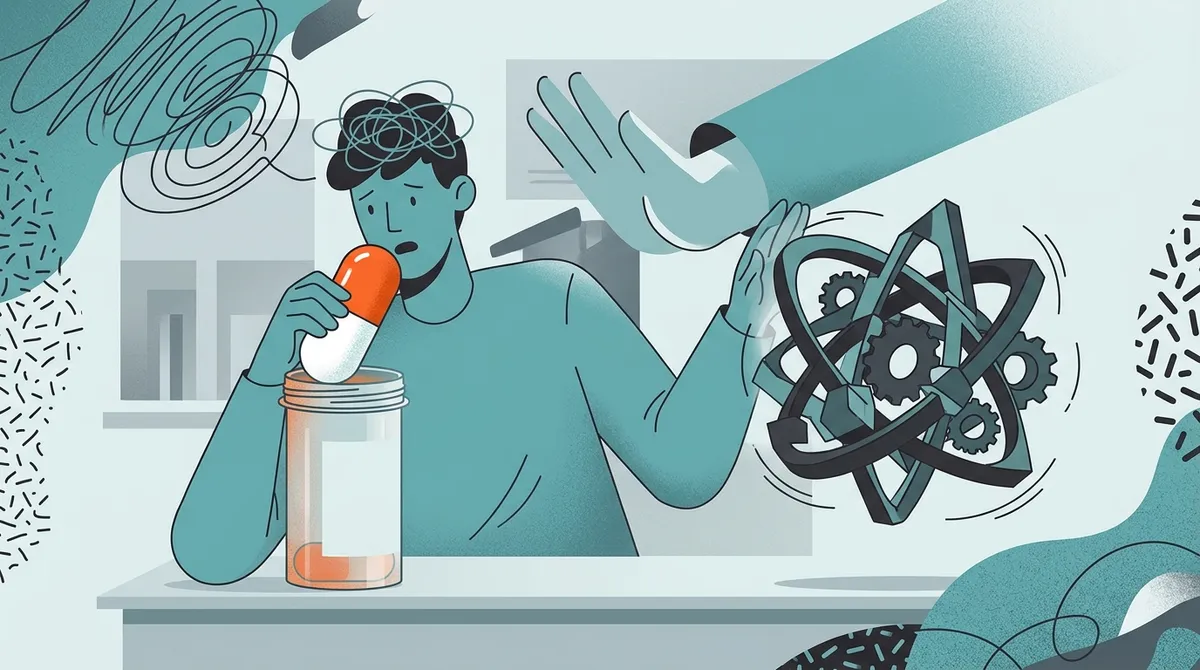
When OCD and ADHD are both present, the sequence of treatment matters. Clinical guidance recommends treating OCD first — typically with SSRIs or Exposure Response Prevention (ERP) therapy. Why? Because OCD-driven inattention can mimic ADHD symptoms. Once OCD is under better control, many ADHD-like symptoms actually improve on their own.
- Start with OCD treatment using SSRIs or ERP therapy
- Reassess ADHD symptoms after OCD shows improvement
- Add ADHD-specific medication or behavioral therapy as needed
- Monitor both conditions regularly and adjust the plan together with your therapist
Jumping straight to stimulant medications without addressing OCD first can worsen anxiety and obsessive symptoms. Always work with a professional who understands both conditions.
Mistake 5: Ignoring the Mental Health Risks of Untreated Comorbidities
When OCD and ADHD are left unaddressed — or only one is treated — the risks stack up quickly. This isn’t meant to scare you. It’s meant to motivate you to take action sooner rather than later.
Here’s what the research tells us about untreated or undertreated cases:
- Injury risk increases by up to 129% when ADHD is paired with multiple comorbidities like OCD
- People with ADHD and anxiety or mood disorders use 2-6 times more healthcare resources
- Comorbid cases are more likely to involve sleep issues, depression, and gastrointestinal problems
- Girls with ADHD are especially vulnerable to internalizing comorbidities like OCD and anxiety
- About 51.8% of individuals with ADHD have one or more co-occurring mental health conditions
The Mental Health Resources from the CDC highlight how early, consistent treatment makes a real difference in quality of life. Don’t wait until things get worse.
Mistake 6: Going Through It Alone Without Professional Support
It can be tempting to try managing OCD and ADHD on your own. Productivity apps, YouTube videos, self-help books — they all have their place. But when you’re dealing with two intertwined mental health conditions, professional therapy is not optional. It’s essential.
The right therapist can help you:
- Get an accurate dual diagnosis so nothing is missed
- Build a personalized treatment plan that addresses both conditions
- Learn coping skills specific to OCD triggers and ADHD challenges
- Track your progress and adjust the approach as you grow
If you’re unsure where to start, consider speaking with a licensed therapist who specializes in anxiety treatment. OCD falls under the anxiety spectrum, and addressing it early can make a huge difference. You can also explore support for co-occurring depression treatment, which often accompanies both ADHD and OCD.
Mistake 7: Overlooking the Impact on Relationships and Daily Life
OCD and ADHD don’t just affect the individual. They affect families, friendships, and romantic relationships too. When one partner struggles with obsessive rituals or can’t stay on task, it creates tension that builds over time.
This is why addressing the broader impact of these conditions matters. If you’re noticing relationship problems linked to either OCD or ADHD symptoms, therapy can help both of you find strategies that work together. Couples therapy can be a powerful complement to individual treatment when both partners want to grow.
Mistake 8: Not Considering Telehealth as a Viable Option
A lot of people skip therapy simply because of logistics — the commute, the schedule, the stigma. But in 2026, telehealth is a fully valid and highly effective option for mental health treatment. You can access therapy from the comfort of your own home, which often makes it easier to stay consistent.
For those across Florida, telehealth therapy in Florida is available through West Florida Therapy. Sessions are offered virtually for all of Florida, and in-person in Brandon for those who prefer face-to-face support. Bilingual services in English and Spanish are also available — making care more accessible for more people.
You can also schedule in-person therapy in Brandon, Florida if you prefer that connection of sitting across from your therapist.
How to Find the Right Therapist for OCD and ADHD
Not all therapists are equally experienced with dual diagnoses. When looking for help, keep these steps in mind:
- Look for experience with both OCD and ADHD — ask directly during a consultation
- Ask about ERP training — this is the gold-standard approach for OCD treatment
- Inquire about integrated treatment plans — dual diagnosis needs a coordinated approach
- Check on telehealth availability — flexibility improves treatment consistency
- Confirm insurance or payment options — barrier-free access makes it easier to commit
Margaret Deuerlein is a licensed and caring psychotherapist at West Florida Therapy who brings both warmth and expertise to complex cases like OCD and ADHD. She understands how overwhelming it can feel to navigate multiple mental health challenges — and she’s here to walk through it with you, step by step. You can also review our process to understand exactly what to expect before your first session.
For additional state-level resources, the Substance Abuse & Mental Health services through Florida Families offers helpful information for Floridians seeking mental health care.
What Effective Treatment Looks Like
When OCD and ADHD are treated together with a thoughtful, integrated plan, real progress is possible. Here’s what a solid treatment journey typically includes:
- A thorough intake evaluation to assess both conditions clearly
- ERP sessions to reduce OCD-driven anxiety and compulsions
- CBT techniques tailored to ADHD-related behaviors
- Medication management in coordination with a prescriber (if needed)
- Regular check-ins to track growth and update the plan
- Support for mood issues, panic, and related symptoms
If you’re also dealing with mood issues or panic attacks alongside OCD and ADHD, these can be addressed within the same treatment framework. Healing doesn’t have to happen in silos.
It’s also worth noting that many clients working on ADHD and OCD also carry unprocessed trauma. Trauma therapy — including EMDR — can be incredibly helpful when trauma is part of the picture. Learn more about EMDR treatment and how it supports healing from the inside out.
You Deserve Support That Sees the Whole Picture
Living with OCD and ADHD is hard. But avoiding the mistakes above puts you in a much stronger position to get the right help at the right time. The most important thing you can do today is reach out to a qualified professional who understands that both conditions deserve attention — not just one at a time.
At West Florida Therapy, we take a personalized, compassionate approach to every client’s journey. Whether you’re navigating anxiety, focus challenges, obsessive patterns, or all of the above — you don’t have to figure this out alone. We offer a free 15-minute consultation so you can ask questions and make sure it’s the right fit before you begin.
Visit us on Google to see what our clients are saying and learn more about the warm, supportive care we provide every day.
And did you know that wellness and mental health often go hand in hand with other areas of your life? Clients at Dental Theory in Brandon know that taking care of yourself means looking at the whole picture — and mental health is a big part of that.
Ready to take that first step? Reach out to our team today and let’s start building a treatment plan that actually works for you — one that addresses both OCD and ADHD with the care and expertise you deserve.
FAQs
Q: Can you really have both OCD and ADHD at the same time?
A: Absolutely — and it’s more common than most people realize! Research across more than 35 studies shows that about 21% of children with OCD also have ADHD, and around 8.5% of adults with OCD do too. Having both at once is called a comorbid condition, and with the right integrated treatment plan, both can be managed effectively.
Q: How do you tell the difference between OCD and ADHD symptoms?
A: Great question, and it can definitely be tricky! Both conditions affect focus and executive function, but the reason behind the inattention is different. In ADHD, focus struggles come from impulse control and attention regulation. In OCD, intrusive thoughts and mental rituals pull your attention away. A thorough evaluation by a licensed therapist is the best way to sort it out clearly.
Q: What is the best therapy for treating OCD and ADHD together?
A: Integrated treatment works best! This typically means combining Exposure and Response Prevention (ERP) for OCD, Cognitive Behavioral Therapy (CBT) for both conditions, and ADHD-specific behavioral strategies. Medication may also be part of the picture, often starting with OCD treatment first before adding ADHD medications — always with professional guidance.
Q: Should OCD or ADHD be treated first?
A: Most mental health professionals recommend addressing OCD first. Treating OCD with SSRIs or ERP therapy often reduces ADHD-like inattention naturally, since much of it may be driven by obsessive thought patterns. After OCD symptoms improve, your therapist can better assess whether additional ADHD-specific treatment is still needed.
Q: Is telehealth therapy effective for OCD and ADHD?
A: Yes! Telehealth therapy is a fully effective and convenient option for treating OCD and ADHD. It allows you to attend sessions from home, which can make it easier to stay consistent — especially important when managing two conditions at once. West Florida Therapy offers telehealth sessions throughout all of Florida, in both English and Spanish.