
Key Takeaways
-
Women with bipolar disorder are more likely to experience depression first and more frequently than men, leading to misdiagnosis as unipolar depression and treatment with antidepressants alone, which can actually trigger rapid cycling without a mood stabilizer.
-
Hormonal fluctuations during menstruation, pregnancy, postpartum period, and menopause can trigger or intensify bipolar episodes in women; tracking symptoms alongside your hormonal cycle provides crucial diagnostic information for healthcare providers.
-
Women experience bipolar II more commonly than men and are prone to mixed episodes where sadness and agitation occur simultaneously, which carries higher self-harm risk and requires immediate professional attention.
-
The hypomanic ‘highs’ in women often feel positive and subtle—including elevated mood, decreased sleep need, racing thoughts, and impulsive behavior—making them easy to miss during evaluation compared to the more obvious manic episodes men typically experience.
-
Physical symptoms like significant sleep changes, appetite shifts, restlessness, fatigue, and migraines are common in women with bipolar disorder but often overlap with thyroid disease or anxiety, contributing to years of misdiagnosis.
-
Track your mood patterns using a journal or app, document your full symptom history including ‘good’ periods that may have been hypomanic, and work with an experienced mental health professional to differentiate bipolar disorder from depression or anxiety.
Have you ever felt like your emotions are on a rollercoaster that never quite stops? One week you feel unstoppable — full of energy, big ideas, and zero need for sleep. The next, you can barely get out of bed. If this sounds familiar, you may be wondering whether it’s just stress, hormones, or something more. Recognizing the signs of bipolar in women is one of the most important steps you can take for your mental health. And you are absolutely not alone in asking these questions.
Bipolar disorder affects millions of women, yet it is frequently misunderstood — and often misdiagnosed. Because women tend to experience the condition differently than men, the signs can be easy to overlook or chalk up to something else. The good news? When you know what to look for, getting the right support becomes so much more possible. Let’s walk through everything you need to know.
What Is Bipolar Disorder?
Bipolar disorder is a mood condition that causes dramatic shifts in energy, mood, and activity levels. These shifts go far beyond everyday ups and downs. They can affect your relationships, your work, your sleep, and your sense of self.
There are two main types most people hear about:
- Bipolar I: Involves full manic episodes that last at least seven days, often followed by depressive episodes.
- Bipolar II: Features less intense “highs” called hypomania, combined with longer and more frequent depressive episodes.
- Cyclothymia: A milder form with mood swings that don’t fully meet the criteria for bipolar I or II.
- Rapid cycling: Four or more mood episodes within a single year — more common in women.
Research consistently shows that while Bipolar I affects men and women equally, women are significantly more likely to be diagnosed with Bipolar II. That means the symptoms can look subtler — but they are no less real or impactful.
How Signs of Bipolar in Women Differ From Men
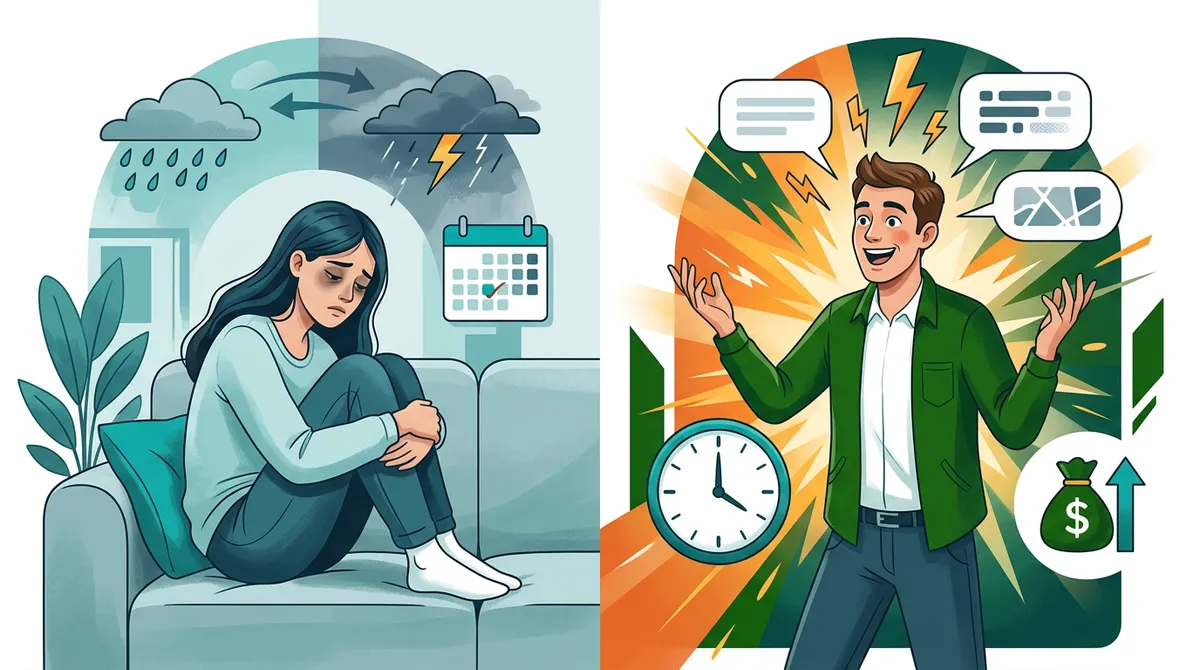
Understanding the differences matters because it helps explain why so many women go undiagnosed for years. The signs of bipolar in women often “hide” behind other conditions or life experiences.
Here’s a quick comparison to put it into perspective:
| Feature | Women | Men |
|---|---|---|
| Most common type | Bipolar II | Bipolar I |
| First episode type | Often depression | Often mania |
| Rapid cycling | More common | Less common |
| Mixed episodes | More frequent | Less frequent |
| Hormonal influence | Significant | Minimal |
| Co-occurring conditions | Anxiety, thyroid issues, migraines | Substance use disorders |
Because women are more likely to first experience depression, many end up being treated for unipolar depression for years before bipolar disorder is identified. This is why understanding the full picture matters so much. You can explore more about how depression affects daily life to better understand the overlap.

Common Signs of Bipolar in Women: The Highs
When we talk about the “highs” in bipolar disorder, we’re referring to manic or hypomanic episodes. In women, these often look like hypomania — a less severe but still disruptive elevated mood state.
Signs of a Manic or Hypomanic Episode
- Elevated or irritable mood: Feeling unusually “up,” wired, or touchy for no clear reason.
- Decreased need for sleep: Sleeping only 3–4 hours yet feeling fully rested and energized.
- Racing thoughts: Ideas come faster than you can process or express them.
- Increased talkativeness: Speaking rapidly, jumping from topic to topic.
- Impulsive or risky behavior: Overspending, risky decisions, or unusual boldness in social situations.
- Inflated self-esteem: Feeling like you can accomplish anything, perhaps starting five projects at once.
In women, these “highs” can sometimes feel positive at first — even exciting. That’s part of what makes them tricky to identify. Connecting with a professional through therapy services can help you sort through these experiences with clarity and compassion.
Common Signs of Bipolar in Women: The Lows
Depressive episodes in women with bipolar disorder tend to be more frequent and longer-lasting than in men. This is often where the most significant suffering occurs — and where misdiagnosis is most likely.
Signs of a Depressive Episode
- Persistent sadness, emptiness, or hopelessness
- Extreme fatigue and low energy
- Loss of interest in things you used to enjoy
- Difficulty concentrating or making decisions
- Changes in appetite or weight
- Sleep disturbances — too much or too little
- Feelings of worthlessness or guilt
- Thoughts of death or suicide
If you are experiencing thoughts of self-harm or suicide, please reach out for help immediately. The Mental Health Resources from the CDC offer a great starting point for finding immediate support.
The Role of Hormones in Bipolar Symptoms
One of the most significant — and often overlooked — factors in women’s bipolar experiences is hormonal fluctuation. Hormones don’t cause bipolar disorder, but they can absolutely trigger or worsen episodes.
Here’s how different life stages can impact symptoms:
- Menstrual cycle: Mood episodes may intensify in the days before or during menstruation, sometimes called “premenstrual magnification.”
- Pregnancy: Hormonal shifts can destabilize mood. Some medications may also need to be adjusted for safety.
- Postpartum period: The dramatic hormone drop after birth can trigger significant mood episodes, including postpartum depression that may actually be a bipolar episode.
- Perimenopause and menopause: Estrogen decline can worsen mood cycling and increase the frequency of episodes.
If your mood symptoms seem to follow a hormonal pattern, that’s important information for your healthcare provider. Florida’s Substance Abuse and Mental Health services also provide resources for women navigating these complex intersections.
Mixed Episodes: When Highs and Lows Happen Together
Women with bipolar disorder are more prone to mixed episodes — a state where you feel both depressed and agitated at the same time. This can be particularly confusing and distressing.
Signs of a mixed episode may include:
- Feeling deeply sad but physically restless
- High energy combined with hopelessness
- Racing thoughts paired with a very dark or empty mood
- Irritability, tearfulness, and impulsivity at the same time
Mixed episodes carry a higher risk for self-harm, so they should be taken seriously. Understanding your mental health holistically — with support from a trained therapist — is key.
Physical Symptoms That Often Go Unnoticed
The signs of bipolar in women aren’t always emotional. Physical symptoms are real, common, and often mistaken for other conditions.
Physical signs to watch for include:
- Significant changes in sleep — sleeping too much or barely at all
- Appetite shifts leading to weight gain or loss
- Restlessness or physical agitation
- Fatigue that doesn’t improve with rest
- Headaches or migraines (more common in women with bipolar)
- Thyroid issues, which can complicate diagnosis and treatment
Because these symptoms overlap with so many other conditions — thyroid disease, anxiety, chronic fatigue — it’s easy to see why bipolar disorder can fly under the radar for years. Checking in with a skilled psychotherapist who understands these nuances makes a real difference.
Why Bipolar in Women Is Frequently Misdiagnosed
Misdiagnosis is one of the most frustrating realities for women with bipolar disorder. Because the first episode is often depression, many women are diagnosed with unipolar depression and treated with antidepressants alone. Without a mood stabilizer, antidepressants can actually trigger rapid cycling.
Other conditions that bipolar disorder is commonly mistaken for in women include:
- Major depressive disorder — because depressive episodes dominate
- Anxiety disorders — due to the overlap of symptoms like restlessness and worry (learn more about anxiety signs and treatment options)
- Borderline personality disorder — because of rapid mood shifts and emotional intensity
A thorough evaluation by an experienced mental health professional is essential to getting the right diagnosis. At West Florida Therapy, Margaret Deuerlein is a caring and experienced psychotherapist who takes the time to truly understand each client’s unique history and experience.
How to Take the Next Steps Toward Getting Help
If any of these signs of bipolar in women resonate with you, you deserve support — not more confusion. Here is a simple path forward:
- Track your moods: Use a journal or mood-tracking app to record your highs, lows, sleep patterns, and energy levels. Even two weeks of data can be incredibly helpful.
- Make a list of symptoms: Write down what you’ve noticed, including when symptoms started and what seems to trigger them.
- Reach out to a mental health professional: A therapist or psychiatrist can provide a thorough evaluation and guide you toward an accurate diagnosis.
- Be honest about your full history: Share everything — including past “good” periods that now seem like they may have been hypomanic. Context is everything.
- Ask about all treatment options: Effective treatment often includes both therapy and medication, tailored specifically to you.
You don’t have to figure this out alone. Services like those available through Florida’s Mental Health Links can help connect you with local and statewide resources. And if you’re looking for compassionate, personalized care, visit us on Google to read reviews from real clients and learn more about our team.
How Therapy Helps Women With Bipolar Disorder
Therapy is a powerful part of managing bipolar disorder. While medication is often part of the picture, therapy provides tools that no pill can replace. Working with someone like Margaret Deuerlein at West Florida Therapy means getting care that is warm, individualized, and built around your life.
Therapy for bipolar disorder in women can help you:
- Identify your personal triggers and early warning signs
- Build coping strategies for both manic and depressive episodes
- Improve communication and relationships — including support for relationship challenges
- Address co-occurring conditions like anxiety or trauma
- Develop a stable daily routine to support mood balance
West Florida Therapy offers both in-person sessions in Florida and virtual therapy statewide — including bilingual services in English and Spanish, so no one has to face these challenges alone due to a language barrier. If stress is also part of your experience, it helps to understand the difference between acute and chronic stress as you build your wellness plan.
If you’re also dealing with physical tension or body stress alongside your mental health journey, you might find value in the holistic body-care approach offered by Mobile Area Massage of Tampa Bay, a complementary wellness resource that some clients find helpful alongside their therapy work.
You Deserve Clarity, Support, and Care
Recognizing the signs of bipolar in women is not about labeling yourself — it’s about understanding yourself. It’s about finally having a framework that explains years of confusing experiences and gives you a path forward. Whether you’re experiencing intense mood swings, hormonal fluctuations that seem to control your emotions, or depressive episodes that just won’t lift, know this: help is available, and you are worth every bit of it.
Margaret Deuerlein and the team at West Florida Therapy are here to walk alongside you with compassion, expertise, and zero judgment. You don’t have to white-knuckle your way through another mood cycle alone. Reach out to our team today and take the first step toward understanding your mental health in a whole new way.
FAQs
Q: What are the most common signs of bipolar in women?
A: The most common signs include frequent depressive episodes, hypomania (a milder elevated mood), rapid mood cycling, mixed episodes where sadness and agitation occur together, sleep changes, and impulsive behaviors. Women are also more likely to experience co-occurring anxiety and thyroid issues alongside their bipolar symptoms.
Q: Why is bipolar disorder so often misdiagnosed in women?
A: Because women with bipolar disorder often experience depression first — and more frequently — they are commonly diagnosed with major depression and treated without a mood stabilizer. The hypomanic “highs” in women are often subtler and may even feel good at first, making them easy to miss during evaluation.
Q: Can hormonal changes make bipolar symptoms worse in women?
A: Absolutely — hormones play a significant role! While they don’t cause bipolar disorder, fluctuations during the menstrual cycle, pregnancy, the postpartum period, and menopause can all trigger or intensify mood episodes. Tracking your symptoms alongside your hormonal cycle can be really helpful information to share with your therapist or doctor.
Q: What is rapid cycling bipolar and is it more common in women?
A: Rapid cycling means experiencing four or more mood episodes within a single year — and yes, research shows it is more common in women. Some women may cycle even faster, experiencing mood shifts within days or weeks. Rapid cycling can be especially disruptive and is something a mental health professional can help you manage effectively.
Q: How can therapy help women manage bipolar disorder?
A: Therapy helps women identify personal mood triggers, build practical coping strategies, improve relationships, and address co-occurring conditions like anxiety or trauma. A skilled therapist works alongside any medical treatment to provide a full support system — and at West Florida Therapy, you’ll get compassionate, personalized care tailored to your unique life.