Key Takeaways
-
Look for a therapist trained in Exposure and Response Prevention (ERP), the first-line psychological treatment for OCD, rather than general talk therapy alone.
-
ERP gradually exposes you to triggering thoughts or situations while you practice not performing compulsions, letting anxiety settle on its own over time.
-
A typical outpatient ERP course may involve about 12 to 20 sessions of roughly one hour each, though plans vary by person.
-
Too much reassurance can feed the OCD cycle, so an OCD-trained therapist will carefully limit reassurance while still supporting you.
-
Before booking, verify the therapist's Florida license, ask whether they regularly treat OCD and use ERP, and confirm insurance, fees, and telehealth options.
-
Therapists don't prescribe medication, but a good therapist can coordinate with a psychiatrist or prescriber if an SSRI might help you.
If you have ever washed your hands until they hurt, checked the stove five times, or lain awake with a thought that just would not leave you alone, you are not alone. OCD is more common than many people realize, and it can feel exhausting and lonely. The good news? Real help exists, and it starts with finding the right person to walk beside you.
Searching for a therapist for OCD in Brandon, Florida can feel like a big task when you are already worn out. You might wonder what kind of therapy works, what to ask, and how to know if someone is a good fit. That is completely normal.
This friendly guide breaks the process into simple steps. You will learn what to look for, which questions to ask, and what to expect once you start. Whether you are a teen, a busy millennial, a young adult, or a parent helping your child, you deserve care that actually fits you.

What OCD Really Looks Like
OCD stands for obsessive-compulsive disorder. It has two parts: obsessions and compulsions. Obsessions are unwanted thoughts, images, or urges that cause distress. Compulsions are things you do (or avoid) to feel relief from that distress.
OCD is not just being neat or organized. It can show up in many ways, including:
- Contamination fears and repeated washing or cleaning
- Checking locks, appliances, or messages again and again
- Unwanted intrusive thoughts that feel scary or out of character
- Need for symmetry or things feeling “just right”
- Mental rituals like counting, praying, or replaying events
- Relationship doubts that loop and loop
According to the National Institute of Mental Health (NIMH), an estimated 1.2% of U.S. adults had OCD in the past year, and lifetime prevalence is 2.3%. Among adults with OCD, about half experienced serious impairment. That means OCD can really get in the way of daily life, but it also means plenty of people are walking this road with you.
If you want to explore the topic more, you can read about existential OCD and how to treat it or learn about relationship OCD mistakes that make symptoms worse.
Why the Right Therapist Matters for OCD
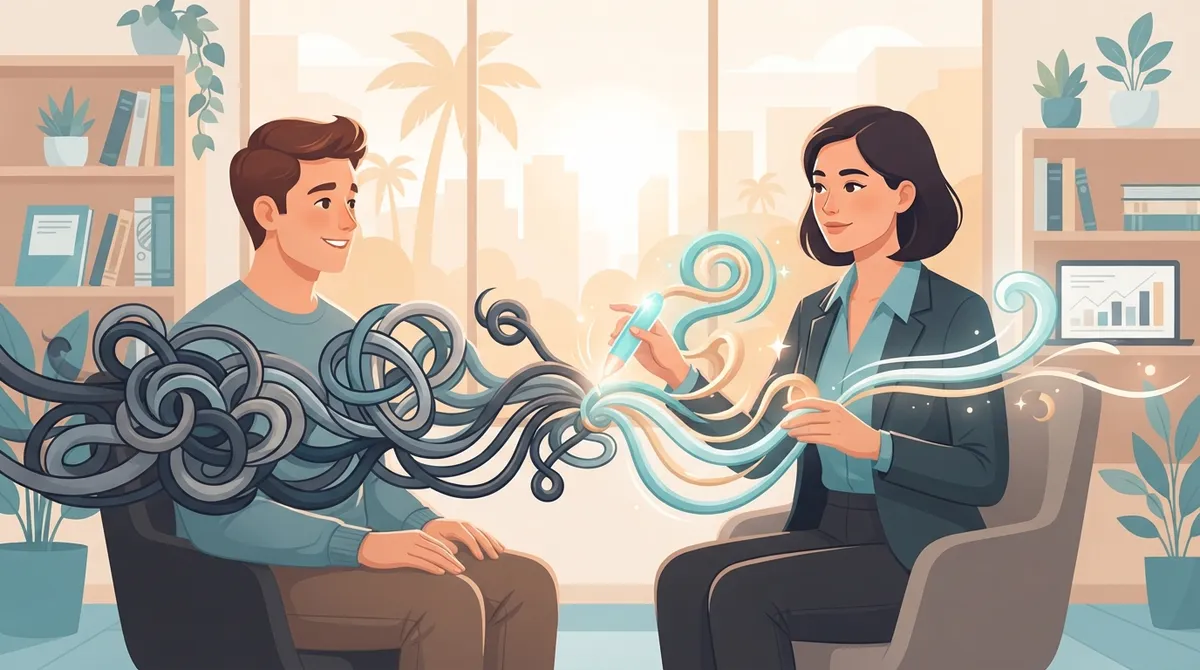
Here is something many people do not know: not all talk therapy works the same way for OCD. General talk therapy can be helpful for stress and life changes. But OCD often needs a more specific approach.
Reassurance, for example, can feel kind and helpful in the moment. But with OCD, too much reassurance can actually feed the cycle. A therapist trained in OCD knows how to support you without accidentally making symptoms stronger.
That is why the search for a therapist for OCD in Brandon, Florida should focus on training and experience, not just convenience. You want someone who understands how OCD works and has a clear plan to help you break free from it.
The Gold Standard: ERP Therapy Explained
The most recommended treatment for OCD is called Exposure and Response Prevention (ERP). It is a type of cognitive behavioral therapy (CBT). The International OCD Foundation describes ERP as a first-line psychological treatment for OCD.
Does that sound scary? Many people think so at first. But ERP is done gently, at your pace, and always as a team effort.
How ERP Works in Plain Words
ERP has two main parts:
- Exposure: You slowly face the thoughts, situations, or feelings that trigger your obsessions.
- Response prevention: You practice not doing the compulsion or avoidance that usually follows.
Over time, your brain learns something powerful. The scary thought does not have to be “solved,” and the anxiety rises and falls on its own. You get your freedom back, one small step at a time.
What Does Treatment Usually Look Like?
The International OCD Foundation says a typical outpatient ERP course may involve about 12 to 20 sessions, often around one hour each. Of course, every person is different. Some people need fewer sessions, and others need more. Your plan should be shaped around your symptoms and goals.
If you are curious about how CBT works more broadly, take a look at why cognitive behavioral therapy in Brandon is so popular.
How to Find a Therapist for OCD in Brandon, Florida: Step by Step
Ready to start your search? Here is a simple path you can follow. Take it one step at a time, and be kind to yourself along the way.
- Name what you are experiencing. Jot down your thoughts, habits, and how they affect your day. You do not need a diagnosis yet. Notes help you explain things clearly.
- Search for OCD-specific providers. Look for therapists who list OCD, anxiety, or ERP in their specialties. The International OCD Foundation’s Resource Directory is a helpful specialist-focused starting point.
- Check credentials. Confirm the therapist is licensed in Florida. You can verify a license through the state’s licensing portal.
- Ask about ERP training. Make sure the clinician uses ERP, not just general talk therapy.
- Book a short consultation. Many therapists offer a free chat so you can see if it feels right.
- Check logistics. Look at location, schedule, insurance, fees, and whether telehealth is available.
- Trust your gut. Feeling safe, heard, and understood matters a lot.
For a broader look at the search process, this guide on how to find a therapist in Brandon, Florida can help.
Questions to Ask Before You Start
A good therapist will welcome your questions. Do not be shy! Here are some great ones to bring to your first call:
- Do you regularly treat OCD?
- Do you use exposure and response prevention (ERP)?
- Have you worked with my age group or type of OCD symptoms?
- What does a typical treatment plan look like?
- How long might therapy take?
- Do you offer in-person sessions, telehealth, or both?
- Will you coordinate with a doctor or psychiatrist if I need medication?
- What are your fees, and do you take my insurance?
You are interviewing your therapist just as much as they are getting to know you. That is how good matches are made.
Credentials and Experience: A Quick Comparison
It can be tricky to know which type of support fits your needs. This simple table can help you see the difference between general support and OCD-focused care.
| What to Look For | General Talk Therapy | OCD-Focused Therapy (ERP) |
|---|---|---|
| Main goal | Understanding feelings and life stress | Breaking the obsession-compulsion cycle |
| Approach | Talking through concerns | Gradual exposure with response prevention |
| Reassurance | Often offered freely | Carefully limited to avoid feeding OCD |
| Typical course | Varies widely | Often about 12 to 20 sessions |
| Best for | Stress, grief, life changes | Obsessions and compulsions |
Many people benefit from both kinds of support at different times. The key is making sure your OCD gets the specific treatment it needs.
What About Medication?
Therapy is not the only tool. For some people, medication can also help. The most common type used for OCD is an SSRI, which is prescribed and monitored by a qualified medical professional such as a psychiatrist or other prescriber.
A therapist does not prescribe medication. But a good therapist can coordinate with your prescriber so everyone is on the same page. If you are unsure whether you need a prescriber, this article on how to decide between a therapist or psychiatrist can point you in the right direction.
In-Person or Online: Which Is Right for You?
Good news for busy schedules! You have options. Many people find that the format matters less than finding the right clinician, but each has its perks.
In-Person Sessions
Meeting face to face can feel grounding. It is also helpful for certain ERP exercises. If you live near Brandon, Valrico, Riverview, or Tampa, in-person care may be easy to reach. You can learn more about in-person vs. telehealth therapy in Brandon to compare.
Telehealth Sessions
Online therapy is a lifesaver for students, working parents, and anyone with a packed calendar. It also helps people who feel nervous about leaving the house. Telehealth can reach anyone across Florida, so you are not limited by your zip code. See how telehealth therapy works in Brandon, Florida for the details.
OCD Support for Every Stage of Life
OCD does not look the same for everyone. Your age, culture, and life stage all shape how it shows up and what support feels best.
- Teens (13 to 17): School pressure and social worries can make OCD feel louder. Teens often do best with a therapist who is warm, patient, and good at explaining things clearly. Parents can play a supportive role too.
- Young adults and Gen Z (18 to 27): Big transitions like college, first jobs, and moving out can stir up symptoms. Virtual therapy fits nicely into a busy, flexible lifestyle.
- Millennials (28 to 43): Work stress, parenting, and relationships can pile on. Short, focused ERP work can feel manageable and worthwhile.
- Couples: OCD can affect relationships when rituals or reassurance-seeking take over. Therapy can help both partners understand what is happening.
- Spanish-speaking adults: Therapy works best in the language where you feel most like yourself. Bilingual care in English and Spanish helps you express your thoughts clearly and feel understood.
If you or your teen are dealing with other worries too, you may find it helpful to read about how to recognize and treat OCD and depression together or why ADHD and anxiety often appear together.
Insurance, Costs, and Practical Details
Let us talk money, because it matters. Costs and coverage vary a lot, so it is smart to check details directly with each provider and with your insurance company.
Here are a few tips:
- Call your insurance company to ask about mental health benefits, copays, and deductibles.
- Ask whether the therapist is in-network or out-of-network.
- Ask about HSA and FSA payment options.
- Confirm whether telehealth sessions are covered under your plan.
You can also read more about whether therapy is covered by insurance before you make your call.
What to Expect at Your First Visit
First sessions can feel a little nerve-racking, but they are usually gentle and simple. Here is what often happens:
- You share what has been going on and how OCD affects your days.
- Your therapist asks questions about your history, habits, and goals.
- You talk about what ERP looks like and whether it feels like a good fit.
- Together, you build a plan that matches your pace and comfort level.
You are never forced to do anything you are not ready for. ERP is planned together, step by step. If you want tips on getting ready, check out how to prepare for a therapy appointment.
How West Florida Therapy Can Help
At West Florida Therapy, Margaret Deuerlein offers caring, personalized support for adults and adolescents dealing with anxiety, OCD-related struggles, and more. Sessions are available in person in Brandon and by telehealth across Florida. Bilingual care in English and Spanish is also available.
The process is simple: a free 15-minute phone consultation, a personalized plan, steady weekly or bi-weekly support, and regular check-ins to track progress. You can read more about OCD therapy in Brandon, Florida and how ERP can help you. You can also visit us on Google — West Florida Therapy to see our Brandon location.
For extra reading from trusted public sources, explore these Florida mental health links, the state’s substance abuse and mental health services, and the CDC’s mental health resources.
Take the First Brave Step
Finding a therapist for OCD in Brandon, Florida does not have to be overwhelming. Look for someone trained in ERP, ask your questions, and choose a format that fits your life. OCD can feel loud and relentless, but it does not get the final say. With the right support, many people find real relief and take their lives back.
You have already done something brave by reading this far. If you are ready to talk, we would love to hear from you. Contact us today to schedule your free 15-minute consultation and take the next step toward feeling like yourself again.
FAQs
Q: How do I find an OCD therapist in Brandon, Florida?
A: Start by looking for licensed therapists who list OCD and exposure and response prevention (ERP) as specialties. The International OCD Foundation’s Resource Directory is a great starting point. Then book a short consultation to see if the fit feels right, and always verify credentials and current services directly.
Q: What is ERP therapy, and how does it treat OCD?
A: ERP stands for exposure and response prevention, a type of cognitive behavioral therapy. You gradually face the thoughts or situations that trigger your obsessions while practicing not doing the compulsion. Over time, your anxiety learns to settle on its own, and OCD loses its grip.
Q: How long does OCD therapy usually take?
A: The International OCD Foundation says a typical ERP course may take about 12 to 20 sessions, often around an hour each. Every person is different, so your plan may be shorter or longer. Your therapist will check in on your progress and adjust along the way.
Q: Can I receive ERP therapy online in Florida?
A: Yes, many therapists offer ERP through telehealth, which is wonderful for busy schedules. West Florida Therapy provides telehealth across Florida, plus in-person sessions in Brandon. Be sure to confirm availability and insurance coverage for virtual sessions directly with your provider.
Q: Does OCD treatment include medication as well as therapy?
A: Sometimes, yes. Many people benefit from therapy alone, while others add medication such as an SSRI prescribed by a qualified medical professional. Your therapist can coordinate with your prescriber so your care stays connected.