

Key Takeaways
-
Bipolar disorder care works best as a team: a therapist supports coping skills and daily routines, while a psychiatrist or qualified prescriber handles medication evaluation and management.
-
Only about 48.8% of U.S. adults with bipolar disorder received treatment in the past year, so reaching out for support matters.
-
Keeping a consistent sleep and wake schedule, tracking moods, and noticing early warning signs are practical habits a bipolar disorder therapist can help you build.
-
Before committing, ask whether the therapist is Florida-licensed, has experience with bipolar I or II, coordinates with psychiatrists, has a crisis plan, and what fees and insurance they accept.
-
Evidence-based approaches such as CBT, interpersonal and social rhythm therapy, family-focused therapy, and psychoeducation may help, and the best fit depends on your symptoms and goals.
-
If you are in crisis, call or text 988 for the 24/7 Suicide and Crisis Lifeline, or call 911 or go to the nearest emergency department for immediate danger.
Living with bipolar disorder can feel like riding a rollercoaster you never agreed to board. One week you may feel full of energy and ideas. The next, you may feel heavy, tired, and cut off from everyone. If that sounds familiar, please know you are not alone, and you are not broken. Support is available right here in the Brandon area.
Searching for a bipolar disorder therapist in Brandon, FL is a brave first step. It can also feel confusing. Who do you call? Do you need a therapist, a psychiatrist, or both? What should you ask on that first call? This friendly guide walks you through eight things worth knowing before you choose. You will learn how therapy fits into treatment, which approaches may help, and how to find a good match. If you are curious about the basics, you may also like our guide on how bipolar disorder therapy in Brandon works.

1. Bipolar Disorder Is More Common Than You Think
Bipolar disorder involves shifts between depression and mania (or a milder form called hypomania). According to the National Institute of Mental Health, about 2.6% of U.S. adults have bipolar disorder in a given year. That means many of your neighbors, coworkers, and friends may be walking a similar path.
The same NIMH data shows that many people do not get enough care. Only about 48.8% of adults with bipolar disorder received healthcare treatment in the past year. And among those, only 38.8% received minimally adequate treatment. These numbers are a gentle reminder that finding the right support really matters.
Here are a few common signs that people notice:
- Long stretches of low mood, low energy, or loss of interest
- Periods of unusually high energy, racing thoughts, or little need for sleep
- Big swings in mood that affect work, school, or relationships
- Risky or impulsive choices during high-energy periods
If you are a woman wondering whether your symptoms fit, our article on how to recognize the signs of bipolar in women may help.
2. A Therapist and a Prescriber Play Different Roles
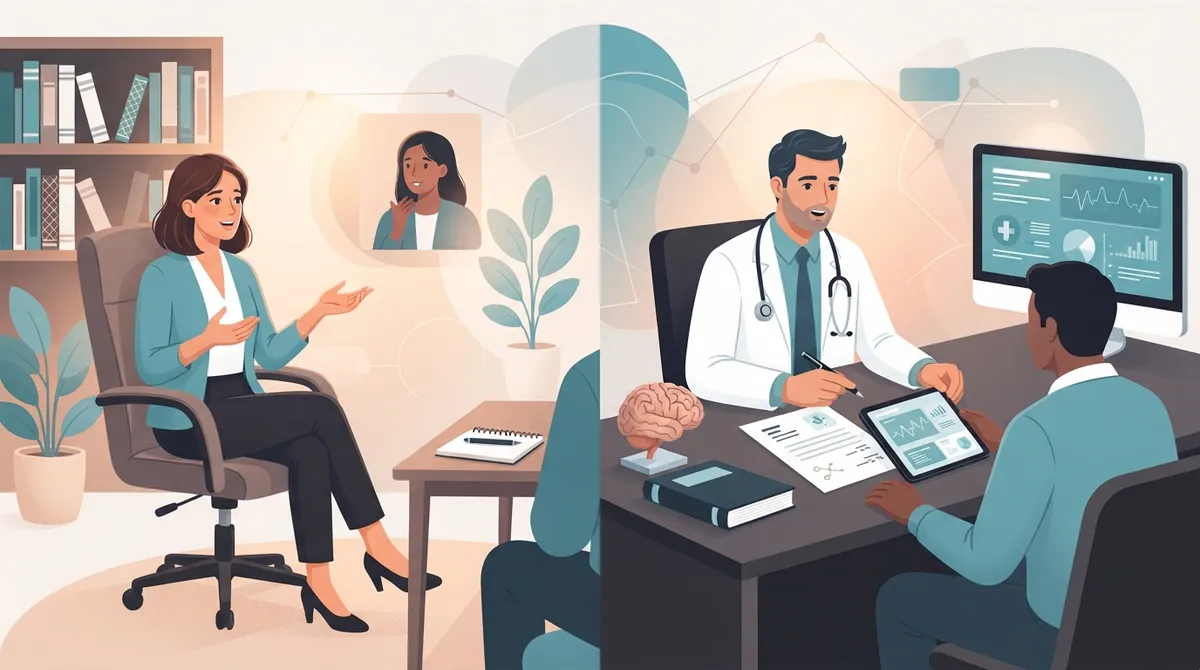
This is one of the most common questions we hear. Can a therapist diagnose bipolar disorder? Do you need a psychiatrist? The short answer is that both can play a part, and they work best as a team.
A therapist helps you understand your moods, build coping skills, and follow your treatment plan. A psychiatrist or other qualified prescriber evaluates whether medication is needed and manages it over time. The NIMH notes that treatment often combines medication and psychotherapy, and medication decisions should be made with a qualified prescriber, especially for bipolar I disorder.
| Role | What They Do | Best For |
|---|---|---|
| Therapist | Talk therapy, coping skills, routines, relationship support | Day-to-day mood management and emotional growth |
| Psychiatrist or prescriber | Medical evaluation and medication management | Deciding on and adjusting medication |
| Primary care clinician | Overall health checks and referrals | Ruling out other health causes and coordinating care |
Not sure which door to knock on first? Our guide on how to decide between a therapist and a psychiatrist breaks it down in plain language.
3. Several Types of Therapy Can Help
There is no single “right” therapy for everyone. The best fit depends on your symptoms, your goals, and a careful assessment. Research-backed approaches that are often used alongside medication include the following.
Cognitive Behavioral Therapy (CBT)
CBT helps you notice thoughts and habits that feed mood swings. You learn practical tools to respond differently. Many people find it concrete and empowering. If you want to know more, read what cognitive behavioral therapy really is.
Interpersonal and Social Rhythm Therapy
This approach focuses on steady daily routines, like sleep, meals, and activity. Because bipolar disorder is sensitive to disruptions in rhythm, small habits can make a big difference.
Family-Focused Therapy
Bipolar disorder affects the people who love you, too. Family-focused work helps loved ones learn about the condition, improve communication, and support the treatment plan.
Psychoeducation
Understanding your own patterns is powerful. Psychoeducation teaches you to spot early warning signs of an episode so you can act sooner.
Dialectical Behavior Therapy (DBT) Skills
DBT skills can help with intense emotions and stress tolerance. Many people with mood concerns find them useful. Learn more in how to use DBT for better mental health and emotional balance.
4. Ask the Right Questions Before You Commit
Finding a good fit is just as important as finding a qualified clinician. A first call or consultation is your chance to ask questions. You are interviewing them as much as they are meeting you. Here is a handy checklist to bring along.
- Are you licensed in Florida? Ask about their license type and scope of practice.
- Have you worked with bipolar I or bipolar II? Experience with mood disorders matters.
- Do you coordinate with psychiatrists or primary care doctors? Teamwork supports better outcomes.
- How do you handle crisis planning? A clear plan brings peace of mind.
- What are your fees, and do you take my insurance? Know the cost upfront.
- How soon can I be seen, and do you offer in-person and online sessions? Access matters when you are struggling.
For even more tips, our post on mistakes to avoid when choosing a therapist in Brandon is a helpful read.
5. Therapy Works Best With a Steady Routine
One of the most encouraging things about therapy is how practical it can be. A good bipolar disorder therapist does not just listen. They help you build a daily structure that supports stable moods. Over time, you may learn to:
- Keep a consistent sleep and wake schedule
- Track your moods and notice early warning signs
- Manage stress before it becomes overwhelming
- Communicate your needs with loved ones
- Stick with your treatment plan, including medication from your prescriber
Many people also have anxiety alongside their mood symptoms. If that sounds like you, take a look at 6 ways to manage bipolar and anxiety together in 2026 and how bipolar anxiety differs from standalone anxiety.
6. In-Person and Virtual Options Are Both Available
Life in the Tampa Bay area is busy. Between work, school, family, and traffic on Brandon Boulevard, getting to an appointment is not always easy. The good news is that you have choices. Many Brandon-area providers offer both in-person and telehealth sessions.
At West Florida Therapy, you can meet in person at our Brandon office or connect virtually from anywhere in Florida. Bilingual services are also available in English and Spanish, so you can talk about your feelings in the language that feels most natural. Hablar en su idioma puede hacer que todo se sienta más fácil. If you want to compare formats, check out in-person vs. telehealth therapy in Brandon, or learn how telehealth therapy works.
| Format | Why People Like It | Good To Know |
|---|---|---|
| In-person | Face-to-face connection, quiet private space | Requires travel to the Brandon office |
| Telehealth | Convenient, flexible, no commute | Needs a private spot and reliable internet |
7. Know the Warning Signs and Have a Crisis Plan
Therapy is a wonderful support, but it is not a substitute for urgent care. Some situations need immediate help. These include severe mania, losing touch with reality, being unable to care for yourself, or thoughts of self-harm.
If you or someone you love is in crisis, please reach out right away:
- Call or text 988 to reach the free, 24/7 Suicide and Crisis Lifeline in Florida.
- Call 911 or go to the nearest emergency department if there is immediate danger or a medical emergency.
It also helps to make a simple crisis plan in advance with your therapist. This might include warning signs to watch for, trusted people to call, and steps to take if symptoms rise. For more state and national support options, explore these Florida mental health links and the CDC’s mental health resources. You can also learn about Florida’s substance abuse and mental health services.
8. The Right Therapist Feels Like a Good Partner
Skills and credentials matter. But so does that gut feeling of being heard. You should feel respected, safe, and understood. A great therapist never judges your ups and downs. Instead, they walk beside you with patience and care.
At West Florida Therapy, Margaret Deuerlein offers warm, caring psychotherapy for adults and adolescents who want real, lasting change. Our process is simple and supportive. Here is what you can expect:
- Start with a conversation. A free 15-minute consultation lets you share your concerns and see if we are a good fit.
- Build a personalized plan. Together we create a treatment plan based on your unique story and goals.
- Get steady support. You meet weekly or bi-weekly, in person or by telehealth, so each session builds on the last.
- Track progress and adjust. We check in often, celebrate growth, and adjust your plan as needed.
Curious about the full experience? Learn more about our process or explore our mood issues services. We work with several major insurance providers, including Aetna, Cigna, Florida Blue, Optum, Oscar, and United Health Care. We also offer out-of-pocket options and accept HSA and FSA accounts. Please check with your insurance carrier to confirm your mental health benefits. You can review our payment options for details.
Want to hear from others? You can visit us on Google — West Florida Therapy to see our Brandon location and read what clients have to say.
Final Thoughts: You Deserve Steady, Compassionate Support
Bipolar disorder is real, it is manageable, and you do not have to face it alone. A caring therapist can help you understand your moods, build healthy routines, and feel more in control of your life. When paired with guidance from a qualified prescriber, therapy can be a powerful part of your care.
Take it one step at a time. Ask questions. Trust your instincts. And remember that reaching out is a sign of strength, not weakness. If you are ready to talk, we would love to hear from you. Contact us today to schedule your free 15-minute consultation and take that first courageous step toward healing, transforming, and living every single day.
FAQs
Q: How do I find a bipolar disorder therapist in Brandon, FL?
A: Start by looking for a Florida-licensed therapist with experience in mood disorders, and call for a short consultation. Ask about their approach, availability, insurance, and whether they coordinate with a psychiatrist. You are always welcome to reach out to West Florida Therapy for a free 15-minute chat.
Q: Can a therapist diagnose bipolar disorder, or do I need a psychiatrist?
A: A qualified mental health or medical professional can assess your symptoms and guide a diagnosis. A therapist can support coping skills and daily functioning, while a psychiatrist or other prescriber handles medication evaluation. Many people benefit from having both on their care team.
Q: What types of therapy help with bipolar disorder?
A: Common approaches include cognitive behavioral therapy, interpersonal and social rhythm therapy, family-focused therapy, and psychoeducation. The best fit depends on your symptoms and goals, so a good therapist will tailor the plan to you.
Q: Does bipolar disorder treatment usually include medication and therapy?
A: Yes, treatment often combines medication management with psychotherapy. Medication decisions should always be made with a qualified prescriber, while therapy helps you build skills, routines, and support.
Q: Can I see a bipolar disorder therapist online in Florida?
A: Yes. West Florida Therapy offers telehealth sessions throughout Florida, along with in-person visits at our Brandon office. Bilingual English and Spanish services are available too.