
Key Takeaways
-
ADHD counseling in Brandon, Florida teaches practical skills for focus, time management, emotional regulation, and relationships through a coaching-style partnership with a therapist, not by 'fixing' your brain but by helping you work with it.
-
Parent training in behavior management is the first-line treatment for children ages 4-6, while children 6+ and teens typically benefit from combining FDA-approved medication with behavioral therapy and school supports as a coordinated team approach.
-
ADHD counseling is different from diagnostic evaluation and medication management; ask prospective providers upfront whether they offer counseling, assessment, or both to ensure you get the right service for your needs.
-
Many people discover ADHD later in life, and adults benefit from counseling targeting work deadlines, project completion, and relationship challenges; West Florida Therapy offers free 15-minute consultations and flexible in-person or telehealth options.
-
ADHD frequently co-occurs with anxiety, depression, social anxiety, OCD, or trauma, and therapy should address the whole picture rather than ADHD alone; bilingual services in English and Spanish are available for those who prefer to communicate in their native language.
-
West Florida Therapy is in-network with major insurers including Aetna, Cigna, Florida Blue, Optum, Oscar, and United Healthcare, and offers self-pay options plus HSA/FSA acceptance to make counseling more accessible.
If you’ve ever lost your keys three times before breakfast, or stared at a to-do list until the words blurred together, you are not alone. Many people live with ADHD and wonder why everyday tasks feel so much harder for them. The good news? Support is real, and it’s closer than you might think.
ADHD counseling in Brandon, Florida offers practical, judgment-free help for kids, teens, and adults. It can teach skills for focus, routines, emotions, and relationships. It won’t “fix” who you are. It helps you work with your brain instead of fighting it.
In this guide, we’ll walk through what ADHD counseling is, who it helps, what to expect, and how to find the right fit. We’ll also explain how counseling works alongside medical care. Grab a cup of coffee, and let’s dive in together.

What Is ADHD Counseling, Exactly?
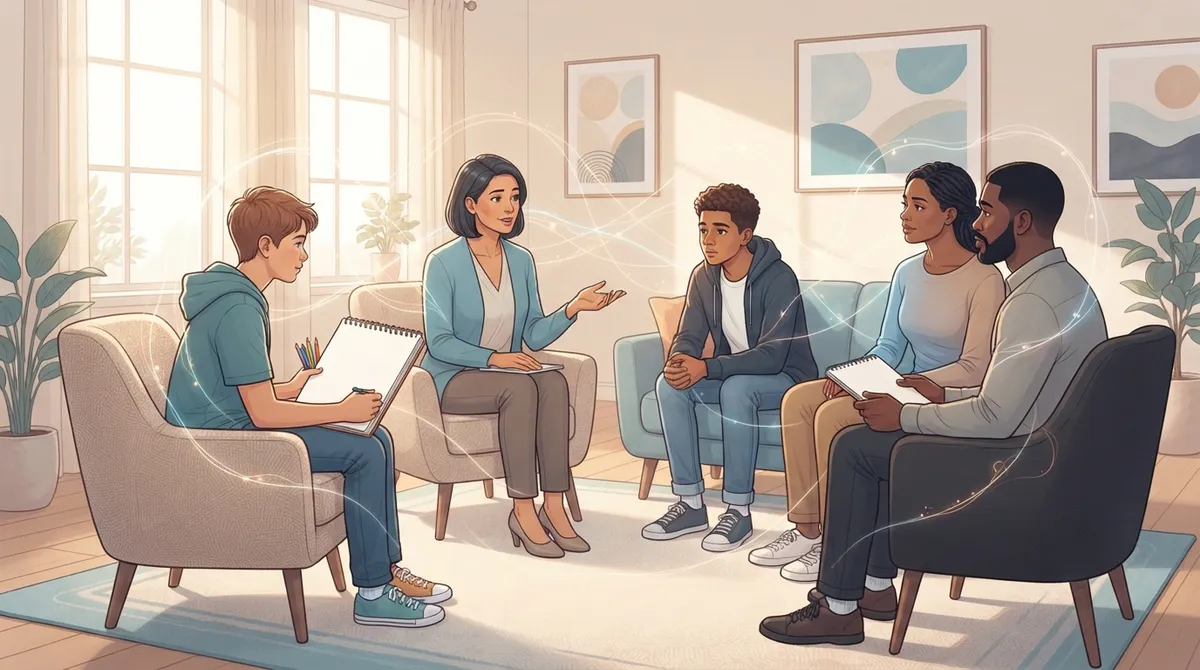
ADHD counseling is talk therapy that focuses on the daily challenges of attention-deficit/hyperactivity disorder. Think of it as a coaching-style partnership. You and your therapist look at what’s getting in your way and build simple tools to make life smoother.
Counseling often covers things like:
- Organization and time management
- Emotional regulation (handling big feelings without feeling overwhelmed)
- Building daily routines that stick
- Improving communication in relationships
- Reducing shame and building self-confidence
It’s important to know what counseling is not. It is not the same as a full diagnostic evaluation. It is also not medication management. Those are separate parts of ADHD care, and each one plays a role.

Who Can Benefit From ADHD Counseling in Brandon?
ADHD doesn’t have an age limit. It shows up differently at different stages of life, so counseling can look different too.
Children and Parents
For younger kids, much of the work happens with parents. According to CDC summaries of American Academy of Pediatrics (AAP) guidance, parent training in behavior management and classroom behavioral support are first-line treatments for children ages 4 to 6. Parents learn clear, calm strategies for routines, rewards, and limits.
Teens and Adolescents
Teen years bring school pressure, social stress, and big emotions. Counseling gives teens a safe space to talk about it all. If your teen is also feeling worried or on edge, our article on why ADHD and anxiety often appear together may help you make sense of what you’re seeing. Parents may also find our guide on virtual therapy for adolescents in Brandon, FL useful.
Adults, Millennials, and Gen Z
Many adults only learn about their ADHD later in life. Maybe you’ve struggled with deadlines at work, finishing projects, or feeling “behind” compared to everyone else. Stressed millennials and Gen Z young adults often juggle jobs, school, money worries, and relationships all at once. Counseling can help you sort through the noise and find a system that works for you.
Couples
ADHD can affect relationships, too. Forgotten plans, missed cues, or constant reminders can build quiet resentment. Couples counseling helps both partners understand ADHD as a shared challenge, not a personal flaw. You can learn more about our couples therapy services if this sounds familiar.
How Does ADHD Counseling Work?
Every therapist has their own style. Still, most ADHD counseling follows a clear and supportive path. Here is what the process often looks like:
- An initial conversation. You share your concerns, history, and goals. This is a good time to ask questions.
- A look at your daily life. Your therapist asks where ADHD shows up most. Work? School? Home? Relationships?
- A personalized plan. Together you set goals that feel realistic and meaningful to you.
- Skill-building sessions. You practice tools in session and try them out in real life.
- Regular check-ins. You review what’s working, celebrate wins, and adjust what isn’t.
At West Florida Therapy, our process follows this same supportive rhythm. It starts with a friendly phone consultation and builds from there.
What Types of Therapy Are Used for ADHD?
There is no single “best” approach. The right fit depends on your age, your needs, and any other concerns you’re facing. Local providers often describe cognitive behavioral and behavioral approaches as common options for ADHD.
| Approach | What It Focuses On | Who It Often Helps |
|---|---|---|
| Cognitive Behavioral Therapy (CBT) | Changing unhelpful thought patterns and building practical habits | Teens and adults |
| Behavioral therapy | Rewards, routines, and clear expectations | Children and families |
| Parent training | Teaching parents calm, consistent strategies | Parents of young children |
| Emotion-focused skills (such as DBT skills) | Managing intense feelings and impulsive reactions | Teens and adults |
| Mindfulness-based approaches | Noticing thoughts and building present-moment awareness | Teens and adults |
Curious about CBT in particular? Our guide on what cognitive behavioral therapy is breaks it down in simple terms. You can also explore how DBT supports emotional balance.
Can a Counselor Diagnose ADHD?
This is one of the most common questions people ask. The honest answer is: it depends on the provider’s training and license. Counseling and diagnostic assessment are different services. Some therapists focus on skill-building and support. Others offer formal evaluations. A psychiatrist, physician, or other qualified prescriber can discuss medication options.
A careful ADHD assessment looks at symptoms across different settings, like home, school, and work. It also checks for other conditions that can look like ADHD or show up alongside it. For children, CDC guidance recommends gathering information from parents, school staff, and the child. It also suggests using rating scales and screening for things like anxiety, depression, learning disorders, autism, and sleep problems.
The CDC’s summary of AAP guidance recommends evaluating children and teens ages 4 to 18 for ADHD when school or behavior problems occur alongside inattention, hyperactivity, or impulsivity.
Before you book, ask any provider these questions:
- Do you offer counseling, diagnostic assessment, or both?
- What experience do you have with my age group?
- How do you work with doctors, prescribers, or schools?
Counseling, Medication, and School Support: Better Together
ADHD care is often a team effort. Counseling is one important piece, but it’s rarely the only piece.
According to CDC summaries of AAP guidance:
- Ages 4 to 6: Parent training in behavior management and/or classroom behavioral interventions come first. Medication may be considered if serious problems don’t improve enough.
- Age 6 and older, including teens: Care generally combines FDA-approved medication with behavior therapy and/or parent training. School supports can also be part of the plan.
Decisions about medication belong to you and a qualified medical provider. A good therapist can coordinate with your doctor, with your permission, so everyone is on the same page.
ADHD Rarely Travels Alone
Here’s something many people don’t realize. ADHD often shows up alongside other challenges. That’s not a sign something is “wrong” with you. It’s very common, and it’s very treatable.
Some common pairings include:
- Anxiety. Constant worry about forgetting something or falling behind. See our guide on understanding anxiety signs, types, and treatment options.
- Depression. Feeling discouraged after years of struggling. Learn more in why ADHD and depression often occur together.
- Social anxiety. Worry about saying the wrong thing or missing social cues. Try our tips on managing ADHD and social anxiety together.
- OCD. Repeating thoughts or habits. Our article on ADHD and OCD mistakes to avoid can guide you.
- Trauma. Learn more about managing PTSD and ADHD together.
If several of these sound familiar, our walkthrough on navigating ADHD, depression, and anxiety together is a helpful next read. Therapy can address the whole picture, not just one piece.
In-Person or Online? Your ADHD Counseling Options
One of the best parts of modern therapy is flexibility. Many Brandon-area providers offer in-person visits, telehealth, or both. Confirm current availability directly with each provider.
Here’s a quick way to think about it:
- In-person sessions can feel focused and distraction-free. For some people with ADHD, leaving home helps the brain “switch on” for therapy. Learn more about in-person therapy in Brandon, Florida.
- Telehealth sessions save travel time and fit busy schedules. This is great for working adults, students, and families. See how telehealth therapy in Florida works.
For telehealth, make sure your clinician is authorized to serve you where you are physically located during the session. Also ask how privacy, emergencies, and coordination with other providers are handled. Not sure which is better for you? Our comparison of in-person vs. telehealth therapy in Brandon can help you decide.
How Can You Find the Right ADHD Counselor in Brandon?
Provider directories and local practice pages are useful starting points. Just remember that listings and insurance participation can change. A directory might show hundreds of Florida therapists, but that’s a statewide count, not a count of ADHD counselors in Brandon. Always confirm the details yourself.
Here’s a simple checklist to guide your search:
- Check credentials. Ask about licensure, training, and experience with ADHD.
- Match the age group. A therapist who loves working with teens may be different from one who works with adults.
- Clarify the service. Is it counseling, assessment, or both?
- Ask about format. In-person, telehealth, or a mix?
- Talk about cost. Ask about fees and whether they take your insurance.
- Trust your gut. You should feel heard and respected from the first conversation.
Our 12 mistakes to avoid when choosing a therapist in Brandon is a great companion read. And if you’re comparing local options, see how to find the best therapy in Brandon, Florida.
Support in English and Spanish
Language matters in therapy. It’s hard to describe your feelings, or your child’s behavior, in a language that doesn’t feel like home. Many Spanish-speaking adults and families in Florida face this barrier. West Florida Therapy offers bilingual services in English and Spanish, so you can speak openly and comfortably. If that’s what you’re looking for, see how to find a Spanish-speaking therapist in Brandon, FL.
Meet Margaret Deuerlein: A Caring Guide on Your Journey
When you’re ready to take a first step, it helps to know someone kind is on the other side. Psychotherapist Margaret Deuerlein offers warm, compassionate support for adults and adolescents. She works to create a space where you feel safe being yourself, struggles and all. Her approach is practical and caring, and she meets each person where they are.
Not sure what a therapist actually does? Read what a psychotherapist does and how they can help. You can also learn more about our practice.
What About Cost and Insurance?
Cost worries keep many people from reaching out. Here’s the encouraging part: there are options. West Florida Therapy is in-network with several major insurance providers, including Aetna, Cigna, Florida Blue, Optum, Oscar, and United Health Care. We also offer self-pay options and accept HSA and FSA accounts.
Because coverage can change, we recommend calling your insurance carrier to verify your mental health benefits, copayments, and deductible. You can review our payment options anytime. We also offer a free 15-minute consultation, so you can ask questions before committing to anything.
Helpful Resources Beyond Therapy
Counseling works best when you have a full support system. These trusted resources can help you learn more and connect with community services:
- The CDC offers helpful mental health resources for caring for yourself and others.
- The Florida Department of Health shares a list of mental health links.
- The Florida Department of Children and Families provides information on substance abuse and mental health services.
If you ever feel unsafe or in crisis, call or text 988, the Suicide & Crisis Lifeline, or call 911 in an emergency.
Simple Daily Habits That Support ADHD Counseling
Therapy works best when you practice between sessions. Small habits can add up fast. Here are a few friendly ideas to try:
- Use visual reminders. Sticky notes, whiteboards, and phone alarms are your friends.
- Break big tasks into tiny steps. A short list feels less scary than a giant project.
- Create a “launch pad.” Keep keys, wallet, and bag in one spot by the door.
- Reward yourself. Celebrate small wins. They count!
- Be kind to yourself. ADHD is not a character flaw or a lack of effort.
Your counselor can help you shape these habits so they fit your life, not someone else’s.
Ready to Take the First Step?
Reaching out for help takes courage, and you’ve already taken a brave step by learning more. ADHD counseling in Brandon, Florida can help you build focus, calm, and confidence one small skill at a time. You don’t have to figure it out alone.
At West Florida Therapy, we offer in-person sessions in Brandon and telehealth across Florida, with bilingual care in English and Spanish. Ready to talk? Reach out to schedule your free 15-minute consultation, and let’s take the first step together. You can also visit us on Google — West Florida Therapy to see our location and read more about our practice.
FAQs
Q: How do I find an ADHD counselor in Brandon, Florida?
A: Start with local practice pages and provider directories, then confirm each therapist’s credentials, experience with your age group, and current availability. Book a short consultation call to see if it feels like a good fit. West Florida Therapy offers a free 15-minute consultation to help you get started.
Q: Can a therapist diagnose ADHD, or do I need a psychiatrist or psychologist?
A: It depends on the provider’s license and training. Counseling and diagnostic evaluation are different services, so ask any provider which one they offer. A psychiatrist, physician, or other qualified prescriber can also talk with you about medication options.
Q: Does ADHD counseling help adults as well as children?
A: Yes! Adults often benefit from counseling that targets organization, time management, emotional regulation, and relationships. For younger kids, much of the work involves parent training and school supports, while teens and adults often focus on CBT and practical life skills.
Q: Can I receive ADHD counseling by telehealth in Florida?
A: In many cases, yes. Telehealth is an option for eligible services, but your clinician must be authorized to serve you where you are physically located during the session. West Florida Therapy offers telehealth throughout Florida, plus in-person sessions in Brandon.
Q: Does insurance cover ADHD counseling in Brandon, Florida?
A: Coverage varies by plan and provider, and it can change over time. West Florida Therapy is in-network with several major insurers, including Aetna, Cigna, Florida Blue, Optum, Oscar, and United Health Care. Call your insurance carrier to verify your mental health benefits, copayments, and deductible before your first visit.