
Key Takeaways
-
Emotionally Focused Therapy (EFT) and the Gottman Method are research-backed approaches with 70-75% success rates for improving relationship satisfaction, significantly outperforming generic self-help methods for couples with serious conflict.
-
Professional therapy is essential when conflict patterns repeat without resolution, trust has been broken through infidelity, or emotional distance persists—self-help alone rarely succeeds in these moderate-to-severe situations.
-
Therapists teach practical, immediately applicable skills like active listening, ‘I’ statements, time-outs, and emotional check-ins that couples can practice daily at home, extending therapy benefits beyond office sessions.
-
Couples don’t need to be in crisis to benefit from therapy; proactive couples therapy prevents small conflicts from escalating, deepens intimacy, and builds shared goals—think of it as preventive maintenance for your relationship.
-
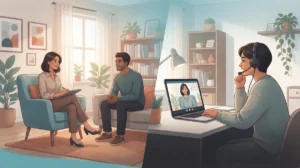
Both telehealth and in-person formats are equally effective for couples therapy, allowing flexibility for busy schedules while providing access to professional support regardless of location or time constraints.
-
Self-help works best for mild, occasional conflicts when both partners are motivated and there’s no history of betrayal, but falls short when emotional patterns become entrenched or one partner refuses to engage.
Every couple argues. That’s completely normal. But when the same fights keep happening — or when silence replaces honest conversation — something deeper may need attention. If you’re a couple in the Brandon, Florida area wondering whether to try Brandon conflict resolution therapy for couples or tackle things on your own, you’re not alone in asking that question.
The good news? You don’t have to guess. This article breaks down both options honestly, so you can make the best choice for your relationship. And spoiler alert: the answer might surprise you. Whether you’re dealing with repeated arguments, emotional distance, or trust issues, there’s a path forward — and it starts with understanding your options.

What Is Conflict Resolution Therapy for Couples?
Conflict resolution therapy for couples is a specialized form of mental health counseling. It helps partners identify negative interaction patterns, improve communication, and learn healthier ways to handle disagreements. It’s not about deciding who’s right or wrong. It’s about building a team that actually works together.
Therapists in Brandon use research-backed approaches to guide couples through this process. These methods have decades of evidence behind them. They’re not just talking circles — they’re structured, goal-oriented, and effective.
Common issues addressed in couples therapy include:
- Repeated arguments that never get resolved
- Communication breakdowns and misunderstandings
- Emotional distance and intimacy problems
- Trust issues or infidelity recovery
- Parenting stress and disagreements
- Major life transitions affecting the relationship
According to the American Psychological Association, approximately 40–50% of marriages experience significant conflict or distress at some point. That’s a lot of couples who could benefit from professional support. If you want to understand the broader landscape of relationship struggles, relationship problems are far more common than people realize.

What Does Self-Help for Couples Look Like?
Self-help approaches include books, podcasts, online courses, apps, and personal communication exercises couples do on their own. These tools can be genuinely helpful — especially for couples dealing with mild conflict or who want to maintain an already healthy relationship.
Popular self-help strategies include:
- Reading books like The Seven Principles for Making Marriage Work
- Practicing daily check-ins and emotional sharing
- Using “I” statements during disagreements
- Scheduling regular date nights to reconnect
- Following guided online courses for couples communication
Self-help has real advantages. It’s affordable, private, and flexible. Couples can go at their own pace without scheduling appointments. For some, it’s a great starting point. But it also has significant limitations — especially when conflict has become deeply rooted or emotionally charged.
Side-by-Side Comparison: Therapy vs. Self-Help
Let’s look at how these two options stack up across the most important categories:
| Category | Conflict Resolution Therapy | Self-Help |
|---|---|---|
| Guided Support | Yes — trained professional leads sessions | No — couple manages on their own |
| Evidence-Based Methods | EFT, Gottman Method, CBT | Varies — depends on resources chosen |
| Personalization | Tailored to your specific relationship | Generic — not customized to your situation |
| Accountability | Built-in through regular sessions | Relies entirely on self-motivation |
| Cost | Varies — insurance often helps | Lower upfront cost |
| Access | In-person or telehealth options available | Anytime, anywhere |
| Best For | Moderate to severe conflict, trust issues | Mild conflict, relationship maintenance |
| Success Rates | 70–75% improvement with EFT alone | Limited data — highly variable |
As you can see, both options have their place. But when conflict is significant, therapy offers something self-help simply can’t: a neutral, trained professional who can spot patterns you can’t see yourself. You can also explore communication skills support as part of a broader therapeutic plan.
The Science Behind Couples Conflict Resolution Therapy
The methods used in Brandon conflict resolution therapy for couples aren’t guesswork. They’re backed by decades of clinical research. Here are the three most commonly used approaches:
1. Emotionally Focused Therapy (EFT)
EFT focuses on emotional attachment between partners. It helps couples identify the deeper feelings driving surface-level arguments. Research shows that EFT leads to significant improvement in relationship satisfaction for about 70–75% of couples. If you want to learn more about this approach, check out what Emotionally Focused Therapy is and how it can help you. You can also explore Emotionally Focused Therapy in Brandon, FL to know what to expect in sessions.
2. The Gottman Method
Developed by Drs. John and Julie Gottman, this method is built on over 40 years of relationship research. It helps couples build friendship, manage conflict, and create shared meaning. Studies show that couples who complete Gottman-based therapy report improved communication and conflict management — and many maintain those gains for at least six months after treatment. Learn more about what the Gottman Method is and how it can save your relationship, or explore 7 ways Gottman Method couples therapy transforms relationships.
3. Cognitive-Behavioral Therapy (CBT) for Couples
CBT helps partners recognize unhelpful thought patterns that fuel conflict. It teaches practical problem-solving skills. Research shows CBT for couples is associated with reduced relationship distress and improved problem-solving, with effect sizes comparable to other established couple therapies.
These approaches are available through qualified therapists serving the Brandon area — including in-person therapy in Brandon, Florida and telehealth therapy across Florida.
When Self-Help Is Enough — And When It’s Not
Here’s an honest look at when each option makes the most sense. Self-help can work well when:
- Conflict is occasional and both partners feel heard most of the time
- Both partners are motivated and consistent in applying new skills
- There is no history of betrayal, trauma, or significant emotional wounds
But self-help often falls short when:
- The same arguments keep cycling without resolution
- One or both partners feel emotionally shut down or disconnected
- Trust has been broken through infidelity or dishonesty
- Anger or defensiveness makes it hard to have calm conversations
- One partner is unwilling to engage with self-help materials
If any of the above sound familiar, finding the right couples therapy in Brandon, FL might be your most important next step. You can also review common couples therapy Brandon mistakes that hurt your relationship before getting started.
The Mental Health Resources from the CDC also emphasize the importance of professional support when emotional patterns become entrenched. Seeking help isn’t a sign of weakness — it’s a sign of commitment to your relationship.
What to Expect in Your First Conflict Resolution Therapy Session
Many couples feel nervous before their first session. That’s totally understandable! Here’s what typically happens:
- Initial assessment: Your therapist will ask about your relationship history, current concerns, and what you hope to achieve in therapy.
- Goal setting: Together, you’ll identify specific areas to work on — like communication, trust, or emotional intimacy.
- Introduction to tools: Your therapist will begin introducing practical strategies, such as active listening and structured conflict management exercises.
- Safe space creation: The therapist ensures both partners feel heard and respected — no ganging up, no blame games.
Most couples attend weekly or bi-weekly sessions. Duration varies depending on the complexity of the issues. Some couples see meaningful progress in just a few months. Others may choose to continue longer for deeper work. For a detailed overview of what to expect, visit our therapy process.
Practical Tools Therapists Teach Couples
One of the biggest advantages of professional Brandon conflict resolution therapy for couples is walking away with real, usable skills. Here are some of the most common tools therapists teach:
- Active listening: Fully hearing your partner without planning your rebuttal
- “I” statements: Expressing feelings without blame (e.g., “I feel unheard” instead of “You never listen”)
- Time-outs: Agreed-upon pauses during heated moments to prevent escalation
- Repair attempts: Gottman-derived techniques for de-escalating conflict in real time
- Emotional check-ins: Regular conversations about how each partner is feeling in the relationship
These tools can be practiced at home between sessions. That’s actually one of the beautiful things about therapy — it doesn’t just happen in the office. It transforms how you interact every single day. For more on how couples can strengthen their bond, explore 12 ways couples therapy can transform your relationship.
Is Conflict Resolution Therapy Only for Couples in Crisis?
Absolutely not! This is one of the biggest myths about couples therapy. Many couples seek Brandon relationship counseling not because they’re falling apart — but because they want to grow stronger together. Think of it like going to the gym for your relationship. You don’t wait until your health is failing to start exercising.
Proactive couples therapy can:
- Prevent small conflicts from snowballing into bigger ones
- Deepen emotional intimacy and connection
- Improve physical and emotional well-being for both partners
- Build shared goals and relationship meaning
For more on why seeking support early makes a difference, the Substance Abuse & Mental Health services from Florida Families highlight how early intervention leads to better outcomes. You can also check out 13 reasons Brandon couples therapy can save your relationship.
Telehealth vs. In-Person: Which Format Works Best?
Another common question couples ask is whether to meet in person or choose a virtual option. Both have real benefits:
| Format | Benefits | Best For |
|---|---|---|
| In-Person Sessions | Full non-verbal communication; stronger rapport | Couples who prefer face-to-face connection |
| Telehealth Sessions | Flexible scheduling; no commute; all of Florida | Busy schedules; couples in different locations |
At West Florida Therapy, therapist Margaret Deuerlein offers both in-person appointments in Brandon, Florida and telehealth sessions available throughout the entire state. Whether you’re nearby or across Florida, professional support is within reach. You can visit West Florida Therapy on Google to learn more and read reviews from real clients.
Bilingual services in English and Spanish are also available — making therapy more accessible for Spanish-speaking couples who may have faced language barriers in mental health care. For more on virtual options, see why Brandon virtual therapy for adults is a game changer.
The Verdict: Which Option Actually Works Better?
Here’s the honest truth: self-help is a wonderful supplement, but it’s rarely a substitute for professional therapy when real conflict is present. Reading a book won’t give you a trained professional who can observe your dynamic in real time and offer personalized guidance.
Research consistently shows that structured approaches like EFT and the Gottman Method outperform generic self-improvement efforts for couples dealing with significant distress. And when trust has been broken — whether through infidelity or emotional betrayal — professional guidance is almost always essential for genuine healing. The Mental Health Links from Florida Health underscore the value of evidence-based professional support for lasting change.
That doesn’t mean self-help has no value. Used alongside therapy, books and communication exercises can reinforce what you’re learning in sessions. It’s not either/or — it’s often both. Explore more about relationship and communication issues to understand the full scope of what professional support can address.
Ready to Take the Next Step Together?
If you’re ready to stop going in circles and start moving forward, Brandon conflict resolution therapy for couples offers a clear, evidence-based path to a healthier relationship. Margaret Deuerlein at West Florida Therapy brings warmth, expertise, and a genuine commitment to helping couples reconnect and thrive — no judgment, no taking sides, just real support tailored to your unique story.
You don’t have to figure it all out alone. Whether you’re facing repeated conflicts, emotional distance, or simply want to build a stronger foundation, professional therapy can make all the difference. Reach out to West Florida Therapy today to schedule your free 15-minute consultation and take the first step toward the relationship you both deserve.
FAQs
Q: What is conflict resolution therapy for couples in Brandon, FL?
A: It’s a specialized form of couples counseling that helps partners identify negative communication patterns, manage recurring disagreements, and rebuild emotional connection. Therapists in Brandon use evidence-based approaches like EFT, the Gottman Method, and CBT to guide couples toward healthier, more constructive ways of relating to each other.
Q: When should couples in Brandon consider professional conflict resolution therapy?
A: If you find yourselves having the same arguments without resolution, feeling emotionally disconnected, or struggling to rebuild trust after a betrayal, it’s a great time to seek professional support. Therapy isn’t just for couples in crisis — many partners use it proactively to strengthen their bond and prevent small conflicts from escalating.
Q: Can conflict resolution therapy in Brandon help after infidelity or trust issues?
A: Yes, absolutely. Rebuilding trust after infidelity is one of the most challenging things a couple can face, and professional therapy provides the structured, guided support needed to work through it. A skilled therapist creates a safe space for both partners to process hurt, rebuild honesty, and gradually restore emotional intimacy.
Q: Are telehealth conflict resolution therapy options available for couples in Brandon?
A: Yes! Many therapists in the Brandon area, including West Florida Therapy, offer both in-person and telehealth sessions for couples throughout Florida. Virtual therapy is just as effective as in-person for most relationship concerns and offers added flexibility for busy couples.
Q: How long does couples conflict resolution therapy typically last in Brandon?
A: The length of therapy varies based on the complexity of the issues and the goals you set together. Many couples begin to notice meaningful progress within a few months of weekly or bi-weekly sessions. Your therapist will regularly check in on your progress and adjust the plan as needed to keep things moving in the right direction.