

Key Takeaways
-
Treat ADHD and depression together as connected conditions rather than separate problems—medication alone won't address both, requiring integrated treatment combining therapy and medication for better outcomes.
-
Cognitive Behavioral Therapy (CBT) combined with medication is more effective than medication alone; therapy teaches practical skills like time management, emotional regulation, and helps reframe negative thought patterns.
-
About 18.6% of people with ADHD also experience depression; overlapping symptoms like low motivation and poor concentration can mask the real diagnosis, making professional evaluation critical for accurate treatment.
-
Early intervention significantly improves outcomes and reduces suffering—waiting months or years for symptoms to resolve on their own rarely works when ADHD and depression are present together.
-
Address the impact on relationships by communicating openly with loved ones and considering couples therapy; untreated relationship stress worsens depression and reduces motivation for recovery.
-
Personalized treatment plans tailored to individual history, strengths, and goals are essential—generic approaches following popular medication or coping strategies are less effective than individualized assessment and care.
Living with ADHD and depression at the same time can feel like running a race with weights tied to your ankles. You want to move forward, but something keeps pulling you back. You’re not alone in this struggle, and more importantly, you’re not stuck.
Many people don’t realize that ADHD and depression often show up together. About 18.6% of people with ADHD also live with depression. When both conditions are present, everyday tasks like getting out of bed, staying focused, or finishing a project can feel impossible. The emotional weight becomes heavier, and life starts to feel overwhelming.
The good news? With the right support and the right approach, things can get better. But first, it helps to know what NOT to do. Many people make avoidable mistakes when dealing with ADHD and depression together. Let’s walk through those mistakes so you can sidestep them and find your path to real relief.
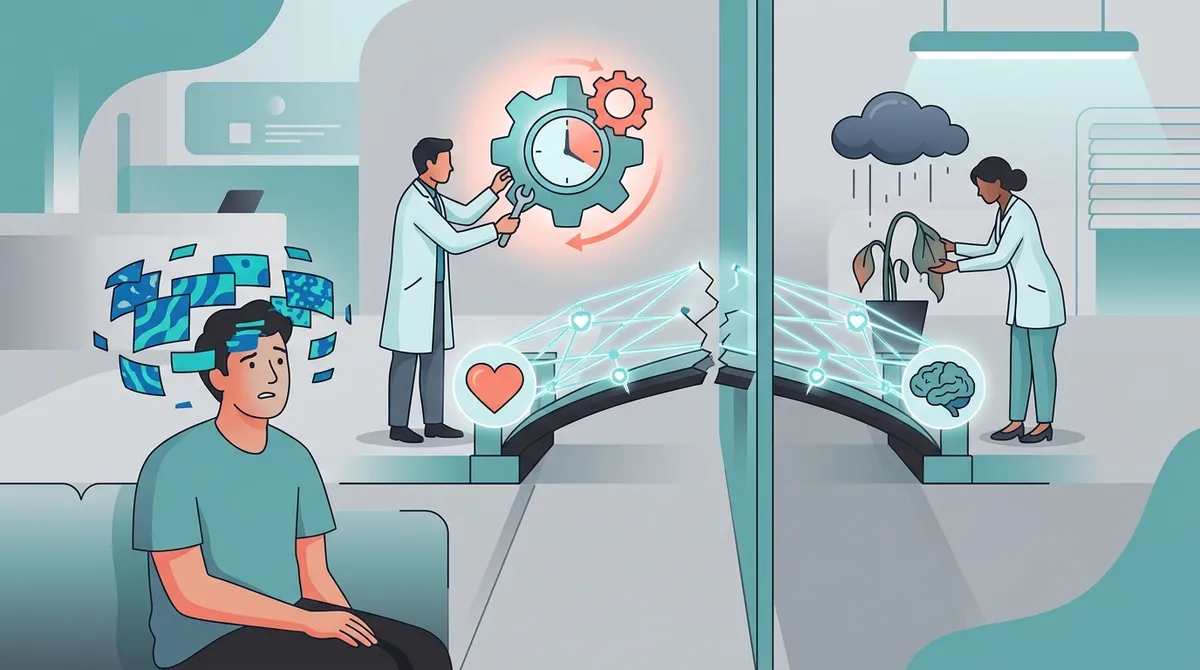
Mistake 1: Treating ADHD and Depression as Separate Problems
One of the biggest mistakes people make is treating these two conditions as completely unrelated. They might take medication for ADHD but ignore the depression. Or they might focus only on the sadness while the ADHD symptoms keep causing chaos in the background.
ADHD and depression are deeply connected. ADHD makes it hard to stay organized, follow through on tasks, and manage emotions. Over time, those daily struggles can chip away at your self-esteem. That constant feeling of failure can trigger or worsen depression. If you only treat one condition, the other often pulls you back down.
Integrated treatment — addressing both conditions at the same time — is the most effective approach. Working with a psychotherapist who understands both conditions can make a huge difference. Therapists who specialize in depression treatment and ADHD can create a plan that supports your whole mental health, not just one piece of it.
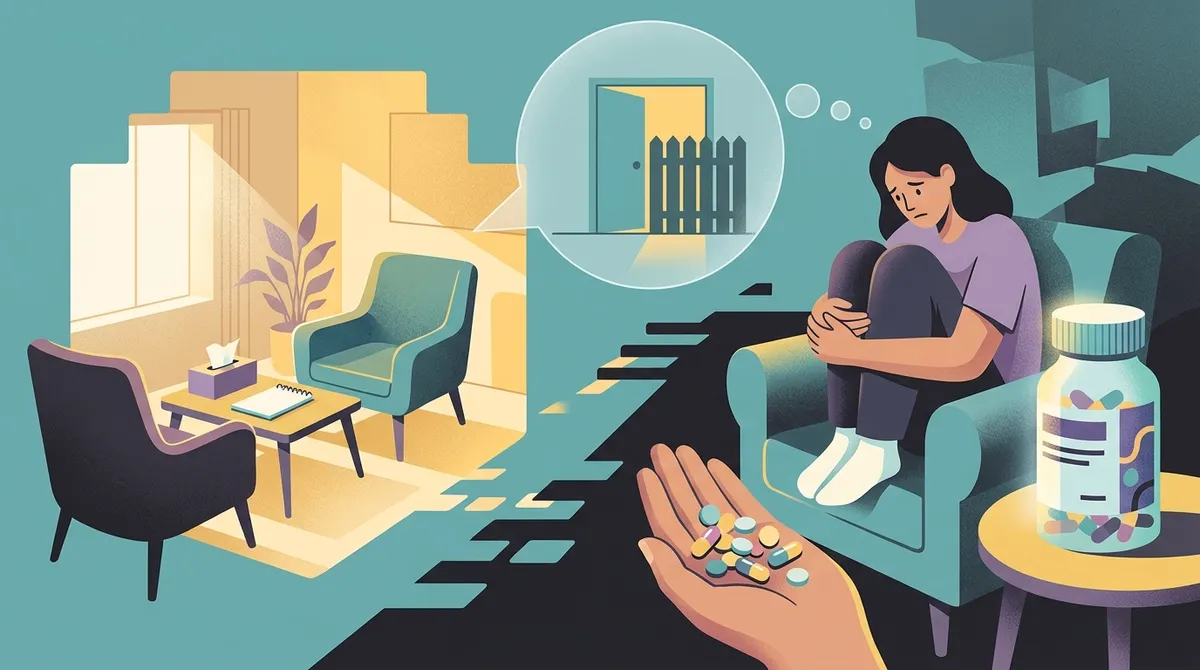
Mistake 2: Skipping Therapy and Relying Only on Medication
Medication can absolutely help. Stimulants often ease ADHD symptoms. Antidepressants like SSRIs or SNRIs can lift the weight of depression. Some medications, like bupropion, may even help with both. But medication alone isn’t enough.
Without therapy, you miss out on learning the skills you need to manage daily life. Medication can quiet the noise, but therapy teaches you how to work with your brain instead of against it. Think of it like this: medication can help you focus, but therapy helps you figure out what to focus on and how to handle the emotions that come up along the way.
Here are some reasons therapy is essential alongside medication:
- It helps you recognize and reframe negative thought patterns
- It builds practical skills like time management and organization
- It supports emotional regulation — learning to manage your feelings without being overwhelmed
- It addresses the low self-esteem that often comes with ADHD struggles
- It gives you a safe space to process what you’re going through
Cognitive Behavioral Therapy (CBT) is especially helpful for people dealing with both ADHD and mood issues. It’s practical, goal-oriented, and teaches you strategies you can use right away.
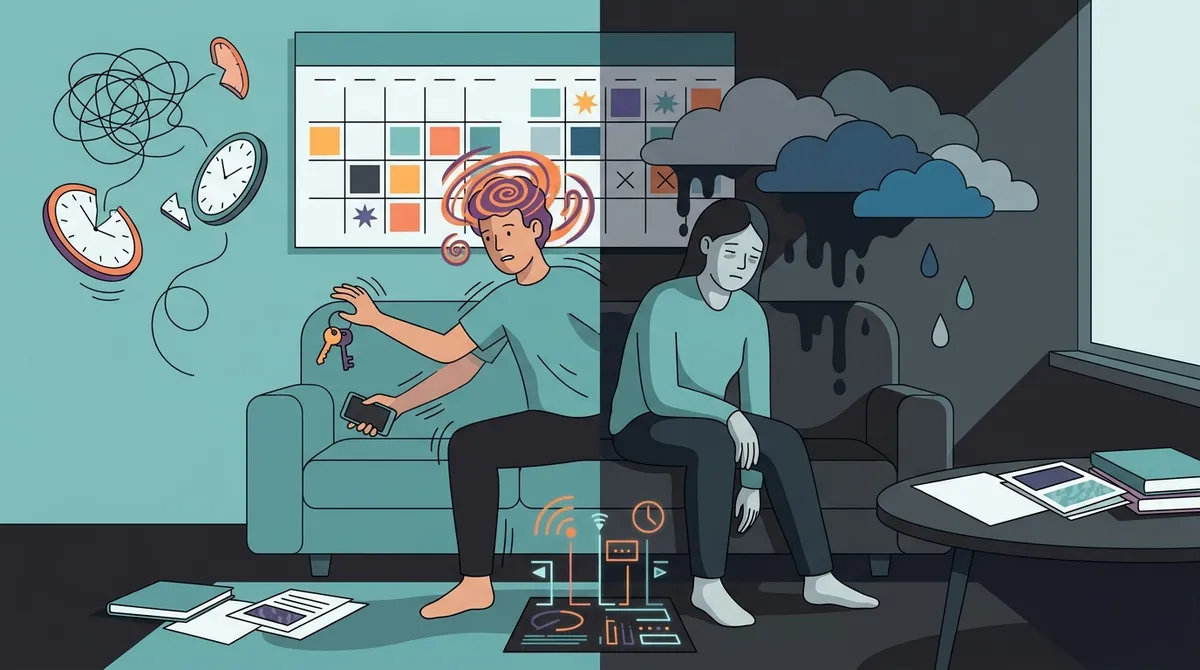
Mistake 3: Ignoring the Signs That Both Conditions Are Present
ADHD and depression share some overlapping symptoms, which makes it easy to miss what’s really going on. Many people get one diagnosis but not the other. Or they spend years thinking their struggles are personality flaws rather than treatable conditions.
Here’s a quick look at how ADHD, depression, and their overlap can appear:
| ADHD Symptoms | Depression Symptoms | Overlapping Symptoms |
|---|---|---|
| Difficulty focusing | Persistent sadness | Low motivation |
| Impulsivity | Feelings of hopelessness | Poor concentration |
| Hyperactivity | Loss of interest in activities | Fatigue and low energy |
| Disorganization | Changes in sleep or appetite | Difficulty completing tasks |
| Forgetfulness | Feelings of worthlessness | Emotional dysregulation |
If you recognize yourself in both columns, that’s worth paying attention to. Getting a thorough evaluation from a qualified mental health professional is the first step. Don’t let overlapping symptoms keep you from getting the full picture of what’s going on.
You can learn more about how depression shows up in daily life by visiting our article on what depression is and how it affects your daily life.

Mistake 4: Waiting Too Long to Seek Help
This is one of the most heartbreaking mistakes we see. People spend months or even years white-knuckling it through life, telling themselves things will get better on their own. Sometimes they do manage for a while. But when ADHD and depression team up, they rarely just go away without support.
Early help means less suffering. It means shorter recovery time. And it means you get to start actually enjoying your life sooner rather than later. If you’re a teenager, a young adult, or someone who has been struggling silently for years, please know: there is no shame in asking for help. Reaching out is one of the bravest things you can do.
The Mental Health Resources from the CDC confirm that early intervention significantly improves outcomes for people with mental health conditions. Don’t wait until things fall apart before you reach out.
Mistake 5: Not Addressing the Impact on Relationships
ADHD and depression don’t just affect you — they affect the people around you too. Mood swings, forgetfulness, emotional withdrawal, and difficulty communicating can put a real strain on relationships. Partners, family members, and friends can feel confused, frustrated, or left out.
Many people focus entirely on their individual symptoms while their relationships quietly suffer. That’s a mistake. Untreated relationship stress can actually make depression worse. And when you feel disconnected from the people you love, motivation to get better drops.
Consider these steps to protect your relationships while managing ADHD and depression:
- Talk openly with your partner or family about what you’re going through
- Ask your therapist about how ADHD and depression might be affecting your communication
- Explore couples therapy if your relationship is feeling the strain
- Set realistic expectations with loved ones during hard periods
- Celebrate small wins together — progress is worth recognizing
You don’t have to navigate relationship problems alone. Support is available for both individuals and couples dealing with these challenges.
Mistake 6: Dismissing ADHD and Depression in Teenagers
It’s not just adults who deal with this. Research shows that 10 to 30% of children with ADHD may also develop a serious mood disorder like major depression. Teenagers who struggle with ADHD often face a unique kind of pain. They feel misunderstood at school, left out socially, and constantly criticized for things they can’t fully control.
One of the biggest mistakes parents make is writing off the signs as typical teenage behavior. Moodiness, poor school performance, and withdrawal from friends can look like typical teen stuff. But when they’re connected to ADHD and depression, they need real support, not just discipline.
Here are signs in teens that deserve attention:
- Dropping grades despite obvious effort or intelligence
- Pulling away from friends and family
- Extreme emotional reactions to small setbacks
- Persistent sadness or feelings of being “different”
- Difficulty sleeping or sleeping too much
- Losing interest in hobbies or activities they used to love
Therapy designed for teens can be a game-changer. It gives them tools to manage their emotions, improve focus, and build confidence. The Florida Substance Abuse & Mental Health services also offer resources to support families navigating these challenges.
Mistake 7: Not Having a Personalized Treatment Plan
Every person’s experience with ADHD and depression is different. A plan that works for your coworker or best friend may not work for you. One of the most common mistakes is following a generic approach to treatment — taking whatever medication is most popular or doing the same few coping strategies everyone talks about online.
What you actually need is a plan built around you. Your history, your strengths, your daily challenges, and your goals all matter. A personalized plan might include:
- A thorough assessment of both ADHD and depression symptoms
- A combination of therapy and medication if appropriate
- Skills-based work through CBT or other evidence-based approaches
- Regular check-ins to measure progress and adjust the plan
- Support for family members or partners when needed
At West Florida Therapy, Margaret Deuerlein is a warm, skilled psychotherapist who truly gets it. She works with teens and adults navigating ADHD, depression, and everything in between. She offers sessions in English and Spanish, in-person in Brandon, Florida, and virtually across all of Florida. Margaret takes the time to understand your full story before building a plan that actually fits your life.
You can learn about our process to see how personalized treatment is built from the very first conversation.
What Good Treatment for ADHD and Depression Looks Like
To bring it all together, here’s a snapshot of what a well-rounded treatment plan typically includes:
| Treatment Component | Purpose | Who It Helps |
|---|---|---|
| Cognitive Behavioral Therapy (CBT) | Reframe negative thinking, build coping skills | Adults, teens, young adults |
| Medication management | Reduce ADHD and depression symptoms | Anyone under psychiatric care |
| Skill-building (time management, organization) | Improve daily functioning | Especially helpful for ADHD |
| Couples or family therapy | Rebuild connection and communication | Couples and families |
| Telehealth therapy | Accessible support from anywhere | Remote clients across Florida |
If you’re in Florida and need flexible options, telehealth therapy in Florida makes it easy to get consistent care no matter where you are. And if you prefer to meet face to face, in-person therapy in Brandon, Florida is also available.
For helpful Florida-based resources, the Mental Health Links from Florida Health can point you toward additional support in your area.
You Deserve Support That Actually Works
Managing ADHD and depression is a challenge, but it’s one you don’t have to face alone. By avoiding these common mistakes — ignoring one condition, skipping therapy, waiting too long to seek help, or going with a one-size-fits-all plan — you give yourself a real chance at living better.
The path forward starts with one conversation. Whether you’re a teenager, a young adult, a parent, or someone who has been struggling for years, support is here for you. Margaret Deuerlein and the team at West Florida Therapy are ready to meet you where you are and help you move forward with care, skill, and genuine compassion.
Check out our mental health services to explore how we can help, or visit us on Google to read what others are saying about their experience. When you’re ready, reach out to schedule your free 15-minute consultation — because getting better starts with taking that first step.
FAQs
Q: What is the link between ADHD and depression?
A: ADHD and depression are two separate conditions that often go hand in hand. The daily struggles of ADHD — like forgetting things, feeling disorganized, or not finishing tasks — can wear down your self-esteem over time, which can trigger or worsen depression. It’s a tough cycle, but one that can absolutely be broken with the right support!
Q: Can ADHD and depression be treated at the same time?
A: Yes, and treating them together is actually the most effective approach! Integrated treatment — which combines therapy like CBT, medication when needed, and skill-building — helps both conditions improve side by side. Treating only one while ignoring the other often slows progress and keeps the cycle going.
Q: What therapy works best for ADHD and depression together?
A: Cognitive Behavioral Therapy (CBT) is one of the most helpful approaches for people dealing with both ADHD and depression. It helps you reframe negative thoughts, build practical skills like organization and time management, and improve how you handle big emotions. A good therapist will tailor CBT to fit your unique situation.
Q: How do I know if my teenager has both ADHD and depression?
A: Watch for signs like falling grades, pulling away from friends, extreme reactions to small setbacks, persistent sadness, or loss of interest in activities they used to love. These can look like “normal” teen behavior, but when they stick around or get more intense, it’s worth talking to a mental health professional who works with teens.
Q: Is virtual therapy available for ADHD and depression in Florida?
A: Absolutely! Telehealth therapy makes it easy to get consistent support no matter where you are in Florida. You can connect with a therapist from the comfort of your own home, making it a great option for busy schedules, teens in school, or anyone who prefers the convenience of virtual sessions.