Key Takeaways
-
ERP (exposure and response prevention) is a first-line, evidence-based CBT treatment for OCD that gradually builds tolerance to triggers while resisting compulsions, with the IOCDF reporting an average symptom reduction of about 60%.
-
Before starting, ask potential therapists whether they use ERP, what OCD-specific training they have, how long treatment takes, and whether they are licensed in Florida and accept your insurance.
-
OCD is defined by obsessions (unwanted intrusive thoughts or urges) and compulsions (rituals done to ease distress), and compulsion relief is temporary, which keeps the cycle going.
-
A typical ERP course runs about 12 to 20 sessions, and therapy can be delivered in person in Brandon or via telehealth anywhere in Florida, depending on your schedule.
-
Reassurance-seeking can feel helpful but often feeds the OCD cycle, so cutting back on it and delaying rituals for a few minutes are practical steps to support progress.
-
Medication can be combined with ERP, but decisions should be made with a psychiatrist or primary care doctor, since therapists cannot prescribe medication.
If your mind keeps looping on thoughts you can’t shake, you are not alone. Maybe you check the stove five times. Maybe you replay a conversation for hours. Maybe a scary thought pops up out of nowhere, and you feel you must do something to make it go away. That is exhausting, and it can make you feel like you are “going crazy.” You are not. These are common signs of obsessive-compulsive disorder (OCD), and there is real help available.
If you are searching for OCD therapy in Brandon, Florida, you have taken a brave first step. OCD is highly treatable, and the right kind of therapy can change daily life in a big way. In this guide, we will walk through what OCD looks like, how exposure and response prevention (ERP) works, what to ask a therapist, and how to get started. We will keep it simple, practical, and kind.
What OCD Really Looks Like
OCD is more than being neat or liking things in order. It has two main parts: obsessions and compulsions.
- Obsessions are unwanted thoughts, images, or urges that show up again and again and cause distress.
- Compulsions are actions or mental rituals you feel driven to do to ease that distress, like washing, checking, counting, praying, or seeking reassurance.
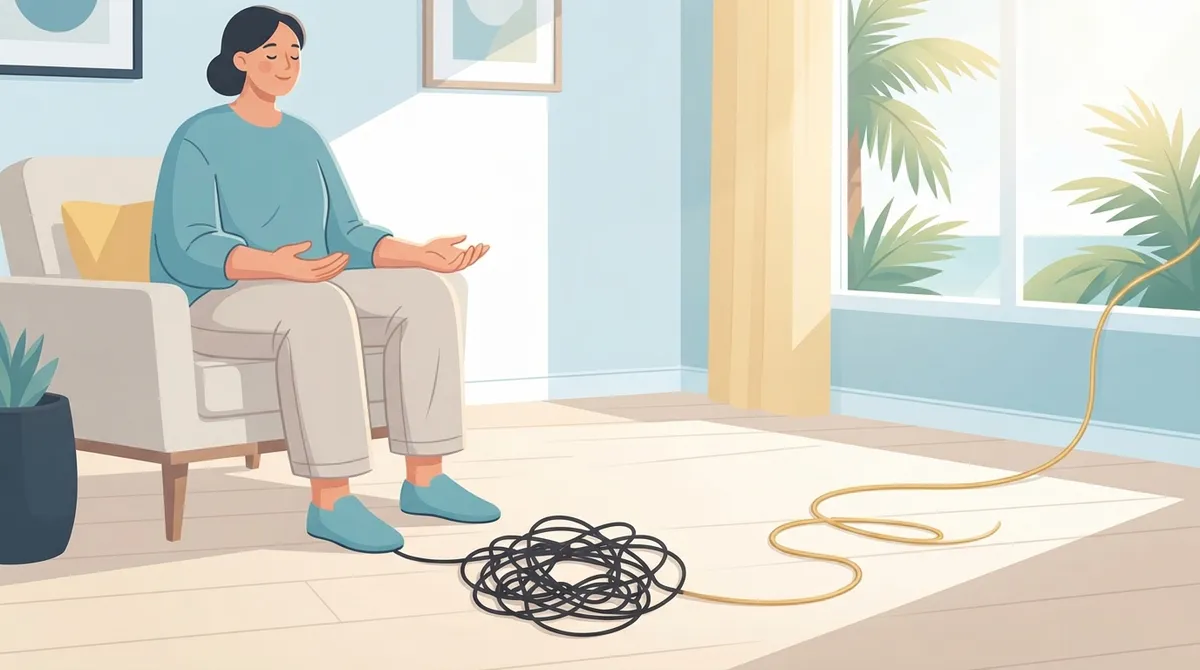
The relief from a compulsion rarely lasts. Soon the doubt returns, and the cycle starts again. Over time, OCD can take up hours of your day and shrink your world.
According to the National Institute of Mental Health (NIMH), an estimated 1.2% of U.S. adults had OCD in the past year, and 2.3% will experience it at some point in their lives. Among adults with OCD, about half (50.6%) reported serious impairment. These are national numbers, not Brandon-specific, but they show how common and how disruptive OCD can be.
Common OCD Themes
OCD can show up in many ways. Here are some themes people often describe:
- Contamination and cleaning fears
- Checking locks, appliances, or emails
- Intrusive thoughts about harm, even though you would never act on them
- Fear of making a moral mistake or being a “bad person”
- Relationship doubts and the need for constant reassurance
- Needing things to feel “just right” or symmetrical
If you want to dig into more specific forms, you may find our articles on existential OCD and relationship OCD mistakes helpful.

Why ERP Is the Gold Standard for OCD Therapy
When you look for OCD therapy in Brandon, Florida, one phrase matters most: exposure and response prevention, or ERP. ERP is a specialized form of cognitive behavioral therapy (CBT). The International OCD Foundation (IOCDF) and other major organizations recognize it as a first-line, evidence-based treatment for OCD.
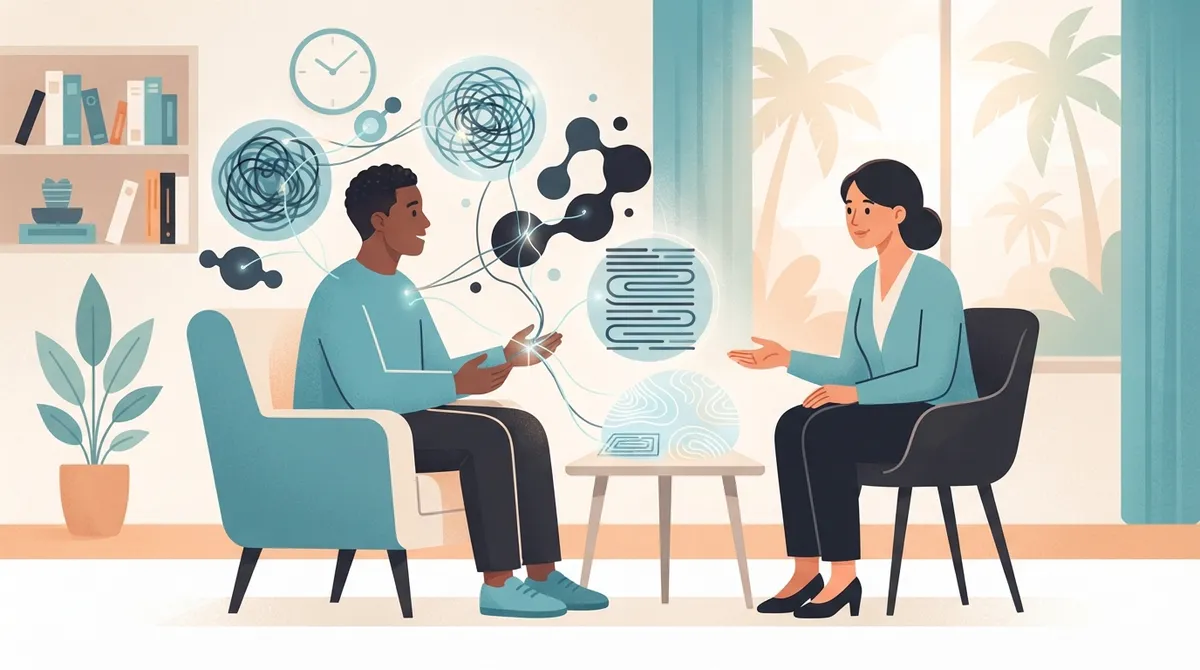
Here is the basic idea. OCD teaches your brain that a feared thought or situation is dangerous and that a ritual is the only way to stay safe. ERP helps you test that belief. You gradually face the thing that triggers distress, and you practice not doing the compulsion. Over time, your brain learns that the anxiety rises, peaks, and falls on its own, and that you can handle it.
What ERP Is Not
Many people worry that ERP will be scary or forced. Good news: a skilled therapist works with you, not against you. ERP is collaborative and planned. You are not tricked or pushed into exposures. You help build the plan, and you move at a pace that is challenging but doable.
The IOCDF reports that ERP leads to an average reduction of about 60% in OCD symptoms. That is an average, not a promise for any one person, but it is encouraging. Many people get real, lasting relief.
How ERP Works Step by Step
Every person’s plan looks a little different. Still, ERP usually follows a clear path.
- Assessment. Your therapist learns about your obsessions, compulsions, and any avoidance. You talk about how OCD affects your work, school, relationships, and sleep.
- Building a fear ladder. Together, you list triggers from mildly uncomfortable to very hard. This becomes your roadmap.
- Starting small. You begin with a manageable exposure, such as touching a doorknob without washing right away.
- Practicing response prevention. You sit with the discomfort and resist the urge to do the ritual. Your therapist coaches you through it.
- Practicing between sessions. Short practice at home helps skills stick. This is a normal part of ERP.
- Climbing the ladder. As you gain confidence, you take on harder steps until OCD has far less power over your choices.
A typical ERP course may involve about 12 to 20 sessions, often around an hour each. The IOCDF notes that treatment length and frequency vary by person and setting. Some people do weekly outpatient therapy, some use teletherapy, and some need a more intensive program.
OCD Therapy Options in Brandon and Across Florida
One great thing about getting help today is flexibility. In the Brandon area, OCD therapy may be offered in person, through secure telehealth, or both. Services and availability change, so always confirm details directly with a practice.
| Format | Best For | Things to Consider |
|---|---|---|
| In-person weekly sessions | People who like face-to-face support and a dedicated space | Requires travel; easy to practice real-world exposures nearby |
| Telehealth sessions | Busy schedules, teens at home, or anyone across Florida | Needs private space and a steady internet connection |
| Bi-weekly or flexible schedule | People balancing work, school, or family | May stretch out the timeline slightly |
| Intensive programs | Severe symptoms or limited progress with weekly therapy | Higher time commitment; may require a specialty program |
If you prefer to meet face-to-face, learn more about in-person therapy in Brandon, Florida. If you want the convenience of home, explore telehealth therapy across Florida.
How to Choose the Right OCD Therapist
Not every therapist has deep training in OCD. General anxiety experience is helpful, but OCD has its own tricky patterns. Reassurance, for example, can feel kind but may actually feed the cycle. That is why it helps to ask a few smart questions up front.
Questions to Ask Before You Start
- Do you use exposure and response prevention (ERP) to treat OCD?
- What training or experience do you have with OCD specifically?
- What will a typical session look like?
- How long does treatment usually take?
- Do you offer in-person, telehealth, or both?
- Are you licensed to serve me in Florida?
- What are your fees, and do you take my insurance?
- Can you coordinate with a doctor or prescriber if I need medication?
Online directories list many clinicians who advertise OCD or ERP services in Brandon and nearby areas. These listings are not endorsements, so verify credentials and fit on your own. A short phone call can tell you a lot.
Meet a Caring Guide: Margaret Deuerlein
At West Florida Therapy, Margaret Deuerlein is a licensed psychotherapist who brings warmth and structure to her work with clients. She understands that reaching out for help takes courage, and she works to make therapy feel steady and welcoming. If you are curious about what a psychotherapist does, our guide on what a psychotherapist does is a great place to start.
Services are available in English and Spanish, in person in Brandon, and virtually anywhere in Florida. That matters for many families, including Spanish-speaking adults who want to explain their thoughts in the language that feels most natural.
Who Can Benefit From OCD Therapy?
OCD can show up at any age. Here are a few examples of who might find help through therapy:
- Teens (13 to 17) who feel stuck in rituals or intrusive thoughts and are struggling at school or with friends. Parents often play an important supportive role.
- Young adults (18 to 27) juggling school, first jobs, and big life changes. Stress can make OCD louder.
- Millennials (28 to 43) managing work, family, and money pressure while OCD takes up precious mental space.
- Women, who NIMH data shows have a higher past-year rate of OCD (1.8%) than men (0.5%) in U.S. adults.
- Couples where one partner’s OCD affects trust, intimacy, or daily routines. Our couples therapy services can support both people.
OCD also often travels with other challenges. You may want to read about OCD and depression, OCD and ADHD, or understanding anxiety if any of these sound familiar.
Therapy and Medication: Can They Work Together?
For some people, medication can be part of the plan alongside ERP. A qualified medical professional, such as a psychiatrist or your primary care doctor, can talk with you about whether medication makes sense. Treatment decisions should always be personal and based on your symptoms and preferences.
Your therapist cannot prescribe medication, but they can coordinate care with your prescriber so everyone is on the same page. Many clients find that therapy skills help them feel more in control, whether or not they also take medication.
What to Expect at Your First Appointment
Nervous about that first visit? That is normal. Here is a simple picture of what usually happens at West Florida Therapy:
- A short phone consultation. You share your concerns and goals, and you can ask questions. There is a free 15-minute consultation to see if it feels like a good fit.
- A personalized plan. Together, you build a treatment plan around your experiences and goals.
- Regular sessions. You meet weekly or bi-weekly, in person or by telehealth, and each session builds on the last.
- Progress check-ins. You and your therapist track growth, celebrate wins, and adjust the plan when needed.
You can read more about our process on our website. And no, you will not be asked to do anything you have not agreed to.
Paying for OCD Therapy in Brandon
Cost is a real concern, and it is smart to ask about it early. West Florida Therapy works with several insurance providers, including Aetna, Cigna, Florida Blue, Optum, Oscar, and United Health Care. We suggest calling your insurance carrier to confirm your mental health benefits, copays, and deductible.
Many clients also choose to pay out of pocket for privacy and flexibility. We accept major credit cards, HSA, and FSA accounts. Learn more on our payment options page.
Simple Tips to Support Your Progress
While you work with a therapist, small habits can help you stay on track:
- Notice the urge to do a ritual, and try to delay it a few minutes.
- Practice the exposures you and your therapist plan, even short ones.
- Be kind to yourself on hard days. Setbacks are part of the process.
- Cut back on reassurance seeking when you can.
- Lean on safe people who understand you are getting help.
For broader support, check out the CDC mental health resources and the Florida Department of Children and Families mental health services. The Florida Department of Health mental health links also list helpful options. If you are ever in crisis, call or text 988 to reach the Suicide and Crisis Lifeline.
Take the Next Step Toward Relief
OCD can make you feel trapped, but you do not have to stay there. ERP has helped many people loosen OCD’s grip and get back to the things they love. Whether you live in Brandon or elsewhere in Florida, help is within reach. See what others say by visiting us on Google, West Florida Therapy.
Ready to talk? Contact us to set up your free 15-minute consultation. Real change is possible, and it can start with one courageous step today.
FAQs
Q: How do I find an OCD therapist in Brandon, Florida?
A: Start by looking for licensed clinicians who list OCD or exposure and response prevention (ERP) as a specialty. Then call and ask about their training, availability, fees, and Florida licensure. A free consultation, like the 15-minute one at West Florida Therapy, is a friendly way to see if it feels like a good fit.
Q: What is ERP therapy, and how does it help OCD?
A: ERP stands for exposure and response prevention, a specialized type of CBT. You slowly face feared thoughts or situations while learning to hold back from compulsions. Over time, your brain learns the fear fades on its own, and OCD loses power.
Q: Can I get OCD therapy online in Florida?
A: Yes! Many people receive OCD therapy through secure telehealth, which can be a great fit for busy adults, teens at home, or anyone who lives far from an office. West Florida Therapy offers virtual sessions anywhere in Florida, plus in-person visits in Brandon.
Q: How long does ERP treatment for OCD usually take?
A: A typical ERP course is about 12 to 20 sessions, often around an hour each. The exact length depends on your symptoms, goals, and how often you meet. Your therapist will check in on your progress and adjust the plan as you go.
Q: Does insurance cover OCD therapy in Brandon, FL?
A: Many insurance plans cover mental health therapy, but coverage varies. West Florida Therapy is in-network with several carriers, including Aetna, Cigna, Florida Blue, Optum, Oscar, and United Health Care. It is best to call your insurance company to confirm your benefits, copays, and deductible.