
Key Takeaways
-
Verify any Brandon therapist's Florida license (LMHC, LCSW, or Licensed Psychologist) through the state licensing board before booking, and confirm directly with the provider.
-
CBT is goal-focused and skills-based: you set clear goals with your therapist, practice skills between sessions, and leave with tools you can use long-term.
-
Confirm insurance network status, copay or deductible, session fees, and cancellation policy before your first visit, since coverage varies by provider and plan.
-
CBT has the strongest research support for anxiety disorders, bulimia, anger problems, and stress, and it is also effective for depression; results vary, so track progress with your therapist.
-
Use a short consultation to judge fit: ask about your specific concern, what a typical session looks like, how progress is measured, and how often you will meet.
-
Skipping homework, expecting instant results, and choosing a therapist only by price or location can slow progress; speak up if something isn't working and give sessions time.
Feeling stuck in the same worried thoughts? Maybe your mind races at night, or a low mood follows you through the day. You are not alone, and you do not have to figure it out by yourself. Many people in Brandon are turning to cognitive behavioral therapy to feel better, and for good reason.
CBT therapy in Brandon, Florida is a practical, skills-based way to work through anxiety, depression, stress, and more. It is also a little overwhelming to search for. Who is licensed? Who takes your insurance? Will online sessions work for you? Those are fair questions.
This friendly guide walks you through each step, from understanding what CBT is to booking your first visit. Whether you are a busy millennial, a teen feeling school pressure, a couple hitting a rough patch, or someone who prefers care in Spanish, you will find clear steps here. Let’s make this simple, together.
What Is CBT and How Does It Work?
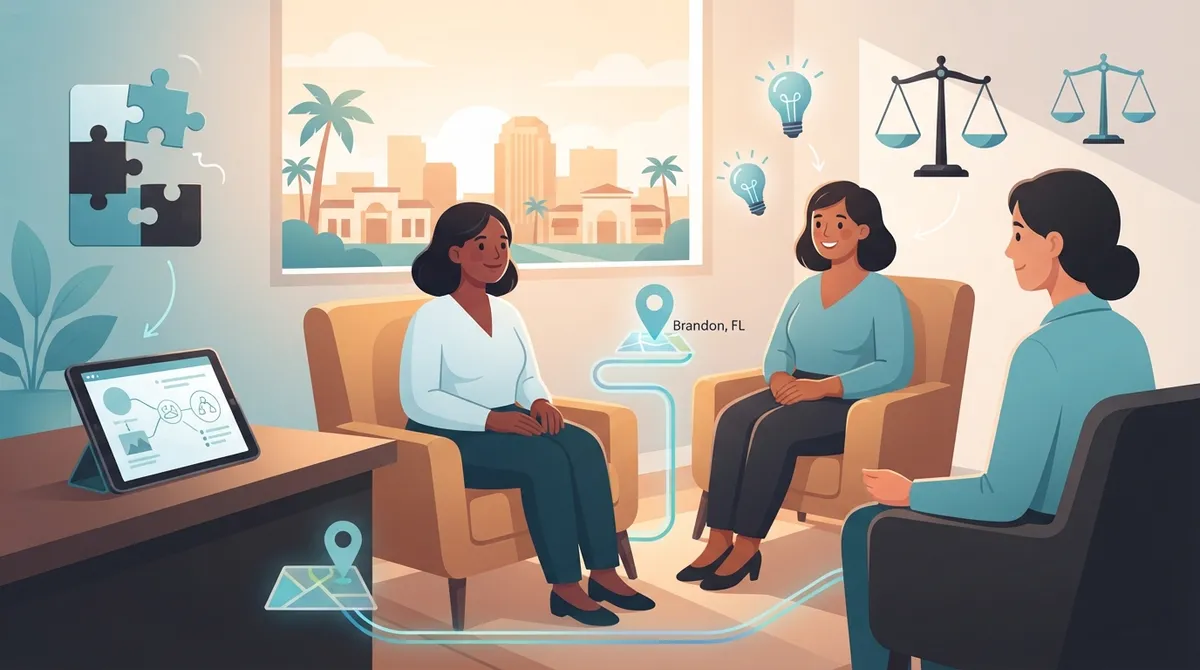
Cognitive behavioral therapy, or CBT, is a structured, goal-focused type of talk therapy. It helps you notice thoughts and habits that keep you feeling stuck, then change them in small, doable ways. You can read a deeper overview in our complete guide to cognitive behavioral therapy.
Here is the basic idea. Your thoughts, feelings, and actions all affect each other. If you think, “I always mess things up,” you may feel anxious and then avoid the thing you fear. Avoiding gives the worry more power. CBT helps you spot that loop and gently break it.
CBT is not just talking about your week. You and your therapist set clear goals. You learn skills and practice them between sessions. Most people find this hands-on style empowering because they leave with tools they can use for life.
What CBT Can Help With
Research supports CBT for many concerns. A well-known review in the National Institutes of Health library found the strongest evidence for anxiety disorders, bulimia, anger-control problems, and general stress. It was also effective for depression compared with control conditions. CBT is commonly used for:
- Anxiety and worry, including social anxiety and panic
- Depression and low mood
- PTSD and trauma-related stress
- OCD and intrusive thoughts
- Insomnia and sleep struggles
- Eating disorders and body image concerns
If you want to learn more about specific concerns, take a look at our pages on anxiety treatment and depression treatment.
A Quick, Honest Note on Results
CBT is helpful, but it is not magic, and everyone’s experience is different. One 2025 review of placebo-controlled trials for adult anxiety-related disorders found a small but real benefit in symptoms. That estimate applies to those specific studies, so your own results may look different. The best way to know is to try it with a caring therapist and track your progress together.
Also, CBT is not a substitute for emergency care. If you are in crisis or thinking about harming yourself, call or text 988 or go to your nearest emergency room right away.
How to Find CBT Therapy in Brandon, Florida: Step by Step
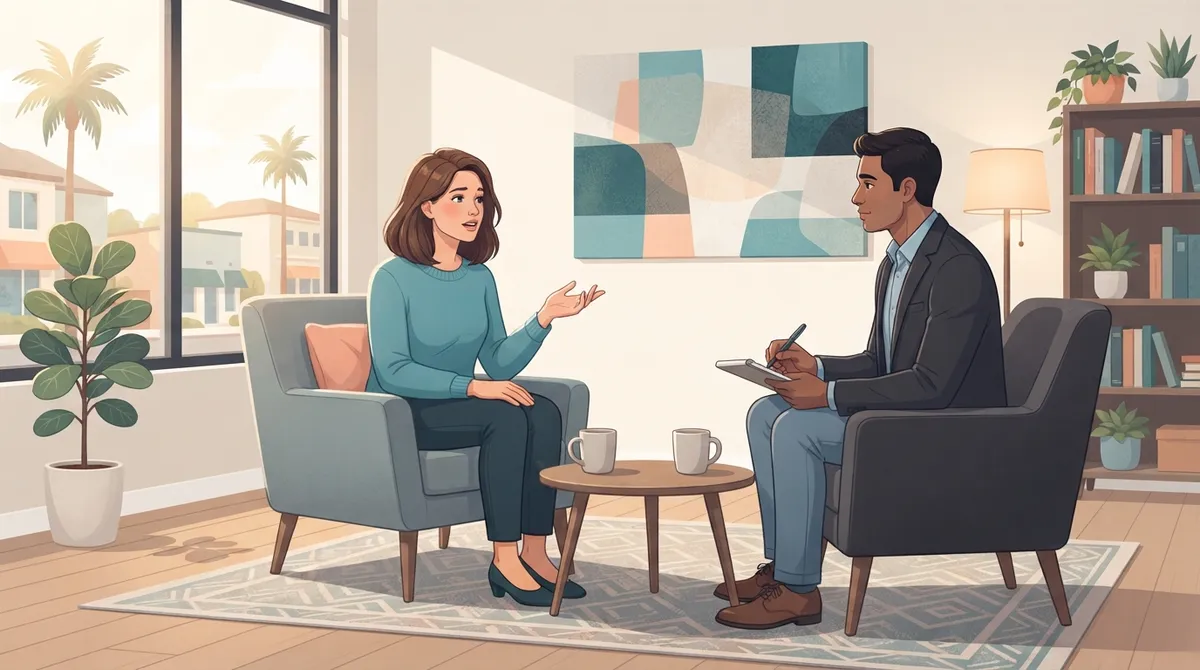
Ready to start? Here is a simple path you can follow. Take it one step at a time, and be kind to yourself along the way.
- Name what you want help with. Is it racing thoughts, a heavy mood, relationship stress, or teen worries? Writing down two or three goals makes your search much easier.
- Decide between in-person and virtual. Some people feel more comfortable in an office. Others love the ease of logging in from home.
- Search local sources. Look at therapist directories, your insurance provider list, and trusted referrals from friends or your doctor.
- Check licenses and credentials. Confirm any therapist you consider is licensed in Florida.
- Ask about cost and insurance. Know your copay, deductible, and session fees before you book.
- Book a short consultation. A quick call helps you sense whether the therapist feels like a good fit.
Directory listings are a great place to start, but treat them as leads, not endorsements. Availability, specialties, and whether someone is accepting new clients can change, so always confirm directly.
In-Person vs. Virtual CBT in Brandon
Brandon-area options include both in-person and telehealth care. Which one is better? It really depends on you. Here is a quick comparison to help you decide.
| Feature | In-Person CBT | Virtual (Telehealth) CBT |
|---|---|---|
| Location | Therapist’s office in Brandon | Anywhere in Florida with a private space |
| Best for | People who like face-to-face connection | Busy schedules, teens, remote or hybrid workers |
| Convenience | Requires travel time | No commute needed |
| Privacy | Private office setting | Depends on your home setup |
| Availability | Limited to office hours and space | Often more flexible scheduling |
Telehealth eligibility depends on the provider, where you are located, and your clinical needs. Learn more about in-person therapy in Brandon or see how telehealth therapy across Florida works. You can also read our comparison of in-person vs. telehealth therapy in Brandon.
How to Check a Therapist’s Florida License
This step takes just a few minutes and gives you real peace of mind. In Florida, common credentials include:
- LMHC: Licensed Mental Health Counselor
- LCSW: Licensed Clinical Social Worker
- Licensed Psychologist: Holds a doctoral degree and state license
You can verify a license through the state licensing board. The Florida Department of Health also shares helpful mental health resources, which you can find through Florida’s mental health links. Ask the therapist directly too. A caring professional will happily share their credentials and training.
Questions to Ask Before Your First Session
A first call is your chance to see if someone feels right. You are interviewing them as much as they are meeting you. Here are some friendly questions to try:
- Are you licensed in Florida, and what type of license do you hold?
- Do you have experience with my specific concern, like anxiety or depression?
- What does a typical CBT session look like with you?
- How will we know I am making progress?
- How often do you meet with clients, and for how long?
- What are your fees, and do you take my insurance?
- What is your cancellation policy?
Good therapists welcome these questions. If a therapist explains things clearly and makes you feel heard, that is a great sign.
What to Expect During CBT Sessions
Every person is different, but many CBT journeys follow a similar rhythm. Early on, you and your therapist talk about your history, your goals, and what is not working right now. From there, you build a plan together.
Sessions often include a few of these pieces:
- Setting an agenda so each visit has a clear focus
- Spotting unhelpful thoughts and testing whether they are accurate
- Learning coping skills like calming techniques and problem-solving
- Gentle practice facing things you may have been avoiding
- Homework between sessions to build skills in real life
How long does CBT take? Many people attend weekly or every other week for a few months, but the right pace depends on your goals. Your therapist should explain the plan and check in on your progress often.
Understanding Costs and Insurance
Money questions are real, and it is okay to ask them up front. Insurance participation and out-of-pocket costs vary by provider and plan. Before you book, confirm these details:
- Whether the therapist is in-network with your plan
- Your copay, coinsurance, or deductible
- The session fee if you pay out of pocket
- Whether the first assessment is billed differently
- The cancellation policy
Some clinics list that they accept hundreds of insurance plans, but that is specific to one provider, so always verify your own coverage. Call your insurance company and ask about your mental health benefits. At West Florida Therapy, we are in-network with several major providers, including Aetna, Cigna, Florida Blue, Optum, Oscar, and United Health Care. We also accept HSA and FSA cards and offer out-of-pocket options. You can see all of our payment options here.
CBT for Different Groups: Who Benefits?
CBT is flexible, which means it can be shaped for different needs and ages. Here are a few ways people in the Brandon area use it.
Teens and Parents
School pressure, social worries, and big feelings are common during the teen years. CBT gives teens simple tools to handle stress and talk back to harsh self-talk. Parents often learn how to support these skills at home. Explore our guide on virtual therapy for adolescents if online sessions sound easier for your family.
Young Adults and Millennials
Life transitions, work stress, and money worries can pile up fast. CBT is short on fluff and heavy on practical skills, which many busy adults appreciate. It can help you manage worry, build better habits, and feel more in control.
Couples
Sometimes stress shows up between partners. While CBT is often used for individuals, many couples also work on communication and conflict with a specialized approach. If this sounds like you, learn about couples therapy and how it can help you reconnect.
Spanish-Speaking Adults
Talking about your feelings is easier in the language you grew up with. Bilingual care in English and Spanish helps you express yourself fully and feel understood. Our guide on finding a Spanish-speaking therapist in Brandon can help you get started.
Meet Margaret Deuerlein at West Florida Therapy
If you want a caring, down-to-earth guide, Margaret Deuerlein is a psychotherapist at West Florida Therapy who helps adults and adolescents work through anxiety, depression, trauma, and relationship struggles. Her approach is warm and practical. You will never feel rushed or judged. You can learn more about Margaret and her approach to care.
West Florida Therapy offers in-person sessions in Brandon and telehealth across all of Florida. Services are available in English and Spanish. We also offer a free 15-minute consultation, so you can ask questions and see if we are a good fit with zero pressure. You can read more about our process to see what to expect from the first phone call to ongoing sessions.
Curious what others think? You can visit our West Florida Therapy location on Google to see reviews and get directions.
Common Mistakes to Avoid When Starting CBT
A few small missteps can slow your progress. Here are some to watch for, so you can start strong.
- Expecting instant results. CBT builds skills over time. Small wins add up.
- Skipping the homework. Practice between sessions is where much of the magic happens.
- Picking a therapist only by price or location. Fit and experience matter just as much.
- Not speaking up. If something is not working, tell your therapist. They can adjust.
- Giving up too soon. It can take a few sessions to feel comfortable.
Other approaches may also be a good fit depending on your needs. If you are weighing your options, our article comparing psychodynamic and CBT therapy can help. For more tips on avoiding missteps, read our guide on choosing evidence-based therapy.
Can CBT Be Combined With Other Support?
Yes. CBT may be used on its own or alongside medication or other supports when it makes sense. A qualified clinician can talk with you about options and coordinate with a prescriber if needed. The goal is a plan that fits you, not a one-size-fits-all approach. For general guidance, the CDC’s mental health resources offer helpful information on caring for your well-being.
Take Your First Step Today
Finding CBT therapy in Brandon, Florida does not have to feel heavy. Start by naming your goals, check your therapist’s license, ask about costs, and choose a format that fits your life. Most of all, pick someone who makes you feel safe and heard.
You deserve support that helps you feel more like yourself. If you are ready to take that first brave step, we would love to hear from you. Contact West Florida Therapy today to schedule your free 15-minute consultation and see how CBT can help you move forward with confidence.
FAQs
Q: What is CBT therapy, and how does it work?
A: CBT, or cognitive behavioral therapy, is a structured, goal-focused type of talk therapy. It helps you notice unhelpful thoughts and habits, then practice new ways of thinking and acting. You learn real skills and try them out between sessions.
Q: Is online CBT therapy available to people in Brandon, Florida?
A: Yes, many providers offer telehealth CBT, so you can meet from home. Availability depends on the therapist, where you live, and your clinical needs. West Florida Therapy offers virtual sessions throughout Florida and in-person visits in Brandon.
Q: Does insurance cover CBT therapy in Brandon, FL?
A: Coverage varies by provider and plan, so it is smart to check before you book. Ask about network status, your copay or deductible, and session fees. West Florida Therapy is in-network with several major insurers and also offers out-of-pocket options.
Q: How long does CBT usually take?
A: Many people meet weekly or every other week for a few months, though the right pace depends on your goals. Your therapist should explain the plan and check in on your progress often. The length of treatment is shaped around your needs.
Q: How can I check a therapist’s Florida license?
A: You can verify a license through the state licensing board, and you can always ask the therapist directly. Common Florida credentials include LMHC, LCSW, and licensed psychologist. A caring therapist will gladly share their training and license details.