Key Takeaways
-
Recognize early warning signs like jaw tension or sudden irritability, then use grounding techniques (4-4-6 breathing, 5-4-3-2-1 technique, or physical pressure) to intervene before sensory overload escalates.
-
Untreated overstimulation anxiety can lead to chronic sleep problems, burnout, depression, and weakened immunity—addressing it early through self-awareness and professional support prevents long-term health damage.
-
Create a sensory-friendly environment by using noise-canceling headphones, dimming lights, decluttering workspaces, and scheduling non-negotiable quiet time into your daily routine.
-
Build long-term nervous system resilience through consistent habits like regular physical movement, stable sleep schedules, mindfulness practice, and time in nature rather than relying only on quick fixes.
-
Professional therapy—particularly CBT, trauma-focused, or mindfulness-based approaches—addresses root causes and provides personalized strategies that self-help alone often cannot achieve.
-
Communicate your sensory needs openly with trusted people and give yourself permission to leave overwhelming situations early, as protecting your energy is a sign of wisdom, not weakness.
Do you ever feel like the world is just too much? The noise, the lights, the endless notifications, the crowded grocery store — all hitting you at once until you want to run and hide? You’re not alone. Overstimulation anxiety is incredibly common, and it can leave you feeling exhausted, irritable, and completely overwhelmed. The good news? There are real, practical ways to manage it — and you don’t have to figure it out by yourself.
Whether you’re a busy millennial juggling work and life, a teenager navigating school pressure, or someone who has always felt “too sensitive” to the world around you, this guide is for you. We’ll walk through what overstimulation anxiety actually is, what causes it, and — most importantly — how to start feeling better. Let’s dive in.
What Is Overstimulation Anxiety?
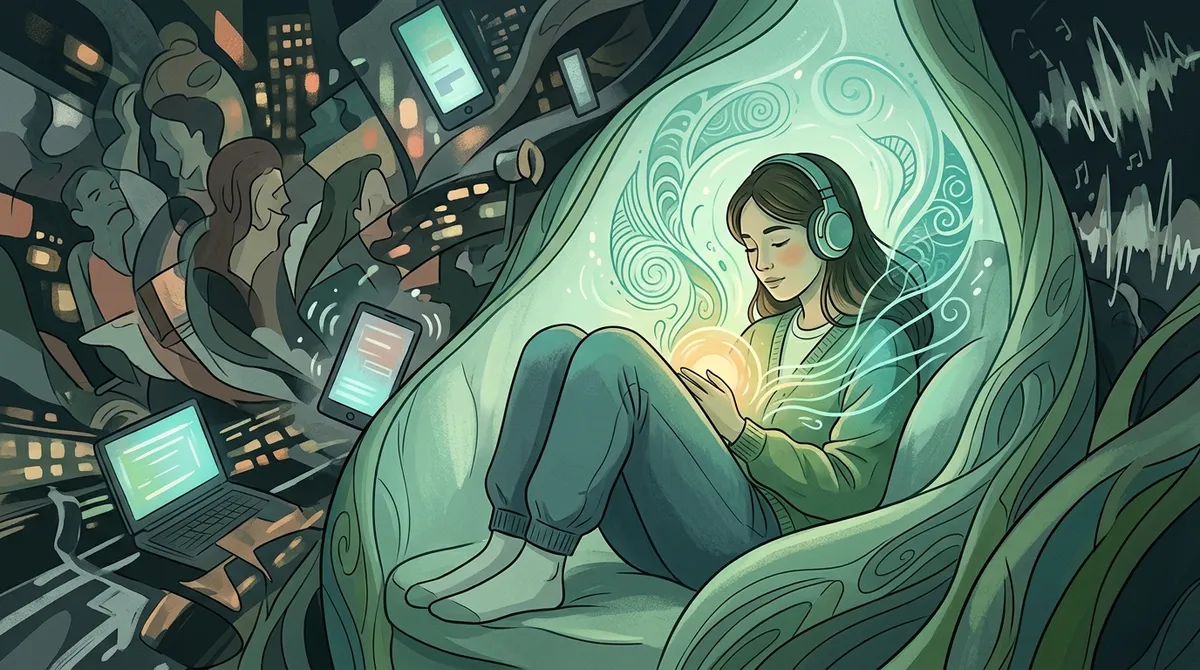
Overstimulation anxiety (also called sensory overload) happens when your brain receives more sensory input than it can comfortably process. Think of your brain like a computer. When too many programs run at once, the whole system slows down or crashes. That’s what overstimulation feels like — a full-system overload.
Your brain responds by triggering the fight, flight, or freeze response. This releases stress hormones like adrenaline and cortisol. These hormones disrupt the part of your brain responsible for calm thinking and emotional control. The result? You feel panicked, irritable, or completely shut down.
According to research, up to 80% of people with sensory processing difficulties experience anxiety — showing just how closely these two issues are connected. If you’d like to learn more about how anxiety works in the brain and body, check out this guide on understanding anxiety signs, types, and treatment options.
Who Experiences Overstimulation Anxiety?
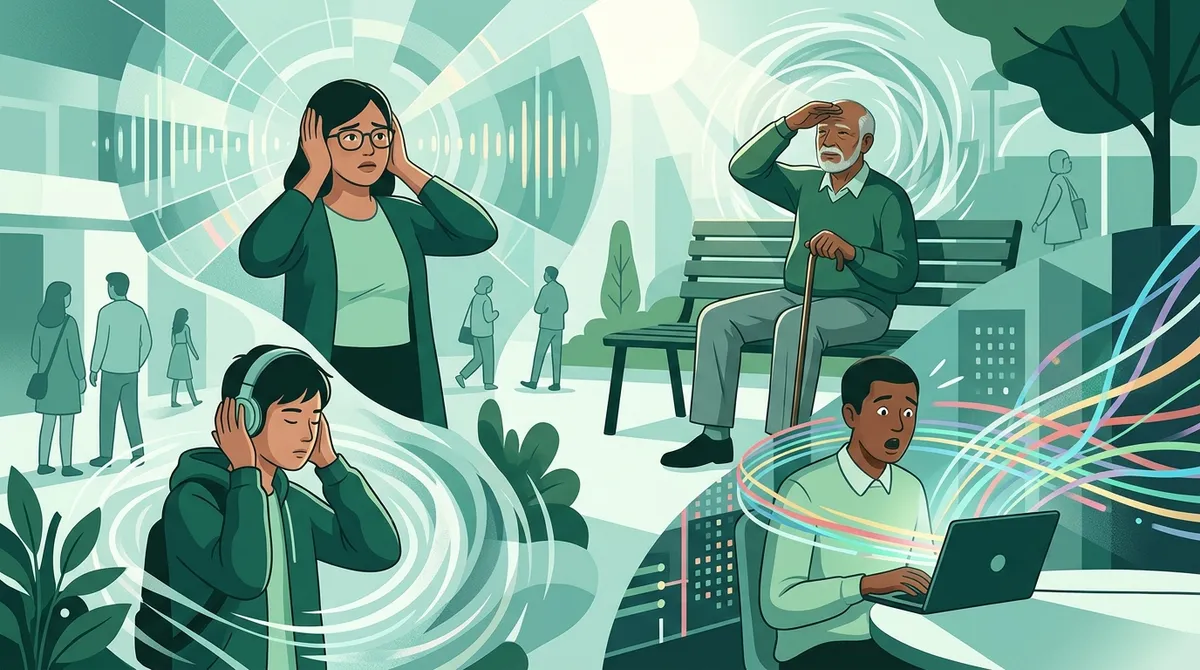
Overstimulation anxiety doesn’t discriminate. It can affect anyone, but it tends to be more intense for certain groups. Understanding who is most affected can help you recognize it in yourself or someone you love.
People most likely to experience overstimulation anxiety include:
- Individuals with ADHD or autism spectrum disorder
- People living with anxiety disorders or PTSD
- Those with sensory processing disorder (SPD)
- Highly sensitive people (HSPs)
- Children and teenagers during high-stress periods
- Adults going through major life transitions or burnout
If you’ve experienced trauma, you may also be especially vulnerable. Trauma rewires how the nervous system responds to sensory input, making the brain hypervigilant and prone to overload. You can read more about this in our article on how to recognize and heal from psychological trauma.
Common Triggers of Overstimulation Anxiety
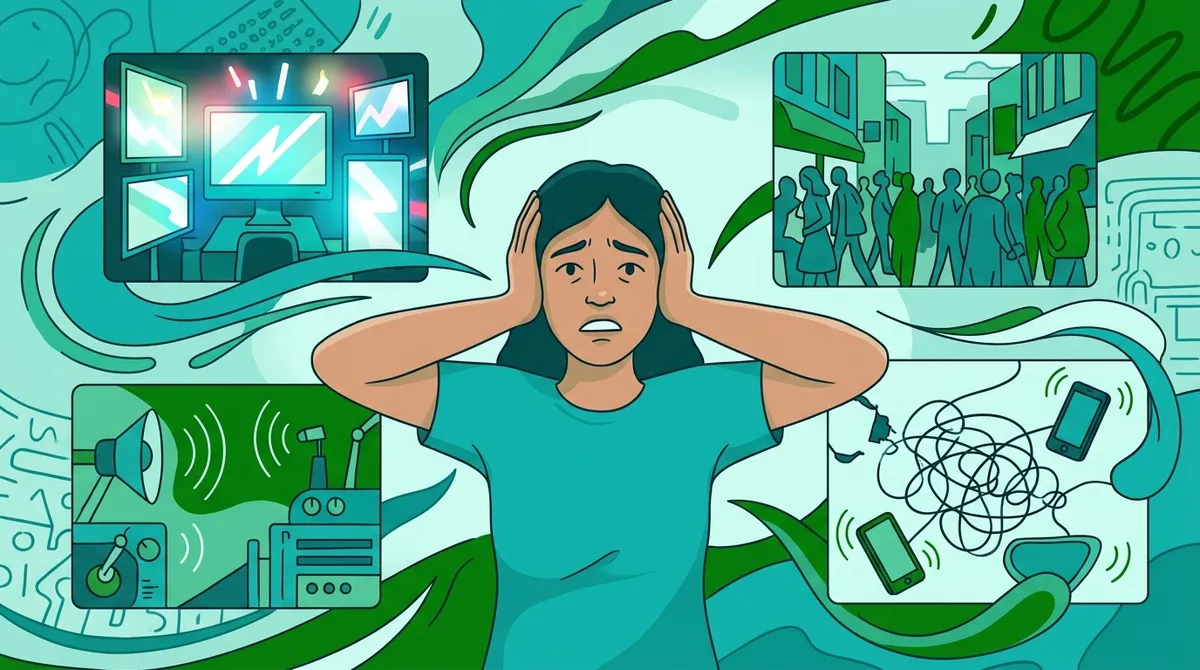
Knowing your triggers is one of the most powerful tools you have. Once you know what sets off your sensory overload, you can plan ahead and protect your nervous system. Common triggers include:
- Loud or persistent noises (traffic, crowds, loud music)
- Bright or flickering lights
- Strong smells (perfume, cleaning products, food)
- Physical touch or certain textures
- Crowded spaces like malls or public transportation
- Excessive screen time or multitasking
- Emotional conversations or conflict
- Unpredictable schedules or chaotic environments
Everyone’s triggers are a little different. Keeping a simple journal of when you feel overwhelmed can help you spot patterns over time.
Signs and Symptoms to Watch For
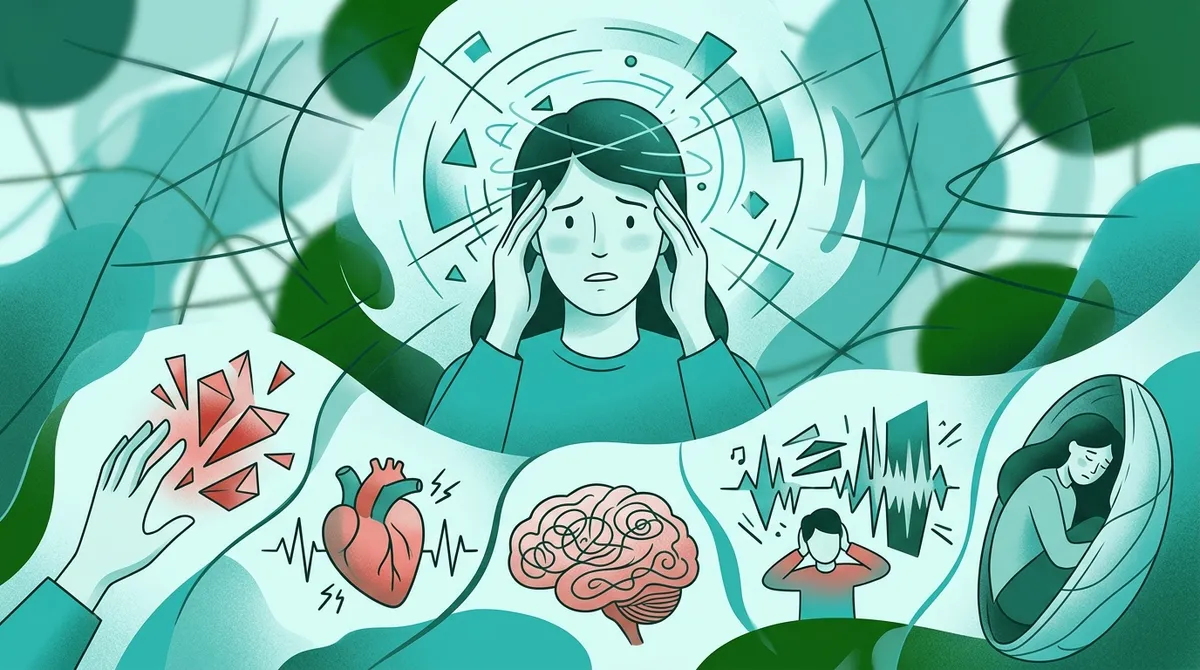
Overstimulation anxiety shows up in your body, your emotions, your thinking, and your behavior. Here’s a breakdown so you can recognize what’s happening when it hits:
| Category | Common Symptoms |
|---|---|
| Physical | Headaches, fatigue, nausea, muscle tension, racing heart |
| Emotional | Irritability, panic, sudden rage, tearfulness, dread |
| Cognitive | Brain fog, difficulty concentrating, poor decision-making |
| Behavioral | Withdrawal, meltdowns, shutting down, avoiding social situations |
In children, overstimulation often appears as tantrums, emotional outbursts, or difficulty sleeping. If you’re a parent noticing these signs in your teenager, mental health support can make a huge difference for the whole family.
What Happens If You Ignore Overstimulation Anxiety?
It’s tempting to just push through. But untreated overstimulation anxiety can snowball into bigger problems. Over time, chronic sensory overload puts your nervous system under constant stress. This can lead to:
- Worsening anxiety or depression
- Post-traumatic stress responses
- Chronic sleep disturbances
- Burnout and emotional exhaustion
- Weakened immune system function
- Relationship strain and communication breakdowns
For more on how stress affects your health in the long run, take a look at our article on acute vs. chronic stress and which harms your health more. Don’t wait until you’re in crisis mode. The earlier you address overstimulation, the easier it is to manage.
How to Manage Overstimulation Anxiety: Step-by-Step
Here are practical steps you can take right now — and in the long run — to manage overstimulation anxiety more effectively.
Step 1: Recognize When You’re Overloaded
The first step is awareness. Notice when your body starts sending warning signals. Do you feel your jaw tighten? Do sounds suddenly seem louder? Are you snapping at people for no reason? These are signs that your nervous system is approaching its limit. Catching it early gives you a chance to intervene before things escalate.
Step 2: Use Grounding Techniques in the Moment
When you’re in the middle of sensory overload, grounding techniques can bring you back to center quickly. Try these:
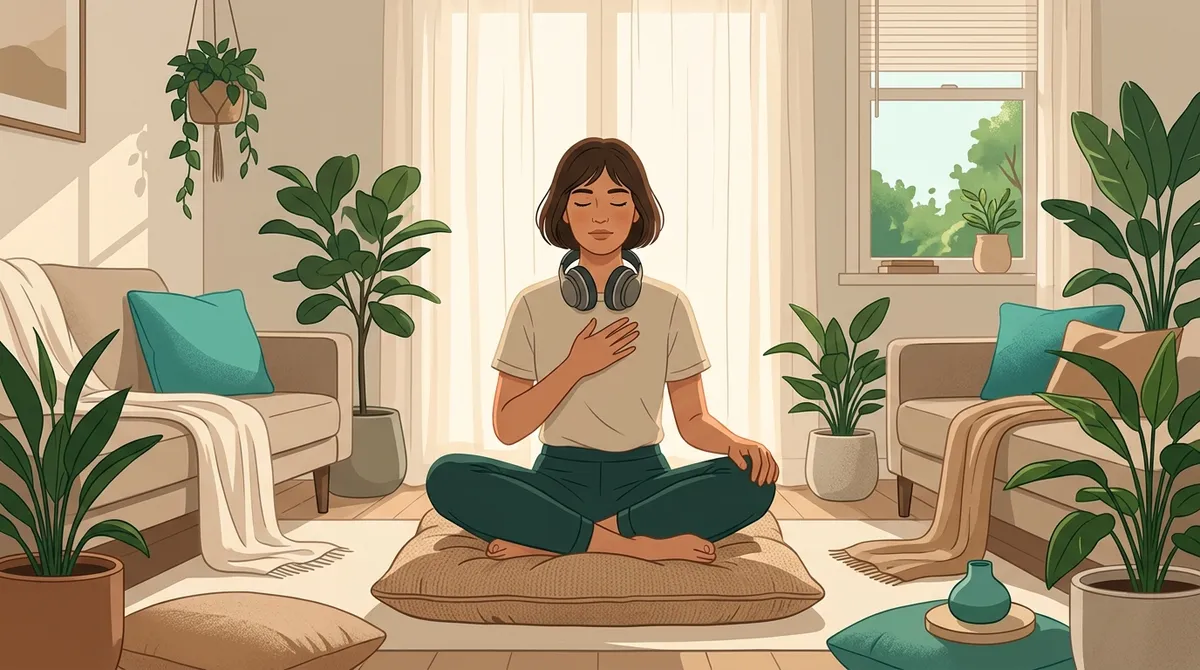
- Deep breathing: Inhale slowly for 4 counts, hold for 4, exhale for 6. This activates your parasympathetic nervous system and calms the stress response.
- The 5-4-3-2-1 technique: Name 5 things you see, 4 you can touch, 3 you hear, 2 you smell, 1 you taste. This refocuses your brain on safe sensory input.
- Physical pressure: Press your feet firmly into the floor or squeeze your hands together. Physical pressure can reduce sensory overwhelm.
Step 3: Create a Sensory-Friendly Environment
Your environment has a huge impact on how your nervous system feels day to day. Small changes can make a big difference. Consider:
- Using noise-canceling headphones in loud spaces
- Dimming lights or using warm-toned bulbs at home
- Decluttering your workspace to reduce visual overload
- Wearing comfortable clothing with non-irritating textures
- Scheduling quiet time into your daily routine as non-negotiable rest
Step 4: Set Healthy Limits on Sensory Input
It’s okay to say no to things that overwhelm you. Protecting your energy is not weakness — it’s wisdom. Some ideas to try:
- Limit screen time, especially before bed
- Take regular breaks from social media and news
- Give yourself permission to leave overwhelming situations early
- Communicate your needs with people you trust
Step 5: Build Long-Term Nervous System Resilience
Long-term management means strengthening your nervous system so it can handle more without going into overload. Helpful habits include regular physical movement, consistent sleep schedules, mindfulness or meditation practice, and time in nature. These aren’t quick fixes — they’re investments in your overall mental health that pay off over time.
How Professional Therapy Helps Overstimulation Anxiety
Sometimes self-help strategies aren’t enough — and that’s completely okay. Professional therapy offers deeper, lasting relief. A skilled therapist can help you understand the root causes of your overstimulation, develop personalized coping strategies, and address any underlying anxiety, trauma, or mood issues.
At West Florida Therapy, Margaret Deuerlein is a caring and experienced psychotherapist who helps individuals work through overstimulation anxiety and the emotional challenges that often go with it. Whether you’re dealing with sensory overload rooted in anxiety, past trauma, or everyday stress, Margaret provides a warm, nonjudgmental space to heal and grow.
Therapies that are especially helpful for overstimulation anxiety include:
- Cognitive Behavioral Therapy (CBT): Helps you identify and change thought patterns that fuel anxiety and overwhelm
- Trauma-focused therapy: Addresses nervous system dysregulation caused by past trauma
- Mindfulness-based therapy: Builds present-moment awareness to reduce reactivity to sensory input
- Occupational therapy approaches: Specifically targets sensory integration and processing difficulties
For those dealing with panic attacks or mood issues alongside sensory overload, therapy can address everything together as a connected picture. The Substance Abuse & Mental Health services in Florida also offer resources for those who need additional community support.
Overstimulation Anxiety in Relationships
Overstimulation anxiety doesn’t just affect you — it affects the people around you too. When you’re in sensory overload, you may withdraw, snap at loved ones, or avoid social situations entirely. This can create confusion and distance in close relationships.
If overstimulation is creating friction in your partnership, couples therapy can be incredibly helpful. Sharing your experience with a partner — with a therapist guiding the conversation — builds understanding and new ways of connecting. Learn more about how couples therapy can support both of you, or explore how relationship challenges and sensory sensitivity often go hand in hand.
Virtual and Bilingual Therapy Options in Florida
One of the biggest barriers to getting help is access. Maybe you live far from a therapist’s office. Maybe you prefer the comfort of your own home. Or maybe you need a therapist who speaks Spanish. All of these are valid, and they’re all solvable.
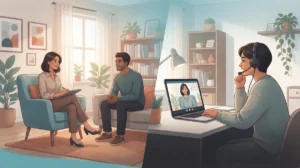
West Florida Therapy offers both in-person and virtual therapy sessions across the entire state of Florida. Bilingual services in English and Spanish are available — because everyone deserves support in the language that feels most natural to them. You can reach out to schedule a session at any time, from anywhere in Florida.
For additional mental health resources in Florida, the Florida Department of Health Mental Health Links page is a helpful starting point. You can also explore broader Mental Health Resources from the CDC for national guidance and support tools.
A Quick Self-Check: How Affected Are You?
Use this simple checklist to reflect on your own experience with overstimulation anxiety:
| Question | Sometimes | Often | Always |
|---|---|---|---|
| Do loud noises feel unbearable to you? | ☐ | ☐ | ☐ |
| Do crowded places drain you quickly? | ☐ | ☐ | ☐ |
| Do you feel irritable after busy or noisy days? | ☐ | ☐ | ☐ |
| Do you need significant alone time to recover? | ☐ | ☐ | ☐ |
| Does sensory overwhelm affect your sleep? | ☐ | ☐ | ☐ |
If you checked “often” or “always” on several of these, speaking with a therapist could be a genuinely life-changing step. You deserve to feel comfortable in your own skin — and in your own world.
You Don’t Have to Stay Overwhelmed
Overstimulation anxiety is real, it’s valid, and it’s manageable. With the right tools and the right support, you can turn down the volume on the world and finally feel like yourself again. Whether you start with a breathing technique today or book a therapy session this week, every small step matters.
Margaret Deuerlein and the team at West Florida Therapy are here to help you find your calm — in a warm, supportive, and personalized way. You can visit us on Google to read reviews from real clients who’ve found relief through therapy. When you’re ready to take the next step, get in touch with our team — we’d love to hear from you.
FAQs
Q: What are the signs of overstimulation anxiety in adults?
A: Adults with overstimulation anxiety may experience headaches, irritability, brain fog, fatigue, and a strong urge to withdraw from noisy or busy environments. Emotional symptoms like sudden rage or tearfulness are also common. If these feelings happen regularly, speaking with a therapist can help you get to the root of what’s going on.
Q: How is overstimulation anxiety different from general anxiety?
A: General anxiety tends to involve worry about future events or circumstances, while overstimulation anxiety is triggered by present sensory input — like loud sounds, bright lights, or crowded spaces. That said, the two often overlap, and many people experience both at the same time. A therapist can help you sort out what’s driving your symptoms.
Q: Can overstimulation anxiety lead to burnout or depression?
A: Yes — when overstimulation anxiety goes unaddressed for a long time, it can absolutely lead to burnout, chronic exhaustion, and even depression. Your nervous system can only handle so much before it starts to break down. The good news is that early support from a mental health professional can prevent things from reaching that point.
Q: What triggers overstimulation in people with ADHD or autism?
A: People with ADHD or autism often have a lower threshold for sensory input, meaning everyday things like background noise, visual clutter, or physical touch can feel overwhelming much faster. Common triggers include fluorescent lighting, crowded spaces, strong smells, and unexpected schedule changes. Working with a therapist who understands neurodiversity can make a big difference.
Q: How is overstimulation anxiety treated in therapy?
A: Therapy for overstimulation anxiety typically involves approaches like Cognitive Behavioral Therapy (CBT), mindfulness-based strategies, and trauma-focused care when needed. A therapist helps you identify your personal triggers, develop coping strategies, and build long-term nervous system resilience. Virtual therapy options make it easier than ever to access this support from the comfort of your own home.