
Key Takeaways
-
Nighttime depression worsens due to fewer dastractions, fatigue lowering emotional defenses, and rumination cycles—understanding these triggers is the first step to breaking the pattern.
-
Cognitive-behavioral therapy (CBT) combined with sleep hygiene practices has strong evidence for treating nighttime depression and should be prioritized over self-help alone.
-
Create a consistent 60-90 minute wind-down routine 60-90 minutes before bed: dim lights, eliminate screens 30 minutes prior, and practice calming activities to signal safety to your brain.
-
Limit blue light exposure after sunset and move your body during daytime hours (even a 20-minute afternoon walk) to regulate melatonin, improve sleep quality, and reduce evening anxiety.
-
Seek professional help if symptoms persist beyond two weeks, disrupt sleep or daily functioning, or involve feelings of hopelessness—early intervention makes a measurable difference.
-
Interrupt isolation by maintaining brief social connections (texts, calls, online communities) and challenge negative rumination by asking ‘Is this a fact or a feeling?’ to reduce thought spirals.
The sun goes down, and suddenly everything feels heavier. Sound familiar? If your mood drops as the evening rolls in, you’re not imagining it. Nighttime depression is a very real experience — and it affects more people than you might think.
Nighttime depression isn’t a separate diagnosis. It’s what happens when symptoms of depression intensify in the evening hours. Fewer distractions, physical exhaustion, and a quiet mind that won’t stop racing can make nights feel incredibly dark. The good news? You don’t have to white-knuckle your way through another sleepless night alone.
In this article, we’ll walk through nine practical, compassionate strategies to help you manage depression at night — and explain when it’s time to reach out for professional support. Whether you’re a stressed millennial, a college student navigating loneliness, or a parent running on empty, this one’s for you.
What Is Nighttime Depression?
Before we dive into solutions, let’s get clear on what we’re dealing with. Nighttime depression describes the pattern where mood issues and depressive symptoms peak in the evening or nighttime hours. It’s closely tied to mental health challenges like major depressive disorder, anxiety, and insomnia.
According to Medical News Today, sleep disturbance is actually the most common persistent symptom in treated depression. That means even when other symptoms improve, nights can still be tough. Understanding why helps a lot.
Why Do Symptoms Get Worse at Night?
Here’s what’s usually happening when the evening rolls in and your mood tanks:
- Fewer distractions: Daytime keeps your brain busy. At night, the noise stops — and your thoughts get louder.
- Fatigue lowers your defenses: You’re more emotionally vulnerable when you’re tired.
- Rumination kicks in: Your brain starts replaying worries, regrets, and “what ifs.”
- Screen time and blue light: Phones and TVs suppress melatonin, throwing off your sleep-wake cycle.
- Circadian rhythm disruptions: Your body’s internal clock can amplify low mood in the evening hours.
These factors can feed into each other, creating a cycle that makes both sleep and mood harder to manage. But knowing your triggers is a powerful first step.
Common Symptoms of Nighttime Depression
Not sure if what you’re experiencing qualifies? Here are the most common signs to watch for:
- Increased sadness or hopelessness in the evening
- Difficulty falling asleep or staying asleep
- Waking up too early and not being able to go back to sleep
- Racing thoughts or excessive worry at bedtime
- Feeling restless or on edge as the day ends
- Craving carbohydrates or comfort foods at night
- Withdrawing from others in the evening hours
- A sense of dread as nighttime approaches
If several of these resonate with you, it may be time to take a closer look at your mental health. You can also explore our resource on what depression is and how it affects daily life for more context.
How Nighttime Depression Compares to Daytime Depression
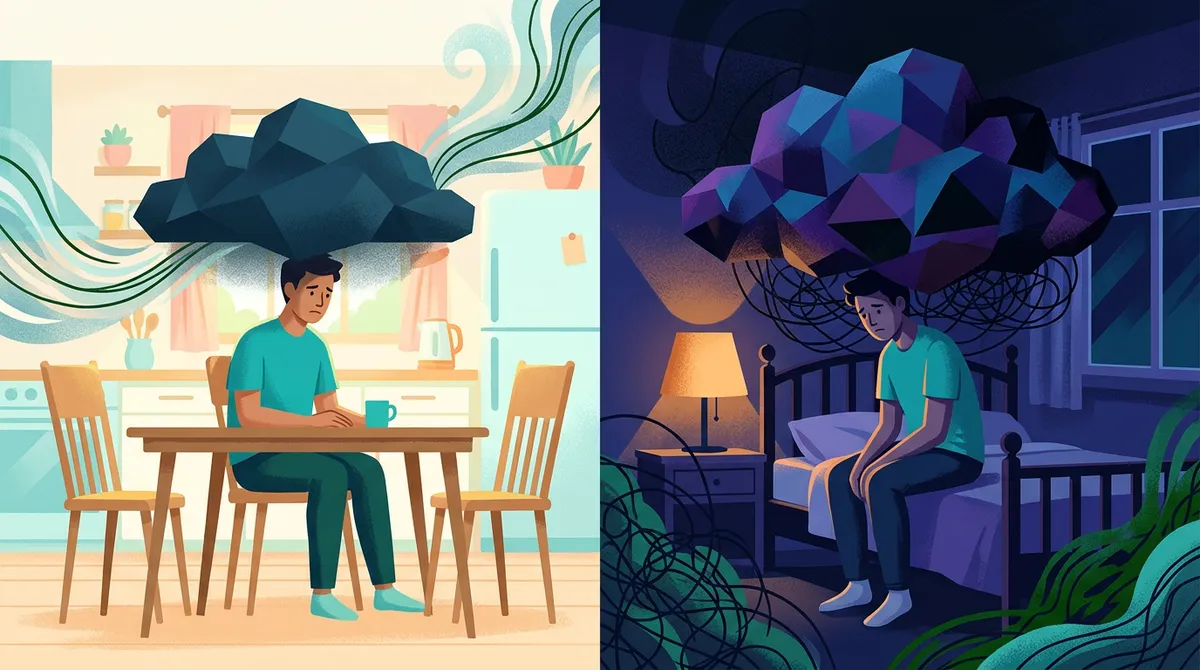
It helps to understand the difference so you can better describe your experience to a therapist or doctor.
| Feature | Daytime Depression | Nighttime Depression |
|---|---|---|
| When symptoms peak | Morning or throughout the day | Evening and nighttime hours |
| Common triggers | Stress, interactions, work | Quiet, fatigue, rumination, screens |
| Sleep impact | Varies | Very high — insomnia is a core feature |
| Social behavior | May still engage socially | Often withdraws or isolates at night |
| Treatment focus | General depression interventions | Includes sleep hygiene and CBT for insomnia |
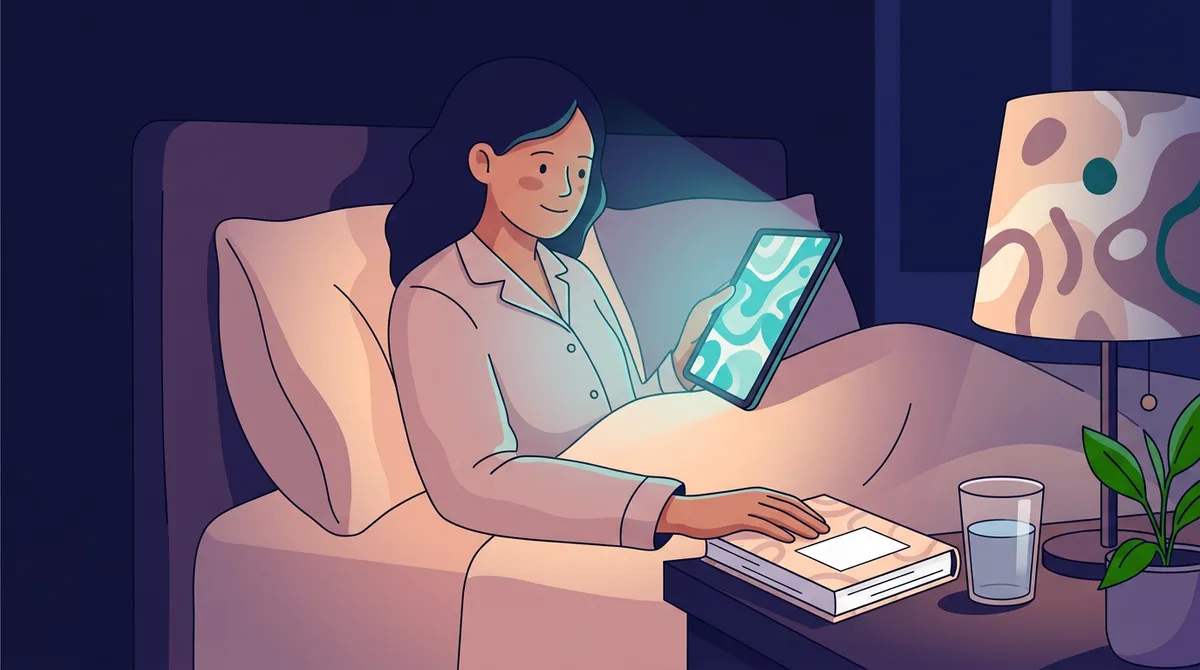
9 Ways to Fight Nighttime Depression
1. Create a Calming Evening Routine
Your brain loves predictability. A consistent nighttime routine signals safety and calm. Try starting your wind-down about 60–90 minutes before bed. Keep it simple and soothing.
- Dim the lights in your home after 8 PM.
- Switch off screens at least 30 minutes before bed.
- Do something calming — reading, gentle stretching, or a warm shower.
- Write down three small things that went okay today.
This kind of routine doesn’t fix everything, but it gently interrupts the spiral before it starts.
2. Limit Blue Light from Screens
Blue light from your phone, tablet, or TV suppresses melatonin — the hormone that helps you sleep. When melatonin dips, your sleep-wake cycle gets disrupted, which can worsen your mood. Try using blue light filters after sunset, or better yet, put the phone down. Your brain will thank you.
3. Practice Mindful Breathing or Meditation
When nighttime anxiety or depression creeps in, your nervous system needs a reset. Deep, slow breathing activates your parasympathetic nervous system — the part that says, “you’re safe, you can rest.”
A simple technique: breathe in for 4 counts, hold for 4, breathe out for 6. Repeat for 5 minutes. Apps like Calm or Headspace can guide you if you need a hand. Learning to manage panic and anxiety at night starts with small, consistent practices like this.
4. Challenge Negative Thoughts
Rumination — that loop of negative thoughts at night — is one of the biggest drivers of nighttime depression. Cognitive-behavioral therapy (CBT) teaches you to notice and gently challenge those thoughts instead of getting pulled under by them.
Ask yourself: “Is this thought a fact, or is it a feeling?” You can’t always stop the thought, but you can decide how much power you give it. A licensed psychotherapist can help you build these skills over time.
5. Move Your Body During the Day
Exercise is one of the most well-researched tools for lifting mood. Even a 20-minute walk in the afternoon can reduce evening anxiety and improve sleep quality. You don’t need a gym membership or a marathon training plan. Just move — and try to do it earlier in the day so it doesn’t interfere with sleep.
6. Watch What (and When) You Eat at Night
Nighttime depression often comes with cravings — especially for carb-heavy comfort foods. While these might feel soothing in the moment, blood sugar spikes and crashes can actually make anxiety and mood worse overnight. Try having a light, balanced snack if you’re hungry, and aim to eat dinner a few hours before bed.
7. Stay Connected — Even Briefly
Isolation feeds depression. When evening hits and you want to pull away from everyone, try a small act of connection instead. A quick text to a friend, a short phone call with a family member, or even an online community can interrupt the loneliness cycle. Connection doesn’t have to be big to be meaningful.
8. Know Your Risk Factors
Understanding what makes you more vulnerable can help you be more compassionate with yourself — and more proactive about getting support. Common risk factors for nighttime depression include:
- A personal or family history of depression or anxiety
- Chronic stress or recent major life changes
- Unresolved trauma (check out our resource on recognizing and healing from trauma)
- Anxiety disorders that intensify at rest
- Substance use, which can disrupt sleep and mood
- Chronic stress — learn more about how chronic stress affects your health
Recognizing your patterns is not weakness — it’s wisdom. The CDC’s Mental Health Resources also offer helpful guidance on understanding depression risk factors.
9. Seek Professional Therapy
This one might be the most important item on the list. Self-help strategies are valuable, but they have limits. If nighttime depression is disrupting your sleep, your relationships, or your ability to function — it’s time to talk to someone.
Therapy, especially cognitive-behavioral therapy (CBT), has strong evidence behind it for both depression and insomnia. A caring therapist can help you identify root causes, build coping skills, and make a plan that works for your life. Anxiety treatment and depression treatment are both available at West Florida Therapy — in person or virtually, anywhere in Florida.
When Should You Seek Help?
It can be hard to know when self-care stops being enough. Here’s a simple checklist to help you decide:
- Your symptoms have lasted more than two weeks.
- You’re regularly unable to sleep or function the next day.
- You feel hopeless or are having thoughts of harming yourself.
- You’ve been isolating from people you care about.
- Nothing you try on your own seems to help.
If any of these are true for you, please reach out. You deserve support — not just survival. The Florida Substance Abuse & Mental Health services are also a helpful state resource if you’re looking for additional options.
How West Florida Therapy Can Help
At West Florida Therapy, Margaret Deuerlein is a compassionate and skilled psychotherapist who truly understands how isolating nighttime depression can feel. She works with adults and adolescents to address depression, anxiety, trauma, and more — offering both in-person and virtual sessions throughout Florida.
West Florida Therapy also offers bilingual services in English and Spanish, making mental health care more accessible for Florida’s Spanish-speaking communities. Whether you’re struggling with sleepless nights, racing thoughts, or a heaviness that won’t lift, help is available. Visit us on Google to read reviews from real clients and learn more about what to expect.
For more on how anxiety and depression are connected, check out this helpful guide on understanding anxiety signs, types, and treatment options. You can also explore Florida’s mental health resources for additional support in your area.
A Quick Summary: Nighttime Depression at a Glance
| Strategy | Best For | Ease of Use |
|---|---|---|
| Evening routine | Reducing anxiety before bed | Easy |
| Limiting blue light | Improving melatonin & sleep | Easy |
| Mindful breathing | Calming nervous system | Easy |
| Challenging thoughts | Breaking rumination cycle | Moderate |
| Daytime exercise | Boosting mood and sleep quality | Moderate |
| Balanced eating | Stabilizing mood and blood sugar | Easy |
| Social connection | Reducing isolation | Moderate |
| Knowing risk factors | Building self-awareness | Easy |
| Professional therapy | Root cause treatment | High impact |
You Don’t Have to Face the Night Alone
Nighttime depression is real, it’s common, and — most importantly — it’s treatable. The darkness doesn’t have to win every night. With the right tools and support, you can reclaim your evenings, improve your sleep, and start feeling like yourself again.
Small steps matter. Whether it’s putting your phone down an hour earlier, taking a short walk in the afternoon, or finally calling a therapist — each step brings you closer to lighter nights. You’re not broken. You’re a human being who deserves rest, peace, and support.
If you’re ready to take that next step, we’d love to hear from you. Reach out to our team at West Florida Therapy today and let’s find a path forward — together.
FAQs
Q: What are the most common symptoms of nighttime depression?
A: Great question! The most common signs include increased sadness or hopelessness in the evening, difficulty falling or staying asleep, racing thoughts at bedtime, and a general sense of dread as night approaches. If these feelings are showing up regularly, it’s worth talking to a therapist who can help you sort through what’s going on.
Q: Why do depression symptoms get worse at night?
A: During the day, your brain stays busy with tasks, people, and activity — which naturally keeps some depressive thoughts at bay. At night, those distractions disappear, fatigue sets in, and your mind can slip into rumination mode. Add in blue light from screens disrupting your sleep hormones, and it’s a recipe for a tough night.
Q: Is nighttime depression a sign of major depressive disorder?
A: Nighttime depression isn’t a separate diagnosis — it’s often a pattern within major depressive disorder or other mood disorders. If your symptoms are consistent and interfering with your sleep or daily life, that’s a signal worth paying attention to. A licensed therapist can help you figure out what’s behind your specific experience.
Q: How can therapy help with nighttime depression?
A: Therapy — especially cognitive-behavioral therapy (CBT) — is one of the most effective tools for nighttime depression. It helps you identify and interrupt negative thought patterns, build healthier sleep habits, and develop coping strategies that actually work. Think of it as having a skilled, caring guide to help you navigate your nights more peacefully.
Q: When should I seek professional help for nighttime depression?
A: If your symptoms have lasted more than two weeks, are affecting your ability to sleep or function the next day, or if you’re feeling hopeless and withdrawing from loved ones — it’s time to reach out. You don’t have to wait until things get worse. Early support makes a real difference, and you absolutely deserve it.