Key Takeaways
-
Schema therapy addresses deep-rooted childhood beliefs (schemas) that traditional talk therapy often misses, using a combination of cognitive, behavioral, and experiential techniques to break long-standing patterns like repeated relationship struggles or chronic depression.
-
Schema therapy requires longer-term commitment (typically a year or more) compared to short-term counseling, making it most effective for personality disorders, trauma, and chronic conditions rather than recent stressors or life transitions.
-
A 2025 systematic review showed real symptom reduction and improved quality of life across multiple mental health conditions in young people, with strongest evidence for borderline personality disorder and personality disorders generally.
-
West Florida Therapy in Brandon offers both in-person and virtual schema therapy sessions with bilingual support and accepts major insurance plans, making treatment more accessible for those with scheduling, transportation, or language barriers.
If you have tried therapy before but still feel stuck in the same painful patterns, you are not alone. Maybe you keep picking partners who hurt you the same way. Maybe you feel worthless no matter how much you achieve. This is exactly where schema therapy in Brandon can make a real difference. Unlike traditional talk therapy, which often focuses on venting and processing recent events, schema therapy digs into the roots of your struggles and helps you finally break free.
At West Florida Therapy, we know how frustrating it feels to talk about the same problems session after session without real change. That is why our approach combines proven methods, including schema therapy, to help you understand where your patterns come from and how to change them for good. Whether you are dealing with relationship struggles, chronic sadness, or personality-related challenges, this guide will help you understand your options and choose the right path forward.
What Is Schema Therapy, Exactly?
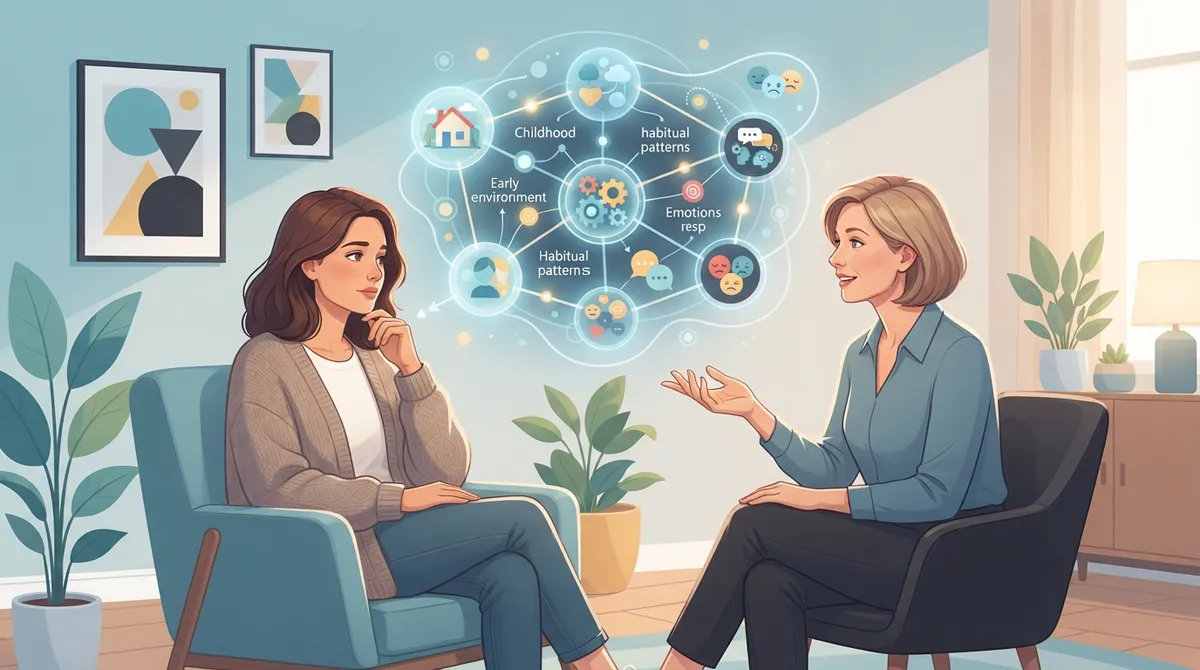
Schema therapy is a long-term type of counseling. It was created to help people with deep, long-standing patterns that regular therapy often cannot touch. These patterns are called “schemas.” They are core beliefs about yourself and the world, often formed in childhood.
For example, if you grew up feeling unseen by your parents, you might develop a schema that says “I am not important.” This belief can quietly shape your career choices, friendships, and romantic relationships for decades. Schema therapy helps you spot these hidden beliefs and replace them with healthier, more accurate ones.
This approach blends three powerful tools together:
- Cognitive techniques, which help you challenge and question unhelpful thoughts
- Behavioral strategies, which help you practice new, healthier actions
- Experiential exercises, like imagery work, which help you process old emotional wounds
This combination makes schema therapy different from single-method approaches. It does not just change your thinking. It also helps you feel and act differently.

How Does Traditional Talk Therapy Compare?
Traditional talk therapy, sometimes called supportive counseling, is often more open-ended. You talk about your week, your feelings, and current stressors. Your therapist listens, reflects, and offers guidance along the way.
This style works well for many people. It can be a great fit if you are dealing with a specific stressful event, adjusting to a life change, or just need a safe space to process emotions. However, talk therapy alone may not always dig deep enough for long-standing patterns tied to personality disorders or repeated relationship struggles.
Key Differences at a Glance
Here is a simple breakdown to help you understand how these two approaches differ:
| Feature | Schema Therapy | Traditional Talk Therapy |
|---|---|---|
| Focus | Deep-rooted childhood patterns and beliefs | Current feelings and recent life events |
| Length of Treatment | Typically longer-term (many months to years) | Can be short-term or ongoing |
| Techniques Used | Cognitive, behavioral, and experiential exercises | Mostly verbal processing and reflection |
| Best For | Personality disorders, chronic patterns, relationship cycles | Stress, mild anxiety, life transitions |
| Structure | Highly structured with specific goals | Often more flexible and open-ended |
Who Benefits Most From Schema Therapy?
Schema therapy was first developed to help people with borderline personality disorder. Research still shows the strongest evidence for this group. But its benefits reach much further than that.
People often turn to schema therapy for help with:
- Personality disorders, especially borderline personality disorder
- Chronic depression that has not improved with other treatments
- Long-standing anxiety tied to childhood experiences
- Trauma-related difficulties and painful memories
- Eating disorders connected to self-worth and body image
- Repeated relationship problems, like always choosing unavailable partners
A 2025 systematic review looked at schema therapy in young people ages 12 to 30. It included 12 studies and 180 participants. The results showed real symptom reduction and better quality of life across several mental health conditions. This is encouraging news, especially for younger clients and their families exploring options for virtual therapy for adolescents in Brandon, FL.
That said, clinical reviews are honest about the evidence. Support is strongest for personality disorders. Evidence is less robust for conditions like PTSD, agoraphobia, or eating disorders. This does not mean schema therapy will not help. It simply means results can vary depending on your specific situation.
How Schema Therapy Differs From CBT and DBT
Many people confuse schema therapy with other well-known approaches like Cognitive Behavioral Therapy or Dialectical Behavior Therapy. While they share some tools, they are not the same.
CBT tends to focus on the present. It helps you notice unhelpful thoughts and replace them with more balanced ones. It is often shorter-term and very structured.
DBT was designed specifically for intense emotions and impulsive behaviors. It teaches skills like mindfulness, distress tolerance, and emotional regulation.
Schema therapy goes a step further back. It asks, “Where did this belief come from in the first place?” It combines pieces of CBT, attachment theory, and emotion-focused work into one longer-term approach. If you want to compare these methods more closely, our article on schema therapy versus CBT breaks down which option might suit you best.
What Does Schema Therapy Look Like in Practice?
Sessions typically follow a clear path. Here is how the process usually unfolds:
- Your therapist helps you identify your core schemas through questions and assessments
- You learn to recognize your “coping styles,” or how you avoid, fight, or give in to painful beliefs
- You explore where these patterns began, often through guided imagery or reflection
- You practice new, healthier responses in real-life situations between sessions
- Your therapist helps you build a stronger, more balanced sense of self over time
This process takes patience. Because schema therapy addresses long-standing patterns, it usually requires more time than short-term counseling. Many clients continue for a year or longer, though everyone’s timeline looks different.
Finding the Right Fit in Brandon, Florida
Choosing between schema therapy and traditional talk therapy does not have to feel overwhelming. The right choice depends on your goals, your history, and what feels manageable for your life right now.
Local mental health providers in Brandon often offer both approaches, along with flexible options like telehealth. This matters if you have a busy schedule, transportation challenges, or simply feel more comfortable talking from home. Learn more about how telehealth therapy in Florida can expand your access to care no matter where you live in the state.
At West Florida Therapy, Margaret Deuerlein brings warmth and deep expertise to every session. She understands how scary it can feel to open up about painful patterns you have carried for years. Her caring, patient approach helps clients feel safe enough to do the deep work that schema therapy requires. You can learn more about her background and approach on our About Margaret Deuerlein page.
Questions to Ask When Choosing a Therapist
Before committing to a specific approach, consider asking potential therapists these questions:
- Do you have specific training in schema therapy techniques?
- What results have your other clients seen with this approach?
- How long do you typically expect treatment to last?
- Do you offer both in-person and virtual sessions?
- Do you accept my insurance, or what are your out-of-pocket rates?
Access matters too. Many Brandon-area practices, including ours, accept major insurance plans like Aetna, Cigna, Florida Blue, Optum, Oscar, and United Health Care. We also offer bilingual support in English and Spanish, because language should never be a barrier to getting help. If cost or insurance questions are holding you back, our Payment Options page walks through what to expect.
Is Schema Therapy Right for You?
Ask yourself these simple questions to get a clearer picture:
- Do you notice the same painful patterns showing up again and again in relationships?
- Have you tried other types of therapy without lasting change?
- Do you struggle with intense emotions that feel bigger than the situation calls for?
- Do you often feel unworthy, unlovable, or fundamentally flawed, even when logic says otherwise?
If you answered yes to several of these, schema therapy might be worth exploring. If your struggles feel more tied to a recent event or short-term stress, traditional talk therapy could be a gentler starting point. Either way, you do not have to figure this out alone.
For additional trusted information on mental health support across the state, the Florida Department of Health’s mental health resources and the Florida Department of Children and Families’ mental health services both offer helpful guidance. The CDC’s mental health resources are also a solid place to learn more about caring for your emotional wellbeing.
Take the Next Step Toward Lasting Change
You deserve to feel free from patterns that no longer serve you. Whether you are drawn to the deep, structured approach of schema therapy or prefer the flexibility of traditional talk therapy, the most important step is simply starting. West Florida Therapy offers both in-person sessions in Brandon and virtual therapy across Florida, along with bilingual support, so you can get help in whatever way feels most comfortable for you.
See what real clients have shared about their experience by visiting our West Florida Therapy location on Google. When you are ready to explore your options, our team is here to listen without judgment and help you find the right path forward. Reach out today to schedule your free 15-minute consultation and take that first courageous step toward healing.
FAQs
Q: What is schema therapy and how does it work?
A: Schema therapy is a long-term approach that helps you spot deep-rooted beliefs formed in childhood, called schemas. It combines cognitive, behavioral, and experiential techniques to help you understand these patterns and slowly build healthier, more balanced ways of thinking and relating to others.
Q: Is schema therapy effective for borderline personality disorder?
A: Yes, schema therapy has the strongest research support for borderline personality disorder compared to other conditions. Many clients see real improvement in emotional stability and relationships, though results can still vary from person to person.
Q: How is schema therapy different from CBT or DBT?
A: CBT focuses mostly on present-day thoughts, while DBT teaches skills for managing intense emotions. Schema therapy goes a step further by exploring where your core beliefs came from, often tracing them back to childhood experiences.
Q: How long does schema therapy usually take?
A: Because schema therapy addresses long-standing patterns, it typically takes longer than short-term counseling, often lasting a year or more. Your therapist will work with you to set a pace that feels manageable and realistic for your life.
Q: Does insurance cover schema therapy in Brandon?
A: Many Brandon-area practices, including West Florida Therapy, accept major insurance providers like Aetna, Cigna, Florida Blue, Optum, Oscar, and United Health Care. We recommend reaching out directly so we can help you understand your specific coverage and out-of-pocket options.