Key Takeaways
-
Safety comes first: if there is fear, coercion, or intimate partner violence, speak privately with a qualified professional before attending joint sessions, since joint counseling may not be appropriate.
-
Verify any therapist's Florida license through the Florida Department of Health, and ask how much of their practice is focused on couples, since a directory listing alone does not prove training.
-
Confirm insurance coverage before starting: many insurers require a covered diagnosis, and relationship-only sessions may not be reimbursed, so call your insurer about mental health benefits, copays, and deductibles.
-
Ask about fees, cancellation policies, and session length upfront, and for telehealth, confirm the clinician is licensed in the state where each partner is physically located during sessions.
Every relationship hits rough patches. Maybe you keep having the same argument on repeat. Maybe you feel more like roommates than partners. Or maybe a breach of trust has left you both unsure where to turn. If any of that sounds familiar, you are not alone, and you are not failing. Reaching out for support is a strong, caring step.
Brandon is a busy community. The U.S. Census Bureau counted 114,626 residents in Brandon in 2020, so it makes sense that many couples here are juggling work, family, and everyday stress. The good news is that couples counseling in Brandon, Florida, is within reach, in person and online.
This friendly guide walks you through seven things to know before you begin. You will learn what couples counseling can help with, how to choose a therapist, what to expect in your first session, and what to ask about cost and insurance. Think of it as a warm, practical roadmap for your next step together.
1. What Couples Counseling Can Help With
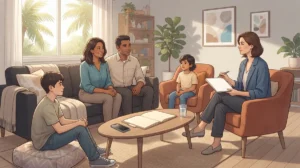
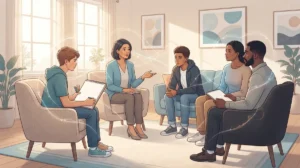
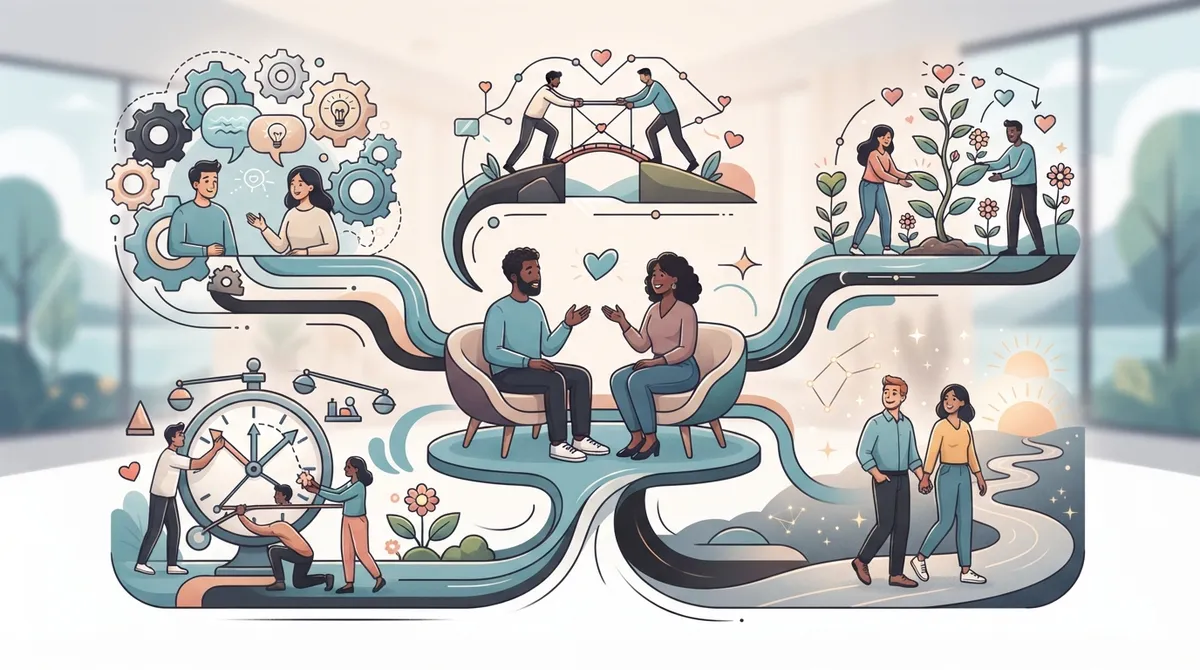
Couples counseling gives you a calm, guided space to talk about hard things. A trained therapist helps both partners feel heard. Local providers in Brandon describe support for a wide range of concerns, though no therapist can promise a specific outcome.
Common reasons couples seek help include:
- Communication breakdowns: talking past each other, shutting down, or avoiding hard topics.
- Recurring conflict: the same fight with a different label.
- Trust and infidelity concerns: rebuilding safety after a betrayal.
- Life transitions: a new baby, a move, a job change, or an empty nest.
- Emotional or physical disconnection: feeling distant or lonely together.
You do not need to be on the brink of a breakup to start. Many couples come in early because they want to grow closer. If you want to learn more about specific struggles, you can read about relationship problems and how therapy addresses them.
2. Know the Difference Between Providers
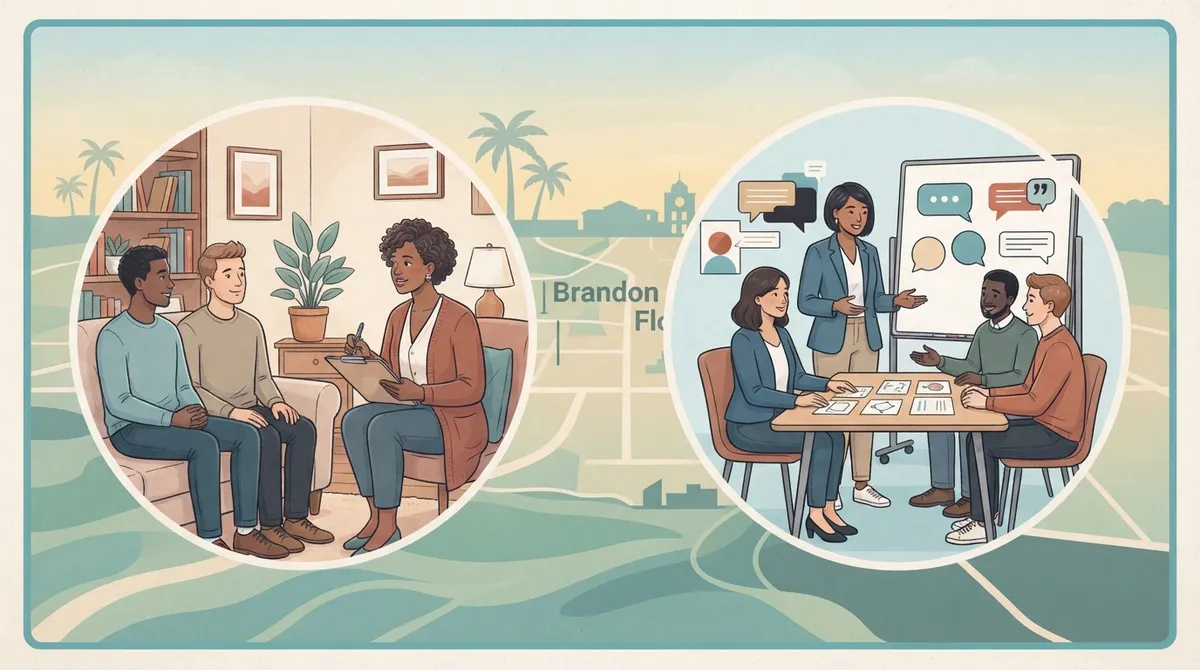
Not every therapist has the same background. In Florida, several types of licensed professionals can provide couples therapy. Credentials and training differ, so it helps to know who is who.
| Credential | What It Stands For | Good to Know |
|---|---|---|
| LMFT | Licensed Marriage and Family Therapist | Trained to work with relationships and family systems |
| LMHC | Licensed Mental Health Counselor | Trained in counseling for individuals, couples, and families |
| LCSW | Licensed Clinical Social Worker | Trained in therapy and connecting clients with support |
Florida regulates these licenses under Chapter 491 of the state statutes. Before you book, you can verify a provider’s current license and status through the Florida Department of Health. A directory listing alone does not prove training or results, so a quick license check gives you peace of mind.
It also helps to ask each therapist how much of their work is with couples. Someone who sees couples every week will bring different experience than someone who mostly sees individuals. You can explore couples therapy at West Florida Therapy to see how a focused practice approaches this work.
3. Learn About Common Therapy Approaches
You may see terms like EFT or the Gottman Method on therapist websites. These are well-known ways of helping couples. Brandon-area listings mention approaches such as Emotionally Focused Therapy, the Gottman Method, and cognitive behavioral strategies.
- Emotionally Focused Therapy (EFT): helps partners understand the emotions and needs underneath their arguments, so they can reconnect. You can read what Emotionally Focused Therapy is in more detail.
- The Gottman Method: uses research-based tools to build friendship, manage conflict, and strengthen trust. Here is a helpful look at what the Gottman Method is.
- Cognitive behavioral approaches: help partners notice unhelpful thought patterns and practice new ways of responding.
Curious how the first two compare? This article on EFT vs. the Gottman Method breaks it down. The best fit depends on you, your partner, and what you are facing. A good therapist will tailor the approach rather than use a one-size-fits-all plan.
4. What Happens in the First Session
The first session can feel a little nerve-wracking, and that is completely normal. Most people walk in wondering if they will be judged. A caring therapist will not judge you. Their job is to understand you both.
Here is a simple picture of what often happens:
- Welcome and paperwork: you review confidentiality, fees, and policies.
- Your story: each partner shares what brought you in and what you hope will change.
- Patterns and history: the therapist asks about how the relationship began, what works, and where you get stuck.
- Goals: together you name what a better relationship looks like.
- Next steps: you talk about how often to meet and what the plan will be.
At West Florida Therapy, the process starts with a free 15-minute phone consultation. You can ask questions, share your concerns, and see if it feels like a good fit. From there, your therapist builds a personalized plan and checks in on your progress along the way. You can read more about our process to see what to expect.
5. In-Person or Online: Choose What Fits
Local options in Brandon may include in-person visits, telehealth, or both. Busy schedules, kids at home, and long commutes can make one format easier than the other. The right choice is the one you will actually stick with.
- In-person: can feel more connected and focused, with fewer distractions from home.
- Telehealth: offers flexibility, especially if one partner travels or works long hours.
One important detail: confirm that your clinician is licensed to provide telehealth to each partner in the state where that partner is physically located during the session. West Florida Therapy offers in-person appointments in Brandon and virtual sessions across Florida. Learn more about in-person therapy in Brandon or telehealth therapy in Florida.
If one of you prefers Spanish, language matters too. Feeling understood in your first language can change how open you feel. Bilingual English and Spanish services are available at West Florida Therapy, so both partners can share in the language that feels most natural.
6. Understand Costs and Insurance
Money questions are normal, and it is smart to ask them early. Fees vary from one provider to the next. For example, one Brandon-area counseling practice lists a standard session fee of $120, with sliding-scale rates of $90 to $120 based on household income. That is one provider’s advertised price, not a market-wide average, so always confirm current fees directly.
Before you start, talk through these topics:
- Session length and how often you will meet
- Fees and accepted payment types
- Cancellation policies
- Confidentiality and how records are handled
- How the therapist communicates with each partner
Insurance can be tricky. Coverage varies, and insurers may require a covered diagnosis. Sessions focused only on relationship counseling may not be reimbursed. It is wise to call your insurance company and ask about your mental health benefits, copays, and deductible. West Florida Therapy works with several major insurance providers and also offers out-of-pocket options, including HSA and FSA accounts. You can review the available payment options to plan ahead.
7. Put Safety First
This one matters most. Couples counseling is not automatically safe or right for every situation. If there is fear, coercion, or intimate partner violence in your relationship, please speak privately with a qualified professional first. Joint sessions may not be appropriate, and your safety comes before everything else.
A caring therapist will ask about safety and will not push you into a format that puts you at risk. If you ever feel unsafe, reach out to a trusted professional or support service. The state of Florida shares helpful substance abuse and mental health services, and you can browse additional mental health links from the Florida Department of Health. The CDC also offers mental health resources for caring for yourself and others.
Why Many Couples Choose West Florida Therapy
Margaret Deuerlein is a warm and caring psychotherapist who helps couples slow down, listen, and find their way back to each other. Her approach is gentle and practical. You will not be blamed or pushed. Instead, you will get steady support and real tools you can use at home.
You can learn more about her background on the About Margaret Deuerlein page. If you would like to hear from others, you can see what clients say when you visit our West Florida Therapy location on Google.
While you work on your relationship, a few small touches at home can help you feel settled too. A tidy yard and a cozy, well-finished space can lift your mood, and local pros like All Trusted Lawn Care and Bucheli Trim can help with those projects. Small wins at home add up, and so does the work you do together in therapy.
Take the Next Step Together
Choosing couples counseling in Brandon, Florida, is a hopeful move. You are saying that your relationship matters enough to invest in. Start by checking licenses, asking about approach and fees, and picking a format that fits your life. Most of all, find someone you both feel comfortable with.
You do not have to figure this out alone. If you are ready to talk, contact us to book your free 15-minute consultation. We would be glad to help you and your partner take that first step toward feeling close again.
FAQs
Q: How do I find a couples counselor in Brandon, Florida?
A: Start by searching local practices and checking each therapist’s Florida license through the Florida Department of Health. Then book a short consultation to see if the style feels right for both of you. West Florida Therapy offers a free 15-minute call to help you decide.
Q: Does insurance cover couples counseling in Florida?
A: It depends on your plan. Many insurers require a covered diagnosis, and sessions focused only on relationship counseling may not be reimbursed. Call your insurance company to check your mental health benefits, copays, and deductible before you begin.
Q: Can we do couples counseling online in Florida?
A: Yes, many Florida therapists offer telehealth for couples. Just confirm that your therapist is licensed to see each partner in the state where that partner is located during the session. West Florida Therapy provides virtual sessions throughout Florida.
Q: Can couples counseling help with infidelity, trust, or communication problems?
A: Couples counseling can give you a safe space to work through trust concerns, rebuild communication, and understand what happened. While no therapist can guarantee results, many couples find that guided support helps them feel closer and more secure.
Q: Is couples counseling safe if there is abuse or fear in the relationship?
A: Not always. If there is coercion, fear, or intimate partner violence, speak privately with a qualified professional first and ask whether joint sessions are appropriate. Your safety always comes first.