

Key Takeaways
-
CBT is recommended as first-line treatment for mild-to-moderate postpartum depression by the American College of Obstetricians and Gynecologists, making it often the first evidence-backed step doctors recommend rather than a last resort.
-
Most CBT programs for postpartum depression require 8-12 sessions over 2-3 months and show medium-sized symptom reduction immediately after treatment, with benefits persisting at six-month follow-up according to 2019-2025 research.
-
CBT alone can effectively treat mild-to-moderate postpartum depression without medication, though it can be combined with medication for more severe symptoms, and the choice is not a sign of therapy failure.
-
Online CBT programs lasting at least nine weeks with professional guidance show meaningful symptom improvement and work better than self-guided options, making telehealth an effective option for busy parents avoiding childcare barriers.
-
CBT addresses multiple postpartum struggles beyond depression including anxiety, intrusive thoughts, sleep problems, and relationship stress through specific techniques like cognitive restructuring and behavioral activation.
-
Immediate psychiatric evaluation is needed if you experience thoughts of self-harm, psychosis symptoms, extreme mood swings suggesting bipolar disorder, or inability to function in daily care.
Bringing home a new baby is supposed to feel joyful. But if you’re reading this, you might be feeling something different: exhaustion, sadness, guilt, or a heavy fog that just won’t lift. First, take a breath. You are not a bad mom. You are not broken. And you are absolutely not alone. Many new parents in Florida quietly struggle with postpartum depression, and many of them find real relief through cognitive behavioral therapy for postpartum depression. This article will walk you through exactly how CBT works, what to expect in sessions, and how to know when it’s time to reach out for support.
At West Florida Therapy, we understand that new parents don’t have extra hours to spare. That’s why we offer flexible, compassionate care designed around your life, not the other way around. Whether you’re a first-time mom in Brandon or a parent juggling a toddler and a newborn, help is closer than you think.
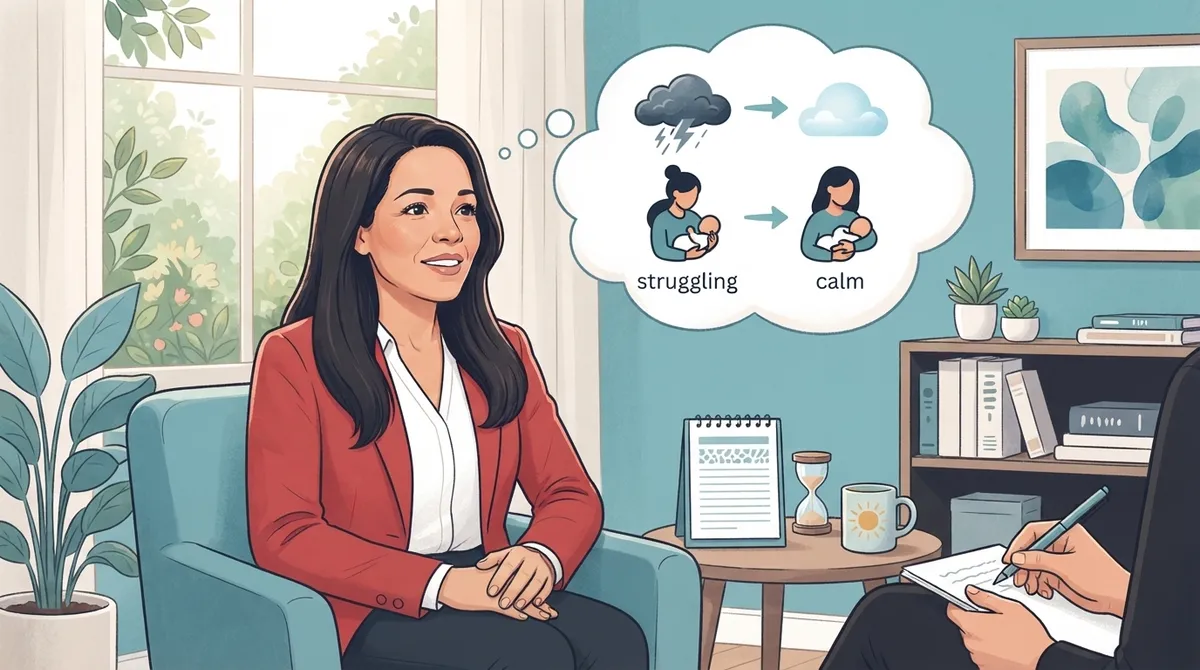
What Is Cognitive Behavioral Therapy for Postpartum Depression?
Cognitive behavioral therapy, or CBT, is a structured type of talk therapy. It helps you notice unhelpful thought patterns and change them into healthier ones. For new parents, this might mean challenging thoughts like “I’m failing at this” or “I’ll never feel like myself again.”
CBT is not about ignoring your feelings. It’s about understanding them, then learning practical tools to manage them. Sessions are usually goal-focused and time-limited, which means you’ll see a clear plan from the start rather than open-ended, vague conversations.
Core Building Blocks of CBT Sessions
Most CBT programs for postpartum depression include a mix of the following:
- Identifying negative thought patterns tied to motherhood, identity, or self-worth
- Behavioral activation, or gently re-engaging in activities that used to bring joy
- Problem-solving skills for real-life stressors like sleep loss or feeding struggles
- Cognitive restructuring to challenge guilt, shame, or fear-based thinking
- Relapse-prevention planning so you have tools ready for tough days ahead
According to the American College of Obstetricians and Gynecologists, psychotherapy, including CBT, is recommended as a first-line treatment for mild-to-moderate perinatal depression. This means CBT is not a last resort. It’s often the very first, evidence-backed step doctors and therapists recommend.

How Effective Is CBT for Postpartum Depression?
You deserve to know the numbers, not just promises. Research gives us encouraging, honest answers here.
A 2019 evidence summary found that CBT reduced depressive symptoms right after treatment, with a moderate effect size across six clinical trials involving 616 participants. Benefits were also seen at a six-month follow-up, though the effect was slightly smaller. A 2022 evidence review backed this up, describing CBT’s impact as a “medium-sized reduction” in symptoms with moderate-quality evidence behind it.
More recent research adds even more hope. A 2025 systematic review of online CBT programs found that treatments lasting nine weeks or longer led to meaningful symptom improvement, especially when a licensed professional guided the sessions rather than leaving parents to work through materials alone.
Quick Look: What the Research Shows
| Study or Review | Key Finding | Year |
|---|---|---|
| Evidence summary (6 trials, 616 people) | CBT reduced symptoms immediately after treatment | 2019 |
| Follow-up review (4 trials, 516 people) | Benefits persisted at 6-month follow-up | 2019 |
| Online CBT meta-analysis | Programs of 9+ weeks showed strong improvement | 2025 |
| Clinical guideline review | All guidelines recommend CBT as first-line care | 2025 |
How Many CBT Sessions Are Needed for Postpartum Depression?
One of the most common questions new parents ask is: “How long will this take?” The good news is that CBT is designed to be efficient. Most programs run about 8 to 12 sessions, according to a 2025 systematic review of clinical guidelines. That’s roughly two to three months of weekly support, though your therapist may adjust the pace based on your needs.
What a Typical CBT Journey Might Look Like
- Initial assessment to understand your symptoms, history, and support system
- Early sessions focused on education about postpartum depression and setting goals
- Middle sessions working on thought patterns, behavioral activation, and coping skills
- Later sessions addressing specific stressors like sleep, feeding, or relationship strain
- Final sessions focused on relapse prevention and building long-term confidence
Every parent’s path looks a little different. Some may need fewer sessions, while others benefit from a longer course of care, especially if there’s a history of trauma or anxiety layered on top of postpartum depression. Our structured therapy process is built to adapt to exactly what you need.
Can CBT Treat Postpartum Depression Without Medication?
Yes, for many parents with mild-to-moderate symptoms, CBT alone can be effective. It’s often the first treatment tried before medication is even discussed. That said, CBT and medication are not competitors. They can work well together.
If your symptoms are more severe, or if therapy alone isn’t providing enough relief, your provider might suggest combining CBT with medication management. This is a normal, common part of care, not a sign that therapy “didn’t work.” Our depression treatment services are designed to meet you wherever you are on that spectrum.
Signs CBT Alone May Be Enough
- You’re experiencing mild-to-moderate sadness, worry, or low motivation
- You’re still able to care for your baby, even if it feels hard
- You have some support at home, even if it’s not perfect
- You haven’t had thoughts of harming yourself or your baby
Signs You May Need More Than CBT Alone
- You’re having thoughts of hopelessness or self-harm
- You feel disconnected from reality or have unusual beliefs
- Your mood swings between extreme highs and lows
- You’re unable to sleep, eat, or function even when the baby is resting
If any of these apply to you, please don’t wait. A full psychiatric assessment is important, and your safety matters more than anything else. The CDC’s mental health resources offer helpful guidance on recognizing when symptoms need urgent attention.
Is Online or Telehealth CBT Effective After Having a Baby?
For new parents, getting to an office can feel impossible. Between feedings, naps, and pure exhaustion, even a short drive can feel like a mountain to climb. This is exactly why telehealth CBT has become such a game-changer.
A 2025 systematic review found that online CBT programs lasting at least nine weeks led to meaningful symptom improvement. However, the researchers noted something important: professionally guided programs worked better than self-guided ones. Having a real, licensed therapist involved makes a measurable difference.
Why Many Parents Choose Telehealth CBT
- No need to arrange childcare or a long car ride
- Sessions can happen during nap time or after the baby is asleep
- Comfortable, private setting from your own home
- Reduces stigma or worry about being seen at a therapy office
- Available throughout all of Florida, not just your local area
West Florida Therapy offers both in-person sessions in Brandon and telehealth therapy across Florida, so you can choose whatever fits your life right now. And yes, bilingual support in English and Spanish is available too, because language should never be a barrier to feeling better.
What Happens During a CBT Session for Postpartum Depression?
If you’ve never done therapy before, walking into that first session can feel intimidating. Let’s take some of the mystery out of it.
A Typical First Few Sessions
- Your therapist asks about your symptoms, birth experience, and daily routine
- You discuss your support system, sleep patterns, and any history of anxiety or trauma
- Together, you set specific, realistic goals for treatment
- Your therapist explains the CBT model in simple, relatable terms
- You may get a small “homework” task, like tracking thoughts or scheduling one enjoyable activity
As sessions continue, you’ll practice catching unhelpful thoughts in real time. For example, instead of thinking “I’m a terrible mother because I need a break,” you’ll learn to reframe it as “Needing rest makes me a human, not a failure.” This shift sounds small, but it can change everything over time.
Can CBT Help With Postpartum Anxiety, Intrusive Thoughts, or Sleep Problems?
Postpartum depression rarely shows up alone. It often brings friends along, like anxiety, intrusive thoughts, or sleep struggles. The good news is that CBT is flexible enough to address all of it.
How CBT Adapts to Common Postpartum Struggles
- Anxiety: CBT teaches grounding techniques and helps challenge catastrophic “what if” thinking
- Intrusive thoughts: Therapists help normalize these thoughts and teach skills to reduce their power
- Sleep disruption: Sessions may include strategies for improving rest, even in small windows
- Relationship stress: CBT can address communication struggles between partners during this transition
- Feeding concerns: Therapy can help process guilt or pressure related to breastfeeding or bottle feeding
If anxiety is a major piece of your experience, our anxiety treatment services can work alongside CBT for depression to give you a more complete plan. And if intrusive thoughts feel scary or shameful, know that many parents experience them and they can be treated effectively with the right support.
When Should Someone With Postpartum Depression See a Psychiatrist?
CBT is powerful, but it’s not the only tool, and it’s not always the only one needed. Clinicians are trained to screen for bipolar disorder before starting depression treatment, because certain medications can worsen bipolar symptoms if this isn’t caught early.
Reasons to Seek a Psychiatric Evaluation Right Away
- Thoughts of harming yourself or your baby
- Symptoms of psychosis, like hearing voices or having unusual beliefs
- Extreme mood swings that suggest bipolar disorder
- Severe depression that keeps you from caring for yourself or your baby
- Substance use that has become hard to control
If any of this sounds familiar, please reach out for help today. Florida families can find state resources through the Substance Abuse and Mental Health services or the Florida Department of Health’s mental health links. These are safe, judgment-free places to start.
Meet the Compassionate Support Behind Your Care
At West Florida Therapy, Margaret Deuerlein brings warmth, experience, and genuine care to every session. She understands that postpartum depression isn’t a character flaw. It’s a medical condition deserving real, evidence-based treatment. Margaret works with new parents throughout Florida, offering both in-person appointments in Brandon and virtual sessions for busy families across the state.
If you’d like to see what other clients have experienced, feel free to visit our West Florida Therapy location on Google and read real reviews from real families.
What Makes Our Approach Different
- Bilingual services in English and Spanish for Florida’s diverse families
- Flexible scheduling for exhausted new parents
- In-person sessions in Brandon or telehealth anywhere in Florida
- Free 15-minute consultation to see if we’re the right fit
- A caring, judgment-free space to talk about the hard stuff
We also know that healthy home environments support mental wellness. Comfortable air quality, for instance, can make a real difference during long postpartum days at home, which is why families sometimes turn to trusted local providers like Marks Air or BluHalo for indoor air comfort while they focus on healing.
Your Next Step Toward Feeling Like Yourself Again
Postpartum depression can feel like a heavy, lonely cloud. But cognitive behavioral therapy for postpartum depression has helped countless parents find their way back to hope, connection, and joy. You don’t have to have it all figured out before reaching out. You just have to take one small step.
If you’re ready to talk to someone who understands, we’d love to help. Reach out to our team today to schedule your free consultation and start your path toward healing, one session at a time.
FAQs
Q: What is cognitive behavioral therapy for postpartum depression?
A: It’s a structured type of talk therapy that helps new parents notice unhelpful thoughts and replace them with healthier ones. Think of it as learning practical tools, like reframing guilt or building small moments of joy back into your day. It’s a warm, goal-focused process, not a cold clinical checklist.
Q: How effective is CBT for postpartum depression?
A: Research shows CBT leads to a meaningful, medium-sized reduction in depressive symptoms, with benefits lasting up to six months after treatment. Many parents notice real improvement within just a few weeks of consistent sessions. It’s one of the most well-studied and trusted treatments available.
Q: How many CBT sessions are needed for postpartum depression?
A: Most programs run about 8 to 12 sessions, roughly two to three months of weekly support. Your therapist may adjust this based on how you’re doing, so there’s no one-size-fits-all number. What matters most is that you feel supported every step of the way.
Q: Can CBT treat postpartum depression without medication?
A: Yes, for many parents with mild-to-moderate symptoms, CBT alone works beautifully as a first-line treatment. If symptoms are more severe, your therapist might suggest combining CBT with medication, and that’s completely okay too. There’s no shame in needing extra support.
Q: Is online or telehealth CBT effective after having a baby?
A: Absolutely, especially when a licensed therapist guides your sessions rather than leaving you with self-help materials alone. Telehealth lets you fit therapy around nap times and feedings without the stress of arranging childcare. It’s a wonderful option for busy Florida parents who need flexibility.