

Key Takeaways
-
CBT targets the connection between thoughts, feelings, and actions; changing one element shifts the entire cycle, making it effective for breaking negative thought patterns like catastrophizing or all-or-nothing thinking.
-
CBT sessions are structured and goal-focused with measurable progress, typically involving homework between sessions, unlike open-ended therapy—clients leave each visit with concrete tools to practice.
-
CBT is evidence-based and recommended as first-line treatment for anxiety, depression, PTSD, OCD, eating disorders, and relationship issues, with strong research support from NIH and clinical guidelines.
-
CBT helps identify and challenge ‘thinking traps‘ like mind reading, overgeneralizing, and catastrophizing, which reduces avoidant behaviors and safety-seeking habits that keep anxiety alive.
-
CBT programs are often shorter than other therapy styles and adapt to different life stages and situations; virtual, in-person, and bilingual options make it accessible for busy professionals, teens, couples, and diverse populations.
-
You should consider CBT if stuck in negative thought patterns for weeks, experiencing anxiety affecting work or relationships, or feeling exhausted from trying to ‘push through’ alone without practical coping strategies.
Ever feel stuck in a loop of the same worried thoughts, over and over? Maybe you replay a conversation in your head, sure everyone thinks poorly of you. Or you feel your chest tighten every time your phone buzzes with a work email. If this sounds familiar, you are not alone, and there is a well-researched way to break free. So, what is cognitive behavioral therapy, and why do so many therapists recommend it first?
Cognitive behavioral therapy, often called CBT, is one of the most studied and trusted forms of talk therapy available today. It helps you spot the unhelpful thought patterns driving your stress, sadness, or fear. Then it teaches you practical skills to change them. At West Florida Therapy, our team uses CBT to help people across Florida find real relief, whether you are a stressed-out young professional, a worried teen, or a couple trying to reconnect. Let’s walk through exactly what this therapy looks like and how it might help you too.
1. Understanding What Cognitive Behavioral Therapy Actually Is
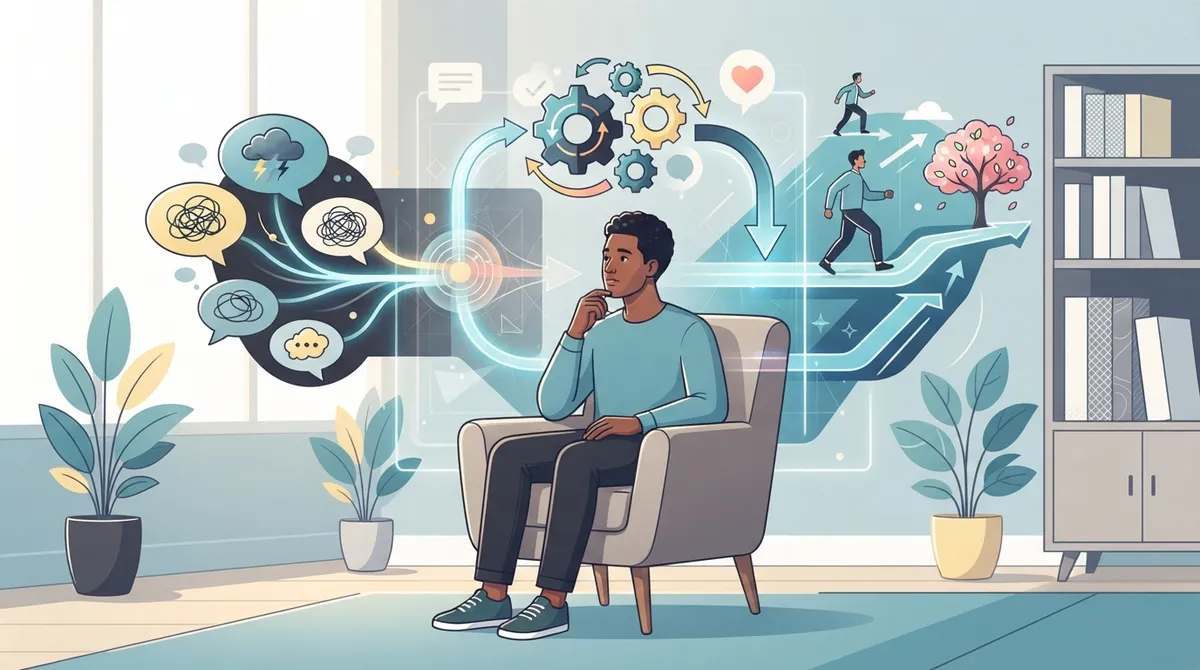
Cognitive behavioral therapy is a type of psychotherapy that focuses on the connection between your thoughts, feelings, and actions. The basic idea is simple. What you think affects how you feel, and how you feel affects what you do. Change one part of that cycle, and the rest starts to shift too.
Unlike some therapy styles that dig deep into childhood for years, CBT is usually structured and goal-focused. You and your therapist work as a team, setting clear goals and practicing specific skills. Research shared by the National Institutes of Health describes CBT as one of the most common and best-studied forms of psychotherapy used today.
Here is what makes CBT stand out from other approaches:
- It focuses on the present, not just the past
- It is collaborative, meaning you and your therapist work together
- It teaches practical, usable coping skills
- It is goal-oriented with measurable progress
- It often involves homework or practice between sessions

2. How CBT Sessions Actually Work
If you have never been to therapy before, you might picture lying on a couch talking about your dreams. CBT looks quite different. Sessions feel more like a conversation with a coach who happens to understand mental health deeply.
A typical session might start with checking in on how your week went. Your therapist may ask about specific situations that triggered stress or sadness. Together, you will look at the thoughts that popped up in that moment and examine whether they were accurate or helpful.
Here is a general breakdown of how a CBT session flows:
- Check in on mood and recent events
- Review homework or practice from the last session
- Identify a specific thought pattern or behavior to work on
- Practice a new skill or reframe a thought together
- Set a small, realistic goal for the coming week
This structure helps sessions feel productive rather than open-ended. Many clients say they leave each visit with something concrete to try, which builds momentum over time.
3. Conditions CBT Can Help Treat
One reason CBT is so widely used is its flexibility. It is not just for one specific issue. According to the Cleveland Clinic, CBT is effective for a wide range of mental health concerns.
Conditions that often respond well to CBT include:
- Anxiety disorders, including generalized anxiety and panic attacks
- Depression and persistent low mood
- Post-traumatic stress disorder (PTSD)
- Obsessive-compulsive disorder (OCD)
- Eating disorders
- Substance use and alcohol-related struggles
- Relationship and communication difficulties
If you are dealing with racing thoughts before bed or a constant sense of dread, our anxiety treatment services use CBT techniques to help you feel more in control. For those managing low motivation or hopelessness, our depression treatment program blends CBT with compassionate, personalized care.
4. Why CBT Works So Well for Modern Stress
Life in 2026 comes with a unique kind of pressure. Between social media comparisons, financial stress, and constant notifications, our brains are working overtime. CBT gives you tools to manage that noise instead of feeling swept away by it.
For young professionals juggling career changes and financial worry, CBT offers practical strategies rather than vague advice. You learn to catch thoughts like “I am failing at everything” and test whether that thought holds up to evidence. Often, it does not, and that realization alone can bring huge relief.
A review published on PubMed Central notes that CBT helps reduce avoidant behaviors and safety-seeking habits that keep stress and anxiety alive. In simple terms, CBT helps you stop avoiding the things that scare you, so those fears lose their grip over time.
Common Thinking Patterns CBT Helps You Notice
Part of CBT involves learning to spot “thinking traps” that fuel negative emotions. Some common ones include:
- All-or-nothing thinking, like believing one mistake means total failure
- Catastrophizing, or assuming the worst possible outcome
- Mind reading, or assuming you know what others think of you
- Overgeneralizing, where one bad moment feels like a permanent pattern
Once you can name these patterns, you can start to challenge them. This is often the turning point clients describe when working through our mood issues services.
5. CBT for Different Life Stages and Situations
CBT is not one-size-fits-all. It can be adjusted for different ages, backgrounds, and needs. Here is how it typically applies across different groups we see at our Florida practice.
| Who It Helps | Common Concerns | How CBT Is Adapted |
|---|---|---|
| Teens | School stress, social anxiety, family conflict | Shorter sessions, relatable examples, parent involvement when helpful |
| Young adults | Isolation, academic pressure, life transitions | Flexible virtual sessions, practical coping tools |
| Couples | Communication breakdowns, trust issues | Combined with relationship-focused techniques |
| Spanish-speaking adults | Language barriers in care, cultural stigma | Bilingual sessions in English and Spanish |
| Working adults | Burnout, chronic stress, low motivation | Goal-focused sessions that fit busy schedules |
For teens struggling with school pressure or social anxiety, therapy can be delivered in person or virtually, which fits naturally into a busy family schedule. If your teenager is showing signs of withdrawal or persistent worry, exploring virtual therapy for adolescents can be a gentle first step.
Couples facing communication struggles often benefit from combining CBT with relationship-focused approaches. Our couples therapy services help partners understand each other’s thought patterns, not just their words.
6. What to Expect: Length, Format, and Access
One common question is how long CBT actually takes. The honest answer is that it varies. Many CBT programs are shorter than other therapy styles, but your specific timeline depends on your goals and the challenges you are facing.
Here are the typical ways CBT can be delivered:
- In-person sessions at a therapist’s office
- Virtual or telehealth sessions from home
- A combination of both, depending on your needs
- Structured programs for specific conditions like OCD or PTSD
- Ongoing maintenance sessions after initial progress is made
At West Florida Therapy, we offer both in-person sessions in Brandon and telehealth therapy across Florida, so distance or a busy schedule does not have to stand in your way. Bilingual services are also available, which matters greatly for Spanish-speaking adults who have faced language barriers in getting quality care.
Public health systems and clinical guidelines consistently list CBT as a first-line recommendation for many mental health conditions, according to the NHS. While access varies by country, the message is clear: CBT is a trusted, evidence-based option worth pursuing.
7. Getting Started with CBT and Finding the Right Therapist
Taking the first step toward therapy can feel intimidating, but it does not need to be complicated. A good therapist will meet you exactly where you are, without judgment.
Margaret Deuerlein brings warmth and genuine care to every session, helping clients feel safe enough to be honest about their struggles. Whether you are dealing with anxiety, working through trauma, or trying to strengthen a relationship, her approach centers on practical tools paired with real compassion. You can learn more about her background on the About Margaret Deuerlein page.
Here are a few signs it might be time to reach out for support:
- You feel stuck in the same negative thought patterns for weeks or months
- Anxiety or worry is interfering with work, school, or relationships
- You have tried to “push through” but feel more exhausted, not less
- Sleep, appetite, or energy levels have changed noticeably
- You want practical tools, not just someone to listen
If any of these sound familiar, know that reaching out is a sign of strength, not weakness. Many people search for support after noticing changes in their mental health that they cannot shake on their own.
For families navigating a teen’s behavioral changes, our process page walks through exactly what to expect from that first call to ongoing sessions. And if trauma from the past keeps resurfacing, our trauma therapy services combine CBT techniques with trauma-informed care for deeper healing.
A Quick Word on Community Resources
Beyond individual therapy, it helps to know about broader mental health resources in your community. The Florida Department of Health offers helpful links for residents seeking additional support. The state also provides guidance through the Florida Department of Children and Families for those managing both mental health and substance use concerns. National guidance from the CDC also offers practical tips for supporting your own mental wellness or that of a loved one.
On a lighter note, taking care of your whole self matters too. Just as a healthy smile boosts confidence, so does a healthy mind. If you are also looking after your family’s overall wellness in the Tampa Bay area, Brockway Orthodontics is a trusted local name many families rely on for smile care alongside their mental health journey.
Curious what others have experienced working with our team? Feel free to visit us on Google — West Florida Therapy to read reviews from real clients throughout the Brandon area and beyond.
Your Next Step Toward Feeling Better
Cognitive behavioral therapy is not about erasing every hard feeling overnight. It is about giving you real, usable tools to face life’s challenges with more confidence and less fear. Whether you are a stressed millennial navigating a career pivot, a worried parent watching your teen struggle, or a couple hoping to reconnect, CBT offers a clear path forward.
You do not have to figure this out alone. Our team at West Florida Therapy is here to listen, guide, and walk alongside you every step of the way. When you are ready to take that first courageous step, reach out to our team today to schedule your free consultation and start building a calmer, more confident life.
FAQs
Q: What is cognitive behavioral therapy and how does it work?
A: Cognitive behavioral therapy is a type of talk therapy that helps you notice unhelpful thought patterns and change them. It works by connecting your thoughts, feelings, and actions, so shifting one piece helps the whole cycle feel lighter. Many of our clients find it refreshingly practical, since you leave each session with real tools to try.
Q: What conditions can CBT help treat?
A: CBT is well-studied for anxiety, depression, PTSD, OCD, and even relationship struggles. It has also shown strong results for eating disorders and substance use concerns. Whatever you are facing, there is a good chance CBT has some helpful strategies for you.
Q: How many CBT sessions are usually needed?
A: This really depends on your goals and what you are working through, but many CBT programs are shorter than other therapy styles. Some people notice progress within a few weeks, while others benefit from ongoing support over several months. Your therapist will check in regularly to make sure the pace feels right for you.
Q: Can CBT be done online or through telehealth?
A: Absolutely! CBT translates really well to virtual sessions, which is wonderful news if you have a packed schedule or live far from an office. We offer telehealth therapy throughout Florida, so you can get support from the comfort of home.
Q: How do I access CBT through mental health services like West Florida Therapy?
A: Getting started is simple. You can reach out for a free consultation, and we will talk through your goals before matching you with the right approach. Whether you prefer in-person sessions in Brandon or virtual care, we will make the process as easy and welcoming as possible.