
Key Takeaways
-
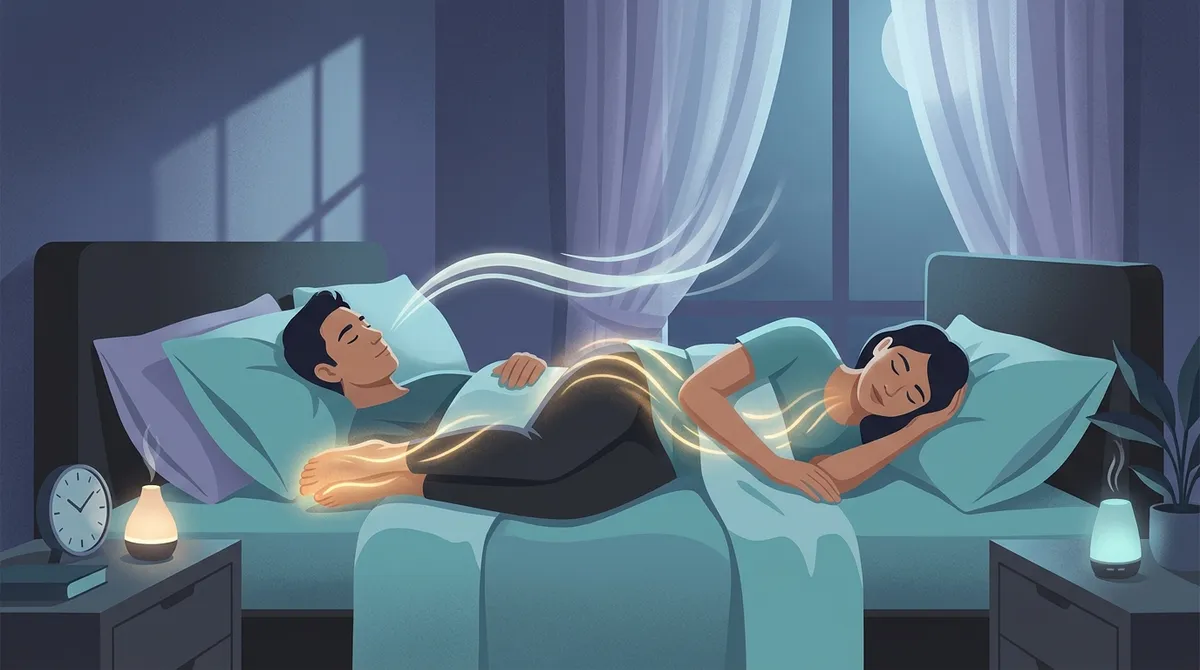
Practice breath focus with a longer exhale (inhale for 4 counts, exhale for 6-8 counts) to activate your parasympathetic nervous system and signal safety to calm racing thoughts before bed.
-
Body scan meditation is one of the most effective sleep techniques—mentally move from toes to head releasing tension, taking 10-20 minutes to help your body let go of stress accumulated throughout the day.
-
Even 5-10 minutes of consistent bedtime meditation can shift your nervous system out of fight-or-flight mode; consistency matters more than duration for building lasting benefits over time.
-
Seek professional therapy if anxiety or insomnia persists for weeks, feels uncontrollable, or impacts work and relationships—meditation alone cannot treat clinical anxiety disorders or deep emotional patterns.
-
Attach meditation to an existing bedtime habit (like after brushing teeth), use guided apps if silence feels uncomfortable, and track your sleep in a journal to notice improvements and stay motivated.
-
Meditation works best combined with healthy sleep habits: set consistent bedtime, dim lights 30 minutes before bed, and avoid screens to strengthen your sleep drive and reduce pre-sleep arousal.
You lie in bed, exhausted — but your mind won’t stop. Worries replay on a loop. Your heart races. Sleep feels impossible. If this sounds familiar, you are not alone. Millions of people struggle with anxiety that spills into the night, making rest feel just out of reach. The good news? Meditation for sleep and anxiety is one of the most accessible, evidence-backed tools available to help calm your nervous system and ease you toward rest. It is not a magic cure, but it is a genuine, research-supported strategy that mental health professionals often recommend alongside therapy. In this article, we will walk you through how it works, what techniques help the most, and when it might be time to seek professional support.
Why Anxiety Makes Sleep So Difficult
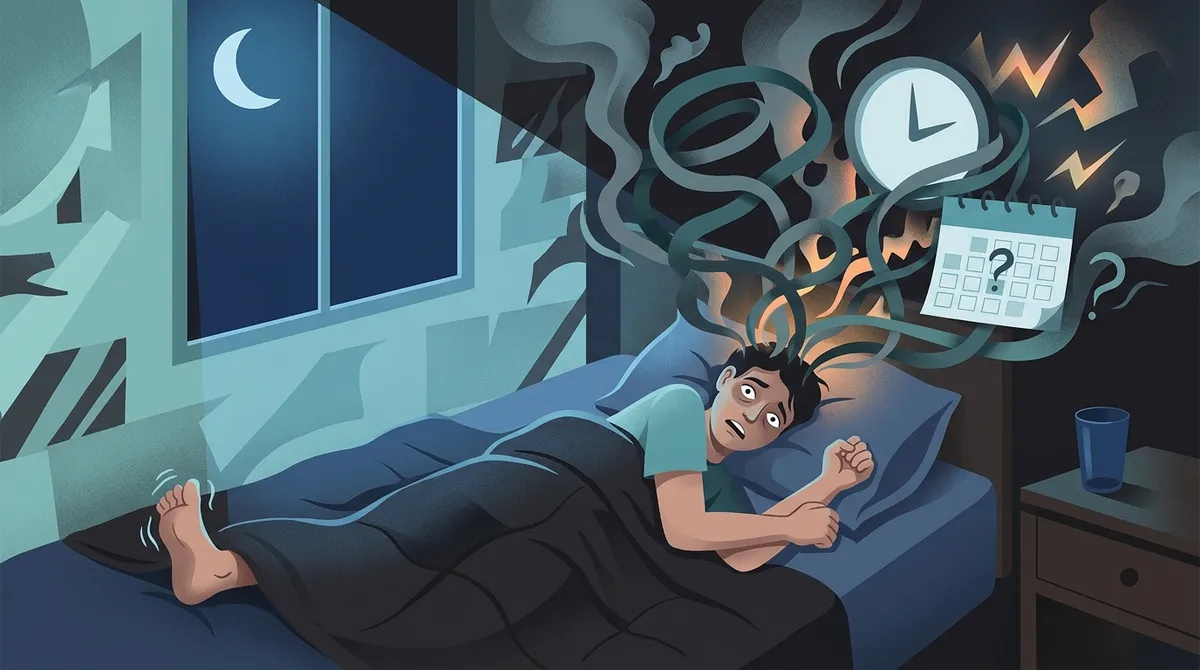
Anxiety and sleep problems are deeply connected. When your brain senses worry or threat, it triggers your stress response — releasing cortisol and adrenaline. This keeps your body alert and awake. That is the opposite of what you need at bedtime.
Racing thoughts are one of the biggest barriers to sleep. You might replay conversations, worry about tomorrow, or feel a sense of dread you cannot quite name. This state of pre-sleep arousal — being mentally keyed up right before bed — is a key reason why anxiety-driven insomnia is so hard to break. If you find your anxiety is consistently worse at night, you are not imagining it. There is a real pattern here, and you can learn to interrupt it. You can explore more about why anxiety gets worse at night and what you can do about it.
What Is Meditation for Sleep and Anxiety?
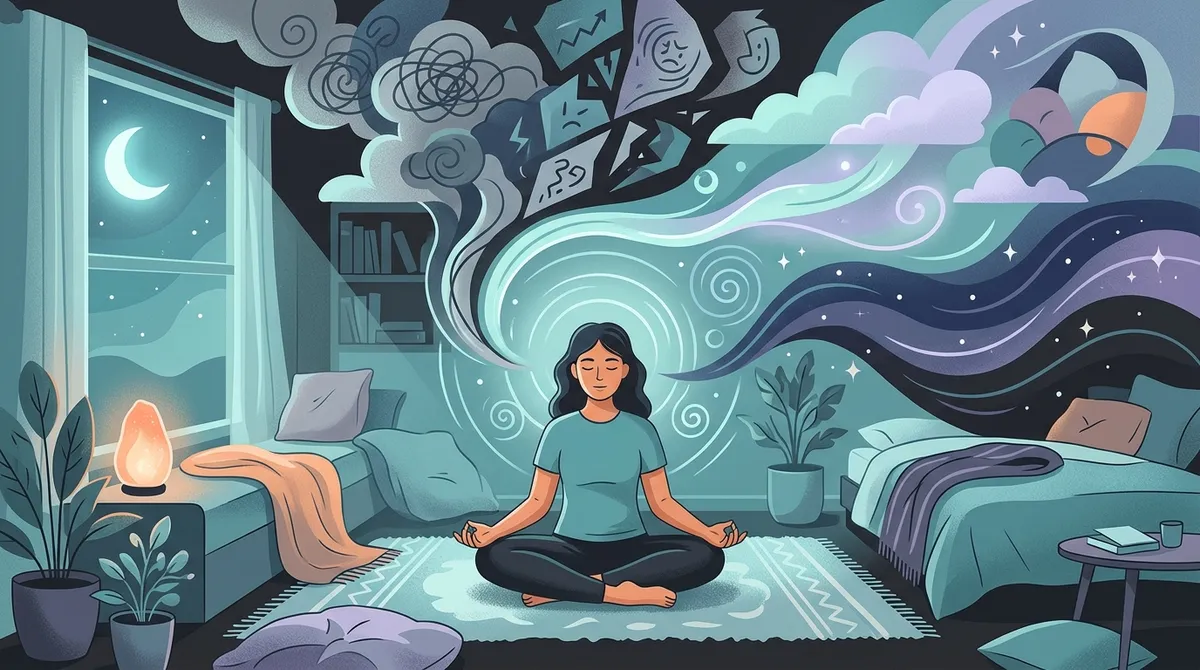
Meditation for sleep and anxiety is a set of calming mental practices designed to slow your body down and shift your focus away from anxious thoughts. It works by activating your parasympathetic nervous system — the part of your body responsible for rest and recovery.
It is different from regular mindfulness meditation, though they overlap. Sleep meditation specifically prepares your body and mind for rest. It often uses slower pacing, softer guided imagery, and techniques that reduce physical tension. Regular mindfulness meditation, on the other hand, can be practiced any time of day and focuses on noticing thoughts without judgment.
Common Techniques Used in Sleep and Anxiety Meditation
There is no single “right” way to meditate for sleep. Different techniques work for different people. Here are the most commonly recommended approaches:
- Breath focus: Slow, deep breathing signals safety to your nervous system. Inhale for four counts, hold for four, exhale for six to eight counts. The longer exhale is key — it activates the calming response.
- Body scan: This involves mentally moving through each part of your body from toes to head, noticing tension and consciously releasing it. The Cleveland Clinic identifies body scanning as one of the most effective sleep meditation tools.
- Guided visualization: Imagining a calm, peaceful scene — a quiet beach, a forest path, a warm room — helps redirect your brain away from anxious thoughts and toward relaxation.
- Calming mantras: Repeating a simple, soothing phrase like “I am safe” or “I can rest now” can interrupt the mental chatter that keeps you awake.
- Progressive muscle relaxation: Tensing and then releasing each muscle group systematically helps your body physically let go of stress held throughout the day.
What Does the Research Say?
Meditation is not just a wellness trend — there is real science behind it. A 2021 randomized controlled trial analysis published on PubMed found that participants using a mindfulness meditation app showed significantly greater improvement in depression and anxiety symptoms compared to a control group. Importantly, reductions in pre-sleep arousal helped explain this benefit.
The NHS also notes that meditation may help people fall asleep faster, sleep longer, and sleep more deeply — especially when used alongside healthy sleep habits. For anyone already managing anxiety or mood challenges, adding meditation to your routine can make a meaningful difference. You can also explore how to use meditation for stress and anxiety relief for even more practical strategies. The Mental Health Resources from the CDC also highlight the value of self-care practices like mindfulness for overall well-being.
How to Build a Simple Bedtime Meditation Routine
You do not need an hour or a fancy setup. Even five to ten minutes of intentional calming practice before bed can shift your nervous system out of fight-or-flight mode. Here is a simple routine to try:
- Set a consistent bedtime: Your brain loves routine. Going to bed at the same time each night — even on weekends — strengthens your sleep drive.
- Dim the lights 30 minutes before bed: Light tells your brain it is still daytime. Lowering the lights signals that it is time to wind down.
- Put away screens: News, social media, and even text messages can trigger anxiety. Give yourself a screen-free buffer before sleep.
- Lie down and start with breath focus: Breathe in slowly through your nose and out through your mouth. Let the exhale be longer than the inhale.
- Try a body scan: Move mentally from your feet upward, releasing tension as you go. Take your time — there is no rush.
- Use a visualization if needed: Picture a safe, calm place. Stay there with your breath until you drift off.
Benefits of Regular Meditation for Sleep and Anxiety
When you practice meditation consistently, the benefits build over time. Here is what many people experience:
- Falling asleep faster because your body recognizes the calming cues
- Waking up less often throughout the night
- Feeling more emotionally regulated during the day
- Noticing anxious thoughts without getting swept away by them
- A general sense of inner calm that carries into daily life
- Reduced physical tension in the body — especially in the jaw, shoulders, and chest
These benefits are not just anecdotal. Regular mindfulness practice has been shown to support overall mental health and emotional resilience. If you are also dealing with panic attacks or intense anxiety episodes, meditation can be one layer of a larger coping toolkit.
Meditation Techniques at a Glance
| Technique | Best For | Time Needed | Difficulty Level |
|---|---|---|---|
| Breath Focus | Calming racing thoughts quickly | 5–10 minutes | Easy |
| Body Scan | Releasing physical tension | 10–20 minutes | Easy–Moderate |
| Guided Visualization | Redirecting anxious imagination | 10–15 minutes | Easy |
| Calming Mantras | Interrupting mental chatter | 5–10 minutes | Easy |
| Progressive Muscle Relaxation | Full-body stress release | 15–20 minutes | Moderate |
When Meditation Is Not Enough
Meditation is a powerful tool — but it works best as part of a broader approach to mental health. If your anxiety is persistent, intense, or getting in the way of daily life, it is a sign that more support is needed. Meditation alone cannot treat clinical anxiety disorders or chronic insomnia rooted in deeper emotional patterns.
Some signs it might be time to reach out for professional help include:
- You have been struggling to sleep for weeks or months
- Anxiety feels uncontrollable, even during the day
- You are experiencing panic attacks or intense episodes of fear
- Your mood is consistently low, irritable, or hopeless
- Sleep problems are affecting your work, relationships, or health
- You have tried self-help strategies without lasting relief
If any of these feel true for you, therapy can make a real difference. A trained therapist can help you understand the root causes of your anxiety, build personalized coping skills, and create a treatment plan that supports lasting change. You can learn more about understanding anxiety signs, types, and treatment options to better know what kind of support might help. The Florida Department of Children and Families Substance Abuse & Mental Health program also provides helpful resources for Floridians seeking mental health support.
How Therapy and Meditation Work Together
At West Florida Therapy, we believe in a whole-person approach. Meditation and mindfulness practices are often woven into therapy — not as a replacement for professional care, but as a meaningful complement to it. Therapists may teach breathing techniques, help you practice body awareness, or guide you in developing personalized relaxation strategies.
Margaret Deuerlein, the caring psychotherapist behind West Florida Therapy, works with adults and adolescents throughout Florida — both in person in Brandon and virtually via telehealth therapy across the state. Whether you are dealing with anxiety, sleep struggles, depression, or trauma, therapy can help you build the skills and insight to feel better — and finally rest. Bilingual services in English and Spanish are also available, making care accessible for more of the community.
Evidence-based therapy approaches like Cognitive Behavioral Therapy (CBT) and Acceptance and Commitment Therapy (ACT) both incorporate mindfulness and can be highly effective for anxiety and sleep issues. You can read more about how ACT therapy can ease anxiety if you are curious about what that process looks like. For those exploring digital options as well, Mental Health Links from the Florida Department of Health offers a helpful directory of additional resources.
Tips for Making Meditation Stick
One of the biggest challenges with meditation is consistency. Here are practical tips to make it a regular habit:
- Start small: Even five minutes counts. Do not wait until you have 30 minutes free.
- Attach it to a habit you already have: Try meditating right after brushing your teeth at night.
- Be kind to yourself: Your mind will wander. That is normal. Gently bring it back — that is the practice.
- Use a guided app or recording: If silence feels uncomfortable, a calm voice can help guide your focus.
- Track how you feel: Keeping a simple sleep journal can help you notice improvements over time.
And remember — if meditation feels hard, that does not mean you are doing it wrong. It just means your nervous system has been under stress. That is exactly what it is designed to help. To explore more practical tools, check out these 10 mindfulness techniques that can transform mental health in 2026.
Taking the Next Step Toward Better Sleep and Calmer Nights
Meditation for sleep and anxiety is a real, research-backed strategy that can help you quiet racing thoughts, relax your body, and finally get the rest you deserve. But it works best when you also address the deeper roots of your anxiety — and that is where therapy comes in.
You do not have to figure this out alone. Whether you are a teen dealing with school stress, an adult struggling with sleepless nights, or someone who has tried everything and still can not find relief — support is available. You can visit us on Google — West Florida Therapy to read about our practice and hear from others who have taken this step.
Ready to start feeling better? Reach out to West Florida Therapy today to schedule your free 15-minute consultation. Real change is possible — and it starts with one step.
FAQs
Q: Does meditation really help with sleep and anxiety?
A: Yes — and there is solid research to back it up! A 2021 randomized controlled trial found that mindfulness meditation meaningfully improved anxiety and depression symptoms, partly by reducing pre-sleep arousal. The NHS also notes that regular meditation may help people fall asleep faster and sleep more deeply. It works best when combined with good sleep habits and, when needed, professional support.
Q: How long should I meditate before bed?
A: Even five to ten minutes of calming meditation before bed can make a real difference. You do not need a long session to benefit — consistency matters more than duration. Starting small and building from there is a great way to make it a sustainable habit you will actually stick with.
Q: What type of meditation is best for insomnia caused by anxiety?
A: Body scan meditation and breath-focused techniques are often the most helpful for anxiety-driven insomnia, since they target both physical tension and racing thoughts. Guided visualization is also a great option if your mind tends to wander. Try a few approaches and see what feels most natural — there is no one-size-fits-all answer!
Q: Is meditation a substitute for therapy or medication?
A: Meditation is a valuable tool, but it is not a replacement for professional care when anxiety or insomnia is persistent or severe. Mental health professionals commonly frame it as a complementary strategy — something that works alongside therapy, not instead of it. If your anxiety or sleep problems are significantly impacting your life, reaching out to a therapist is a great next step.
Q: Can guided meditation reduce nighttime anxiety?
A: Absolutely! Guided meditation is especially helpful for people who find it hard to quiet their minds on their own. A calm voice walking you through breathing, body awareness, or visualization can gently redirect your focus away from anxious thoughts and toward relaxation. Many people find it easier to start with guided sessions before moving to unguided practice.