Key Takeaways
-
Trauma therapy uses structured, evidence-based techniques to help your brain and body heal from traumatic experiences, not just talk about the past—restoring safety and allowing you to move from surviving to actually living.
-
Trauma-Focused Cognitive Behavioral Therapy (TF-CBT), Cognitive Processing Therapy (CPT), and EMDR are research-backed approaches with proven effectiveness; CPT uses 12 structured sessions to challenge trauma-related beliefs like self-blame and shame.
-
Trauma therapy addresses a wide range of conditions beyond PTSD, including anxiety, depression, complex PTSD, substance use tied to trauma, and even generational trauma patterns that are inherited across families.
-
Telehealth trauma therapy is now available across Florida and equally effective as in-person sessions, with bilingual services in English and Spanish, removing major barriers like scheduling conflicts or transportation issues.
-
Initial trauma therapy sessions involve assessment, psychoeducation about how trauma affects the brain, then active processing of traumatic memories using your chosen modality, followed by skills-building and regular progress reviews.
-
Signs you may benefit from trauma therapy include being triggered by ordinary situations, avoiding certain people or places, emotional numbness, depression that won’t lift, and using substances or overwork to avoid difficult feelings.
Trauma has a way of quietly taking over your life. It can show up as sleepless nights, sudden panic, or a constant sense of dread that never quite goes away. If you live in Brandon, Florida, or anywhere in the state, you deserve real support — not just strategies to “cope,” but true healing. Trauma therapy is designed to help you do exactly that. It gives you a safe space to process what happened, understand how it affects you, and build a life where trauma no longer calls the shots. Whether you experienced a single frightening event or years of ongoing stress, trauma therapy in Brandon is available — and it works. This guide walks you through everything you need to know: what trauma therapy is, how it works, and how to take that first brave step toward healing.

What Is Trauma Therapy?
Trauma therapy is a type of mental health treatment that focuses specifically on the effects of traumatic experiences. It is not just talking about your past. It is a structured, evidence-based process that helps your brain and body heal from the inside out. According to NCBI’s StatPearls on Trauma-Informed Therapy, trauma-informed care acknowledges how deeply trauma shapes a person’s functioning and well-being.
The goal of trauma therapy is to restore your sense of safety. It helps you move from surviving day to day to actually living your life. It addresses conditions like PTSD, acute stress disorder, anxiety, depression, and even substance use that is connected to trauma. Learn more about how anxiety treatment and trauma therapy often work hand in hand.
How Is Trauma Therapy Different from Regular Therapy?
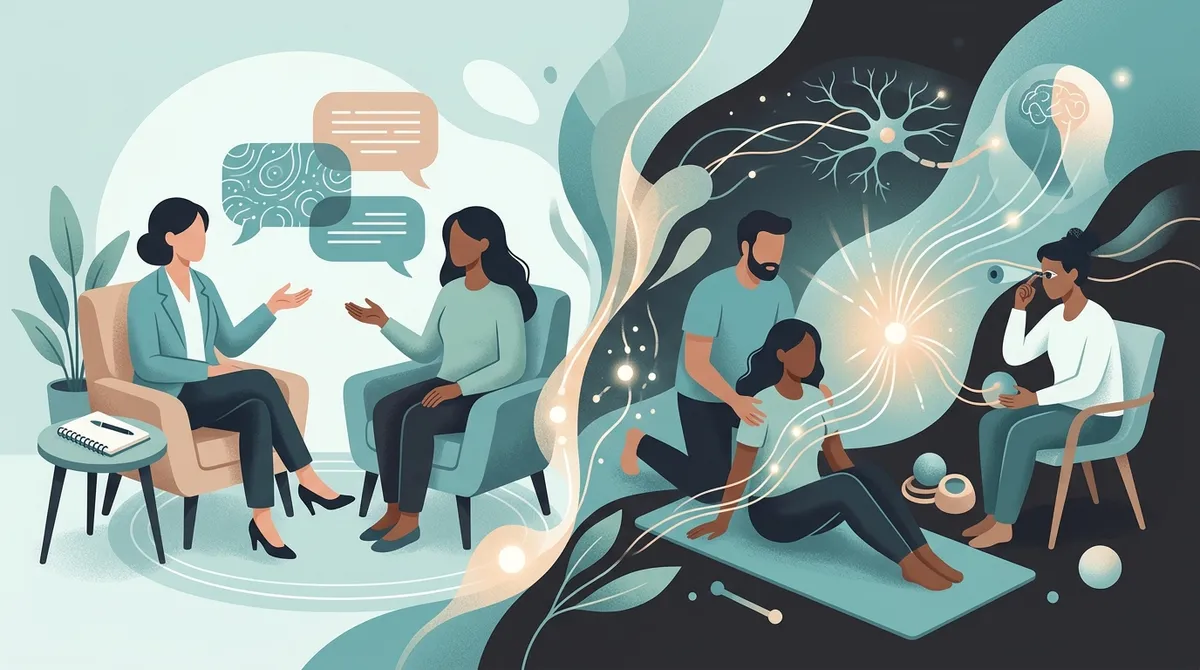
You might wonder: isn’t all therapy kind of the same? Not quite. Traditional therapy often focuses on present-day challenges and patterns of thinking. Trauma therapy goes deeper. It specifically targets the memories, beliefs, and nervous system responses that trauma leaves behind.
Think of it this way. Regular therapy might help you manage stress at work. Trauma therapy helps you understand why certain situations make your heart race, your thoughts spiral, or your body freeze — and then it helps you change that response at its root. It is a more targeted approach for people whose daily lives are being shaped by past painful experiences.
Common Types of Trauma Therapy Used in Brandon, Florida
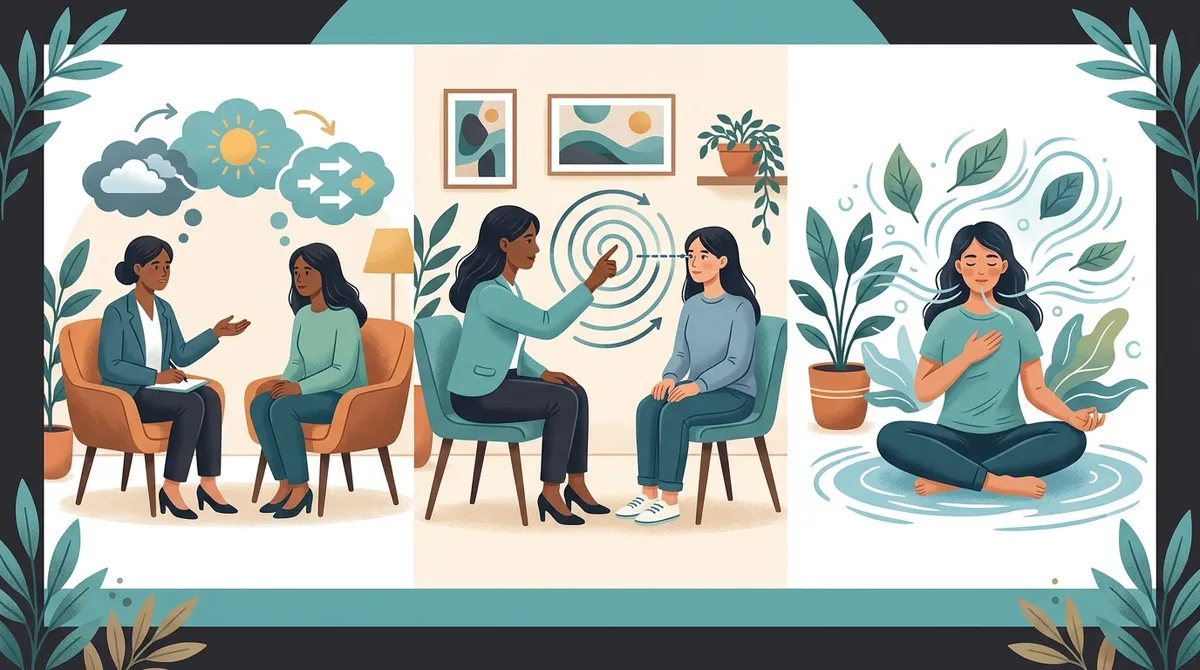
There is no single “right” type of trauma therapy. A good therapist will match the approach to your needs. Here are the most widely used and research-supported methods:
1. Trauma-Focused Cognitive Behavioral Therapy (TF-CBT)
TF-CBT is one of the most well-researched trauma therapies available. It combines cognitive restructuring, exposure techniques, and emotion regulation strategies. It is especially effective for children and teenagers, and it often includes parental involvement to support youth recovery. If you have a teenager struggling with panic attacks or school anxiety tied to past trauma, TF-CBT is a strong option.
2. Cognitive Processing Therapy (CPT)
CPT is typically delivered over 12 structured sessions. It helps you identify and challenge distorted beliefs connected to trauma — things like self-blame, shame, or the sense that the world is completely unsafe. By working through these beliefs, CPT reduces PTSD symptoms and improves emotional regulation significantly.
3. EMDR (Eye Movement Desensitization and Reprocessing)
EMDR is a powerful, research-backed approach that uses bilateral stimulation (like guided eye movements) to help the brain reprocess traumatic memories. Many people find it works faster than traditional talk therapy. You can explore EMDR treatment as part of a comprehensive trauma care plan at West Florida Therapy.
4. Trauma-Informed Therapy as a Framework
Some therapists use a trauma-informed lens across all of their work — not as a single technique, but as a foundational approach. This means every part of your care is shaped by an understanding of trauma’s impact. Safety, trustworthiness, and empowerment are built into every session.
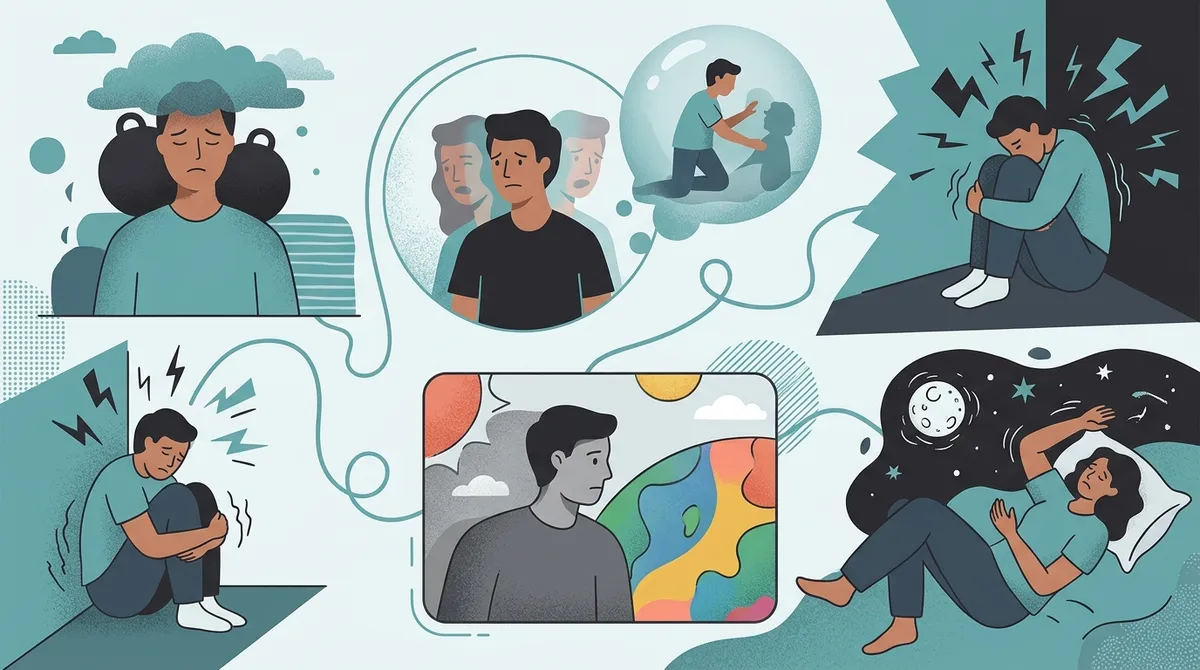
Conditions That Brandon Trauma Therapy Can Treat
Trauma therapy is not only for people with a formal PTSD diagnosis. It helps with a wide range of experiences and conditions. Here is a quick overview:
| Condition | How Trauma Therapy Helps |
|---|---|
| PTSD | Reduces flashbacks, nightmares, and hypervigilance |
| Anxiety & Panic | Calms the nervous system and retrains fear responses |
| Depression | Addresses grief, loss, and hopelessness linked to trauma |
| Complex PTSD | Heals repeated or long-term trauma patterns |
| Acute Stress Disorder | Provides early intervention after a traumatic event |
| Substance Use | Addresses trauma as the root cause of unhealthy coping |
| Generational Trauma | Helps break inherited patterns of pain and behavior |
If you are not sure whether your experiences count as “trauma,” that is okay. A good therapist will help you figure that out together. You can also explore how to recognize and heal from psychological trauma to better understand your own experiences.
The Benefits of Seeking Trauma Therapy in Brandon
Many people wait years before reaching out for help. If that sounds like you, you are not alone — and it is never too late to start. Here is what trauma therapy can genuinely offer you:
- Restored sense of safety: You will learn to feel safe in your own mind and body again.
- Reduced flashbacks and intrusive memories: Trauma stops ambushing you without warning.
- Better emotional regulation: You will feel less reactive and more in control of your responses.
- Stronger relationships: Healing trauma often improves how you connect with the people you love.
- Increased resilience: You build real tools to navigate hard times with confidence.
- Freedom from self-blame: Therapy helps you let go of shame and understand your experience clearly.
According to the CDC’s Mental Health Resources, seeking care for trauma-related conditions improves long-term health outcomes significantly. Taking that step is one of the most powerful things you can do for yourself.
A Holistic View of Trauma Recovery
One of the most important shifts in modern trauma therapy is the move toward a holistic approach. Rather than just teaching coping skills, good trauma therapy helps you actually process and move through your pain. Think of it as learning to swim through the ocean of your experience — not just staying afloat at the surface.
This means working with your whole self: your thoughts, your emotions, your body, and your story. It means retraining the brain’s fear center (the amygdala) so that past memories no longer trigger current-day panic. It means finding meaning in your experiences without minimizing them. Exploring mental health holistically leads to more lasting and meaningful results.
What to Expect in Your First Few Sessions
Starting therapy can feel intimidating. Knowing what to expect helps a lot. Here is a simple breakdown of how the process typically unfolds:
- Initial consultation: You share what brought you in, ask questions, and decide if the therapist is a good fit for you.
- Assessment and goal-setting: Your therapist learns about your history and helps you set clear, meaningful goals for healing.
- Psychoeducation: You learn about how trauma affects the brain and body — this alone can be incredibly validating and relieving.
- Active trauma processing: Using the chosen modality (TF-CBT, CPT, EMDR, etc.), you begin working through traumatic memories and their effects.
- Integration and skills building: You develop real-life tools and practice applying them between sessions.
- Progress review: You and your therapist regularly check in on how things are going and adjust the plan as needed.
At West Florida Therapy, the process is thoughtfully designed to give you clarity and support from day one. You can learn more about the step-by-step experience at our process page.
In-Person and Virtual Trauma Therapy Options in Brandon
One of the biggest barriers to getting help is logistics. Life is busy. Maybe you work full time, have kids, or live far from a therapist’s office. The good news is that trauma therapy is now more accessible than ever.
- In-person therapy: Ideal for those who prefer face-to-face connection. West Florida Therapy offers in-person therapy in Brandon, Florida.
- Telehealth therapy: Available to anyone across Florida. You can attend sessions from home, your car, or wherever feels comfortable. Explore telehealth therapy in Florida for flexible scheduling options.
- Bilingual services: For Spanish-speaking clients, therapy is available in both English and Spanish — because healing should never be limited by language.
You can also check out the Florida Department of Children & Families’ Substance Abuse & Mental Health resources for additional state support options.
Meet Margaret Deuerlein: Your Trauma Therapist in Brandon
When choosing a trauma therapist, the relationship matters deeply. You want someone who is skilled, warm, and genuinely invested in your healing. Margaret Deuerlein is a licensed and certified psychotherapist who brings both professional expertise and a caring, personalized approach to every session.
Margaret works with adults, adolescents, and couples navigating trauma, anxiety, depression, and more. She understands that healing is not linear, and she meets you exactly where you are. Whether you need support processing a specific event or are working through years of complex experiences, Margaret is equipped and ready to walk alongside you. Visit us on Google to read reviews from clients who have experienced real transformation through her care.
Is Trauma Therapy Right for You?
You might be asking yourself whether you truly “need” trauma therapy. Here are some signs that it could be a great fit:
- You find yourself triggered by situations that seem ordinary to others.
- You avoid certain people, places, or thoughts related to past events.
- You feel emotionally numb, disconnected, or stuck.
- You struggle with depression or low mood that does not seem to lift.
- You have tried to “move on” but find yourself going in circles.
- You use substances, overwork, or other behaviors to avoid difficult feelings.
If any of these resonate with you, reaching out to a trauma-informed therapist is a meaningful and courageous step forward. You can also explore mood issues as a related concern that trauma therapy often addresses.
Taking the First Step Toward Healing
You do not have to keep carrying this weight alone. Healing is possible — not just managing symptoms, but genuinely reclaiming your life. Brandon trauma therapy offers you the tools, support, and evidence-based care to get there. Whether you are a young adult navigating isolation, a parent helping your teenager, or someone finally ready to face what happened years ago, there is a path forward for you.
The Florida Department of Health also provides a helpful list of Mental Health Links for residents seeking additional community resources.
We begin with a free 15-minute consultation so you can ask questions, get a feel for the process, and make sure we are the right fit — no pressure, no commitment. Reach out to West Florida Therapy today and take that one courageous step toward healing, transformation, and living every single day with more freedom and peace.
FAQs
Q: What is Brandon trauma therapy and who is it for?
A: Brandon trauma therapy refers to evidence-based mental health treatment available in Brandon, Florida, designed to help people heal from the effects of traumatic experiences. It is for anyone — adults, teens, or couples — who feel stuck, triggered, or overwhelmed by past events and are ready to start healing.
Q: How long does trauma therapy typically take?
A: The length of trauma therapy varies depending on your unique needs and the approach used. For example, Cognitive Processing Therapy (CPT) is typically delivered in about 12 structured sessions, while other approaches may be shorter or longer. Your therapist will work with you to set realistic and meaningful goals from the start.
Q: Can I do trauma therapy virtually if I can’t come in person?
A: Absolutely! West Florida Therapy offers telehealth therapy to clients all across Florida, so you can access trauma support from the comfort of your own home. Virtual sessions are just as effective as in-person therapy for many people, and they make care far more accessible.
Q: Is trauma therapy available in Spanish at West Florida Therapy?
A: Yes! West Florida Therapy proudly offers bilingual therapy services in both English and Spanish. We believe that healing should never be limited by language, so Spanish-speaking clients can receive full trauma therapy support in the language they feel most comfortable in.
Q: What is the difference between PTSD and complex PTSD in trauma therapy?
A: PTSD typically results from a single traumatic event, while complex PTSD (C-PTSD) develops from repeated or prolonged trauma over time, such as childhood abuse or long-term neglect. Trauma therapy addresses both, though C-PTSD often requires a longer and more layered approach to fully heal those deeply rooted patterns.