From the outside, anxiety during the holidays can look like irritability, avoidance, exhaustion, or overthinking. Internally, it can feel like pressure, self-criticism, fear of judgment, or the sense that you have to play a role.
Some common triggers include:
- Feeling responsible for everyone’s happiness
- Conflict with certain relatives
- Unpredictable or chaotic environments
- Past painful memories tied to holidays
- Social pressure to talk, perform, or be “on”
- Grief, loneliness, or emotional disconnection
- Sensory overload: noise, crowds, smells, movement
- Feeling judged for life choices, relationships, weight, parenting, career, or mental health
“What part of this event triggers my anxiety — the environment, the people, or the expectations?”
Naming the source helps you take your power back.
Step 1: Cultivate a Healthy Nervous System
Anxiety is not just in your mind — it’s in your body. Your nervous system remembers the past, anticipates the future, and reacts faster than logic.
✔ Practice grounding techniques
Spend 2–5 minutes on:
- Slow belly breathing
- Progressive muscle relaxation
- A calming mantra: “I am safe. I am steady.”
- Visualizing yourself handling moments with confidence
✔ Anticipate your triggers with compassion
Ask yourself:
- What usually overwhelms me at gatherings?
- What can I do differently this time?
This “thinking about your thinking” increases emotional resilience.
✔ Plan supportive boundaries
Examples:
- Limiting the length of your visit
- Saying no to topics that hurt or overwhelm you
- Allowing yourself breaks when needed
This preparation primes your mind for success.
Step 2: Set Clear Emotional Boundaries — and Stick to Them
You don’t owe anyone unlimited access to your energy, attention, or emotional space.
Examples of gentle but firm boundaries:
- “I’m stepping outside for a few minutes. I’ll be back soon.”
- “I’d prefer not to talk about that today.”
- “Let’s agree to keep things light — I don’t want to get into stressful conversations.”
Healthy boundaries help your nervous system stay regulated.
If boundaries feel hard to set, therapy can help you build the skills. Learn more at
👉 West Florida Therapy
Step 3: Identify Thought Traps — and Reframe Them
Holiday anxiety is often fueled by internal narratives such as:
- “Everyone will judge me.”
- “I need to make sure no one is upset.”
- “I shouldn’t feel anxious — it’s supposed to be fun.”
- “If I say no, people will be disappointed.”
A helpful metacognitive strategy is to observe the thought without believing it:
Ask:
“Is this a realistic thought, or is this my anxiety trying to protect me?”
Then gently reframe:
- “It’s okay to be myself — not the version others expect.”
- “I can’t control everyone’s emotions.”
- “Feeling anxious doesn’t mean I’m doing anything wrong.”
This is the foundation of Cognitive Behavioral Therapy (CBT) — and a proven way to reduce holiday stress.
For more on CBT, see the American Psychological Association.
Step 4: Create an Exit Strategy That Respects Your Mental Health
Your well-being matters more than social expectations. You don’t have to stay longer than feels healthy.
Plan:
- A time to leave
- A reason you can use if needed
- A person you trust to support you
- A calming activity for afterward
Having an exit strategy reduces anticipatory anxiety because you know you’re not trapped.
Step 5: Use Sensory Regulation in the Moment
When anxiety spikes, your body needs anchoring.
Try:
- Holding a warm mug
- Rubbing your fingers together
- Focusing on one sound in the room
- Taking a brief walk outside
- Slowing your breath to 4-6 breaths per minute
Each of these signals your nervous system: “I’m safe, I can slow down.”
Step 6: Allow Yourself Micro-Breaks
Instead of pushing through the overwhelm, give yourself permission to step away:
- Sit alone in a quiet room
- Go to the bathroom and breathe
- Step onto the porch
- Visit with a calmer family member
- Focus your attention on a pet or child
These small breaks prevent escalation.
This is a skill — noticing your rising anxiety before it peaks, and choosing to intervene gently.
Step 7: Respond to Difficult Family Dynamics With Grounded Confidence
Families can be loving, supportive… or triggering.
If someone says something intrusive or uncomfortable, you can respond without absorbing it.
Calm boundary responses:
- “I’m focusing on taking care of myself today.”
- “Let’s save that conversation for another time.”
- “I’m choosing not to discuss that.”
Calm redirection:
- “How’s work going for you?”
- “Tell me what you’ve been watching lately.”
This shifts the emotional tone without emotional confrontation.
Step 8: Give Yourself Grace — You Are Not Required to Enjoy Every Moment
Holiday pressure often sounds like:
- “I should be happy.”
- “Something is wrong with me.”
- “Everyone else looks fine.”
But your emotional experience is valid — happiness isn’t mandatory.
Try a reflection:
“What would I say to someone I love who felt this way?”
Offer yourself the same compassion.
Step 9: Consider Professional Support During the Holiday Season
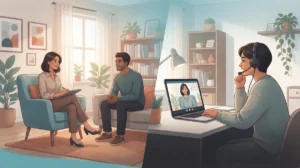
The holidays often intensify anxiety — but therapy can help you navigate this period with more clarity, confidence, and emotional balance.
A therapist can help you:
- Identify triggers
- Practice boundary-setting
- Develop grounding skills
- Reframe unhelpful thought patterns
- Heal emotional wounds connected to family or the past
- Resolve holiday-related trauma
If you’re in Brandon, Riverview, Fishhawk, Valrico, Tampa, or Apollo Beach, All Florida, virtually, you can get support at
👉 West Florida Therapy
Step 10: After the Event, Reflect — Not to Judge Yourself, But to Learn
Reflection strengthens metacognition and helps ease future anxiety.
Ask yourself:
- What went better than expected?
- What triggered me the most?
- What helped me stay grounded?
- What do I want to do differently next time?
This is how emotional resilience is built — slowly, compassionately, and with awareness.
You Can Feel Safe, Confident, and Supported During Holiday Gatherings
You don’t have to dread the holidays. With preparation, boundaries, awareness, and support, it is possible to enjoy family gatherings again — or at least move through them with less overwhelm.
And if anxiety still feels too heavy, you deserve help from a professional who understands.
For therapy that supports anxiety, depression, trauma, and family stress, visit:
👉 West Florida Therapy
You are not alone.
You are not failing.
You are learning to protect your peace — and that is strength.