
Key Takeaways
-
Cognitive Behavioral Therapy (CBT) combined with exposure therapy is the gold-standard treatment for agoraphobia, helping you identify negative thought patterns and gradually face feared situations at a safe, manageable pace.
-
Early intervention is critical—the sooner you reach out to a licensed therapist, the easier recovery becomes, as avoidance behaviors tend to expand over time without treatment.
-
Therapy and medication together produce better outcomes than either alone; SSRIs, SNRIs, and anti-anxiety medications can complement CBT while you build long-term coping skills.
-
A personalized treatment plan should include weekly CBT sessions, exposure exercises as homework, and regular adjustments based on progress toward specific, meaningful goals like grocery shopping alone.
-
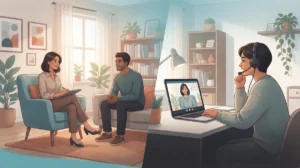
Virtual therapy is highly effective for agoraphobia and allows you to start treatment from home if leaving feels impossible, making professional support accessible without adding to your anxiety.
-
Recovery means gaining tools to manage anxiety without letting it control your life; most people see meaningful improvements within months of consistent therapy, though timelines vary based on symptom severity.
Does leaving the house feel overwhelming? Do crowded places, open spaces, or even stepping outside fill you with dread? If so, you are not alone — and there is real hope. Agoraphobia is more common than many people realize, and with the right agoraphobia treatment, life can feel full and free again.
Agoraphobia is an anxiety disorder where people fear situations that feel hard to escape from or where help might not be available. It often leads to avoiding everyday places like grocery stores, public transit, or even leaving home altogether. The good news? Effective, evidence-based treatments exist — and many people recover fully with the right support.
Whether you are a busy millennial juggling life’s pressures, a teenager struggling with social anxiety, or a Spanish-speaking adult looking for bilingual support in Florida, this guide will walk you through exactly how agoraphobia treatment works and how to take that first brave step forward.

What Is Agoraphobia and Why Does It Happen?
Agoraphobia is not simply a fear of open spaces — that is a common myth. It is actually a deep fear of situations where escape feels difficult or embarrassing, or where a panic attack might strike without help nearby. People with agoraphobia often avoid:
- Crowded shopping malls or grocery stores
- Public transportation like buses or trains
- Open outdoor areas like parking lots or parks
- Being outside the home alone
- Bridges, elevators, or enclosed spaces
Over time, avoidance grows. What started as skipping one crowded event can slowly become not leaving the house at all. This is why early agoraphobia treatment is so important — the sooner you reach out, the easier recovery becomes.
For more context on understanding anxiety signs, types, and treatment options, it helps to recognize that agoraphobia almost always involves an anxiety treatment component. Many people also experience co-occurring depression, which makes a comprehensive care plan even more essential.

Step 1 — Recognize the Signs and Reach Out
The first step in agoraphobia treatment is simply acknowledging that something is wrong and that you deserve help. Many people spend years minimizing their symptoms or feeling embarrassed. Please know — there is absolutely nothing to be ashamed of.
Common signs that you may benefit from agoraphobia treatment include:
- Feeling intense fear or anxiety in public places
- Avoiding situations that used to feel normal
- Needing a trusted person with you to leave home
- Experiencing racing heartbeat, sweating, or dizziness in public
- Feeling that the world outside is dangerous or unpredictable
Reaching out to a licensed therapist is the most important first step. If you are in Florida, West Florida Therapy offers individual therapy both in-person and virtually — so you can get help from the comfort of home if leaving feels too hard right now. Reach out to us today to get started.

Step 2 — Understand the Most Effective Treatment Approaches
Not all treatments are created equal, and agoraphobia treatment is most successful when it uses evidence-based methods. Here is a breakdown of the main approaches therapists use:
Cognitive Behavioral Therapy (CBT)
CBT is widely recognized as the gold-standard treatment for agoraphobia. It works by helping you identify and change the negative thought patterns that fuel your fear. For example, you might learn to challenge thoughts like “If I go outside, something terrible will happen” with more balanced, realistic thinking.
CBT also teaches practical coping skills, so you feel more prepared and confident. Research consistently shows that Mental Health Resources support CBT as one of the most effective tools for anxiety disorders, including agoraphobia.
Exposure Therapy
Exposure therapy is a powerful component of CBT. It involves gently and gradually facing the situations you fear — in a safe, supported way. Think of it like slowly turning up the volume on something uncomfortable until it no longer feels so loud.
Your therapist will help you build a “fear ladder” — a step-by-step plan that starts with easier challenges and slowly works up to harder ones. Over time, your brain learns that the feared situation is not actually dangerous, and anxiety fades.
There are two main types of exposure used in agoraphobia treatment:
- In-vivo exposure — Real-life practice facing feared situations (like walking to the mailbox or visiting a store)
- Imaginal exposure — Vividly imagining feared scenarios to reduce distress in a low-stakes way first
- Virtual exposure — Using technology to simulate feared environments safely
Mindfulness-Based Therapy
Mindfulness techniques teach you to stay present rather than spiraling into “what if” thinking. Deep breathing, body scans, and grounding exercises are all tools that can reduce the physical symptoms of anxiety in feared situations.

Step 3 — Learn About Medication Options
For many people, therapy alone is enough. But for others, medication can be a helpful partner in the treatment process. Here is a simple overview of what you might discuss with your doctor:
| Medication Type | Common Examples | How They Help | Important Notes |
|---|---|---|---|
| SSRIs (Antidepressants) | Prozac, Zoloft | Reduce overall anxiety and panic | May take several weeks to work |
| SNRIs | Effexor, Cymbalta | Regulate mood and anxiety | Similar timeline to SSRIs |
| Anti-anxiety medications | Buspirone | Reduce short-term anxiety | Not habit-forming |
| Beta-blockers | Propranolol | Calm physical symptoms | Used for situational anxiety |
It is important to work with both a therapist and a prescribing doctor when medication is part of your plan. Therapy and medication together tend to produce the best outcomes for agoraphobia treatment. According to the Substance Abuse & Mental Health division of Florida’s Department of Children and Families, integrated care approaches are among the most effective for anxiety disorders.
Step 4 — Build a Personalized Treatment Plan
No two people experience agoraphobia in exactly the same way. Your treatment plan should reflect your unique life, triggers, and goals. A good therapist will take the time to understand your story before jumping into action.
A personalized agoraphobia treatment plan might include:
- An initial assessment to understand your specific triggers and history
- Setting realistic, meaningful goals (like visiting a friend or going to the grocery store alone)
- Weekly therapy sessions using CBT and exposure techniques
- Homework exercises to practice coping skills between sessions
- Regular check-ins to adjust the plan as you progress
At West Florida Therapy, psychotherapist Margaret Deuerlein brings warmth, expertise, and compassion to every session. She understands that agoraphobia can feel isolating — and she is committed to helping you move forward at a pace that feels safe and manageable. Bilingual services in English and Spanish are also available, making care accessible for Spanish-speaking adults across Florida.
Step 5 — Explore Complementary Support Options
Beyond therapy and medication, several supportive practices can strengthen your recovery. Think of these as bonus tools in your healing toolkit:
- Regular physical exercise — Even gentle walks reduce anxiety over time
- Sleep hygiene — Good sleep makes managing anxiety much easier
- Limiting caffeine and alcohol — Both can worsen anxiety symptoms
- Journaling — Writing down worries helps externalize and process them
- Support groups — Connecting with others who understand your experience reduces isolation
If you are also managing mood issues or past trauma, addressing those alongside agoraphobia often speeds up recovery. Research shows that unresolved trauma can be a root cause of anxiety and avoidance behaviors.
Step 6 — Know What to Expect in Your First Therapy Session
Starting therapy for the first time can feel nerve-wracking — especially if leaving the house is part of what you are working on. Here is what a first session typically looks like so you can feel prepared:
- Introduction and rapport-building — Your therapist will take time to make you feel comfortable and safe
- Gathering your history — You will share your experiences with anxiety and how agoraphobia affects your daily life
- Discussing goals — Together, you will identify what you hope to achieve through treatment
- Explaining the treatment approach — Your therapist will walk you through CBT and exposure therapy in a clear, non-overwhelming way
- Answering your questions — There is no such thing as a silly question here!
If getting to an office feels impossible right now, virtual therapy is a fantastic option. All of Florida is served through online sessions, which means you can begin your healing journey from your living room. For more information on what is available, visit the Mental Health Links provided by the Florida Department of Health.
How Long Does Agoraphobia Treatment Take?
This is one of the most common questions people ask — and the honest answer is that it varies. Some people notice meaningful improvements within a few months of consistent therapy. Others take longer, especially if agoraphobia has been present for many years.
What matters most is consistency and courage. Showing up — even on hard days — is what moves the needle. And with the right therapist by your side, each small step adds up to big changes over time.
It is also worth noting that “recovery” does not always mean “never feeling anxious again.” Success in agoraphobia treatment means you have the tools to manage anxiety without letting it run your life. Think of it as learning to drive in the rain — it might never feel completely comfortable, but you know how to do it safely.
You can also explore related topics like acute vs. chronic stress and mental health resources on the West Florida Therapy website to deepen your understanding of how anxiety affects overall wellbeing.
Taking the First Step Toward Freedom
Living with agoraphobia can feel like being trapped behind an invisible wall. But that wall is not permanent — it can come down, one brick at a time, with the right support. Agoraphobia treatment works. People recover every day, and you can too.
Whether you are ready to dive into therapy this week or you just want to learn more, taking any step forward is worth celebrating. You deserve a life that feels open, connected, and full of possibility.
Margaret Deuerlein and the team at West Florida Therapy are here to walk alongside you on that journey — with compassion, expertise, and a genuine belief in your ability to heal. Visit us on Google to read reviews from clients who have found their way forward.
Ready to take the next step? Schedule your first appointment with our team today — in-person in the office or virtually from anywhere in Florida. You do not have to face this alone.
FAQs
Q: Can agoraphobia be fully treated, or is it a lifelong condition?
A: Great news — many people fully recover from agoraphobia with consistent treatment! While some individuals may always have a tendency toward anxiety, therapy equips you with skills to manage it so it no longer controls your life. Think of treatment as building a toolkit you will always have with you.
Q: What is the difference between exposure therapy and imaginal exposure?
A: Exposure therapy involves facing feared situations in real life, while imaginal exposure means vividly picturing those scenarios in your mind first. Imaginal exposure is often a gentler starting point before tackling real-world challenges — kind of like rehearsing before the big performance!
Q: Is virtual therapy effective for agoraphobia treatment?
A: Absolutely — virtual therapy can be especially helpful for agoraphobia since leaving home is often the biggest challenge. Research supports online CBT as highly effective, and it allows you to begin healing right from your own safe space. West Florida Therapy offers virtual sessions to all of Florida.
Q: How effective is medication alone for treating agoraphobia?
A: Medication can ease symptoms, but therapy — especially CBT — is generally needed for lasting change. Using both together tends to produce the best results. Medication helps reduce the intensity of anxiety so therapy work feels more manageable and productive.
Q: What should I expect during my first agoraphobia therapy session?
A: Your first session will feel more like a conversation than anything scary — your therapist will focus on getting to know you, understanding your experiences, and making you feel safe. There is no pressure to do anything uncomfortable right away. It is simply a warm, open chat about where you are and where you want to go.