

Key Takeaways
-
Therapists differ in licensing: some only provide treatment, while others can assess and diagnose ADHD. Ask directly, "Do you diagnose ADHD, or provide treatment after a diagnosis?" before booking.
-
Medication must be prescribed by a qualified medical professional such as a psychiatrist or primary care provider, while therapy builds skills, habits, and emotional coping tools.
-
For children under 6, the CDC recommends behavior therapy, especially parent training, as the first treatment; for ages 6 and older, medication and behavior therapy may be combined.
-
Verify that any therapist holds an active Florida license, confirm their ADHD experience with your age group, and check insurance coverage for therapy and evaluations before committing.
-
Choose a provider who listens without judgment, offers practical tools, and works with your doctor or school, and avoid anyone who promises a quick ADHD cure or pressures you to commit immediately.
-
Between sessions, use phone alarms, break big projects into small steps, keep a brain-dump list, and protect your sleep, since fatigue makes focus harder.
If you’ve been searching for an ADHD therapist in Brandon, Florida, you’re already taking a brave first step. Maybe you keep losing track of time. Maybe your teen can’t seem to finish homework, no matter how hard they try. Or maybe you’ve spent years feeling like everyone else got a manual for life, and you missed your copy. You are not lazy, broken, or “not trying hard enough.” ADHD is a real, well-studied condition, and the right support can make daily life feel much lighter.
The tricky part? Finding the right person. Therapists have different training, different licenses, and different roles. Some can diagnose ADHD. Some focus on day-to-day skills. Some work with parents, and others work with adults or teens. This guide walks you through the process in simple, friendly steps. You’ll learn what an ADHD therapist actually does, what questions to ask, and how to pick someone who feels like a good fit for you or your family.
What an ADHD Therapist in Brandon Actually Does
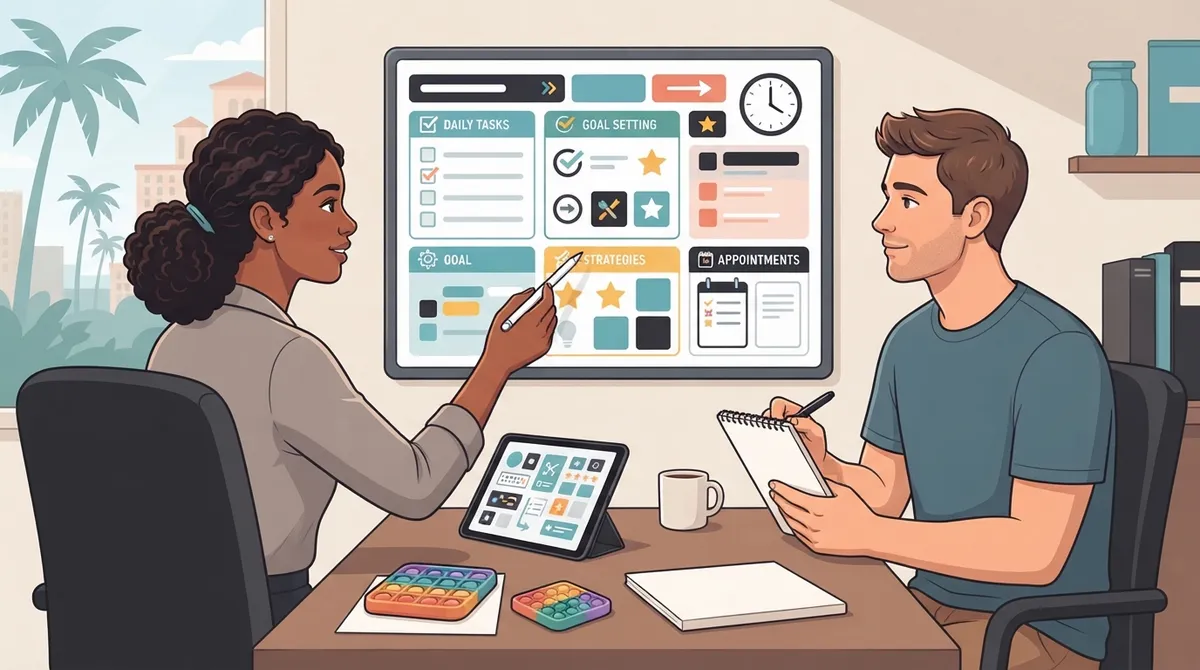
An ADHD therapist helps you build skills, manage emotions, and understand how ADHD shows up in your life. That might include organization, time management, focus, emotional regulation, relationships, and school or work performance.
Here is the important part. What a therapist can do depends on their Florida license and training. Some therapists provide treatment only. Others can also assess and diagnose. Medication is a separate piece, since it must be prescribed by a qualified medical professional such as a psychiatrist or primary care provider.
Think of it like a team. Your therapist may be your coach and guide, while a prescriber handles medication if that’s part of your plan. Good therapists are happy to work alongside the other people in your care.
Common Ways Therapy Supports ADHD
- Skills building: Practical tools for planning, prioritizing, and following through.
- Emotional support: Help with frustration, shame, overwhelm, and low self-esteem.
- Relationship help: Better communication with partners, family, and coworkers.
- Parent guidance: Strategies for parents who want to support a child or teen with ADHD.
- Coordination of care: Working with schools, prescribers, and other providers.

How Common Is ADHD in Florida?
You are far from alone. According to CDC state data, about 12.8% of Florida children had a current ADHD diagnosis in 2020 to 2023. The same data shows that 69.5% of Florida children with ADHD received some form of ADHD treatment during that time.
Those numbers tell us two things. First, ADHD is very common. Second, many families are already looking for help, and many still need it. If you’ve felt like you’re the only one struggling, the numbers say otherwise.
Step-by-Step: How to Find the Right ADHD Therapist
Finding support can feel like a lot, so let’s break it into small, doable steps.
- Get clear on who the therapy is for. Is it for you, your teen, your child, or your family? Some therapists focus on adults and teens, while others work mainly with younger children.
- Decide what you need first. Do you need an evaluation, ongoing therapy, or both? If you aren’t sure, that’s okay. A short phone call can help you sort it out.
- Search local options. Look at therapist directories, your insurance provider’s list, and practice websites. Search for terms like “ADHD therapist Brandon Florida” and check that the provider serves your age group.
- Verify credentials. Confirm the therapist holds an active Florida license and ask what their training covers.
- Schedule a consultation. Many practices offer a short intro call. Use it to ask questions and see how you feel talking with them.
- Trust your gut. The best therapist on paper isn’t helpful if you don’t feel comfortable. Fit matters a lot.
Questions to Ask Before You Book
It’s completely normal to ask questions. A good therapist will welcome them. Here are some helpful ones to keep handy.
- Do you have experience working with ADHD in my age group?
- Do you provide ADHD assessments, or would you refer me to a psychologist or psychiatrist?
- What types of therapy do you use for ADHD?
- How do you work with prescribers, schools, or other providers?
- Do you offer in-person sessions, telehealth, or both?
- What are your fees, and do you accept my insurance?
- Do you offer bilingual sessions in English and Spanish?
Write the answers down. Comparing notes later makes the decision much easier, especially when you’re feeling tired or scattered.
Can a Therapist Diagnose ADHD?
This is one of the most common questions, and the honest answer is: it depends. ADHD assessment generally involves a healthcare professional reviewing your symptoms, history, and how you function day to day. Not every therapist offers a formal diagnostic evaluation.
Some providers will refer you to a psychologist, psychiatrist, or primary care clinician for diagnosis, then continue working with you on treatment. Others may offer both. Before you book, simply ask, “Do you diagnose ADHD, or do you provide treatment after a diagnosis?” That one question can save you time and stress.
Therapy vs. Medication Management: What’s the Difference?
Many people assume ADHD care means medication only, or therapy only. In reality, evidence-based care can include behavioral therapy, parent training, medication management, or a combination. The right mix depends on your age, needs, and goals.
| Type of Support | Who Provides It | What It Focuses On |
|---|---|---|
| ADHD therapy | Licensed therapist or counselor | Skills, habits, emotions, relationships, coping strategies |
| Medication management | Psychiatrist or other qualified prescriber | Prescribing and monitoring medication |
| ADHD assessment | Qualified healthcare professional (scope varies) | Reviewing symptoms, history, and daily functioning |
| Parent training | Therapist trained in behavior strategies | Helping parents support a child’s behavior at home |
What Treatment Looks Like for Children and Teens
If you’re a parent, the CDC offers helpful guidance. For children under 6, behavior therapy, especially parent training in behavior management, is recommended as the first treatment before medication. For children 6 and older, treatment may combine medication and behavior therapy. Schools can also be an important part of the support team.
For teens, therapy can help with homework habits, social stress, emotions, and the pressure of growing up. Teens often feel misunderstood, so a warm and respectful therapist makes a big difference. If your teen also feels anxious, it may help to read about why ADHD and anxiety often appear together. You can also explore what to know about adolescent therapy in Brandon if you want a closer look at teen support.
What Helps Adults With ADHD
Adult ADHD often gets missed, especially in women and in people who learned to “mask” their struggles. Many adults only discover their ADHD after years of anxiety, burnout, or relationship strain. If that sounds familiar, you may also find it helpful to read how ADHD can overlap with other challenges, such as depression or social anxiety.
Therapy for adults with ADHD often focuses on:
- Building routines that actually fit your brain
- Breaking big tasks into small steps
- Managing emotional ups and downs
- Reducing shame and negative self-talk
- Improving communication in relationships
- Handling work stress and deadlines
Many people find that cognitive behavioral therapy offers practical, step-by-step tools. Others prefer a mix of approaches. If you’re curious about the differences, this guide on what type of therapy is best for you can help you sort through options.
In-Person or Virtual: Which Is Better?
Both can work well. In-person sessions feel more personal for some people. Virtual sessions are convenient when your schedule is packed, which is very common with ADHD. Telehealth also removes the stress of traffic, parking, and getting out the door on time.
If you live outside Brandon, virtual therapy can still connect you with support anywhere in Florida. Always confirm that your provider is licensed in Florida and offers telehealth for your situation. To learn more, read how in-person and telehealth therapy compare in Brandon.
Bilingual Support for Spanish-Speaking Families
Language matters in therapy. When you explain your thoughts and feelings in the language you think in, things click faster. For Spanish-speaking adults and families in Florida, finding a bilingual provider can remove a major barrier to getting help.
If that’s you, you may want to read how to find a Spanish-speaking therapist in Brandon. West Florida Therapy offers bilingual services in English and Spanish, so you can share your story comfortably.
How West Florida Therapy Can Help
At West Florida Therapy, Margaret Deuerlein, a caring psychotherapist, works with adults and adolescents who want support with focus, emotions, stress, and the daily challenges that come with ADHD and related concerns. Sessions are available in person at the Brandon office and virtually throughout Florida, in English or Spanish.
Here’s what you can expect when you begin:
- A friendly conversation. You start with a free 15-minute consultation to talk about your concerns and goals.
- A personalized plan. Together, you build a plan that fits your needs and your life.
- Steady support. You meet weekly or every other week, in person or by telehealth.
- Progress check-ins. Your plan is adjusted as you grow and your needs change.
If you want to see what others say about us, visit us on Google — West Florida Therapy and read about the experiences of people in our Brandon community.
Insurance, Costs, and Payment Options
Cost is a real concern, and it’s smart to ask about it early. Coverage for ADHD therapy and evaluations varies from plan to plan. Call your insurance provider to verify your mental health benefits, copays, and deductible.
West Florida Therapy is in-network with several major insurance providers, including Aetna, Cigna, Florida Blue, Optum, Oscar, and United Health Care. We also offer out-of-pocket rates and accept major credit cards, HSA, and FSA accounts. Learn more about payment options or read answers about whether therapy is covered by insurance.
Red Flags and Green Flags When Choosing a Therapist
Not every therapist will be right for you, and that’s perfectly okay. Here’s a quick guide.
Green Flags
- They explain their role and scope clearly
- They listen without rushing or judging
- They offer practical tools, not just talk
- They are open to working with your doctor or school
- You feel a little lighter after speaking with them
Red Flags
- They promise a quick “cure” for ADHD
- They can’t explain their credentials
- They dismiss your concerns or blame you
- They pressure you to commit right away
If you want more guidance, these tips on mistakes to avoid when choosing a therapist may help you feel more confident.
Helpful Local and State Resources
Alongside therapy, trusted public resources can support your search. The CDC offers general mental health resources for families. The Florida Department of Health shares helpful mental health links. For broader state services, you can also explore the Florida Department of Children and Families page on substance abuse and mental health.
These resources are useful starting points, but they don’t replace personal guidance from a licensed professional who knows your story.
Small Daily Habits That Support Your Therapy
Therapy works best when you practice what you learn between sessions. Here are a few easy habits many people with ADHD find helpful:
- Use phone alarms and calendar reminders for key tasks
- Break big projects into three small steps
- Keep a simple “brain dump” list by your bed or desk
- Celebrate small wins, even the tiny ones
- Protect your sleep, since tiredness makes focus harder
Be patient with yourself. Progress with ADHD is rarely a straight line. If you want a realistic sense of timing, this guide on how long therapy takes to work can set healthy expectations.
Take the Next Step Toward Support
Finding an ADHD therapist in Brandon, Florida doesn’t have to be a long, stressful hunt. Start by knowing what you need, asking clear questions, and choosing someone who makes you feel heard. Whether you need help for yourself, your teen, or your whole family, support is out there, and you deserve it.
When you’re ready, we’d love to hear from you. Get in touch with our team to schedule your free 15-minute consultation with Margaret Deuerlein. You don’t have to figure this out alone. One small call can be the start of something that feels a whole lot better.
FAQs
Q: How do I find an ADHD therapist in Brandon, Florida?
A: Start by deciding whether you need an evaluation, ongoing therapy, or both. Then search local directories and practice websites, verify each therapist’s Florida license, and book a short consultation call. Asking about ADHD experience and your age group helps you find a good fit.
Q: Can a therapist diagnose ADHD in Florida?
A: It depends on the therapist’s license and training. Some providers offer formal ADHD assessments, while others refer you to a psychologist, psychiatrist, or primary care clinician for diagnosis and then provide therapy. It’s always okay to ask this directly before you book.
Q: What is the difference between ADHD therapy and medication management?
A: ADHD therapy builds skills, habits, and emotional coping tools, while medication management is handled by a qualified prescriber like a psychiatrist. Many people use both together, and the two providers can work as a team. Your best plan depends on your age, needs, and goals.
Q: What treatment is recommended for a child with ADHD?
A: The CDC recommends behavior therapy, especially parent training, as the first step for children under 6. For children 6 and older, treatment may combine medication with behavior therapy, and schools can help too. A qualified provider can shape a plan that fits your child.
Q: Are ADHD therapy sessions available by telehealth in Florida?
A: Yes, many Florida providers offer virtual sessions, which can be a great fit for busy schedules. Just confirm that your therapist is licensed in Florida and offers telehealth for your needs. West Florida Therapy offers both in-person care in Brandon and virtual care across Florida.