

Key Takeaways
-
CBT is one of the most researched and effective treatments for postnatal depression, with multiple studies showing medium to strong reductions in depressive symptoms within weeks to months of starting treatment.
-
Most people notice improvement within 6-12 CBT sessions, with active skill-building typically occurring in sessions 4-8 where you learn techniques to manage negative thoughts and reintroduce enjoyable activities.
-
CBT works best for mild to moderate depression alone, but moderate to severe cases benefit from combining therapy with medication prescribed by a psychiatrist or doctor for optimal results.
-
Telehealth and phone-based CBT sessions are equally effective as in-person therapy, allowing new parents to receive treatment from home without arranging childcare or travel.
-
Postnatal depression differs from ‘baby blues’ and requires professional help if symptoms like persistent sadness, overwhelming guilt, constant worry, or sleep trouble last more than two weeks or worsen.
-
Seek immediate emergency help if you experience thoughts of self-harm, thoughts of harming your baby, hearing voices, severe confusion, or extreme agitation, as these may indicate postpartum psychosis requiring urgent medical care.
Having a baby is supposed to feel joyful. But if you’re reading this while rocking a fussy infant at 3 a.m., feeling numb, guilty, or like you’re failing at motherhood, please know this: you are not alone, and you are not broken. Postnatal depression affects many new parents, and it is treatable. One of the most researched and effective treatments is CBT for postnatal depression, a practical, skills-based therapy that helps you feel like yourself again.
At West Florida Therapy, we understand how scary it can feel to admit you’re struggling after having a baby. Maybe you’re worried people will judge you. Maybe you don’t even have time to think straight, let alone find help. This article walks you through what CBT is, how it works for postpartum depression, what the research says, and how to know when it’s time to reach out for support.

What Is Postnatal Depression, Really?
Postnatal depression, also called postpartum or perinatal depression, is more than feeling tired or overwhelmed. It’s a real mental health condition that can show up weeks or even months after childbirth. It’s different from the “baby blues,” which usually fade within two weeks.
Common signs include:
- Persistent sadness, hopelessness, or emptiness
- Overwhelming guilt about not being a “good enough” parent
- Constant worry or racing thoughts about the baby’s safety
- Trouble sleeping, even when the baby is sleeping
- Loss of interest in things you used to enjoy
- Withdrawing from friends, family, or your partner
- Feeling disconnected from your baby
If these symptoms last more than two weeks, get worse, or make it hard to function, it’s time to talk to a professional. This is not something you need to “push through” alone. Learn more about what depression is and how does it affect your daily life to better understand what you might be feeling.
How Does CBT Help With Postnatal Depression?
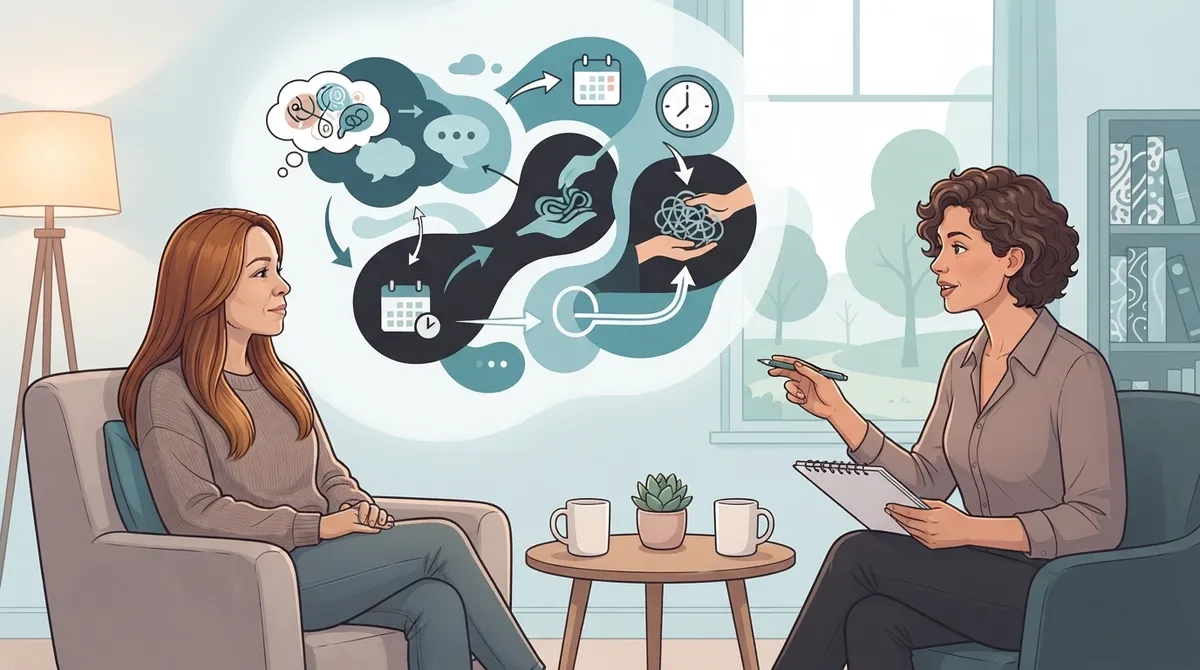
Cognitive behavioral therapy, or CBT, is one of the most studied treatments for depression. It helps you notice unhelpful thought patterns, like “I’m a terrible mom” or “Nothing will ever get better,” and teaches you how to challenge and reshape them.
For new parents, CBT often focuses on:
- Reducing feelings of guilt and shame around parenting
- Managing excessive worry about the baby’s health or safety
- Breaking cycles of avoidance and withdrawal
- Rebuilding sleep routines where possible
- Reconnecting with activities that once brought joy
- Improving communication with a partner or family members
CBT does not blame you for how you feel. Instead, it gives you tools to slowly regain control over your thoughts, your mood, and your daily life. Many therapists, including our own Margaret Deuerlein, use warm, judgment-free approaches to help new parents feel supported every step of the way.
What Does the Research Say About CBT for Postpartum Depression?
The evidence supporting CBT for postnatal depression is strong. Here’s what recent studies have found:
| Study | Sample Size | Key Finding |
|---|---|---|
| 2023 systematic review and meta-analysis | 5,291 participants (31 studies) | Medium reduction in depressive symptoms (Hedges’ g = -0.53) |
| 2020 meta-analysis | 966 participants (13 trials) | CBT outperformed usual care through the first four months postpartum |
| 2023 broader review | 9,722 participants | Strong pooled effect (SMD = -0.74) reducing depressive symptoms |
| 2018 meta-analysis | Multiple trials | EPDS scores improved by 2.86 points compared to control group |
| 2022 systematic review | 79 studies | Short-term (SMD = -0.69) and long-term (SMD = -0.59) improvement |
These numbers might look technical, but here’s the simple takeaway: CBT works, especially in the weeks and months right after treatment. Some studies show the benefits fade a bit over time, which is why ongoing support and follow-up care matter so much.
How Many CBT Sessions Do You Actually Need?
There’s no one-size-fits-all answer, but many people start to notice a difference within a handful of sessions. Here’s a general roadmap of what treatment might look like:
- Initial assessment (session 1): Your therapist will ask about your symptoms, sleep, support system, and any thoughts of harming yourself or your baby.
- Building a treatment plan (sessions 2-3): Together, you’ll set specific, realistic goals based on your life right now.
- Active skill-building (sessions 4-8): You’ll learn techniques to manage negative thoughts, reduce avoidance, and slowly reintroduce activities you enjoy.
- Practice and reinforcement (sessions 9-12): You’ll keep applying these tools with support and feedback from your therapist.
- Review and next steps (final sessions): You and your therapist will check your progress and decide if you need more sessions, a change in approach, or if you’re ready to continue on your own.
Every person’s timeline looks different. Some people need just a few sessions, while others benefit from longer-term support, especially if depression is combined with anxiety or trauma. If you’re also dealing with anxiety treatment needs, your therapist can address both at once.
Is CBT the Right Choice, or Should You Consider Medication Too?
This is one of the most common questions new parents ask. The honest answer is: it depends on how severe your symptoms are.
- Mild to moderate depression: CBT alone is often effective and may be all you need.
- Moderate to severe depression: A combination of CBT and medication, guided by a psychiatrist or your doctor, may work best.
- Persistent or recurrent depression: Ongoing therapy paired with medical support can help prevent relapse.
Your therapist should always assess for suicidal thoughts, thoughts of harming your baby, signs of psychosis, past trauma, and your overall support system before recommending a plan. This assessment isn’t scary; it’s simply how professionals make sure you get the right level of care. If trauma is part of your story, our trauma therapy services can help address that alongside your depression treatment.
Can You Get CBT for Postnatal Depression Without Leaving Home?
Yes, and this flexibility matters a lot for new parents. Getting to an office with a newborn can feel nearly impossible some days. That’s why CBT is often available in multiple formats:
- In-person, one-on-one sessions
- Group therapy with other new parents
- Telephone sessions
- Online video sessions
- Guided digital programs and workbooks
At West Florida Therapy, we offer telehealth therapy across Florida, so you can get support from your couch, your nursery, or wherever feels comfortable. We also provide bilingual services in English and Spanish, because language should never be a barrier to getting help.
What Happens During Your First CBT Appointment?
Walking into (or logging onto) your first session can feel intimidating. Here’s what you can generally expect:
- Your therapist will ask gentle, open-ended questions about how you’ve been feeling since giving birth.
- You’ll talk about your sleep, appetite, mood, and any scary or intrusive thoughts.
- Your therapist will screen for safety concerns, including thoughts of self-harm or harming the baby.
- You’ll discuss your support system, including your partner, family, and friends.
- Together, you’ll start outlining goals for treatment.
Nothing you say will shock your therapist. New parents often share thoughts they feel ashamed of, and a good therapist will meet you with compassion, not judgment. This is exactly the kind of caring approach Margaret Deuerlein brings to every session with new parents in our care.
Can CBT Help With Postnatal Anxiety and Birth Trauma Too?
Absolutely. Postpartum depression rarely shows up alone. It often overlaps with:
- Postnatal anxiety and constant worry
- Intrusive, unwanted thoughts about the baby’s safety
- Birth trauma or a difficult delivery experience
- Panic attacks or physical symptoms like a racing heart
CBT can be adapted to address all of these. If your symptoms include flashbacks or intense fear related to childbirth, your therapist may also draw from trauma-focused techniques. Our EMDR treatment option can be especially helpful for processing a traumatic birth experience alongside CBT.
Signs You Need Urgent Help Right Now
Most postnatal depression is very treatable with CBT and support. But some symptoms require immediate medical attention. Please seek emergency help right away if you experience:
- Thoughts of ending your life
- Thoughts of harming your baby
- Hearing voices or seeing things that aren’t there
- Severe confusion or extreme agitation
- Barely needing any sleep at all
These can be signs of postpartum psychosis, which is a psychiatric emergency. CBT alone is not the right treatment in these moments. Please call 911, go to your nearest emergency room, or contact the Florida Department of Children and Families Substance Abuse & Mental Health program for immediate crisis resources.
Building Your Support System Beyond Therapy
Therapy is powerful, but healing works best with support all around you. Consider these steps alongside your CBT sessions:
- Ask your partner or a trusted family member to help with nighttime feedings when possible
- Join a local or online support group for new parents
- Be honest with your doctor about how you’re feeling at checkups
- Give yourself permission to rest, even in small pockets of time
- Remind yourself that needing help does not mean you’re failing
You can also explore trusted resources like the Florida Department of Health’s mental health resources and the CDC’s guide on caring for your mental health for additional support and education.
Why Choose West Florida Therapy for Postnatal Depression Support?
At West Florida Therapy, we understand that new parents need flexible, compassionate care. Whether you prefer in-person sessions in Brandon or virtual appointments from anywhere in Florida, we’re here to meet you where you are. Our team, led by caring professionals like Margaret Deuerlein, specializes in helping new parents navigate mood issues with warmth and evidence-based tools.
We also offer bilingual services in English and Spanish, ensuring language is never a barrier to getting the care you and your family deserve. You can see what our West Florida Therapy clients have shared by visiting our Google Business Profile for West Florida Therapy.
While you focus on healing emotionally, it also helps to take care of your home environment. Families managing newborn schedules often find comfort in a well-maintained space, and local experts like Marks Air and BluHalo can help ensure your home stays comfortable and healthy as you adjust to new routines.
You Deserve Support, Not Judgment
If you’re struggling after having a baby, please hear this clearly: you are doing an incredibly hard thing, and it’s okay to ask for help. CBT for postnatal depression is not about “fixing” you, because you were never broken. It’s about giving you tools to feel like yourself again, one small step at a time.
You don’t have to figure this out alone. Our team at West Florida Therapy would be honored to walk alongside you during this season. Reach out to schedule your free consultation today, and let’s take that first step together.
FAQs
Q: How does CBT help with postnatal depression?
A: CBT helps you notice and gently challenge unhelpful thoughts, like feeling like a failure as a parent, while giving you practical tools to reconnect with daily life. It’s a warm, structured approach that helps many new parents feel more like themselves again, often within just a few weeks of starting sessions.
Q: Is CBT effective for postpartum depression?
A: Yes, research strongly supports CBT as an effective treatment for postpartum depression. Multiple studies show meaningful reductions in depressive symptoms, especially in the first few months after treatment begins, making it one of the most trusted options available.
Q: How many CBT sessions are needed for postnatal depression?
A: Many people notice improvement within 6 to 12 sessions, though this varies based on how you’re feeling and your specific goals. Your therapist will work with you to figure out the right pace, and there’s no pressure to rush your healing.
Q: Can I receive CBT for postnatal depression online or by telephone?
A: Absolutely, and this flexibility is wonderful news for exhausted new parents. Telehealth and phone-based CBT sessions work just as well for many people, letting you get support without needing to arrange childcare or travel anywhere.
Q: Should I choose CBT, medication, or both for postnatal depression?
A: It really depends on how severe your symptoms are. Mild to moderate depression often responds well to CBT alone, while moderate to severe symptoms may benefit from combining therapy with medication, guided by your therapist and doctor together.