
Key Takeaways
-
DBT teaches four core skills—mindfulness, distress tolerance, emotion regulation, and interpersonal effectiveness—that work together to help manage intense emotions and improve relationships in real-life situations.
-
DBT treatment typically involves weekly individual therapy sessions, skills-training groups (90 minutes), and phone coaching between sessions, lasting 6-12 months depending on individual needs.
-
DBT balances acceptance of yourself as you are with commitment to change and growth, making it especially effective for people struggling with intense emotions, self-harm, relationship conflict, and trauma.
-
Brandon offers accessible DBT services including in-person and telehealth options, with some providers offering bilingual services and specialized programs designed specifically for teenagers and children.
-
When choosing a DBT therapist, ask about their specific DBT training credentials, whether they offer both individual sessions and skills groups, and what crisis support they provide between sessions.
-
DBT differs from CBT by emphasizing emotional balance and acceptance alongside cognitive change, making it better suited for people with intense emotions rather than those primarily dealing with negative thought patterns.
If your emotions feel like a rollercoaster you can’t get off, you’re not alone. Many people in Brandon, Florida search for help when big feelings, self-harm thoughts, or constant conflict start taking over daily life. Brandon dialectical behavior therapy offers a proven path forward, blending skills training with real support to help you feel steadier and stronger. This guide breaks down what DBT is, who it helps, and how to find the right care close to home.
Whether you’re a parent worried about your teenager, a young adult feeling overwhelmed, or someone who has tried other types of therapy without success, this article will walk you through everything in plain, friendly language. Let’s get started.
What Is Dialectical Behavior Therapy?
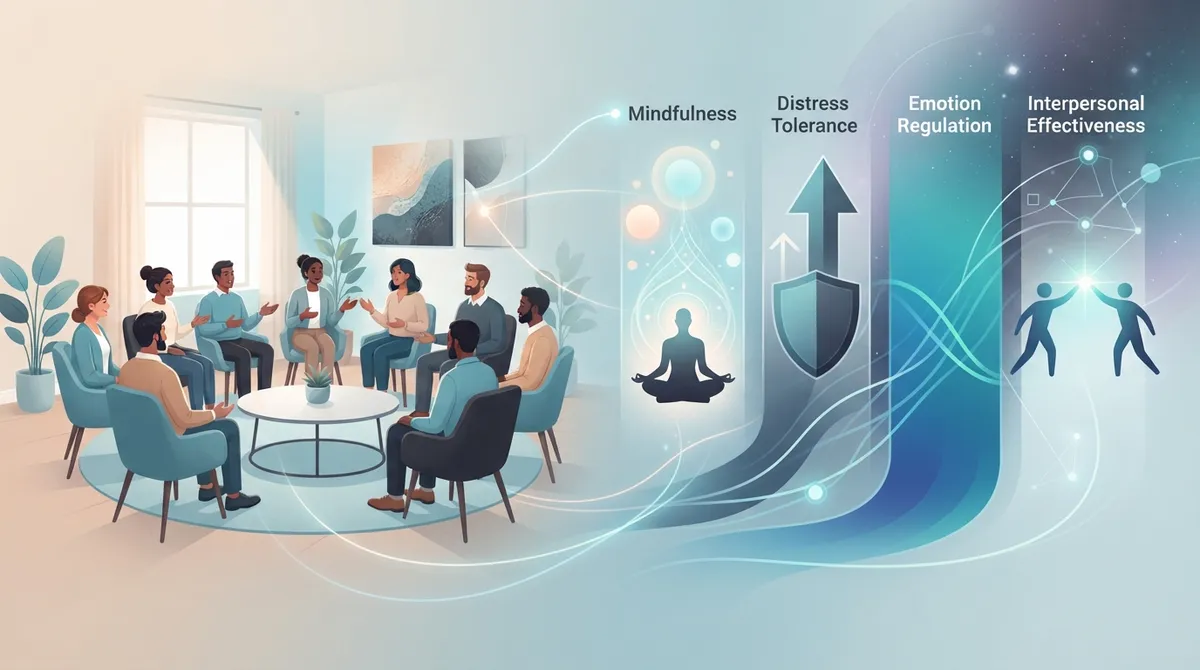
Dialectical behavior therapy, or DBT, is a type of talk therapy built to help people manage intense emotions. It was first created for people with borderline personality disorder, but today it helps with many other struggles too, including anxiety, depression, PTSD, and self-harm behaviors.
The word “dialectical” simply means balancing two things that seem opposite. In DBT, that means learning to accept yourself exactly as you are, while also working to change and grow. It sounds tricky, but this balance is actually what makes DBT so effective for people who feel stuck between wanting to change and feeling overwhelmed by that idea.
Who Benefits From DBT?
DBT was originally designed for intense emotional pain, but it now helps a wide range of people. Here are some groups who often benefit:
- Adults struggling with emotion regulation or mood dysregulation
- Teens dealing with school pressure, family conflict, or social anxiety
- People experiencing trauma or PTSD symptoms
- Individuals with a history of self-harm or suicidal thoughts
- Couples working through communication breakdowns
- Anyone dealing with personality disorders or chronic relationship struggles
If any of these sound familiar, know that help is available and change is possible.
Core Skills Taught in DBT
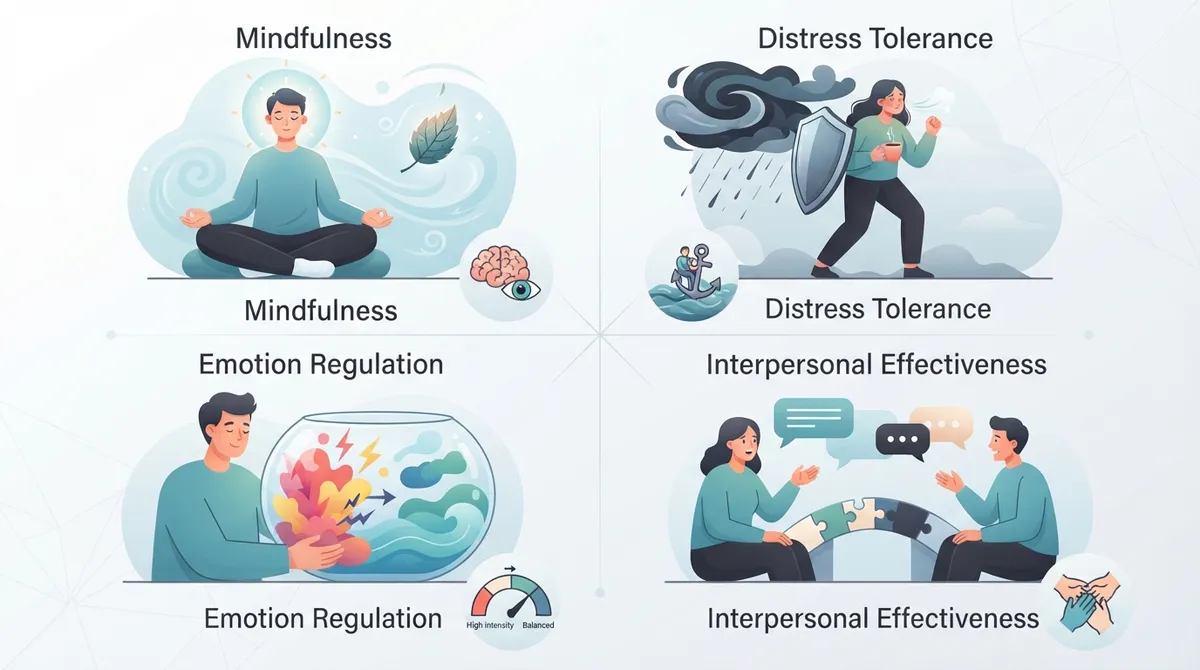
DBT is built around four main skill areas. These skills work together, giving you tools to use in real life, not just in the therapy room.
- Mindfulness – Learning to stay present and aware without judgment
- Distress Tolerance – Getting through crisis moments without making things worse
- Emotion Regulation – Understanding and managing intense feelings
- Interpersonal Effectiveness – Communicating needs clearly while keeping relationships healthy
These skills often overlap with tools used in cognitive behavioral therapy, but DBT adds a stronger focus on emotional balance and acceptance. Many clients say the interpersonal effectiveness skills alone completely change how they handle relationship problems.
How DBT Treatment Usually Works
DBT is not a one-time session. It’s a structured program that typically includes both individual therapy and group skills training. Here’s what a typical path looks like:
- Weekly individual therapy sessions to work through personal challenges
- Weekly skills-training groups to practice new tools with others
- Phone coaching for support between sessions during tough moments
- Regular check-ins to track progress and adjust the plan
Most DBT programs last around six months to a year, though some people continue longer depending on their needs. Local Brandon-area skills groups often run about one hour and 45 minutes per session, giving clients real time to learn and practice together.
DBT Groups for Teens and Children
Some Brandon-area practices offer DBT skills groups designed specifically for kids and teens. This matters because adolescents face unique pressures, from school stress to social media anxiety. A DBT program built for younger clients teaches the same core skills but in age-appropriate ways.
Parents often tell us this is a relief. You don’t have to guess how to help your teenager cope. A trained therapist can guide the whole family through the process, making it feel less scary and more manageable.
DBT vs. Other Therapy Approaches
People often wonder how DBT compares to other common therapies. Here’s a simple breakdown:
| Therapy Type | Main Focus | Best For |
|---|---|---|
| DBT | Emotion regulation and acceptance | Intense emotions, self-harm, BPD, chronic conflict |
| CBT | Changing negative thought patterns | Anxiety, depression, general negative thinking |
| EMDR | Processing traumatic memories | PTSD and trauma-related symptoms |
| Couples Therapy | Improving communication and connection | Relationship conflict and intimacy issues |
Many therapists blend approaches based on what each client needs. For example, someone dealing with both anxiety and emotional outbursts might benefit from a mix of DBT and traditional talk therapy.
Finding DBT Support in Brandon, Florida
Brandon has a growing number of mental health providers offering DBT services, including both in-person and telehealth appointments. This is great news if you have a busy schedule or prefer the comfort of doing sessions from home.
Some local providers even serve as training sites for social work students, showing how seriously the DBT model is taken in the Tampa Bay area. Certification matters too. Some clinicians pursue specialized training, such as programs from Behavioral Tech or credentials through the DBT-Linehan Board of Certification, which reflects how structured and specific this therapy model really is.
Questions to Ask When Choosing a DBT Therapist
Not all therapy is the same, so it helps to ask a few questions before committing to a provider:
- Do you offer both individual sessions and skills groups?
- Are you trained specifically in DBT, or do you use DBT-informed techniques?
- Do you offer telehealth options for busy schedules?
- Do you work with teens, adults, or both?
- What is your approach to crisis support between sessions?
Asking these questions upfront saves time and helps you find the right match for your needs.
Meet Margaret Deuerlein: A Caring Guide Through Tough Times
At West Florida Therapy, Margaret Deuerlein brings warmth, patience, and real experience to every session. She understands that reaching out for help takes courage, especially when emotions feel too big to handle alone.
Margaret works with individuals and couples across Florida, offering both in-person sessions in Brandon and virtual telehealth therapy for those who need flexibility. She also provides bilingual services in English and Spanish, making mental health care more accessible for Spanish-speaking families in the community. You can learn more about Margaret Deuerlein and her approach to healing.
Margaret’s philosophy centers on meeting people where they are. She doesn’t believe in one-size-fits-all treatment. Instead, she builds a plan around your specific story, whether that includes depression, trauma, relationship struggles, or emotional dysregulation.
What to Expect During Your First Steps
Starting therapy can feel like a big decision, but the process is simpler than most people expect. Here’s how it typically unfolds:
- A brief phone consultation to discuss your concerns and goals
- Building a personalized treatment plan tailored to your needs
- Regular weekly or bi-weekly sessions, in-person or via telehealth
- Ongoing check-ins to track progress and adjust your plan as needed
This structure gives you clarity from day one. You won’t be left guessing what comes next.
Payment and Insurance Options
Cost is often a big worry, especially for stressed young adults and families. West Florida Therapy offers flexible options to fit different budgets:
- Out-of-pocket payment for maximum privacy and flexibility
- Accepted credit cards, HSA, and FSA accounts
- In-network coverage with Aetna, Cigna, Florida Blue, Optum, Oscar, and United Health Care
It’s always a good idea to check with your insurance provider about your specific mental health benefits before your first appointment. You can also review official Mental Health Links from the Florida Department of Health for more general resources on care options across the state.
Why DBT Matters for Emotional Wellness
Emotional struggles don’t just affect your mood. They can impact your relationships, your job, your sleep, and how you see yourself. DBT gives you real, practical tools to break unhealthy patterns and build a more stable life.
For couples, learning these skills together can transform how you handle conflict. Instead of shutting down or blowing up during disagreements, you learn to pause, communicate clearly, and reconnect. This is especially helpful for couples therapy clients working through years of built-up tension.
For teens, DBT skills can mean the difference between feeling constantly overwhelmed and having a toolkit to handle stress. Parents often notice fewer meltdowns and better communication at home once their teenager starts practicing these skills consistently.
The Role of Community Support
Healing rarely happens in isolation. Community resources, like those listed by the Substance Abuse & Mental Health division of Florida’s Department of Children and Families, can complement individual therapy work. The Mental Health Resources page from the CDC also offers helpful tips for caregivers supporting a loved one through emotional struggles.
Local activities can help too. Some clients find that spending time outdoors with groups like Gulfside Adventures gives them a healthy outlet between therapy sessions. Practicing mindfulness skills while kayaking or hiking can reinforce what you learn in DBT groups. Taking care of your whole self matters, and that includes dental health too. Local practices like Dental Theory remind us that self-care extends beyond mental health alone.
Common Signs You Might Benefit From DBT
Not sure if DBT is right for you? Here are some common signs that this approach could help:
- You feel emotions very intensely and struggle to calm down
- Small conflicts often turn into big arguments
- You’ve had thoughts of self-harm or struggle with impulsive behavior
- You feel disconnected from your relationships or push people away
- You’ve tried other therapy but still feel stuck in the same patterns
If several of these sound familiar, it might be time to reach out. Recognizing these mental health warning signs early can make a real difference in your recovery journey.
Take the First Step Toward Emotional Balance
You don’t have to keep struggling alone. Brandon dialectical behavior therapy offers real, practical support for people facing intense emotions, relationship struggles, or trauma. Whether you’re seeking help for yourself, your teenager, or your relationship, there is a path forward.
West Florida Therapy offers in-person appointments in Brandon and telehealth sessions throughout Florida, with bilingual services available in English and Spanish. A free 15-minute consultation is a simple, no-pressure way to start. If you’re ready to feel steadier, calmer, and more in control, reach out and schedule your consultation today. You can also visit West Florida Therapy on Google to read reviews from others who’ve walked this path before you. Healing starts with one small, courageous step, and we’re here to walk beside you.
FAQs
Q: What is dialectical behavior therapy used for?
A: DBT was first created to help people with borderline personality disorder, but it’s now used for a lot more. It helps with intense emotions, self-harm behaviors, anxiety, depression, and even relationship struggles. If your feelings tend to feel bigger than life, DBT gives you real tools to feel more in control.
Q: Are there DBT therapists in Brandon, Florida?
A: Yes! Brandon has several mental health providers offering DBT services, including both in-person sessions and telehealth options. West Florida Therapy offers in-person appointments right in Brandon, plus virtual sessions for clients anywhere in Florida.
Q: How does DBT differ from CBT?
A: Great question! CBT focuses mainly on changing negative thought patterns, while DBT adds a strong focus on emotional balance and acceptance. Think of DBT as CBT’s more emotionally-focused cousin, especially helpful for people who feel overwhelmed by intense feelings.
Q: What skills are taught in DBT?
A: DBT teaches four core skills: mindfulness, distress tolerance, emotion regulation, and interpersonal effectiveness. These skills work together to help you stay present, get through hard moments, manage big emotions, and communicate better with others.
Q: How long does DBT treatment usually take?
A: Most DBT programs last about six months to a year, though this can vary based on your personal needs and goals. Some people continue with skills groups even longer because they find ongoing value in the community and practice.
Q: Are there DBT groups for teens or children in Brandon?
A: Yes, some local practices offer DBT skills groups specifically designed for children and teenagers. These groups teach the same core skills in age-appropriate ways, which can be a huge relief for parents looking for real support.