

Key Takeaways
-
Bipolar anxiety requires different treatment than anxiety alone: mood stabilizers plus anxiety-focused therapy, not just anti-anxiety medication, because some anxiety drugs can trigger manic episodes in bipolar disorder.
-
Anxiety medications must be chosen carefully for people with bipolar disorder, as certain anti-anxiety drugs can potentially trigger manic episodes, making provider expertise critical for safe treatment.
-
Cognitive behavioral therapy combined with medication is significantly more effective than medication alone for bipolar anxiety, helping you identify patterns and build specific coping skills for mood swings.
-
Stress management practices like consistent sleep routines, regular exercise, and mindfulness are key preventive tools, since both stress and sleep disruption can trigger bipolar episodes and anxiety simultaneously.
-
Bipolar anxiety is very treatable with an integrated approach combining mood stabilizers, therapy, lifestyle changes, and peer support, though it requires a layered plan rather than one-size-fits-all treatment.
-
Many people with bipolar disorder also experience related anxiety disorders like panic disorder, OCD, or generalized anxiety, making this overlapping pattern one of the most common companions to bipolar disorder.
Have you ever felt like your worry has worry? If you live with bipolar disorder, you might notice that anxiety doesn’t just visit sometimes. It can move in and stay awhile, showing up alongside your mood swings and making everything feel harder. You are not alone in this, and you are definitely not broken. Many people ask us, “Is bipolar anxiety even a real thing?” The honest answer is that bipolar disorder and anxiety disorders overlap so often that mental health professionals treat this combination as its own unique challenge, one that needs its own thoughtful approach.
At West Florida Therapy, we meet people every day who feel caught between racing thoughts, panic, and deep mood shifts. This article will walk you through what bipolar anxiety really looks like, how it differs from anxiety alone, and what real treatment can look like. Whether you are in Brandon, Tampa, or anywhere else in Florida, understanding this connection is the first step toward feeling steadier and calmer.

What Is Bipolar Anxiety, Really?
Bipolar anxiety is not an official separate diagnosis. Instead, it describes what happens when someone with bipolar disorder also experiences a related anxiety disorder. Bipolar disorder itself causes big swings between manic highs and depressive lows, sometimes lasting days or weeks at a time. When you add anxiety on top of that, the worry and fear can feel constant and overwhelming, even during times when your mood seems stable.
Research shows that many people with bipolar disorder also struggle with a related anxiety condition. This is not rare. In fact, anxiety is one of the most common companions to bipolar disorder. This combination can make daily life feel like walking a tightrope, and it can also make treatment more complicated if it’s not addressed properly.
Common Anxiety Disorders That Show Up With Bipolar Disorder
Not all anxiety looks the same, and people with bipolar disorder can experience several different types. Here are the most common ones we see:
- Generalized anxiety disorder, marked by constant worry about everyday things
- Panic disorder, which brings sudden waves of intense fear or physical symptoms
- Social anxiety disorder, causing fear of being judged or embarrassed in front of others
- Obsessive-compulsive disorder, involving unwanted thoughts and repetitive behaviors
- Post-traumatic stress disorder, often triggered by past traumatic events
- Specific phobias, which create intense fear around certain situations or objects
If any of these sound familiar, please know that help is available. Our anxiety treatment services are designed to address exactly these kinds of overlapping struggles.
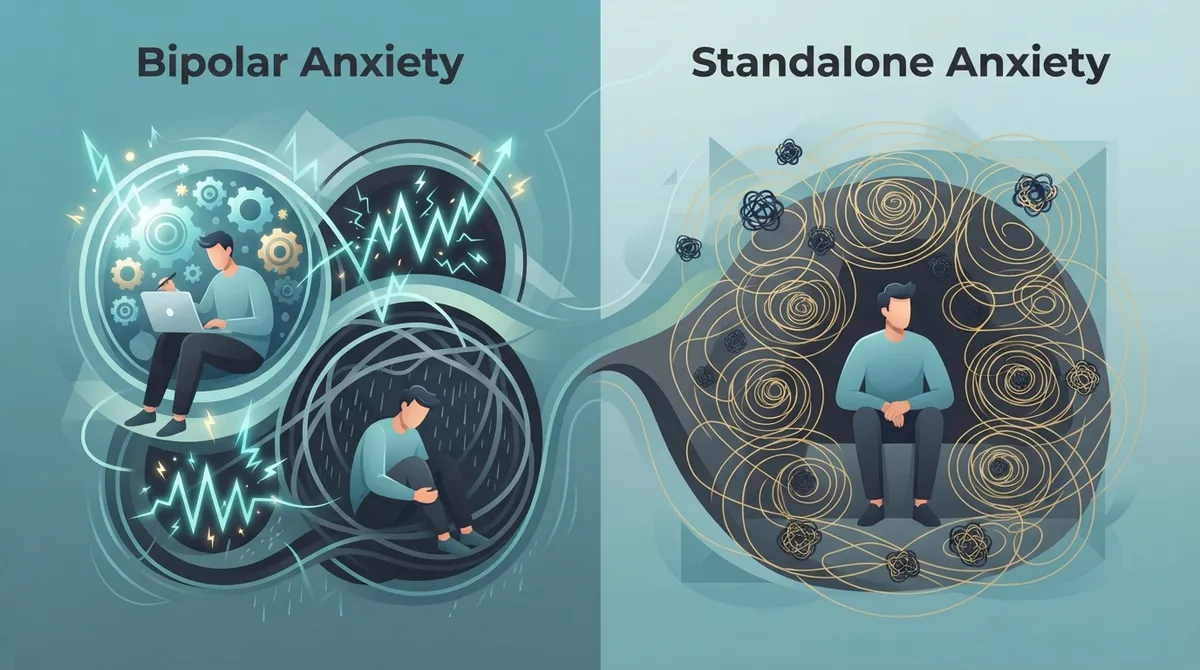
Bipolar Anxiety vs. Anxiety Alone: How Are They Different?
This is where things get important. Standalone anxiety and bipolar anxiety can look similar on the surface, but treating them requires very different strategies. Understanding these differences helps you and your therapist choose the right path forward.
| Feature | Anxiety Alone | Bipolar Anxiety |
|---|---|---|
| Mood Pattern | Generally stable mood, worry is the main issue | Mood swings between mania and depression, plus anxiety |
| Triggers | Often tied to specific stressors or situations | Can be triggered by mood episodes themselves |
| Treatment Focus | Usually therapy and sometimes anti-anxiety medication | Requires mood stabilizers plus anxiety-focused therapy |
| Medication Risk | Fewer medication interactions to consider | Some anxiety medications can trigger manic episodes |
| Episode Length | Often more consistent day to day | Can shift along with manic or depressive phases |
Because of these differences, it’s so important to work with someone who understands both conditions. A good therapist will look at your whole picture, not just one piece of it. Our team at West Florida Therapy takes this integrated approach seriously, considering how mood issues and anxiety symptoms interact in your specific life.
Why Does This Combination Happen So Often?
You might wonder why bipolar disorder and anxiety show up together so frequently. There are a few reasons researchers point to:
- Both conditions may share similar genetic or biological roots, affecting how the brain regulates emotions.
- High stress and traumatic events can trigger both bipolar episodes and anxiety symptoms at the same time.
- The unpredictability of mood swings can itself create anxiety, since you never quite know what tomorrow will bring.
- Sleep disruption, which is common in bipolar disorder, can also fuel anxious feelings.
- Some people develop anxiety as a coping response to the fear of another manic or depressive episode.
Understanding these root causes can bring a sense of relief. It’s not a personal failure. It’s a pattern that many people experience, and it’s one that responds well to the right kind of support.
Recognizing the Signs: Is This You?
Sometimes it’s hard to tell where bipolar symptoms end and anxiety begins. Here are signs that might point to this overlap:
- Racing thoughts that feel both excited and terrified at the same time
- Physical symptoms like a racing heart, sweating, or trouble breathing during mood episodes
- Constant worry about when the next mood swing will hit
- Avoiding social situations out of fear of judgment, especially during depressive periods
- Trouble sleeping due to a mind that won’t slow down
- Feeling on edge even when things seem to be going well
- Consistent sleep routines to protect mood stability
- Regular movement or exercise to release tension
- Mindfulness practices to calm racing thoughts
- Building a strong support system of friends, family, or peer groups
- Reach out to a licensed mental health professional for an assessment.
- Be honest about all your symptoms, both mood-related and anxiety-related.
- Ask questions about how medications might interact with your specific symptoms.
- Commit to starting therapy alongside any medication plan.
- Give yourself grace as you learn new coping tools. This takes time.
If several of these sound familiar, it may be time to talk with someone. Our guide on understanding anxiety signs, types, and treatment options can help you learn more about what you’re experiencing.
How Is Bipolar Anxiety Treated?
The good news is that this combination is very treatable. It just requires a thoughtful, layered approach rather than a one-size-fits-all plan. Here’s what effective treatment usually includes.
1. Medication Management
Mood stabilizers are often the foundation of bipolar disorder treatment. Depending on your symptoms, your prescriber may also consider certain antipsychotic medications. Anxiety medications need to be chosen carefully, since some can potentially trigger manic episodes in people with bipolar disorder. This is why working with a knowledgeable provider matters so much.
2. Psychotherapy
Talk therapy, especially cognitive behavioral therapy, has been shown to bring far more benefits than medication alone. Therapy helps you identify patterns, manage anxious thoughts, and build coping skills for mood swings. At West Florida Therapy, our founder Margaret Deuerlein brings genuine warmth and deep clinical experience to helping clients navigate exactly this kind of overlapping challenge.
3. Lifestyle and Stress Management
Since stress and trauma can trigger both bipolar episodes and anxiety, learning healthy stress management is key. This might include:
4. Peer Support
Connecting with others who understand what you’re going through can be incredibly validating. Peer support groups offer a safe space to share experiences and learn from people managing similar challenges.
Steps to Take If You Think You Have Bipolar Anxiety
Feeling overwhelmed by all this information is completely normal. Here’s a simple path forward:
If you’re in Florida and ready to take that first step, our process is designed to feel supportive from day one, not overwhelming.
Why Choose Integrated Care in Brandon, Florida?
Living with bipolar anxiety in Brandon or anywhere in the Tampa Bay area doesn’t mean you have to figure it out alone. Whether you prefer in-person therapy in Brandon or the convenience of telehealth therapy across Florida, support is closer than you think. We also offer bilingual services in English and Spanish, because everyone deserves care in the language that feels most natural to them.
Many of our clients also find value in EMDR treatment when trauma is part of the picture, since past traumatic events can play a big role in triggering both bipolar episodes and anxiety symptoms. You can read real stories and feedback from people we’ve helped by visiting our West Florida Therapy location on Google.
A Word About Safety
Bipolar disorder is a serious condition, and depressive episodes can sometimes include thoughts of suicide. Please know this is treatable, and you deserve support right now, not just someday. If you or someone you love is struggling, reaching out for help is a sign of strength, not weakness. The Mental Health Resources from the CDC offer helpful guidance on recognizing warning signs and finding support.
For additional statewide resources, Florida residents can also explore the Mental Health Links provided by the Florida Department of Health, as well as services listed through the Substance Abuse & Mental Health division of Florida Families.
You Deserve Steady Ground
Living with bipolar anxiety can feel like the ground keeps shifting under your feet. But with the right support, that ground can become steady again. You can learn to recognize your patterns, manage your symptoms, and build a life that feels manageable and even joyful. Recovery isn’t about perfection. It’s about progress, and every small step counts.
Whether your struggles look more like panic attacks, ongoing worry, or big mood swings, you don’t have to sort it all out by yourself. Our team understands the unique challenges of managing bipolar disorder alongside anxiety, and we genuinely care about helping you find relief. If relationship strain has crept in alongside your symptoms, our couples therapy services can help you and your partner reconnect too.
Ready to Feel Steadier? Let’s Talk.
You don’t have to carry this alone anymore. If you’re ready to explore what real, integrated support looks like for bipolar anxiety, we would love to hear from you. Reach out to our team today to schedule your free 15-minute consultation and take that first brave step toward feeling like yourself again.
FAQs
Q: What is the relationship between bipolar disorder and anxiety?
A: They often show up together, and it’s more common than you might think. Many people with bipolar disorder also experience an anxiety disorder, and the two conditions can feed off each other, making mood swings and worry feel more intense together.
Q: Can bipolar disorder cause panic attacks?
A: Yes, it can. The intense energy of a manic episode or the fear surrounding an unpredictable mood shift can trigger panic attack symptoms like a racing heart or shortness of breath. You’re not imagining it, and support is available to help you manage both.
Q: Is bipolar anxiety a recognized diagnosis in mental health?
A: It’s not an official standalone diagnosis, but it’s a very real and recognized pattern where bipolar disorder and an anxiety disorder occur together. Therapists and doctors treat this combination as a unique challenge that needs its own care plan.
Q: What medications are used for bipolar disorder with anxiety?
A: Treatment often starts with mood stabilizers, sometimes paired with antipsychotic medications. Anxiety medications need extra care since some can potentially trigger manic episodes, so it’s best to work closely with a provider who understands both conditions.
Q: How does stress trigger bipolar episodes and anxiety?
A: High stress and traumatic events can spark both a bipolar episode and anxiety symptoms at the same time. Learning healthy stress management tools, like consistent sleep and mindfulness, can make a real difference in keeping both conditions calmer.