
Key Takeaways
-
About 28% of people with PTSD also have ADHD, and up to 36% of people with ADHD develop PTSD; ADHD increases PTSD risk to 10-11.9% compared to 1.6-3.3% in the general population due to impulsivity, emotional dysregulation, and difficulty processing traumatic events.
-
Many PTSD and ADHD symptoms overlap significantly (difficulty concentrating, impulsivity, sleep problems, emotional outbursts, hypervigilance), leading to misdiagnosis; a comprehensive assessment by a trained therapist is essential to identify both conditions accurately.
-
Effective treatment must address both conditions simultaneously using combined approaches: trauma-focused therapies (TF-CBT, EMDR) for PTSD and behavioral coaching plus mindfulness for ADHD symptom management.
-
Veterans, children/adolescents, substance abuse patients, Hispanic/bilingual adults, and Gen Z face higher risk of co-occurring PTSD and ADHD; early professional evaluation is especially important for these groups.
-
Daily coping strategies include creating predictable routines, practicing grounding exercises like the 5-4-3-2-1 method, limiting overstimulating environments, and building a support network while pursuing professional treatment.
-
Seek a therapist with specific experience in both trauma and ADHD who offers non-judgmental care, bilingual services if needed, and willingness to collaborate with other healthcare providers for coordinated medication management.
Living with PTSD and ADHD at the same time can feel overwhelming. Your mind races, you struggle to focus, and painful memories seem to come out of nowhere. If this sounds familiar, you are not alone — and there is real hope ahead.
These two conditions overlap more than most people realize. Research shows that about 28% of people with PTSD also have ADHD, and up to 36% of people with ADHD develop PTSD at some point in their lives. That is a huge overlap, and it means many people are quietly struggling with both without even knowing it.
Understanding how PTSD and ADHD interact is the first step toward getting better. Whether you are a teenager dealing with school stress and past trauma, a millennial managing anxiety from a difficult childhood, or a veteran navigating life after service, this guide is for you. Let’s walk through what you need to know — and what you can do about it. You can also learn more about mental health in general to build a strong foundation.

What Are PTSD and ADHD?
Before we dive into how they interact, let’s quickly clarify what each condition actually is.
PTSD (Post-Traumatic Stress Disorder) develops after a person experiences or witnesses a traumatic event. This could be abuse, accidents, natural disasters, violence, or any deeply distressing experience. Symptoms include flashbacks, nightmares, emotional numbness, and feeling constantly on edge. You can learn more about how to recognize and heal from psychological trauma on our blog.
ADHD (Attention-Deficit/Hyperactivity Disorder) is a neurodevelopmental condition that affects focus, impulse control, and activity levels. People with ADHD often struggle with organization, staying on task, and managing their emotions. It is not just about being hyperactive — many people with ADHD feel scattered, restless, or easily distracted.
When both conditions exist together, the challenges multiply. Understanding the connection can make all the difference in your path to healing.

How PTSD and ADHD Are Connected
Here is something important to understand: ADHD can actually increase the risk of developing PTSD. This happens for a few key reasons.
Why ADHD Increases PTSD Risk
- Impulsivity and risk-taking: People with ADHD are more likely to end up in risky or dangerous situations, which increases the chance of experiencing trauma.
- Emotional dysregulation: ADHD makes it harder to manage emotions. When a traumatic event happens, the emotional response can be more intense and longer-lasting.
- Difficulty processing events: People with ADHD often struggle to make sense of confusing or distressing experiences, making traumatic memories harder to process.
- Social vulnerability: ADHD can affect relationships and social skills, sometimes leaving individuals more exposed to abusive or harmful environments.
Research confirms that PTSD prevalence is 10–11.9% in those with ADHD, compared to just 1.6–3.3% in the general population. That is a dramatic difference, and it highlights how closely these two conditions are linked. For more context on trauma therapy and how it helps, we encourage you to explore available resources.
Overlapping Symptoms That Cause Confusion
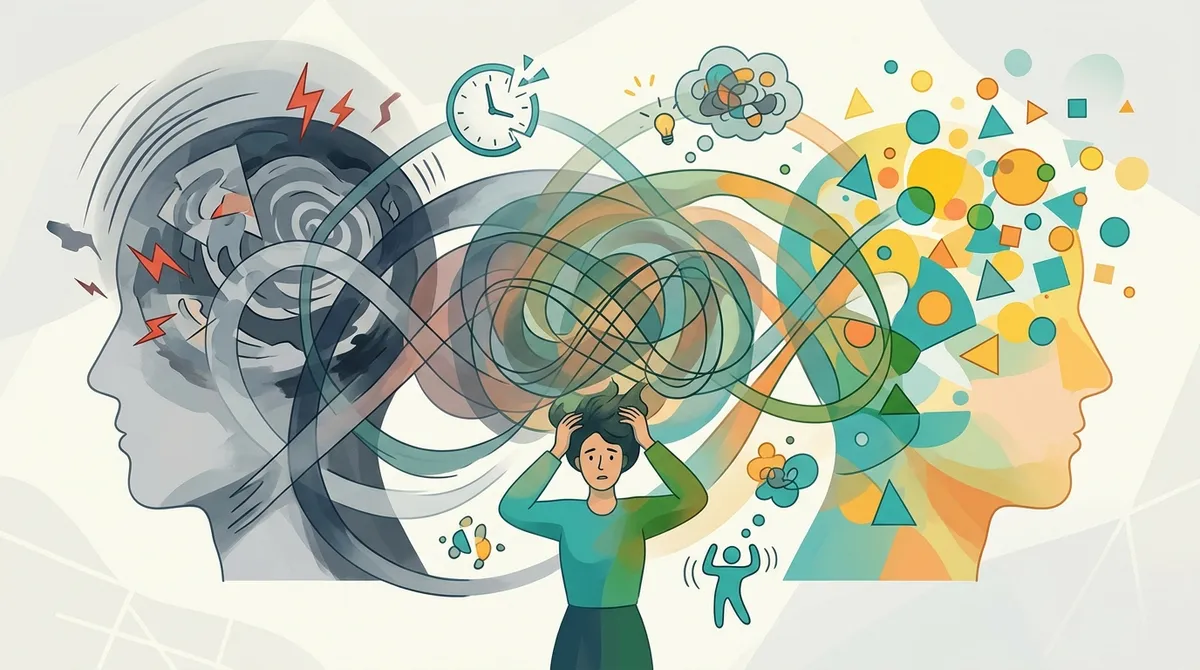
One of the biggest challenges with PTSD and ADHD is that their symptoms look very similar. This overlap often leads to misdiagnosis — and when one condition gets missed, treatment does not work as well.
| Symptom | ADHD | PTSD |
|---|---|---|
| Difficulty concentrating | ✓ | ✓ |
| Impulsivity | ✓ | ✓ |
| Sleep problems | ✓ | ✓ |
| Emotional outbursts | ✓ | ✓ |
| Hypervigilance / restlessness | ✓ | ✓ |
| Avoidance behaviors | Partial | ✓ |
| Flashbacks or intrusive thoughts | ✗ | ✓ |
As you can see, many symptoms overlap strongly. A thorough, comprehensive assessment by a trained therapist is absolutely essential. Treating only one condition while missing the other will leave you feeling stuck. Anxiety treatment is often part of the picture too, since anxiety frequently co-occurs with both PTSD and ADHD.

Who Is Most at Risk?
Certain groups face a higher likelihood of dealing with both PTSD and ADHD simultaneously.
- Veterans: Research shows ADHD prevalence is 2.5 times higher in veterans with a PTSD history. About 11.5% of veterans with PTSD also meet ADHD criteria.
- Children and adolescents: Kids with ADHD are more likely to experience trauma at home or school, increasing PTSD risk early in life. Panic attacks in teens are often linked to this combination.
- Adults in substance abuse treatment: A striking 84% of ADHD patients in inpatient substance abuse programs also had co-occurring PTSD.
- Hispanic and bilingual adults: Language barriers and cultural stigma can delay diagnosis and treatment, making early professional support especially important.
- Young adults and Gen Z: Isolation, academic stress, and social pressure increase vulnerability, particularly for those who experienced childhood trauma.
Recognizing if you fall into one of these groups can help you seek the right support sooner rather than later. The Mental Health Resources from the CDC also offer helpful guidance for anyone beginning this journey.
How Co-Occurring PTSD and ADHD Affect Daily Life
When both conditions are present, the impact goes beyond just symptoms. It touches every area of your life.
Emotional and Psychological Effects
- Greater emotional dysregulation — mood swings feel bigger and harder to control
- Higher risk of psychiatric hospitalization
- Increased experiences of anxiety and depression
- Some individuals report psychotic-like experiences, such as distorted thinking, when both conditions interact severely
Relationship and Social Effects
- Difficulty maintaining friendships and romantic relationships
- Communication breakdowns and emotional outbursts that push loved ones away
- Struggles with intimacy and trust in close relationships
- Increased conflict, especially in couples dealing with one or both partners carrying untreated trauma
Work and Academic Effects
- Trouble focusing on tasks and meeting deadlines
- Difficulty managing life goals and career ambitions
- Underperformance that feels inexplicable and frustrating
- Increased absenteeism due to emotional exhaustion
The good news? All of these effects can improve significantly with the right treatment plan. For support with mood issues related to PTSD and ADHD, professional therapy makes a meaningful difference.
How to Get an Accurate Diagnosis
Getting the right diagnosis is one of the most important steps you can take. Here is how to approach it effectively:
- Seek a comprehensive mental health evaluation: Do not settle for a quick screening. A thorough assessment should look at your full history, including childhood behavior, trauma exposure, and current symptoms.
- Be honest about your history: Tell your therapist or evaluator about past traumatic events, even if they seem unrelated to your current struggles. Trauma history is a critical piece of the puzzle.
- Ask about both conditions specifically: Unfortunately, many providers still assess for only one. Advocate for yourself and ask whether both PTSD and ADHD are being evaluated.
- Consider bilingual services if needed: If English is not your primary language, working with a bilingual therapist ensures nothing gets lost in translation. West Florida Therapy offers services in both English and Spanish.
- Use trusted external resources: Organizations like Substance Abuse & Mental Health services in Florida can connect you with qualified evaluators and support networks.
Effective Treatment Approaches for PTSD and ADHD
The most effective approach treats both conditions simultaneously. Treating only one is like fixing half a broken engine — it will not take you very far. Here is what a strong treatment plan may look like:
Therapy Options
- Trauma-Focused Cognitive Behavioral Therapy (TF-CBT): This therapy helps individuals process traumatic memories and reframe negative thought patterns. It is effective for both PTSD symptoms and ADHD-related emotional regulation.
- EMDR (Eye Movement Desensitization and Reprocessing): A research-backed therapy for trauma that helps the brain reprocess distressing memories in a healthier way.
- Behavioral Coaching: Practical strategies for managing ADHD symptoms like disorganization, impulsivity, and time management challenges.
- Mindfulness-Based Therapy: Builds present-moment awareness, which helps calm hypervigilance and improve focus simultaneously.
Medication Support
In some cases, medication can help manage symptoms of both conditions. A psychiatrist or physician works alongside your therapist to determine what is appropriate. It is worth noting that stimulant medications used for ADHD can sometimes affect PTSD symptoms, which is why coordinated care is so important. Check with Mental Health Links provided by Florida Health for licensed providers near you.
What to Look for in a Therapist
- Experience with both trauma and ADHD
- A warm, non-judgmental approach
- Availability for both in-person and virtual sessions
- Bilingual capability if needed
- Willingness to collaborate with other healthcare providers
Margaret Deuerlein, a caring and experienced psychotherapist at West Florida Therapy, works with adults and adolescents navigating these complex challenges. With a compassionate, personalized approach, she helps clients untangle the overlapping symptoms of PTSD and ADHD and build real, lasting skills for healing. You can visit us on Google to read reviews and learn more about what clients experience working with our team.
Practical Daily Tips While You Pursue Treatment
While working with a therapist, there are things you can do day-to-day to support your healing.
- Create predictable routines: Structure helps the ADHD brain and soothes the PTSD nervous system at the same time.
- Practice grounding exercises: Simple techniques like the 5-4-3-2-1 method can help you stay present when trauma memories or ADHD restlessness take over.
- Limit overstimulating environments: Crowded or chaotic spaces can trigger both PTSD hypervigilance and ADHD overload. Give yourself permission to step back when needed.
- Build a support network: Whether it is family, friends, or a support group, connection matters. If relationship problems are part of the picture, consider involving a therapist who can help bridge communication gaps.
- Be gentle with yourself: Healing from PTSD and ADHD is not linear. Some days will be harder than others, and that is completely okay.
Taking the Next Step Toward Healing
Living with both PTSD and ADHD is genuinely hard — but it does not have to define your life. With the right support, accurate diagnosis, and consistent treatment, real improvement is possible. People do recover. Relationships heal. Focus returns. Life gets lighter.
Whether you are exploring virtual therapy from the comfort of your home across Florida, or you prefer in-person sessions, support is available. Learn more about our therapy services or about our team to find the right fit for your needs.
You deserve to feel better — and the first step is simply reaching out. Schedule your first session with us today and take that brave first step toward a calmer, clearer, more connected life.
FAQs
Q: How common is it to have both PTSD and ADHD at the same time?
A: It is more common than most people think! About 28% of people with PTSD also have ADHD, and up to 36% of people with ADHD develop PTSD at some point. If you suspect you might have both, you are definitely not alone — and getting a thorough evaluation is a wonderful first step.
Q: Can ADHD symptoms be mistaken for PTSD, or vice versa?
A: Absolutely, and this happens more often than it should. Both conditions share symptoms like difficulty concentrating, emotional outbursts, sleep problems, and restlessness. This overlap makes a comprehensive assessment by a trained therapist so important — getting an accurate picture of what is going on means your treatment will actually work.
Q: What kind of therapy works best for someone with both PTSD and ADHD?
A: The most effective approach treats both conditions at the same time. Trauma-focused therapies like TF-CBT and EMDR are great for PTSD, while behavioral coaching and mindfulness practices help manage ADHD symptoms. Working with a therapist experienced in both areas — like the compassionate team at West Florida Therapy — makes a huge difference.
Q: Does having ADHD mean I am more likely to develop PTSD?
A: Yes, research shows that ADHD increases the risk of developing PTSD beyond just trauma exposure alone. PTSD affects 10–11.9% of people with ADHD, compared to just 1.6–3.3% in the general population. The good news is that knowing this can help you get proactive support and the right care early on.
Q: Can I get help for PTSD and ADHD through virtual therapy in Florida?
A: Yes! Virtual therapy is a wonderful and convenient option, especially if you are juggling a busy schedule or prefer the comfort of your own home. West Florida Therapy offers virtual sessions to clients across all of Florida, as well as in-person appointments, with bilingual services available in English and Spanish.