
Key Takeaways
-
Identify negative communication cycles with a therapist’s help to gain awareness of destructive patterns like shutting down, escalating, or going silent—recognition alone provides relief and enables change.
-
Learn active listening skills including eye contact, reflecting back what you hear, and asking open-ended questions instead of preparing your response while your partner speaks.
-
Practice concrete conflict resolution tools like using ‘I’ statements, taking structured breaks, and finding compromise to replace old destructive habits with new ones that actually stick.
-
Address the underlying emotional needs beneath surface arguments—respect, security, love, or attention—rather than fighting about symptoms like dishes or money.
-
Rebuild emotional safety with your partner in a non-judgmental therapeutic space, enabling honest vulnerability and genuine connection after repeated communication breakdowns.
-
Therapy can effectively help couples heal after infidelity or major trust breaches by providing both partners a safe space to process pain and create transparency agreements for moving forward.
Does it feel like you and your partner keep having the same argument over and over? You start talking, things escalate, and somehow you end up further apart than when you began. If that sounds familiar, you are not alone. Many couples in the Brandon area find themselves stuck in painful communication cycles that leave both partners feeling frustrated, misunderstood, and emotionally drained.
The good news? couples therapy focused on communication can genuinely change how you and your partner connect. Brandon communication therapy for couples is a structured, guided process that helps you identify what is going wrong and practice healthier ways of talking, listening, and responding. In 2026, more couples than ever are reaching out for this kind of support — and the results speak for themselves. Research shows that emotionally focused therapy is effective for about 75% of couples, with benefits lasting at least two years.
Let’s walk through exactly how this process works and what you can expect.

1. It Helps You Identify Your Negative Communication Patterns
Most couples do not realize they are stuck in a pattern. They just know something feels off. One partner shuts down. The other escalates. Or both of you go quiet and nothing ever gets resolved. These are called negative communication cycles, and they are incredibly common.
In relationship and communication issues therapy, your therapist helps you slow things down and actually see the pattern. Once you can name it, you can start to change it. This awareness alone can be a huge relief for couples who have felt confused about why things keep going wrong.
- Recognizing when you are being defensive versus truly listening
- Noticing withdrawal patterns before they derail a conversation
- Understanding your emotional triggers and how they affect your responses
- Seeing how your partner’s behavior may be a reaction to fear, not hostility

2. It Teaches You to Actually Listen, Not Just Wait to Talk
There is a big difference between hearing your partner and truly listening to them. Most of us spend our time in conversations preparing our response instead of absorbing what the other person is actually saying. This habit creates a huge disconnect over time.
Brandon communication therapy for couples teaches active listening skills in a supportive, low-pressure setting. You learn how to reflect back what your partner says, validate their feelings, and ask questions that open up the conversation rather than shut it down. According to Mental Health Resources from the CDC, strong communication and emotional support are foundational to mental well-being — and that applies deeply to relationship health too.
- Make eye contact and minimize distractions during important conversations
- Reflect back what you heard before responding with your own view
- Ask open-ended questions to encourage your partner to share more
- Validate feelings before jumping to problem-solving mode
3. It Gives You Tools for Conflict Resolution That Actually Stick
Conflict is not the enemy of a good relationship. How you handle conflict is what matters. Couples therapy helps you move away from “winning” the argument and toward actually understanding each other. This shift changes everything.
Working with a therapist on conflict resolution gives you concrete tools you can use between sessions. You practice these skills in real conversations with your partner, with a professional there to help you course-correct when needed. Over time, these new habits replace the old, destructive ones.
- Using “I” statements instead of blame-based language
- Taking structured breaks when emotions run too high
- Agreeing on a time to revisit difficult conversations calmly
- Finding compromise without one partner feeling like they always lose
4. It Rebuilds Emotional Safety Between Partners
When communication breaks down repeatedly, emotional safety erodes. You stop feeling like your partner is a safe person to be vulnerable with. You guard yourself. You hide your real feelings. And the emotional distance grows.
Therapy creates a space where both partners feel heard without judgment. A skilled therapist like Margaret Deuerlein at West Florida Therapy helps couples rebuild that sense of safety step by step. When you feel emotionally safe with your partner again, honest and open communication becomes possible. You can explore more about this process through what emotionally focused therapy is and how it can help.
5. It Addresses the Issues Underneath the Arguments
Arguments about dishes, money, or who forgot to call the plumber are rarely actually about those things. Surface-level conflicts almost always have deeper emotional needs underneath them — needs for respect, security, love, or attention.
Brandon communication therapy for couples helps both partners dig beneath the surface. When you understand what is really driving the conflict, you can address the actual issue instead of fighting about the symptom. This is one of the most powerful parts of the therapeutic process. You can learn more about how this works through how couples relationship therapy strengthens your bond.
- Identify the unmet emotional need behind the recurring argument
- Share that need with your partner in a clear, non-blaming way
- Work together to find ways to meet each other’s core needs
6. It Can Help After Infidelity or a Major Breach of Trust
Trust is the foundation of any relationship. When it is broken — whether through infidelity, dishonesty, or a significant betrayal — rebuilding it can feel impossible. Many couples wonder if therapy can really help after something that serious. The answer is yes, it can.
Healing after a trust breach takes time, structure, and professional guidance. Therapy provides all three. Both partners need a place to process their pain, and the relationship needs a roadmap for moving forward. You can also explore how restoring emotional connection and trust works as part of this healing process. For those dealing with deeper emotional wounds, trauma therapy may also be part of the healing journey.
- Both partners have a safe space to express hurt and grief
- The partner who caused the breach learns accountability skills
- Transparency and consistency are built back over time
- New relationship agreements are created to prevent future breaches
7. It Supports Couples Through Major Life Transitions
Sometimes relationships feel strained not because anything is “wrong” exactly, but because life is hard right now. A new baby, job loss, a move, illness, or parenting stress can all put enormous pressure on a relationship. These transitions strain communication and make even simple conversations feel loaded.
Couples counseling helps you navigate these challenging seasons together instead of drifting apart during them. Having professional support during a life transition can protect your relationship and strengthen it at the same time. The Florida Department of Children and Families also recognizes the importance of mental health services in helping families and couples through stressful life circumstances.
Common transitions that bring couples to therapy include:
- Becoming parents for the first time
- Blending families from previous relationships
- Navigating financial stress or career changes
- Supporting a partner through illness or loss
- Adjusting to an empty nest or retirement
8. It Is Available In-Person and Virtually Across Florida
One of the most common reasons couples delay getting help is logistics. Busy schedules, childcare, distance, or simply not knowing where to start can all get in the way. The good news is that in 2026, couples therapy is more accessible than ever before.
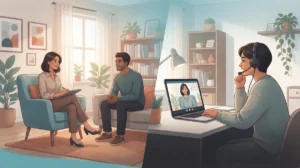
At West Florida Therapy’s Brandon location, you can attend sessions in person with a warm, welcoming therapist who genuinely cares about your relationship. If coming in is not possible, telehealth therapy across Florida makes it easy to get the support you need from your own home. Bilingual services in English and Spanish are also available, which removes a significant barrier for Spanish-speaking couples who have struggled to find culturally comfortable care.
Here is a quick comparison of what both options offer:
| Feature | In-Person Sessions | Telehealth Sessions |
|---|---|---|
| Location | Brandon, FL office | Anywhere in Florida |
| Convenience | Dedicated space for sessions | No travel required |
| Bilingual Support | Yes (English/Spanish) | Yes (English/Spanish) |
| Session Format | Face-to-face with therapist | Secure video platform |
| Insurance Accepted | Yes (multiple providers) | Yes (multiple providers) |
What to Expect in Your First Couples Therapy Session
It is completely normal to feel nervous before your first session. Most couples worry about being judged or put on the spot. A good therapist will put you both at ease right away. The first session is mostly about getting to know each other and understanding what brought you in.
Here is what a typical first session looks like:
- Introduction and comfort-setting: Your therapist creates a warm, non-judgmental environment from the start.
- Sharing your story: Both partners have the chance to share their perspective on the relationship and what they hope to work on.
- Goal-setting: Together, you identify what you want to get out of therapy.
- Building your plan: Your therapist begins crafting a personalized plan based on your unique situation.
You can also learn more about the West Florida Therapy process to know what to expect before you even walk through the door. If you are curious about a specific evidence-based approach, the Gottman Method is one highly effective framework used for communication and relationship building.
How Do You Know If You Need Couples Communication Therapy?
You do not have to be in a crisis to benefit from therapy. Many couples seek support as a proactive step to strengthen a good relationship. But there are some clear signs that communication therapy could help you right now.
- You have the same argument repeatedly without resolution
- One or both partners feel consistently unheard or dismissed
- Conversations quickly turn into shouting matches or silent standoffs
- You feel more like roommates than partners
- Intimacy — emotional or physical — has decreased significantly
- You are avoiding certain topics entirely because they always lead to conflict
If any of these feel familiar, reaching out is a sign of strength, not weakness. You can also review common relationship problems that therapy addresses to see if your situation resonates. For more context on local mental health resources available in Florida, the Florida Department of Health mental health links provide helpful community-level guidance.
Taking the First Step Together
Choosing to work on your relationship is one of the most loving things you can do — for your partner and for yourself. Brandon communication therapy for couples is not about placing blame or deciding who was right. It is about learning to truly understand each other and building a relationship where both of you feel seen, valued, and connected.
Whether you are dealing with recurring conflict, emotional distance, a trust breach, or simply want to communicate better, help is available. Margaret Deuerlein and the team at West Florida Therapy are here to walk alongside you with warmth, expertise, and genuine care. Sessions are available in person in Brandon and virtually throughout Florida, with bilingual support in English and Spanish.
You can also visit West Florida Therapy on Google to read reviews from couples who have taken this step and found real change on the other side.
Ready to start? Reach out to schedule your free 15-minute consultation and take the first step toward a stronger, healthier relationship today.
FAQs
Q: What is communication therapy for couples?
A: Communication therapy for couples is a guided therapeutic process where a licensed therapist helps partners identify harmful communication patterns and learn healthier ways to talk, listen, and resolve conflict. It is a supportive, structured experience designed to help both of you feel truly heard and understood.
Q: How do I know if my partner and I need couples counseling?
A: If you find yourselves having the same arguments repeatedly, feeling emotionally disconnected, or avoiding certain topics entirely, couples counseling can help. You do not have to be in crisis to benefit — many couples use therapy proactively to strengthen a relationship they already value.
Q: Is couples communication therapy available online in Brandon, Florida?
A: Absolutely! West Florida Therapy offers both in-person sessions in Brandon and telehealth therapy for couples throughout all of Florida. Virtual sessions are just as effective as in-person ones and make it much easier to fit therapy into a busy schedule.
Q: Can couples therapy help rebuild trust after infidelity?
A: Yes, couples therapy can be very effective after a trust breach, including infidelity. A skilled therapist helps both partners process hurt, establish accountability, and create a step-by-step path toward rebuilding trust and emotional safety together.
Q: What type of therapist is best for relationship and communication issues?
A: Look for a licensed therapist who specializes in couples work and uses evidence-based approaches like Emotionally Focused Therapy (EFT) or the Gottman Method. A therapist who creates a warm, non-judgmental environment where both partners feel safe will make the biggest difference in your progress.