

Key Takeaways
-
In Florida, "therapist" and "counselor" are everyday terms, not specific licenses, so check the actual credential (LMHC, LCSW, or LMFT) and confirm it is active.
-
Verify any provider's license through the Florida Department of Health license lookup, and ask whether a registered intern is supervised and how supervision works.
-
Focus on fit over title: consider your main concern, the clinician's experience with it, their therapeutic approach, and how safe and heard you feel in the first call.
-
An LMHC must complete at least 60 graduate semester hours, 700 supervised practicum/internship hours (280 in direct client services), two years of post-master's experience, and pass the NCMHCE.
-
Before booking, ask about fees, insurance, cancellation policy, session format, and whether the provider is authorized to serve you if you use telehealth.
-
For emergencies or thoughts of self-harm, do not wait for an appointment; call 911 or dial 988 for the Suicide & Crisis Lifeline immediately.
You finally decided to reach out for help. That is a big step, and you should feel proud of it. Then you start searching and hit a wall of words: therapist, counselor, psychotherapist, clinician. Are they the same thing? Does the label matter?
Here is the good news. If you are searching for a therapist vs counselor in Brandon, Florida, you are asking the right question, and the answer is simpler than it looks. In everyday life, people use both words for the same kind of work. What really matters is the provider’s license, their experience with your concern, and whether you feel comfortable with them.
In this guide, we will break down what each word usually means, how Florida licenses mental health professionals, and how to choose the right fit in Brandon. Whether you are a busy millennial, a teen, a parent, a couple, or someone who prefers care in Spanish, you will leave with clear next steps.
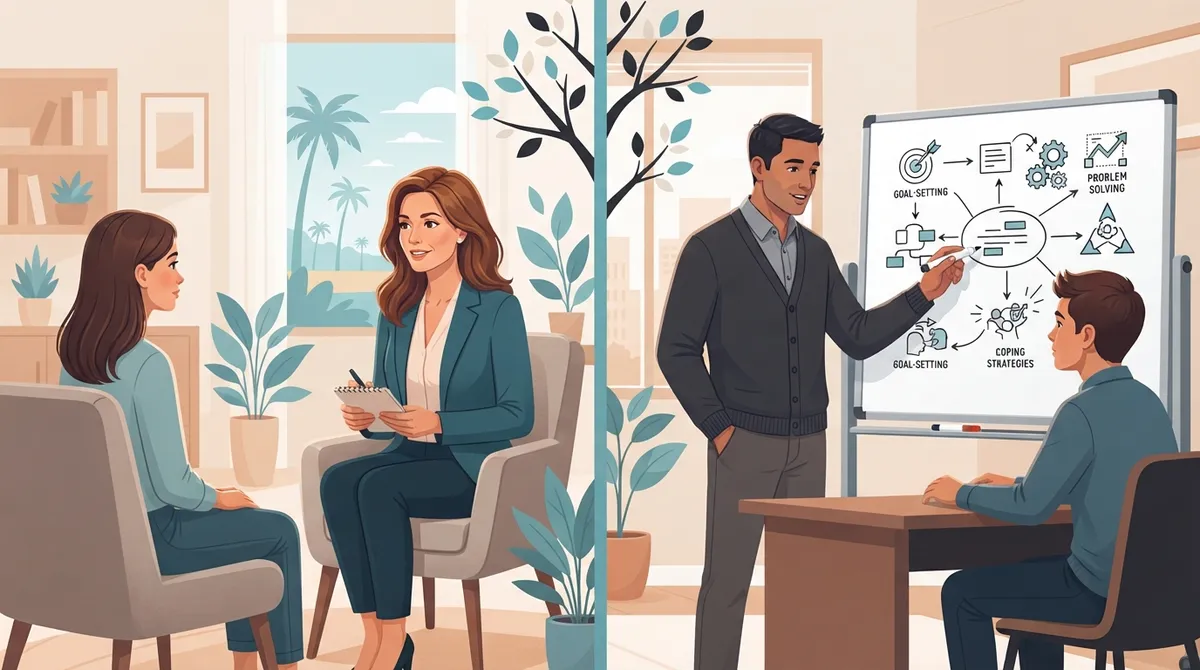
What Is the Difference Between a Therapist and a Counselor?
Let’s start with the short answer. In Florida, “therapist” and “counselor” are broad, everyday terms. They are not the names of one specific license. A person who calls themselves either one might hold very different credentials.
Think of it like the word “doctor.” It tells you something, but not everything. You would still want to know the exact specialty. The same goes for mental health care.
Here is how people often use the words:
- Counselor often suggests support for a specific issue, such as stress, grief, or a life change. It may sound shorter-term or more focused.
- Therapist often suggests deeper, longer-term work, such as healing trauma or changing long-standing patterns.
But these are habits of speech, not legal rules. A licensed mental health counselor can do deep, long-term work. A licensed therapist can offer short, focused support. So the label alone will not tell you what you need.
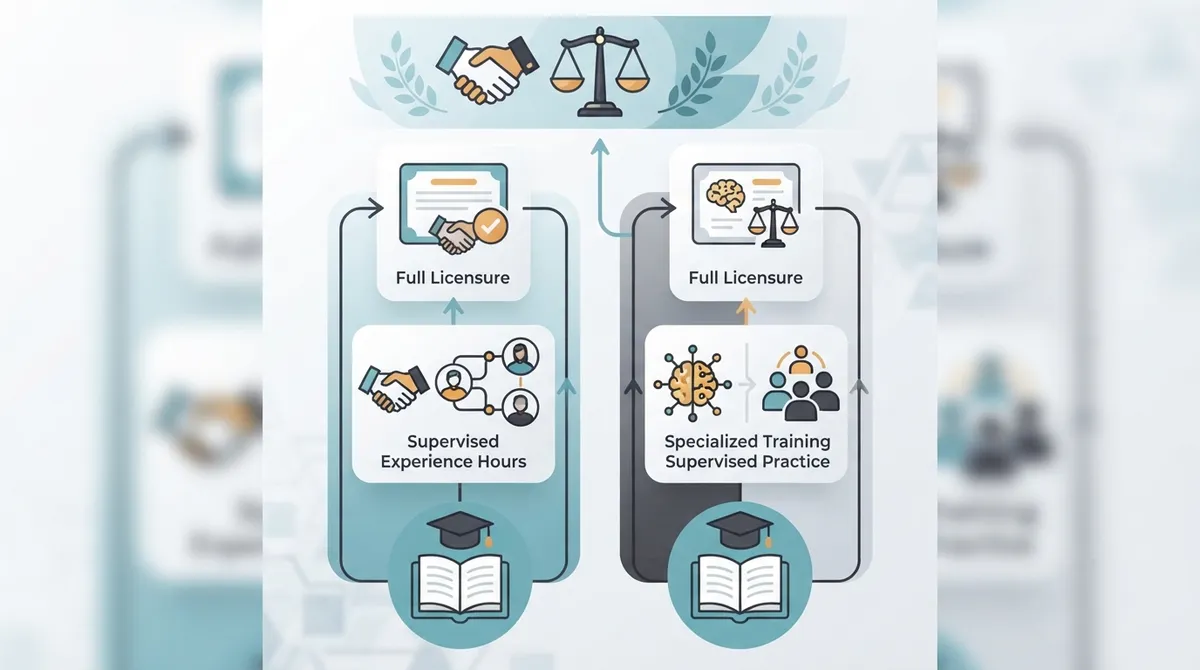
How Florida Licenses Mental Health Professionals
Florida regulates several mental health professions under Chapter 491 of the state statutes. Chapter 491 describes mental health counseling as using behavioral-science methods to prevent and treat unwanted behavior and support mental health and human development. Its scope includes psychotherapy, psychopathology, human development, and family and group dynamics.
Three licenses come up most often when people search for a therapist or counselor:
- LMHC (Licensed Mental Health Counselor): Training centers on mental health counseling and psychotherapy.
- LCSW (Licensed Clinical Social Worker): Training includes clinical social work, which looks at a person within their wider life and community.
- LMFT (Licensed Marriage and Family Therapist): Training emphasizes relationships and family systems.
Each of these professionals may provide psychotherapy within their licensed scope. Their paths differ, but all of them are trained, supervised, and tested before they can practice on their own. You can read more about how therapy and counseling compare in Brandon if you want a second angle on this question.
What an LMHC Must Complete
Since many people search for a “counselor,” it helps to know what it takes to earn an LMHC in Florida. According to the Florida Board’s current guidance, applicants need:
- A qualifying graduate degree of at least 60 semester hours (or 80 quarter hours)
- At least 700 hours of university-sponsored supervised practicum or internship
- At least 280 of those hours spent in direct client services
- Two years of post-master’s supervised clinical experience
- A passing score on the clinical-level National Clinical Mental Health Counseling Examination (NCMHCE)
That is a lot of training. It shows that a licensed counselor is a fully qualified mental health professional, not a lesser option than a “therapist.”
Therapist vs Counselor: A Quick Comparison
This table sums up how the terms and credentials line up in Florida. Remember, the license matters more than the label.
| Term or License | What It Means | Main Training Focus |
|---|---|---|
| Therapist | Everyday word, not one specific license | Varies by license |
| Counselor | Everyday word, not one specific license | Varies by license |
| LMHC | Licensed Mental Health Counselor | Mental health counseling and psychotherapy |
| LCSW | Licensed Clinical Social Worker | Clinical social work and whole-person care |
| LMFT | Licensed Marriage and Family Therapist | Relationships and family systems |
Does the Title Change the Care You Receive?
Not as much as you might think. A well-trained LMHC, LCSW, or LMFT can each help with anxiety, depression, trauma, and relationship stress. What shapes your experience most is the clinician’s style, their specialty, and how safe you feel in the room.
For example, a person who wants help with worry and panic might look for a clinician with deep experience in anxiety care. You can learn more about finding the right anxiety therapy in Brandon to see what that looks like in practice.
A couple stuck in the same argument for months might want someone with relationship training. Our guide on relationship counseling in Brandon explains what to expect there.
How to Choose Between a Therapist and a Counselor in Brandon
Instead of fixating on the word, focus on fit. Here is a simple, step-by-step way to decide:
- Name your main concern. Is it anxiety, low mood, trauma, a rocky relationship, or a big life change?
- Check the license. Look for LMHC, LCSW, or LMFT, plus an active Florida license.
- Ask about experience. Has the clinician worked with people like you and with your concern?
- Look at the approach. Some clinicians use CBT, EMDR, or schema therapy. Ask what that would look like for you.
- Think about logistics. Consider location, evening hours, cost, and insurance.
- Trust your gut. Use a first call to see if you feel heard and respected.
If you are still torn on method, this breakdown of which type of therapy is best for you can help you narrow things down.
How to Verify a License in Florida
This step takes just a few minutes, and it protects you. Florida law requires a licensed mental health counselor to use “licensed mental health counselor” or “LMHC” on promotional materials that identify the licensee. You can also confirm any provider through the Florida Department of Health license lookup.
One more thing to know: a registered mental health counselor intern is not the same as an independently licensed LMHC. Interns are still building their required hours and work under supervision. They can be wonderful, but it is fair to ask:
- Who supervises this intern?
- How does supervision work?
- Is the supervisor involved in my care?
A good clinician will welcome those questions. You deserve full clarity before you begin. For more tips, see these mistakes to avoid when choosing a licensed therapist in Brandon.
What Different Brandon Readers Often Need
Every person walks in with a different story. Here are a few common ones, and what to keep in mind.
Spanish-Speaking Adults
Talking about your feelings is hard enough. Doing it in your second language can make it harder. Bilingual care lets you describe the full texture of what you feel, in the words that come most naturally. West Florida Therapy offers sessions in both English and Spanish, and our post on finding a Spanish-speaking therapist in Brandon walks through what to look for.
Stressed Millennials and Young Adults
Work, money, family, and big life shifts can pile up fast. If cost and time are on your mind, you are not alone. Look for flexible scheduling, clear fees, and a clinician who works toward real skills, not endless sessions.
Teens and Their Parents
Teens face school pressure, social worry, and family tension. A good fit with a teen therapist matters even more, because teens open up only when they feel safe. Parents can read more in our guide to adolescent therapy in Brandon.
Couples
If you and your partner keep hitting the same wall, couples therapy can help you talk and listen in new ways. Ask any clinician about their training in working with couples, and what method they use.
Practical Questions to Ask Before You Book
Before you commit, a short call can answer a lot. Try asking:
- What is your license, and is it active in Florida?
- Have you worked with my concern before?
- What does a typical session look like?
- What are your fees, and do you take my insurance?
- What is your cancellation policy?
- Do you offer an initial consultation?
Also confirm that the provider serves Brandon and is allowed to care for you where you are located, especially for telehealth. Care across Florida is possible online, and the right setup keeps you covered and protected.
In-Person or Virtual Care?
Brandon residents have real choices. Some people like the calm of an office and the focus that comes from leaving home. Others need the ease of a screen, especially with a packed schedule or limited transportation.
Neither is “better.” It depends on your comfort, your privacy, and your life. If you are weighing both, read about in-person vs. telehealth therapy in Brandon to see how they compare.
Meet Margaret Deuerlein at West Florida Therapy
At West Florida Therapy, Margaret Deuerlein offers warm, thoughtful psychotherapy for adults and adolescents, as well as couples. Sessions are available in person in Brandon and by telehealth across Florida, in English or Spanish.
Many people feel nervous before that first call. That is normal. Our process starts with a free 15-minute phone consultation, where you can share what is going on and ask your own questions. From there, you and your therapist build a plan that fits your goals, then check in on your progress along the way.
Payment is flexible too. West Florida Therapy is in-network with several major insurance plans, and many clients also choose out-of-pocket payment for added privacy. You can see your payment options any time, or read what neighbors say on our Google page: see West Florida Therapy reviews on Google.
When You Need Help Right Now
Routine therapy is not built for emergencies. If you or someone you love is in danger, or you are having thoughts of harming yourself, do not wait for an appointment. Call 911 or reach a crisis line such as 988, the Suicide & Crisis Lifeline, right away.
For general support and local resources, the Florida Department of Health offers mental health links and resources, and the Department of Children and Families lists substance abuse and mental health services. You can also explore the CDC’s mental health resources for ways to care for yourself and others.
Taking care of your mind is part of whole-body health, just like keeping up with a dentist or an orthodontist such as Brockway Orthodontics. Both are about feeling good in your own skin.
The Bottom Line: Choose the Person, Not Just the Title
So, therapist vs counselor in Brandon, Florida: which one is right? Usually, the title matters less than you think. Check the license, ask about experience, look at the approach, and pay attention to how you feel after the first conversation. A caring, qualified clinician who “gets” you will help far more than a perfect label.
If you are ready to take that first step, we would love to hear from you. Contact us to schedule your free 15-minute consultation and start feeling supported. You do not have to carry this alone, and real change really is possible.
FAQs
Q: What is the difference between a therapist and a counselor in Florida?
A: In Florida, “therapist” and “counselor” are broad, everyday terms, not two separate licenses. What matters is the exact credential, such as LMHC, LCSW, or LMFT, along with the clinician’s experience and approach. A good first step is to check that their Florida license is active.
Q: How can I verify a therapist’s or counselor’s Florida license?
A: You can look up any provider through the Florida Department of Health license lookup. It only takes a few minutes and confirms their license type and status. Licensed mental health counselors must also use “LMHC” or “licensed mental health counselor” on materials that identify them.
Q: Should I choose an LMHC, LCSW, or LMFT in Brandon?
A: Each can provide psychotherapy within their licensed scope, so the best choice depends on fit. An LMFT focuses on relationships and family systems, an LMHC on mental health counseling, and an LCSW on clinical social work. Look at their experience with your concern, their approach, and how comfortable you feel with them.
Q: Can I see a therapist online if I live in Brandon, Florida?
A: Yes. Many Florida-licensed clinicians offer telehealth, so you can meet from home. Just confirm that your provider is authorized to care for you where you are located. West Florida Therapy offers in-person sessions in Brandon and virtual sessions throughout Florida.
Q: What should I ask before choosing a therapist or counselor?
A: Ask about their license and status, their experience with your concern, session format, fees, and insurance. It also helps to ask about cancellation rules and whether they offer a free first consultation. These answers help you feel confident before you begin.