

Key Takeaways
-
Confidentiality has limits: serious safety risks and certain legal reporting duties are common exceptions, so ask your therapist to explain exactly what those limits are before sharing.
-
You do not have to share your whole life story right away; you can say "I am not ready to talk about that yet," and a good therapist will respect your pace.
-
Before the session, jot down your top concerns, what you hope will change, any medications and health conditions, and questions about fees, privacy, and approach.
-
Pay attention after the first session to whether you felt listened to, respected, and able to imagine opening up to this person over time; it is fine to look elsewhere if the fit feels wrong.
-
Honest answers to safety questions about self-harm or harm to others are a standard part of care, but if you are in immediate danger, call 911 or the 988 Suicide & Crisis Lifeline instead of waiting.
-
Feeling awkward, tired, or emotionally stirred up after the first session is normal; if the pace feels like too much, tell your therapist so they can adjust.
Booking your first therapy appointment takes courage. If you are feeling a little nervous, that is completely normal. Many people wonder what will happen in the room, what they will be asked, and whether they will have to share their whole life story right away. The good news? You do not.
Knowing what to expect at your first therapy session can turn worry into calm. In 2026, more people than ever are reaching out for support. According to SAMHSA’s 2024 National Survey on Drug Use and Health, 22.9% of U.S. adults, or about 60.1 million people, received mental health treatment. You are far from alone.
This friendly guide walks you through nine things you can expect, from the first hello to the last goodbye. Whether you are a stressed young professional, a teen feeling school pressure, a couple needing better communication, or a Spanish-speaking adult looking for care in your own language, this guide is for you.

1. A Warm Welcome and a Chance to Settle In
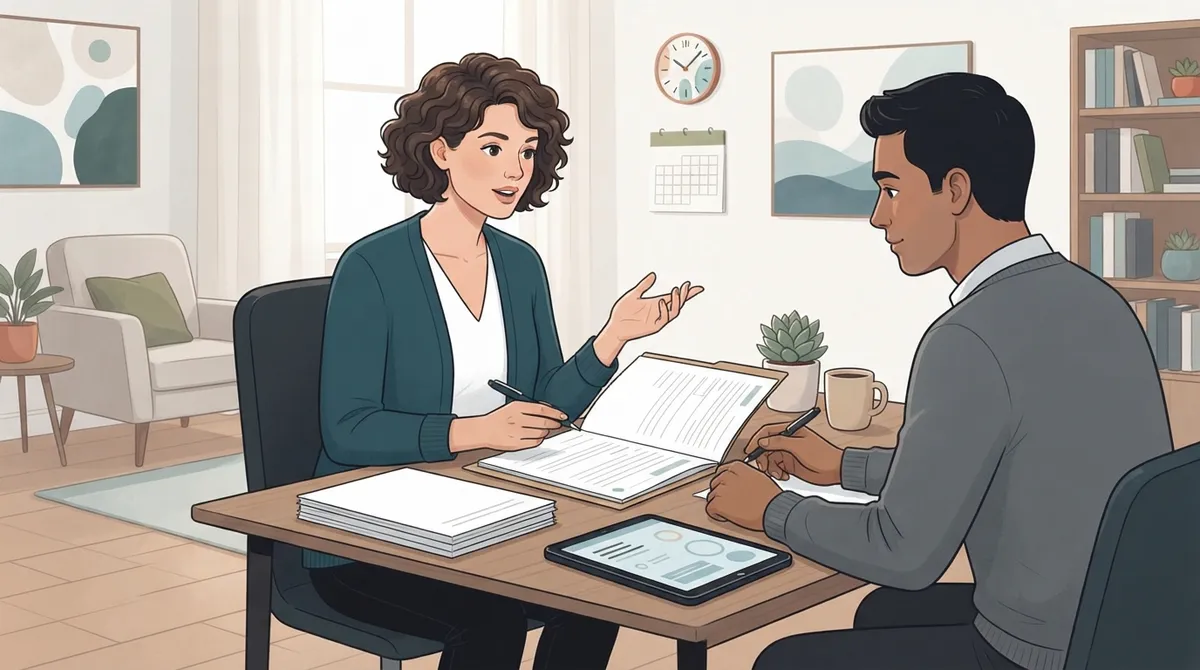
Your first therapy session usually starts with simple introductions. Your therapist will say hello, explain how the hour will go, and help you feel at ease. There is no test to pass and nothing to prepare perfectly.
Think of it like meeting someone new who is on your side. At West Florida Therapy, psychotherapist Margaret Deuerlein focuses on creating a calm, caring space. Many clients find that a friendly start makes it much easier to open up.
It is also okay to feel awkward. Most people do. A good therapist expects this and will go at a pace that feels comfortable to you.
2. Paperwork and Practical Details
Before you dive in, expect a little admin. This often includes consent forms, privacy notices, and a short intake form about your health, medications, and goals. Some practices send these ahead of time so you can fill them out at home.
You will also talk about the basics:
- How long sessions last and how often you might meet
- Fees, payment options, and insurance questions
- Cancellation and scheduling policies
- Whether you will meet in person or by telehealth
West Florida Therapy offers flexible payment options. Clients can pay out of pocket, using major credit cards, HSA, or FSA accounts. The practice is also in-network with several major insurance providers, including Aetna, Cigna, Florida Blue, Optum, Oscar, and United Health Care. Check with your carrier about your mental health benefits and copays. You can also read more about whether therapy is covered by insurance before your visit.
3. A Clear Talk About Confidentiality
One of the first things your therapist should explain is privacy. What you share in therapy is generally confidential. That is what makes it a safe place to be honest.
There are limits, though. Common exceptions include serious safety concerns, such as a risk of harming yourself or someone else, and certain legal reporting duties. Rules can vary by location and service type.
Good questions to ask in your first session:
- What are the exact limits of confidentiality?
- How are my records stored and protected?
- Will anything be shared with my insurance company?
- If I am a teen, what will my parents be told?
Asking these questions is smart, not rude. A caring therapist will welcome them.
4. Questions About What Brought You In
This is the heart of the session. Your therapist will ask what led you to reach out and what you hope will change. You might hear questions like:
- What has been going on lately that made you want support?
- How long have you felt this way?
- How are things affecting your sleep, work, school, or relationships?
- What have you tried so far?
You do not need a polished answer. Messy and unsure is perfectly fine. Maybe you feel constant worry, low energy, or a sense that something is just “off.” Saying that out loud is enough to start.
If you are wondering whether what you are feeling is serious enough, our guide on signs you need therapy in Brandon, Florida may help you see you are not overreacting.
5. A Look at Your Background and Support System
To understand you better, your therapist will ask about relevant history. This is an assessment, not an interrogation. Expect gentle questions about your health, past experiences, family, relationships, and who supports you today.
Here is the part many people worry about: you do not have to talk about everything right away. If a topic like childhood or trauma feels too heavy, you can say, “I am not ready to talk about that yet.” A good therapist will respect that and move at your pace.
For those who have lived through hard experiences, it can help to know that healing is a gradual process. You can learn more in our article on how to recognize and heal from psychological trauma.
6. Safety Questions You Might Hear
Your therapist may ask whether you have had thoughts of harming yourself or others. Please do not be alarmed. This is a standard part of care, and it helps your therapist understand what level of support you need.
Be as honest as you can. Honest answers let your therapist help you in the best way. And remember: if you are ever in immediate danger, do not wait for a routine appointment. Call 911 or the 988 Suicide & Crisis Lifeline right away.
For helpful state and national resources, you can explore the Florida Department of Health mental health links and the CDC mental health resources.
7. A Peek at Your Therapist’s Approach and a Game Plan
Toward the end, your therapist will often share how they work and what a plan might look like. Different methods suit different needs, such as cognitive behavioral therapy (CBT), EMDR, DBT, or schema therapy. If you want to compare approaches, you might enjoy Psychodynamic vs. CBT Therapy: Which Heals Deeper? and What Type of Therapy Is Best for Me?
At West Florida Therapy, the process is simple and supportive:
- Start with a conversation. A brief phone consultation helps you share your concerns and ask questions. It is free for 15 minutes.
- Build your personalized plan. Together, you create a plan based on your goals and experiences.
- Get consistent support. Sessions are usually weekly or bi-weekly, in person or by telehealth.
- Track progress and adjust. Your therapist checks in often and tweaks the plan as you grow.
Not sure how often to go? Our guide on how often you should see a therapist can help. You can also see how long therapy takes to work for realistic expectations.
8. A Check on Whether You Feel Heard (The Fit Question)
The first session is not just the therapist getting to know you. It is also your chance to see whether this is the right match. Research and experience both show that feeling understood matters a great deal in therapy.
Ask yourself after the session:
- Did I feel listened to and respected?
- Could I imagine opening up to this person over time?
- Did they explain things clearly?
It is also fine to ask about training, experience, and treatment methods. If the fit does not feel right, you are free to look elsewhere. Our tips on mistakes to avoid when choosing a licensed therapist can guide your search.
| Green Flags | Possible Red Flags |
|---|---|
| Listens without judging | Interrupts or dismisses your feelings |
| Explains confidentiality and fees clearly | Vague about costs or privacy |
| Respects your pace | Pushes you to share before you are ready |
| Invites your questions | Avoids questions about training or methods |
9. Mixed Feelings Afterward (and That Is Normal)
After your first session, you might feel relieved, hopeful, tired, or a bit emotionally stirred up. All of these are normal. Talking about hard things can take energy, much like a workout for your heart and mind.
Be kind to yourself. Drink some water, take a walk, or do something calming. If the pace or topics felt too much, tell your therapist at the next visit so they can adjust. Therapy should feel challenging at times, but never overwhelming.
What About a First Session by Telehealth?
If you meet online, the session works much the same as in person. A few extra tips help it go smoothly:
- Find a private, quiet spot where you will not be interrupted
- Test your internet connection and the video platform beforehand
- Use headphones for extra privacy
- Share your location with your therapist in case of an emergency
Telehealth is popular for good reason. SAMHSA reports that 12.8% of U.S. adults, about 33.4 million people, received mental health treatment via telehealth in 2024. West Florida Therapy offers virtual sessions across Florida, plus in-person appointments in Brandon. Learn more in how telehealth therapy works in Brandon, Florida or compare options in In-Person vs. Telehealth Therapy.
Tips for Different Readers
Spanish-speaking adults: Therapy is most helpful when you can express your feelings in the language that feels like home. West Florida Therapy offers bilingual care in English and Spanish. You can read more about finding a Spanish-speaking therapist in Brandon.
Teens and parents: Teens often worry about what a parent will be told. Ask about privacy rules up front. Parents can support by staying calm, respecting the teen’s space, and asking how they can help.
Couples: In a first couples session, expect each partner to share their view and hopes. The goal is not to pick a winner. It is to help you both feel heard.
Busy young adults: If cost or time is a worry, ask about scheduling, payment options, and virtual sessions. Many people find telehealth fits a packed week.
Simple Ways to Prepare
You do not need to prepare much, but a few small steps can help:
- Jot down your top concerns and what you hope will change.
- List any medications and health conditions.
- Write down questions about fees, privacy, and approach.
- Arrive a few minutes early, or log in early for telehealth.
For a deeper checklist, see how to prepare for a therapy appointment.
Ready to Take the First Step?
Your first therapy session is simply a conversation, a chance to be heard and to start building a plan. You set the pace, you ask the questions, and you decide what feels right. Margaret Deuerlein and the team at West Florida Therapy are here to walk beside you with warmth and care.
Want to see what others say? Visit our West Florida Therapy location on Google to read reviews and find us in Brandon.
When you are ready, get in touch with our team to schedule your free 15-minute consultation. You do not have to carry this alone. Real change can start with one brave hello.
FAQs
Q: What happens during a first therapy session?
A: Your therapist will welcome you, explain privacy and fees, and ask what brought you in. You will talk about your goals, background, and support system. It is a getting-to-know-you conversation, not a test.
Q: Will I have to talk about my childhood or trauma right away?
A: No. You can share what feels comfortable and say you are not ready to discuss certain topics. A caring therapist will go at your pace and build trust over time.
Q: Is everything I tell a therapist confidential?
A: Most of what you share is private, but there are limits. Serious safety concerns and certain legal reporting duties are common exceptions. Ask your therapist to explain these limits and how your records are stored.
Q: Do I need to bring anything to my first appointment?
A: You do not need much. It can help to bring a short list of concerns, your medications, any questions you have, and your insurance card if you plan to use it. For telehealth, check your internet and find a private spot.
Q: How do I know if a therapist is a good fit for me?
A: Notice whether you felt heard, respected, and comfortable asking questions. It is okay to ask about their training and approach. If the match does not feel right, you can try someone else.